Distance-based charging for everyone is no longer taboo
Text Febetra / Kris Vandekerckhove Images Febetra
Time for a smart approach
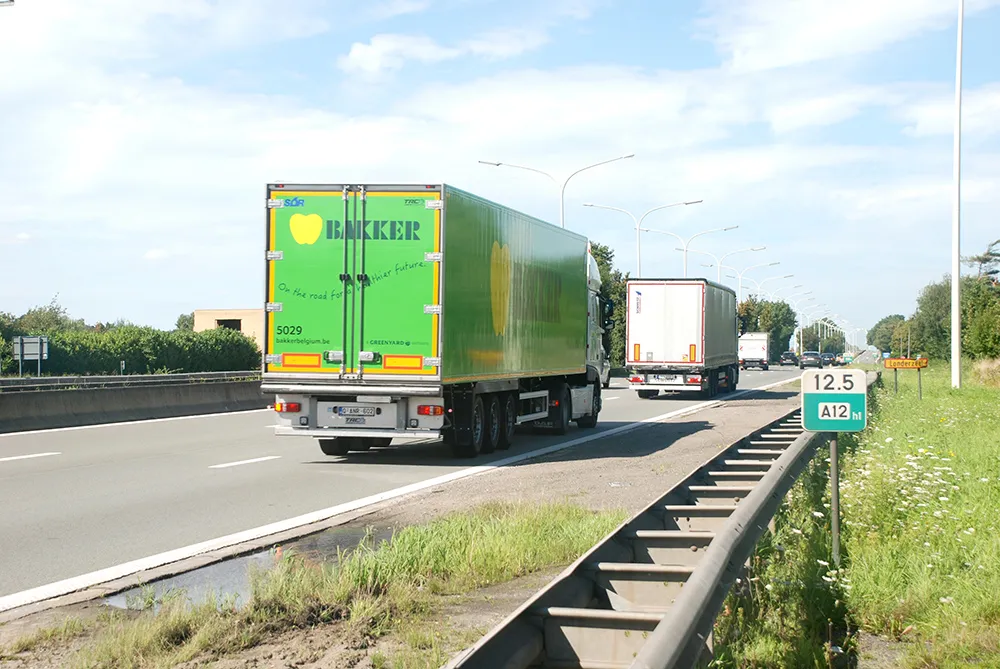
Distance-based charging has had no positive impact on mobility. Quite the contrary. Since distance-based charging for lorries was introduced in April 2016, congestion has only continued to worsen. This is particularly painful for transport operators. Paying an average of eight times more than under the former Eurovignette system, only to spend longer and more often stuck in traffic. That was certainly not what they had in mind.
Philippe Degraef, director of Febetra: “In its current form, distance-based charging is purely a fiscal measure that does not deserve the label ‘smart’. It is high time, then, to turn this misguided measure into a smart instrument for managing mobility. How? Simply by extending the ‘user pays’ principle to all road users. At present, that principle applies to just 2% of the vehicle fleet, or 15% of traffic.”
The user pays
Degraef: “Rationally speaking, nobody can oppose the ‘user pays’ principle. Why should it be unfair or unacceptable to charge a high-mileage driver more than someone who uses the road occasionally? The principle itself is nothing revolutionary, either. It is already well established in many other areas.”
“For example, those who use a lot of electricity or water pay more than those who use little. That is only logical. Nobody bats an eyelid. But whenever someone dares to suggest distance-based charging for all road users, politicians, both in Flanders and in the south of the country, show their cold feet. Their response is that it is impossible to sell.”
Taxing, but differently
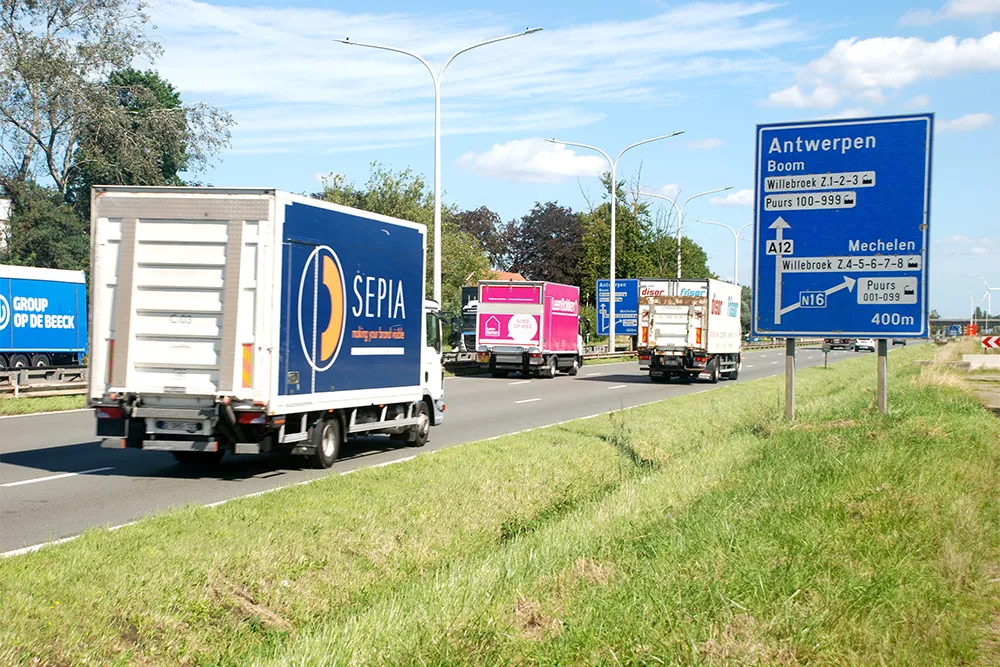
“Politicians would do well to provide the public with the necessary context,” Degraef continues. “Building public support starts with providing accurate information, not spreading doom-laden messages. That is where the problem lies. Today, the debate is far too emotional, with half-truths and outright tall tales never far away. Let’s simply set the record straight. The aim should be to move towards a system in which people are taxed not on vehicle ownership, but on use. Contrary to what many imply or believe, distance-based charging would not be added to existing flat-rate taxes, such as road tax and vehicle registration tax. It would replace them. So it is not necessarily the case that people will have to dig deeper into their pockets. Motorists will not be taxed more heavily, but in a different way. And, to dispel any misunderstanding, obviously at lower rates than those that apply to lorries today.”
Local circumstances
“We must also put an end as soon as possible to the myth that some poor soul living in a godforsaken village in the Ardennes will have to pay distance-based charges to drive 10 kilometres to the baker. It goes without saying that distance-based charging has no reason to exist in rural areas where there are no mobility problems and no alternatives to the car.”
The congestion monster
“Congestion has reached such dramatic proportions in large parts of the country that doing nothing is not an option. Passively watching as we head towards the much-feared traffic gridlock would look very much like culpable neglect. To avoid ending up in a nightmare scenario, we need a combination of measures. Distance-based charging for all road users is a necessary ingredient. Unlike the political world, Febetra refuses to capitulate and we do believe this option is worth pursuing wholeheartedly. It probably won’t be a walk in the park, but with the right objective context, based on facts and figures, it should be possible to make the man and woman in the street realise that distance-based charging for everyone is not such a crazy idea after all,” concludes a combative Degraef.
Question about this story? Ask your question
Keep following this
Get an email when a new story is published. No account needed.
- SubjectTransport