AI for real-time control of internal transport
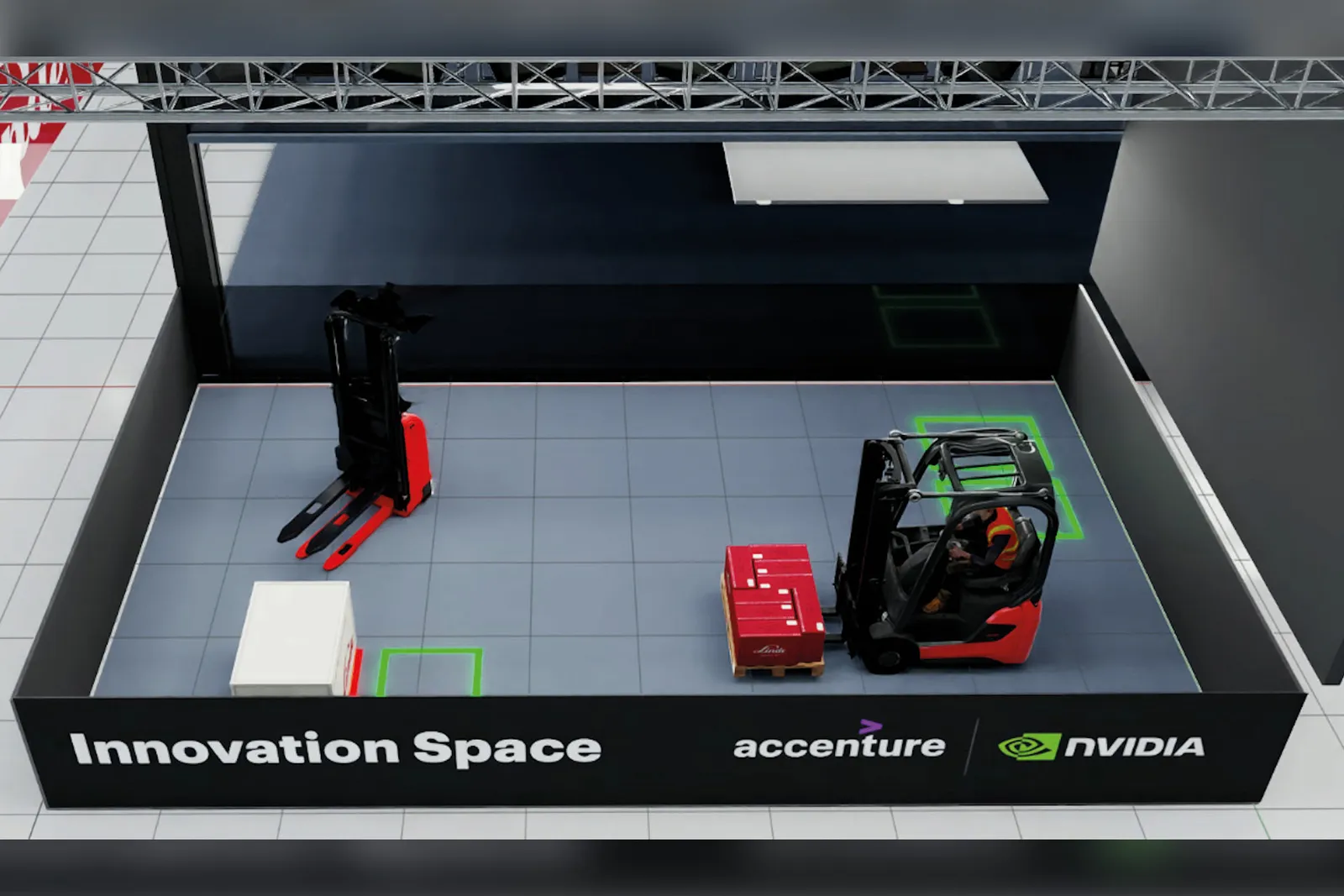
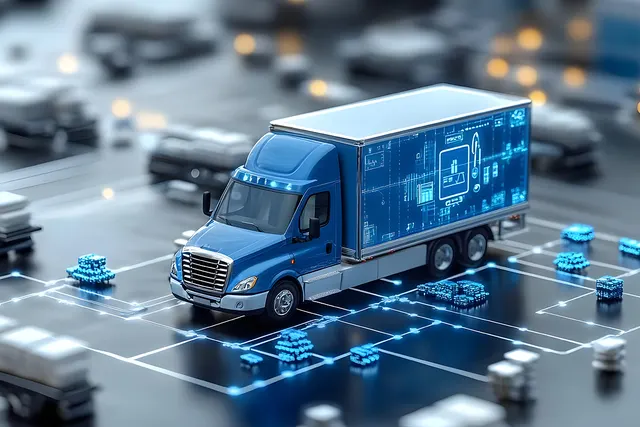
In the future, warehouse managers will be able to rely increasingly on artificial intelligence (AI) to optimise material flow processes. At the technical showcase at the LogiMAT trade fair in Stuttgart, Linde Material Handling (MH) recently demonstrated how this product vision works and is gradually becoming reality. The solution is based on NVIDIA’s powerful Omniverse AI platform, which uses a ‘digital twin’ to collect, process and analyse huge volumes of data from warehouse operations in real time. This initiative is in line with the strategy of Linde MH’s parent company, KION Group, which recently announced a large-scale collaboration with NVIDIA, a leader in AI, and Accenture, a digitalisation expert, to take industrial automation to a new level.
At LogiMAT, Linde demonstrated a scenario that could be typical of the warehouse of the future: manual and automated trucks working in perfect harmony side by side with the help of innovative AI technology. This development will be particularly beneficial for large truck fleets. The integration of intelligent hardware and software, combined with computing power, ensures transparency across every process in the warehouse and enables more efficient, reliable and flexible order fulfilment through continuous simulation. “Artificial intelligence and neural networks will improve warehouse efficiency. Throughput will increase, fleets of both manual trucks and AGVs can be optimised, and staff can be deployed more efficiently. This will lead to significant cost savings for companies,” says Ulrike Just, member of the Executive Board and responsible for Linde MH Sales & Service EMEA. “As a technology and innovation leader in our industry, we are at the forefront of developing AI-based solutions. These solutions represent a major breakthrough and are designed to improve our customers’ competitiveness and ensure the long-term efficiency of their material flows. We are planning the first pilot projects with major customers, for whom the return on the investments involved will be particularly high.”
Real-time localisation creates transparency
The first step in Linde MH’s strategy is to make manual internal transport smarter by connecting it to a network. That is why the company is developing a new tracking system that shows precisely where every truck is, both inside and outside the warehouse. The system uses modern technology that requires little additional equipment. Drivers receive route directions and new tasks via a smart display. The system takes into account the truck’s location and, for example, the position of its steering wheel. This means the route can be adjusted immediately, for example if an area is busy, to prevent delays.
At a certain point, AI becomes indispensable
As warehouses become more complex, optimising routes and coordinating manual and automated internal transport place far greater demands on capacity. “When 100 or more trucks need to be coordinated, it is essential to use higher-level intelligence and hardware capable of processing such large volumes of data,” explains Ron Winkler, Managing Director of the Digital Business Unit at Linde MH. “This is where AI from the NVIDIA Omniverse platform comes in. It creates a digital twin of the warehouse, a virtual 1:1 replica of the physical environment.” Simulations can be run in fractions of a second in this digital twin, either to optimise routes and coordinate AGVs and manual trucks effectively, or to make improvements to existing warehouse layouts.
The key advantage is that solutions to changing warehouse conditions, such as new orders or stock fluctuations, traffic congestion in certain warehouse zones, obstacles or overhanging loads, can be identified in real time, simulated in the digital twin and sent back to the truck control system. If a truck is running late, for example, the system can automatically assign the nearest forklift to unload. To achieve this, the NVIDIA Omniverse platform digitally stores all physical data relating to internal transport (e.g. load capacity, steering angle) and infrastructure (e.g. racking locations, routes, working hours). This virtual space then processes the constant stream of information from sensors, intelligent cameras on trucks and infrastructure, warehouse management software and truck control systems.
Simulation is key
Intelligent camera systems, strategically installed throughout the warehouse infrastructure and on both manual and automated trucks, are used to track load carriers, AMRs and manual trucks. They also provide real-time monitoring of loading and storage areas. The images captured by these systems are then interpreted and processed directly by AI.
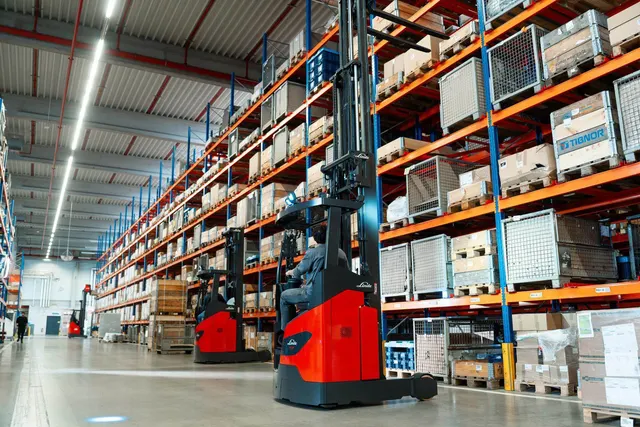
The showcase at Linde’s stand demonstrated this in practice: a forklift driver transports goods to the receiving area in an electric Linde forklift truck. In the designated transfer area, a fully automated Linde stacker then picks up the pallet for onward transport to the warehouse. To document and track materials and goods seamlessly on the Omniverse platform, the mobile intelligent camera on the manual truck automatically takes a photo of the load when the pallet is picked up and saves it in the system. At the same time, the camera records the entire surroundings, identifies people and obstacles, and immediately adapts the truck’s behaviour to the situation. The warehouse cameras provide the system with information about storage-location occupancy and also detect potential collisions with people, prompting the trucks to slow down.
But what if the forklift driver does not place the pallet precisely in the specified area, as an AGV usually requires? The cameras enable the digital twin to recognise where the pallet has been placed and send the order to the Linde L-MATIC core. Thanks to the intelligent camera on the fully automated AGV, AI detects the skewed pallet and determines a solution, in this case the best way to pick up the load. The cameras also flag problems such as boxes slipping or part of the load overhanging. In such cases, AI determines that the AGV should not collect the load. The Linde L-MATIC core then stops and is assigned another transport task. Meanwhile, AI calculates which manual truck is nearby and can take over the transport task.
“By configuring a digital twin of the warehouse, any conceivable infrastructure and fleet configuration can be simulated in 3D and tested for efficiency,” explains Ron Winkler. “AI can be continuously trained and refined. This lays the foundation for a warehouse system that proactively solves challenges and keeps improving.”
Een zakelijke vraag aan Motrac Intern Transport? Get in touch
Companies in this story
Keep following this
Get an email when a new story is published. No account needed.
- SubjectTransport
- CompanyMotrac Intern Transport