‘A sustainable business model with solar panels is within reach’
Text Carolien Klees Beeld Volvo Trucks
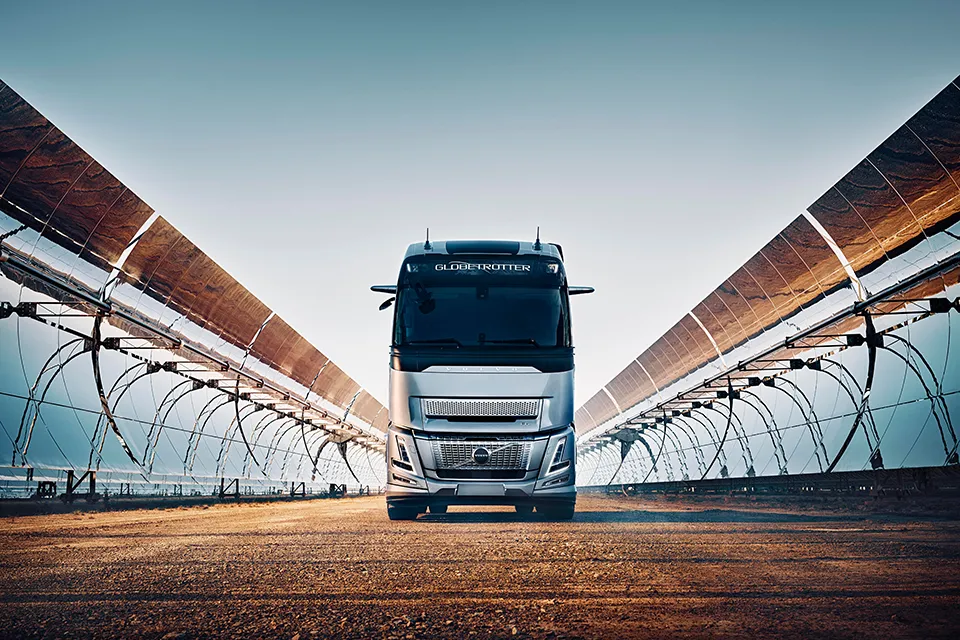
A mix of technologies is the best solution
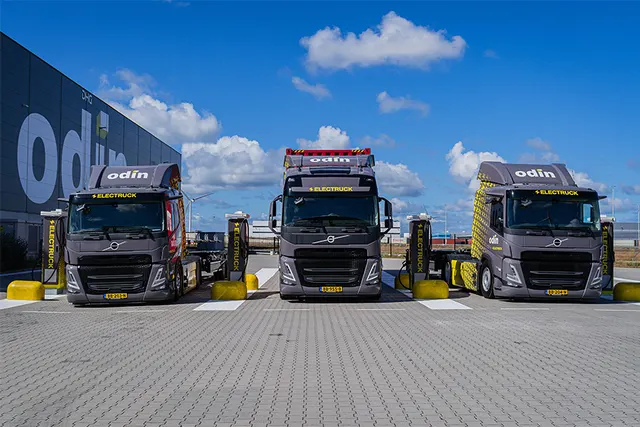
Hydrogen is increasingly being used for heavy trucks, while the range of electric vehicles continues to grow. What is the smart choice when renewing or expanding a fleet? We ask Jan Schouten, Manager Energy Transition at Volvo Trucks. He not only works on these issues, Volvo was also the first truck brand to bring hybrid trucks, (Bio-)LNG trucks and a full range of electric trucks into series production.
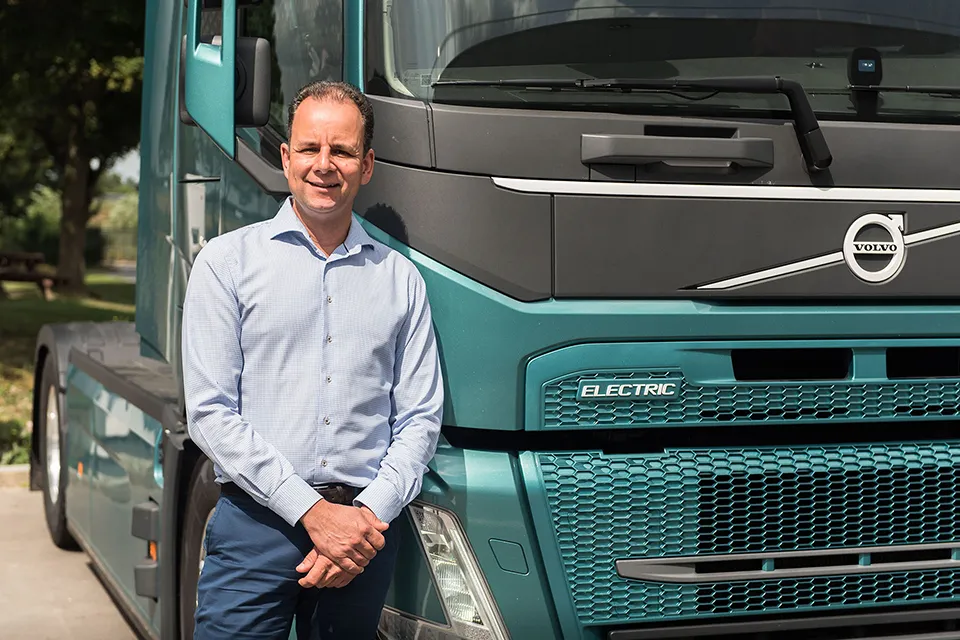
Schouten: “Ultimately, a mix of technologies is the best solution. For heavy trucks, the options are battery-electric drive, a fuel cell as the power source, and efficient combustion engines. The latter run on environmentally friendly fuels such as HVO, Bio-LNG or hydrogen.”
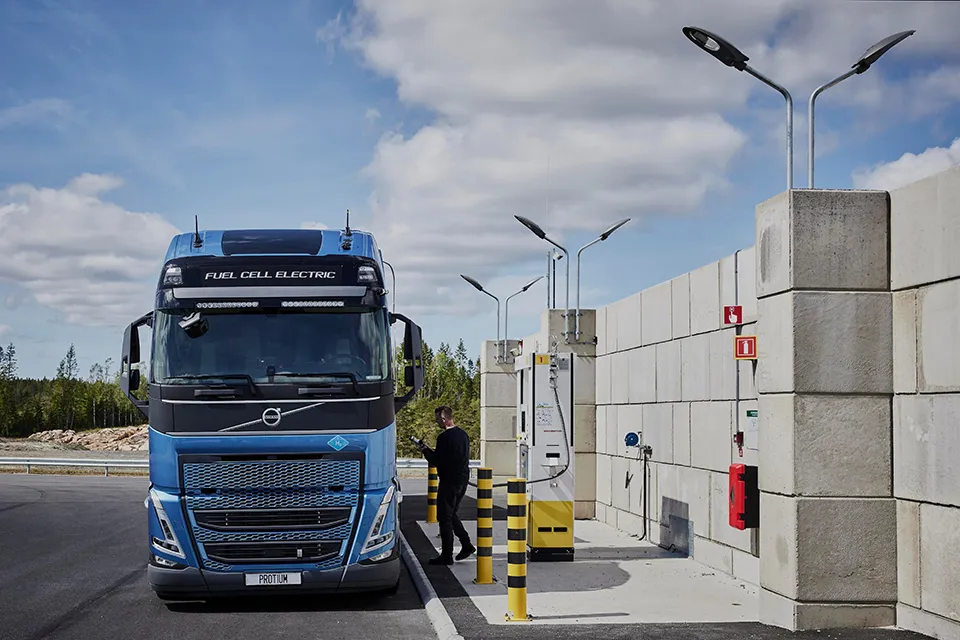
Hydrogen
The ultimate goal is to phase out the use of fossil fuels completely. In the longer term, a hydrogen-powered engine could also offer a solution, as it produces virtually no CO2 emissions. This builds on the technology already developed for combustion engines running on (Bio)-LNG. The EU classifies this as ‘zero-emission’, even though it is still a combustion engine. “The drawback of hydrogen is that it is still very costly, and the refuelling infrastructure for trucks still needs to be developed. Reliability is also not yet at the level required for further scaling up. We see positive opportunities here, but the timing needs to be right.”
Business case
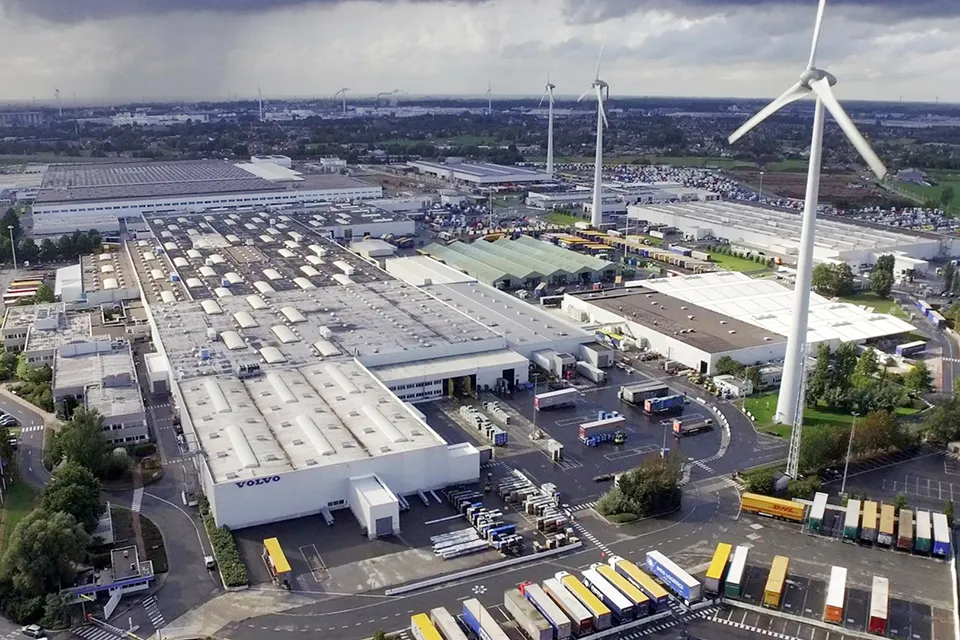
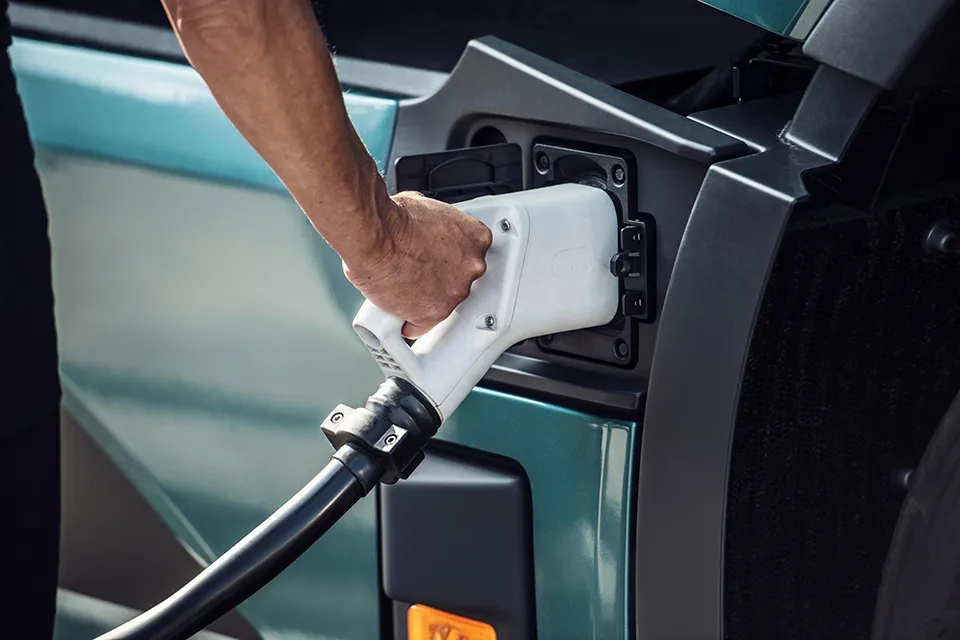
For some businesses, electric driving can be the ideal solution. Depending on the business situation, using solar panels and selling HBE (Renewable Fuel Units) can even provide a business case. Charging on your own premises, even with green electricity from the grid, can generate revenue. “The size of many warehouses makes them ideal for generating electricity with solar panels. Combined with charging electric vehicles on site, this already offers a financial advantage when running at least two heavy electric trucks. That can amount to several thousand euros per truck per year.” This is thanks to the tradability of so-called HBE certificates, which can be sold to suppliers of fossil fuels.
Service levels
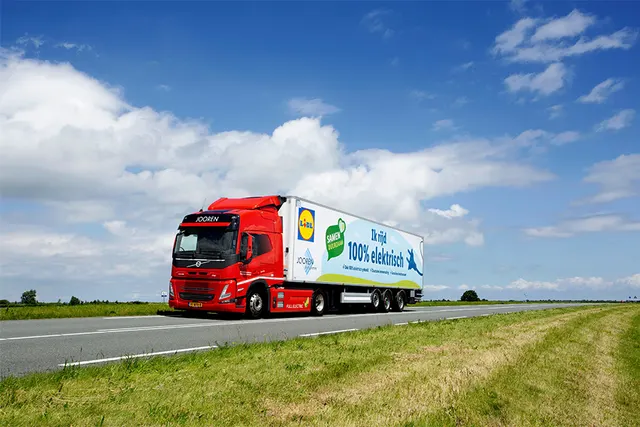
Schouten has another useful tip for anyone looking to switch to electric trucks: “Users naturally want the same capabilities and service levels as with a diesel truck. This means there must always be a workshop available with enough qualified mechanics, all the necessary parts and the right permits.” As Volvo Trucks was the first to put a full range of electric trucks into series production, it now has enough trained and experienced mechanics and service locations. “You can test as much as you like, but you learn the most in practice,” says Schouten.
Environmentally friendly developments
But what about those ‘environmentally unfriendly’ batteries? “Significant investment is currently going into research on reusing and recycling used batteries. The first aim is, of course, to keep batteries in trucks for as long as possible, but there are also many applications in which used batteries can enjoy a second life. For example, they can be used as stationary batteries, which can help address constraints on the electricity grid.”
“Progress is also being made on aerodynamics. Reducing truck air resistance leads to lower energy consumption and a longer range.” Schouten concludes: “My advice is to discuss your specific business situation with a specialist. It is almost always a bespoke solution, and developments are constantly unfolding.”
Question about this story? Ask your question
Keep following this
Get an email when a new story is published. No account needed.
- SubjectTransport