Automating with common sense
Text Roel van Gils Image Vanas
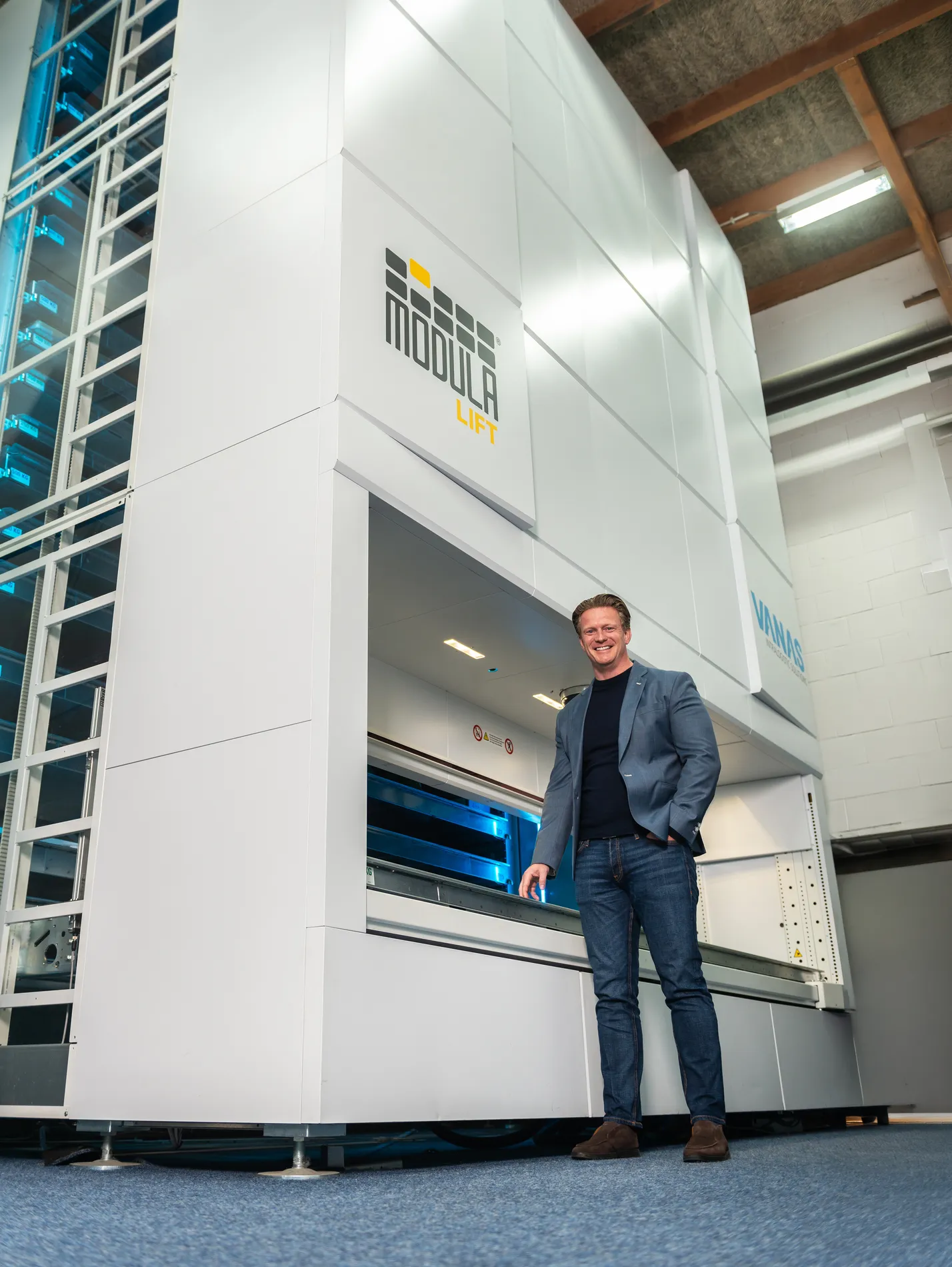
Warehouse automation is about more than robots, shuttles and advanced software. According to Andy van Mieghem, managing director of Vanas Engineering, a successful automation project starts with a much simpler question: what does a company really need?
“Too often, we see companies fall in love with a particular technology,” he says. “Because a competitor or someone they know uses it, or because it looks innovative. But the best solution is not automatically the most advanced or the most expensive.”
Vanas Engineering helps companies in Belgium and the Netherlands to make their warehouses and production environments work more efficiently. The focus is not on the technology, but on the result. The main objectives are almost always the same: more storage capacity, higher productivity and fewer errors.
Make use of vertical space
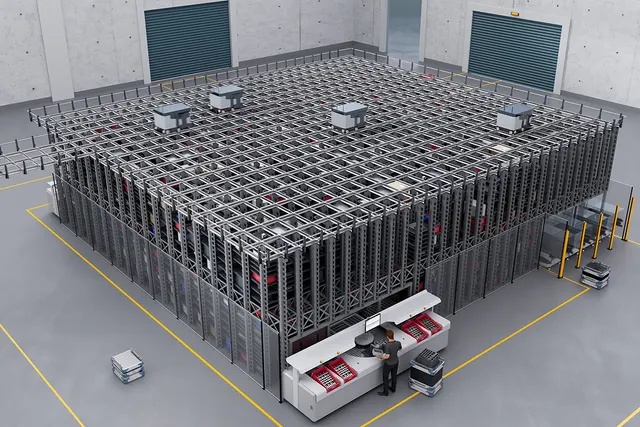
According to Van Mieghem, one of the most effective ways to gain space is to make use of the available height. “With automated vertical lift modules, for example, goods can be stored up to 22 metres high. Products are automatically brought to the operator according to the goods-to-person principle. This can save up to 90 per cent of floor space and dramatically reduce walking distances. In many warehouses, around 70 per cent of order-picking time is still spent walking. Eliminating that means an operator can work two to four times more efficiently.”
Grow without relocating
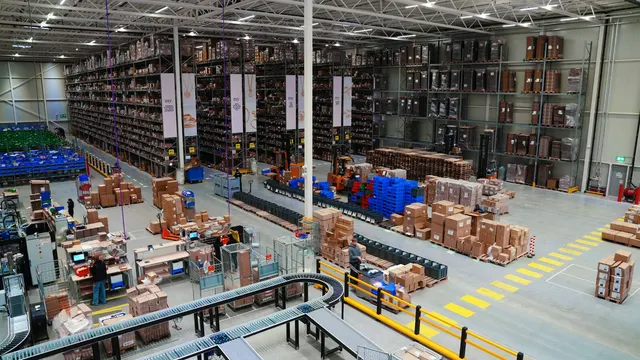
Vanas does not advocate full automation in every situation, however. The company strongly believes in hybrid solutions that combine conventional storage, semi-automation and full automation in a smart way. A good example is building materials supplier Dozon. Ten years ago, Vanas installed an automated pick-and-pass system there. At the time, it consisted of a two-tier shelving warehouse with roller conveyors that distributed orders by zone. This achieved a rate of 110 order lines per labour hour. When the warehouse outgrew its space and storage capacity became too limited, the company chose not to undertake a major new-build project, but instead to expand intelligently within the existing building. By combining nine vertical lift modules with the existing conveyor lines, storage capacity doubled and productivity rose to 200 order lines per labour hour.
“Projects like this show that automation does not always have to cost millions. Sometimes, a smart combination of technologies achieves the same result on a much lower budget.”
Ready for new legislation
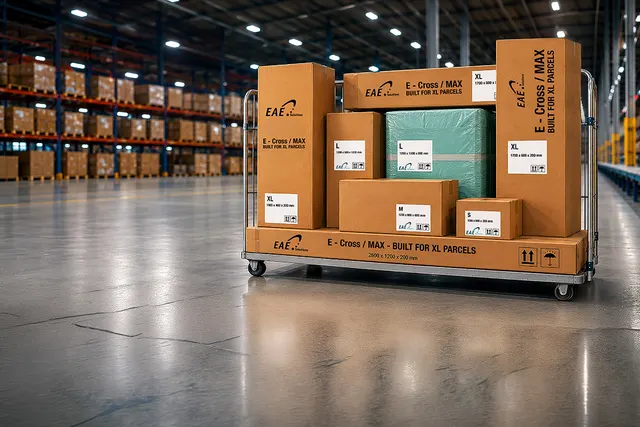
There are also major changes in packaging. New European regulations impose stricter requirements on empty space in parcels. Companies that take this into account now can save a great deal of money in the future. At Medpets, Vanas developed a packaging line that automatically makes boxes to size. This means that hardly any void fill is needed and transport volumes are significantly reduced. “Customers save not only on packaging materials, but also on transport costs. What’s more, they are already prepared for the PPWR regulations, which will come into force across Europe over the coming years.”
The most important advice? “Don’t wait until processes grind to a halt. Start thinking about optimisation in good time,” Van Mieghem concludes. “Seek advice from a partner that can propose different solutions and therefore offer an objective perspective. Ultimately, the best automation is not the most impressive technology, but the solution that best fits your growth ambitions.”
Have a business enquiry for Vanas Engineering BV? Get in touch
Companies in this story
Keep following this
Get an email when a new story is published. No account needed.
- SubjectAutomation
- CompanyVanas Engineering BV