












Warehouse automation: why the smartest solution is not always the most expensive
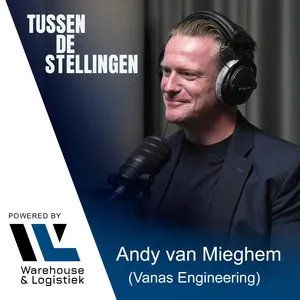
Conversation with Andy van Mieghem, Managing Director of Vanas Engineering
Host: Roel van Gils
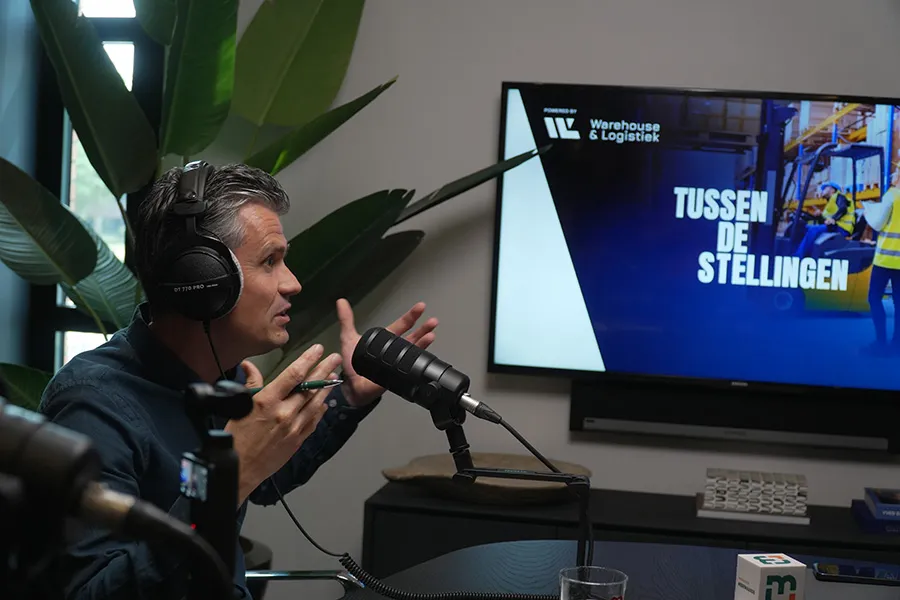
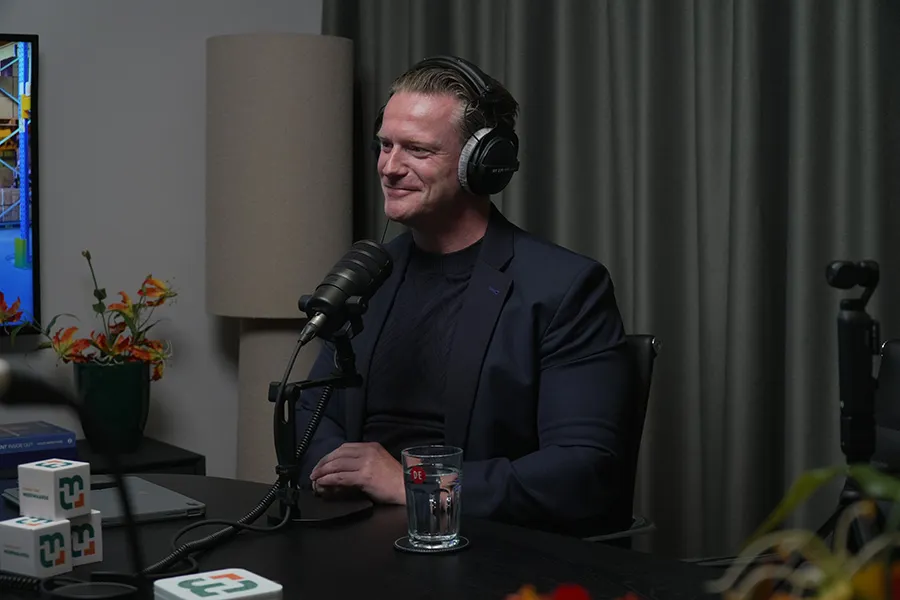
Warehouse automation is no longer just about robots and advanced technology. In this episode of Tussen de Stellingen, Roel van Gils talks to Andy van Mieghem, Managing Director of Vanas Engineering, about the benefits of smart, hybrid automation solutions. They discuss how businesses can create more storage capacity, pick orders more efficiently, prepare for the new PPWR legislation and why the best automation solution is not always the most expensive.
Have a business enquiry for Vanas Engineering BV? Get in touch
Full transcript
All chapters (26)
- Introduction
- What does Vanas Engineering do?
- New-build or existing buildings?
- Looking at the entire process
- Where does automation start today?
- Thinking ahead when designing
- Why vertical lift modules?
- Target markets
- Why businesses automate
- The main drivers of automation
- ROI and the impact of new legislation
- The three divisions at Vanas Engineering
- Does a customer start with a solution or a problem?
- The Modula division
- The Automation division
- When is data analysis needed?
- From analysis to implementation
- Involvement after handover
- Case study: Dozon
- Not always the most expensive solution
- Practical example: Medpets
- Ready for PPWR regulations
- What sets Vanas apart?
- Service in Belgium and the Netherlands
- Advice for companies looking to automate
- Closing remarks
Introduction
Roel van Gils Welcome to another episode of Tussen de Stellingen from Warehouse en Logistiek Benelux. Today, we’re taking a look at the world of warehouse automation. It’s a world where space is scarce, staff are hard to find and businesses have to deliver ever faster. My guest today is Andy van Mieghem from Vanas Engineering, a specialist in smart intralogistics solutions. Andy, tell us a bit about yourself.
Andy van Mieghem Hey, thanks for inviting me. I’m Andy van Mieghem and I’ve been with Vanas for about twenty years. It started out as a family business and later became part of Modula, most recently two years ago. I’ve had the chance to experience every stage of the company. I started by working out projects and drawing up plans. I found it really interesting to come up with solutions. That’s where my passion began. Then I got to visit customers and develop solutions on site. After that, I became interested in our vertical lift modules and the in-house software we’d been developing for them for years. I then moved up to sales manager, took on operational responsibilities as well and became Managing Director about seven years ago. Then came a number of investments and the acquisition of automation specialist Pacoma Systems, a strategic move. At the same time, we also expanded into the Netherlands. It’s been a great journey and I’m still passionate about it. After twenty years, it still feels like my baby.
What does Vanas Engineering do?
Roel van Gils Great, lovely. And welcome again, Andy. Let’s start with the basics: Vanas Engineering. Who exactly are you, and what do you do?
Andy van Mieghem In short, warehouse fit-out and production storage. We help customers free up space, increase productivity and enable employees to work more efficiently and without errors. Those are the three main things. We do this with everything from small static systems, the traditional solutions, to highly automated systems. We strongly believe in hybrid solutions. It doesn’t always have to be fully automated. Full automation is very much in vogue these days, but sometimes conventional systems are perfectly suitable and solve the problem in a very cost-effective way. That’s why we offer this combination. There are of course other benefits, such as better ergonomics, but space and efficiency remain the main drivers. They are the biggest challenges here in the Benelux. Wages are high, staff are hard to find and space is scarce. That’s why we prefer to make use of height rather than add more floor space.
Read the full transcriptCollapse transcript24 more chapters
New-build or existing buildings?
Roel van Gils Do you often work in existing buildings that are being laid out more efficiently, or mainly in new-builds?
Andy van Mieghem Both. The ideal scenario is a greenfield project, a new-build, because you can help plan the positioning of everything from the outset. The reality, however, is that projects are very often brownfield, in an existing building. We then try to make better use of the existing space and functionality. This often saves the customer a great deal, because they don’t need to build a new facility, move premises or relocate their staff. A well-designed layout in an existing building can bring an additional benefit. For us, about seventy per cent of installations are in existing buildings and thirty per cent are new-builds.
Looking at the entire process
Roel van Gils As a system integrator, do you look at the entire process?
Andy van Mieghem Yes, preferably. That isn’t always the case, but ideally we look at the whole process: from goods receipt, storage, order picking, packing and dispatch to sorting. The entire chain.
Roel van Gils That’s where there’s the most potential for optimisation.
Andy van Mieghem Yes, you can then create a design in which everything works together. It doesn’t all have to be implemented at once. We often work with small and medium-sized businesses. A big bang is usually not an option for them. We choose scalable solutions, but design with a five-to-ten-year horizon in mind. If you start today with sorting or packing systems and conveyor rollers, we’re already considering what storage might look like in the future. That way, the installation is ready for the next step. Otherwise, you end up with three separate pieces of the puzzle that you have to force together later. That often creates bottlenecks.
Where does automation start today?
Roel van Gils Are sorting and packing also the logical starting point these days?
Andy van Mieghem We’re seeing a shift here. Five years ago, the focus was mainly on storage and order picking. Packing is now getting much more attention too, especially in e-commerce. That’s naturally linked to the upcoming PPWR legislation.
Roel van Gils I believe it becomes mandatory from 2030.
Andy van Mieghem Yes. The legislation comes into force this year, but becomes mandatory from January 2030. Packages will then be limited to a maximum of fifty per cent empty space. Void fill also counts as empty space. So you can no longer fill boxes with plastic air pillows or paper. Fifty per cent sounds like a lot, but the limit is strict because it applies to the total volume, not just the height. Everything around the product counts too. Many customers will therefore need to take action. It remains to be seen what penalties will apply, but knowing Europe, these rules will certainly be enforced. That’s why we’re increasingly seeing packing processes become the starting point, followed by storage and picking.
Thinking ahead when designing
Roel van Gils Ideally, you take that into account right from the start?
Andy van Mieghem Yes. Think of conventional static storage: racks covering an area the size of several football pitches. If you move and need to set aside space for that again, or if you immediately consider vertical storage, which can store everything on just one fifth of the floor space, it’s better to design the process around that from the outset. With a greenfield project in particular, you also look at things such as floor loading, so that future expansion remains possible.
Why vertical lift modules?
Roel van Gils You said in the introduction that you’re part of a larger group. Can you tell us a bit more about that?
Andy van Mieghem We’d been an integrator and distributor of Modula machines in the Benelux for years. So, in 2016, we acquired Pacoma Systems because we strongly believe in vertical lift modules.
Roel van Gils Why?
Andy van Mieghem Vertical lift modules are a very simple way to save space. The machines are built to the available height, up to a maximum of twenty-two metres, for small goods. Anything that fits in shelving or carton flow racks can be stored in a vertical lift module. They work on the goods-to-person principle. The tray comes down and presents the products to the operator. A laser pointer indicates which product to pick. In some cases, we save up to ninety per cent of the space. You also save a huge amount of walking. Even today, around seventy per cent of order-picking time is spent walking. If you can reduce that, the operator becomes two to four times more efficient.
Roel van Gils That naturally makes things much more efficient.
Andy van Mieghem Absolutely. What’s more, vertical lift modules are a cost-effective form of automation. You don’t need to think in terms of investments with six zeros. From about seventy-five thousand euros, you can already get a solid vertical lift module that automatically delivers goods. We then connect our software to the customer’s ERP or WMS, providing full support for order picking. When volumes increase, we often combine vertical lift modules with conveyor rollers. You can pick orders from a vertical lift module and put everything on a table, but if you’re processing a lot of orders, those boxes and totes also need to be taken away. You can assign someone to do that, or install a system that automatically removes the totes. That’s why we acquired Pacoma Systems: to offer the entire combination from a single supplier.
Target markets
Roel van Gils And which markets do you mainly target?
Andy van Mieghem For automation, we mainly focus on e-commerce and distribution. I’m referring to conveyor systems, packing systems and sorting systems. Pure storage solutions, such as a vertical lift module, are used just about everywhere. They can be used in a technical warehouse storing spare parts for in-house production or managing tools, for example.
Roel van Gils Are you restricted by certain dimensions?
Andy van Mieghem There are, of course, limits. You need a height of about three metres or more, otherwise a vertical lift module won’t save much space. They range from two to four metres in width. Several machines are often installed side by side. There are also different depths available, which makes them very flexible.
Roel van Gils And what products can they store?
Andy van Mieghem The trays can be up to four metres wide. We have customers storing large products measuring 800 by 600 millimetres, as well as heavy components that are removed from the machine using a spring balancer, so the employee doesn’t have to lift anything.
Roel van Gils That’s good for ergonomics too.
Andy van Mieghem Exactly. That gives them a very wide range of applications, from manufacturing businesses wanting to store labels close to production to conventional e-commerce environments where order picking is central.
Why businesses automate
Roel van Gils Looking at warehouse automation, what are the main reasons for automating?
Andy van Mieghem Still the same three: space, efficiency and error-free working.
The main drivers of automation
Roel van Gils And looking at warehouse automation, what are the most common reasons for automating?
Andy van Mieghem Still the golden three: space, efficiency and error-free working.
Roel van Gils Yes, just as you said at the start.
Andy van Mieghem Yes, they’re still the same. That was true ten years ago, and it’s still true today. The only change is in what we mean by efficiency. In the past, it was often about reducing headcount, so really about cutting costs. Now it’s the opposite: businesses can’t find staff. Automation enables them to grow with the same team.
Roel van Gils Yes.
Andy van Mieghem If one employee works four times as efficiently, you can do the maths.
ROI and the impact of new legislation
Roel van Gils So it’s no longer just about cost savings. ROI is obviously important, but…
Andy van Mieghem No, it’s not the only consideration any more. People always look at the numbers, of course, but it’s mainly about growth potential. Can you continue storing everything in your existing building? Try defining the ROI if you don’t have to relocate completely. Then you compare the costs with an investment and simply choose the best solution. We’re also seeing a shift in the time horizon. In the past, an investment had to pay for itself within three years. Now some customers say five years is fine too, because the strategy is so important. We see this particularly with packaging systems, because new legislation is also a key driver there. Companies are investing to comply with the regulations.
Roel van Gils Are companies already aware that this legislation is on the way?
Andy van Mieghem No. Some are starting to think about it, but for many customers, three years still seems a long way off. That’s especially true when we’re working on automation projects today where customers are still looking at conventional case erectors and case sealers that use a lot of void fill. We deliberately tell them: let’s think ahead for a moment. Otherwise, we’ll end up integrating a machine that will have to be replaced in three years’ time by a modern version that reduces packaging height.
Roel van Gils So do you sometimes put the brakes on yourselves?
Andy van Mieghem Yes. To tell customers: don’t make the wrong investment now. Think it through a little further and perhaps do it right for the future a few months later.
The three divisions at Vanas Engineering
Roel van Gils You focus on three niches, is that right?
Andy van Mieghem Yes. Our main aim is to equip warehouses and production facilities. We combine that with different systems to achieve that goal. As I said earlier, these range from conventional systems to fully automated ones. In between is semi-automation, which is Modula. So we distinguish between three groups: Static Solutions, Modula and Automation.
Why do we do that? Because these are three different specialisms. You can’t expect one person to have all the expertise in all three niches. What’s more, a complete system integration requires a completely different approach from a project where someone is looking for a hundred square metres of racking or one or two vertical lift modules. That’s why we have separate specialists for each niche.
Roel van Gils So it really is a separate department?
Andy van Mieghem Yes. Within our group, it’s a separate department with specialists who know everything about those solutions. The generalist who visits the customer first determines which direction to take, then brings in the right specialist.
Does a customer start with a solution or a problem?
Roel van Gils Do customers come to you already asking for a particular solution?
Andy van Mieghem Both happen. Some customers say: you have a broad range, can you help us? We’re hearing that more and more, especially in the automation sector. There’s a huge proliferation of systems these days. Ten years ago, you had miniloads, vertical lift modules and high-speed shuttles. That was about it. Now there are hundreds of different technologies. And if Asia has its way, a few more will appear every year. That makes it hard to choose.
On the other hand, some customers say they’re considering racking, lifts or another system. That doesn’t mean we simply go along with it. We’ve agreed within our organisation that our greatest strength lies in thinking things through with customers and advising them. We won’t blindly offer a particular solution just because someone asks for it. We like to challenge the customer. Why do you need it? How are you performing today? What are your growth plans? In two out of three cases, the customer turns out to have chosen the right direction. But in one out of three, we discuss it and suggest a different or partly different solution. For example, by putting fast movers in a different system from the one the customer originally had in mind.
The Modula division
Andy van Mieghem Our second division is Modula. It covers everything to do with vertical lift modules, with its own software.
Roel van Gils Developed in-house?
Andy van Mieghem By Modula itself. The software is used worldwide, is highly scalable and manages all the machines. It is connected to the customer’s ERP or WMS so that orders are sent through automatically.
That’s another niche. There are seven different types of machine in the range. We often talk about vertical lift modules, but there’s also the Flexibox, for example. Instead of retrieving one large tray, it can retrieve up to 180 bins per hour. That’s a much faster solution.
Roel van Gils That’s pretty fast.
Andy van Mieghem Yes. We sometimes call it a vertical lift module on steroids. It really flies. But even then, our specialists assess whether it’s actually the right solution. Sometimes we combine one fast machine with two conventional vertical lift modules.
Roel van Gils So all of that is possible?
Andy van Mieghem Absolutely. One software platform controls all those different machines in a coordinated way. There’s also a vertical lift module with a roller shutter above it, for example. When someone needs a tool, only the compartment containing that tool is unlocked. The rest remains locked. That creates an unattended technical store where employees can collect materials 24 hours a day, while you can still be sure that stock records are accurate and avoid any surprises at the end of the year.
The Automation division
Roel van Gils And the third division?
Andy van Mieghem That’s Automation. There we really operate as a system integrator. Everything revolves around conveyors that connect the different zones and transport the goods. We usually start these projects with an intensive preliminary study and data analysis. Our logistics engineers draw up several designs. If they find that vertical lift modules or other solutions would be a better fit, specialists from the other divisions join the discussion to help develop the design.
When is data analysis needed?
Roel van Gils Is that kind of extensive data analysis also needed for projects involving only vertical lift modules or static solutions?
Andy van Mieghem To a much lesser extent. Sometimes it is, when we find that the required speeds are high. In that case, we bring in a data analyst from the Automation department to provide support. But I’d say it’s needed in two out of ten cases. Usually, the specialist can map everything out well enough themselves. If extra support is needed, we can of course provide it from the other department.
From analysis to implementation
Roel van Gils Everything is analysed at the start, of course. What does the process look like after that?
Andy van Mieghem First, we look at the data, if it’s available, because that still can’t be taken for granted. If data is available, we work with it. We then produce a high-level design with an accompanying high-level budget to assess whether the business case makes sense at all. Once that is approved, we start the detailed engineering.
I strongly believe in working together. That means working together within our own organisation, but especially with the customer. We know the theoretical impact of our solutions, but the customer knows their own processes and specific challenges. So during the design phase, we brainstorm together until we arrive at the final design.
Once the customer decides to go ahead, the implementation process begins. This is followed by functional analyses, programming, on-site installation, testing, joint testing with the customer, go-live in hypercare mode, and then after-sales support to maintain and service the automation on an ongoing basis.
Involvement after handover
Roel van Gils So you stay involved after handover as well?
Andy van Mieghem Yes, absolutely. With conveyor systems in particular, we see that customers’ needs change over the years. On the one hand, we provide routine maintenance and service. We have service technicians available 24 hours a day, seven days a week. If required, they can be on site within four hours.
We also review things with the customer every year to check whether their original needs still match the current situation. Has anything changed? Do we need to re-engineer or adjust certain sections?
Roel van Gils So you do that proactively?
Andy van Mieghem Yes, if a customer is willing to set aside time to do it together, we definitely think it’s worthwhile. Better to anticipate than wait until it starts to hurt. A bottleneck often only becomes visible once companies are already reaching their limits. We try to get ahead of that time pressure by thinking through the customer’s growth plans with them and proposing changes in good time.
Case study: Dozon
Roel van Gils Can you give an example of a project you’ve completed and what it achieved?
Andy van Mieghem A good example is Dozon, where we actually combined all three of our divisions. Dozon supplies building materials and all kinds of tools for the construction industry. About thirteen years ago, we built a warehouse there with two levels of shelving and roller conveyors connecting different picking zones.
There were two picking zones on the ground floor and two on the first floor. The system used a pick-and-pass principle. Orders were released, totes were automatically sent to the right zones, and the order pickers filled the appropriate tote at each zone.
Roel van Gils Was all of that automatic?
Andy van Mieghem The picking itself was done by the employee. The tote was automatically taken to the right zone, the picker put the products in it and sent it on. Once an order was complete, it was automatically sorted to the right packing station and then sent straight to dispatch.
Roel van Gils Is the system still running in the same way today?
Andy van Mieghem No, and that’s what makes the story interesting. About two years ago, after some ten years, the warehouse started to outgrow the building. That solution had worked extremely well for ten years. At the time, they were achieving around 110 order lines per person-hour.
Roel van Gils And before that?
Andy van Mieghem That was even before my time, so I wouldn’t want to put an exact figure on it. But it would have been less than half, somewhere around forty to fifty order lines per hour.
Roel van Gils They must have had to work hard.
Andy van Mieghem Absolutely. The increase to 110 order lines per hour was already a huge improvement at the time, without going in for extreme levels of automation. But eventually the building became too small. At the time, we were using only two levels, even though the building was nine metres high.
That’s when the discussion started: should we build a third floor with extra conveyors, or take the next step? We proposed replacing some of the racking with vertical lift modules.
After analysing the data, we established that the fast movers could be stored perfectly well in nine vertical lift modules. They were installed against the wall, nine metres high, and integrated into the same pick-and-pass system as the existing conveyors.
That gave us the best of both worlds. Much of the conventional racking was retained for slow movers and larger items, while the fast movers were stored semi-automatically.
The result was that productivity rose from 110 to around 200 order lines per man-hour. Storage capacity also doubled within the same building. The system is fully scalable too, as another nine vertical lift modules can be added later. This means the customer can continue for years without needing a new building.
I think that is a great example of working with a customer to find the right solution and offering a phased approach without it having to cost a fortune.
Not always the most expensive solution
Andy van Mieghem Automation is very much in vogue today. Many companies immediately think of the biggest and most expensive solutions. Robots, shuttles… If you invest a few million, it will undoubtedly work. But the question is whether you could achieve the same result for a million less.
That is exactly how we look at automation. We strongly believe in hybrid solutions. Not everything needs to be fully automated. Sometimes you see companies wanting to put everything into a single automated storage system, including items that barely move. In effect, you pay a great deal for storage that adds little value. Sometimes a combination of technologies is simply much smarter.
Practical example: Medpets
Roel van Gils Another interesting example?
Andy van Mieghem Another great example is Medpets. Its focus is less on order picking and more on packaging. Medpets supplies everything for pets, from toys to food. The company is strongly focused on e-commerce and had built a completely new premises, so there was plenty of space.
Together, we decided not to automate storage and picking. We opted for conventional shelving about two and a half metres high, along with pallet racking for the larger items.
Roel van Gils Because there was plenty of space available?
Andy van Mieghem Yes, absolutely. We also opted for conventional wave picking. Using standard picking trolleys, orders for around a hundred customers are picked at the same time. This means there is little walking through the aisles.
The orders are then sorted using some automation, with conveyors and an automated packaging line. We opted for three different box sizes. The products are placed straight into the right boxes at the put walls.
Roel van Gils Those sorting stations?
Andy van Mieghem Exactly. The boxes are then automatically reduced in height.
Roel van Gils So that is already happening now?
Andy van Mieghem Yes. As a result, there is virtually no need for void fill. The boxes are then automatically conveyed to the sorting stations, where up to 2,000 parcels per hour are sorted to the right carrier.
That is where Medpets made the biggest gains. Previously, all packaging was done by hand, with lots of packing tables and a great deal of void fill. Now, the cost of void fill has been eliminated, and around half of the packing tables have been replaced by the automated packaging line.
Ready for PPWR regulations
Roel van Gils Did they move to new premises at the same time?
Andy van Mieghem Yes, that was the plan anyway.
Roel van Gils Was this concept their idea from the outset, or did you develop it together?
Andy van Mieghem We developed it together. They knew that packaging was a major bottleneck and wanted a solution in place straight away in the new building. We then thought it through together, including the automatic reduction of box height.
We completed the project in 2023. In effect, they are already fully prepared for the PPWR regulations, which become mandatory in 2030. When you receive a parcel from them today, it is no longer full of air, but neatly packed to size.
Roel van Gils That obviously delivers an immediate benefit. What other advantages have they gained?
Andy van Mieghem The main gain is efficiency. Transport costs have also fallen. When all your boxes are much more compact, you can fit many more parcels into the same lorry. The savings on packaging materials are also substantial. For some customers, these amount to several hundred thousand euros a year.
Roel van Gils I can well believe that.
Andy van Mieghem Ultimately, it is material that would otherwise be thrown away immediately. Those were the three main benefits in this case. The project was not about saving space at all.
I think this is another great example of a hybrid solution. We combine simple shelving with efficient wave picking and a smart piece of automation at the back end. If they do run short of storage capacity in the future, there is already a plan to automate part of the storage by making better use of the building’s height. This brings storage, packaging and automation together seamlessly.
What sets Vanas apart?
Roel van Gils There are, of course, other companies operating in this sector. Where do you think Vanas makes the difference?
Andy van Mieghem It really comes down to those three niches. There are plenty of companies that specialise in static storage solutions, plenty of suppliers of vertical lift modules, and plenty of companies offering conveyors and automation.
Our added value lies in bringing those three disciplines together. That enables us to offer complete solutions in which the vertical lift modules, conveyors, software and controls are fully integrated.
Roel van Gils So there is no dispute between different suppliers there either?
Andy van Mieghem Exactly. It is a genuine one-stop shop for automation. No one points the finger at partners. One company takes responsibility, coordinates everything and ensures the installation continues to perform at its best.
Service in Belgium and the Netherlands
Roel van Gils Do you do that for customers in the Netherlands and Belgium?
Andy van Mieghem Yes. We have two branches: one in Melsele in Belgium and one in Waalwijk in the Netherlands. Both have their own service teams and technicians, so we are close to customers for maintenance and service. If a fault should occur, which can of course always happen with automation, we can be on site within four hours to get the customer up and running again quickly.
Advice for companies looking to automate
Roel van Gils Finally, if you could give one message to companies considering warehouse automation, what would it be?
Andy van Mieghem Take the time to think about optimisation before problems start to bite. Above all, do not let technology drive your decisions. That is very tempting these days. Many companies say: “I want that technology because it looks amazing.” Or: “My neighbour uses that solution, so it will probably work for me too.”
Try to look at it objectively. Bring in a company that offers several systems, so you can get impartial advice too. That is exactly where Vanas is strong. We have a range of storage, packaging and conveying systems. Our specialists weigh up all the options and find the solution that fits best.
If you then want to compare that solution with other suppliers, that is absolutely fine. But the advice will be more impartial than if you speak to a supplier that sells only racking or only vertical lift modules. An adviser like that is more likely to steer you towards their own range.
So, above all, look for a partner who can think independently with you as you search for the best solution.
Closing remarks
Roel van Gils Brilliant. Andy, thank you for your insights. And thanks again for joining us.
Andy van Mieghem My pleasure. Thank you for the invitation. It was great fun.
Roel van Gils Thank you.
Companies in this story
Keep following this
Get an email when a new story is published. No account needed.
- ThemeAutomating goods flows
- SubjectGeneral
- CompanyVanas Engineering BV







