












The future of trade and logistics: opportunities, bottlenecks and supply chain management
Text Armand Landman Beeld Pixabay, Erasmus Universiteit
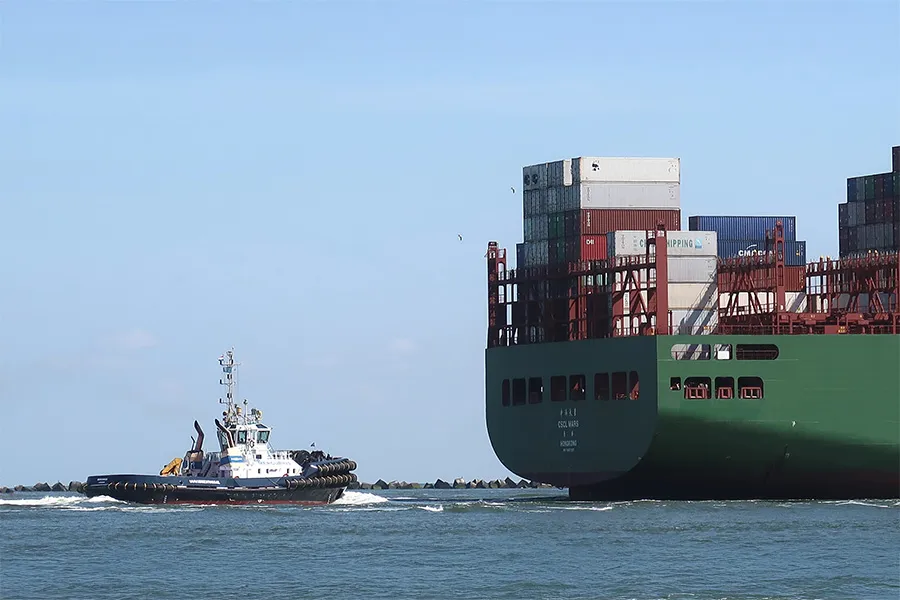
The logistics sector is undergoing rapid change. International trade, geopolitics, the energy transition and technological innovation are putting supply chains under pressure worldwide. At the same time, there is a growing need for closer collaboration between academia, business and policymakers to ensure the Netherlands remains a leading logistics hub fit for the future. Prof. dr. Albert Veenstra, Professor of International Trade and Logistics at Rotterdam School of Management, shares his insights.

Could you briefly outline your current areas of work?
“Certainly. I am Professor of International Trade and Logistics at Rotterdam School of Management and Senior Program Manager at UPT BV, Erasmus University Rotterdam. My focus is on the logistics that facilitate international trade flows. My research includes the impact of tariffs, the energy transition in shipping and logistics, and changes in the balance of power in the container supply chain.”
What are the main current developments in your field?
“The tariff war, particularly between the US and China, is creating major uncertainty in global trade flows. The energy transition is also changing how goods are transported, and new flows are emerging, such as ammonia and methanol. In addition, the role of major shipping lines has changed: they are increasingly integrating supply chain activities and dominating terminals and freight forwarding. Their market power is causing disruption at ports, including congestion in Rotterdam. This is more serious than we thought, as reflected in throughput lagging behind Antwerp.”
Why is Rotterdam more affected than Antwerp?
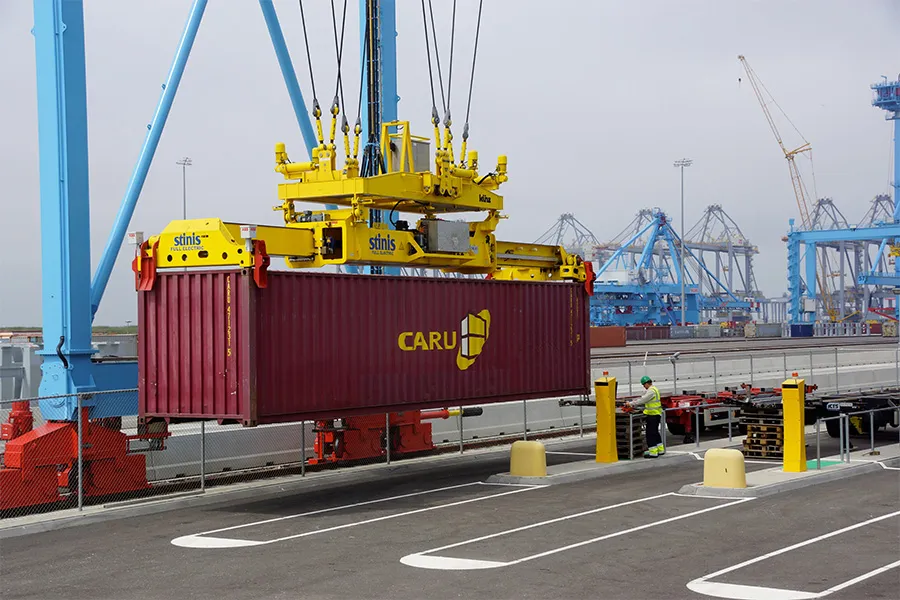
“In Rotterdam, we are dealing with complex transitions. ECT terminal is losing customers to other terminals such as APM and RWG, and has therefore scaled back its operating capacity. At the same time, expansions at those terminals have yet to be completed, while container throughput is growing somewhat. This is creating a capacity crisis, putting significant pressure on space and staffing.”
What is the impact of protectionist measures, such as those imposed by the US?
“They are based on outdated thinking about trade that ignores the existence of supply chains. Tariffs then lead to all kinds of unexpected effects, such as fluctuating trade flows and stockpiling. This makes it extremely difficult for the logistics sector and academia to make reliable forecasts.”
What does this uncertainty mean for warehousing?
“Uncertainty always leads to higher stock levels: companies fill their warehouses as a precaution. We saw this during COVID-19, and we are seeing it again now. As a result, warehouses remain overfull, despite efforts to perfect just-in-time logistics.”
What advice do you give the sector and policymakers?
“We monitor developments such as employment in ports and strategic trends, including Chinese influence in the maritime sector and cyber security. Our work often falls somewhere between consultancy and academic research. A current example is the impact of various new EU regulations on international supply chains and logistics.”
Inland shipping faces infrastructure problems. What exactly is happening?
“The sector consists of small companies, often with international crews. Problems such as collisions with bridges and locks are caused by language barriers, fatigue, complex navigation rules and a lack of technological know-how. We contribute to discussions on solutions involving training, skills and the integration of technology.”
What role does customs play in the Netherlands’ position as a logistics hub?
“The Netherlands has always enjoyed a strong position thanks to efficient customs processes, which allowed international goods flows to move easily through Dutch warehouses. New customs rules introduced since 2016 have made this more complex, affecting the Netherlands’ attractiveness.”
Should we take a critical look at the Netherlands’ role as a logistics hub?
“Absolutely. We need to consider what kind of logistics we want to facilitate. High-value logistics, such as flowers, chilled products and hazardous materials, should be nurtured. Low-value logistics, such as bulk e-commerce, delivers little and requires labour-intensive processes with low added value.”
How is the energy transition affecting the logistics sector?
“Profoundly. There is growing pressure to transport new fuels such as hydrogen and ammonia. At the same time, the electrification of road transport is bringing new logistics requirements, such as charging hubs at warehouses. Electrification is progressing faster than expected, leading to grid congestion. This is a major problem because new warehouses often cannot secure a power connection.”
Could the sector have foreseen this congestion?
“Not really. Electrification accelerated unexpectedly due to developments among vehicle manufacturers and policy incentives. Network operators are now working hard on solutions, but upgrades take years.”
Is energy management playing a bigger role in warehouses?
“Certainly. Warehouse owners are often property developers with no involvement in logistics operations. There are initiatives such as installing their own solar parks, but a structural solution requires closer collaboration between property companies, logistics service providers and energy producers.”
You mentioned the need for policymakers to better understand supply chains. Could you explain?
“Policy measures such as the EU deforestation regulation affect supply chains, but are developed without a real understanding of how those chains are structured. For example, palm oil is stored in mixed batches and separated administratively, but regulations require physical separation. Measures like these create major logistical bottlenecks. We therefore try to show how supply chains actually work and call for better dialogue with policymakers.”
What should the sector do to engage more effectively with policymakers?
“Logistics companies need to explain much more explicitly that they are links in supply chains. Policy measures often do not directly affect their own activities, but have a huge impact through supply chain effects. Without that awareness, inefficient rules are introduced that disrupt supply chains.”
Question about this story? Ask your question
Keep following this
Get an email when a new story is published. No account needed.
- ThemeThe supply chain under pressure
- SubjectGeneral







