












‘If we want to remain a leader, we can only do so sustainably’
Text Armand Landman Beeld Valerie Kuypers, Henk Roolvink
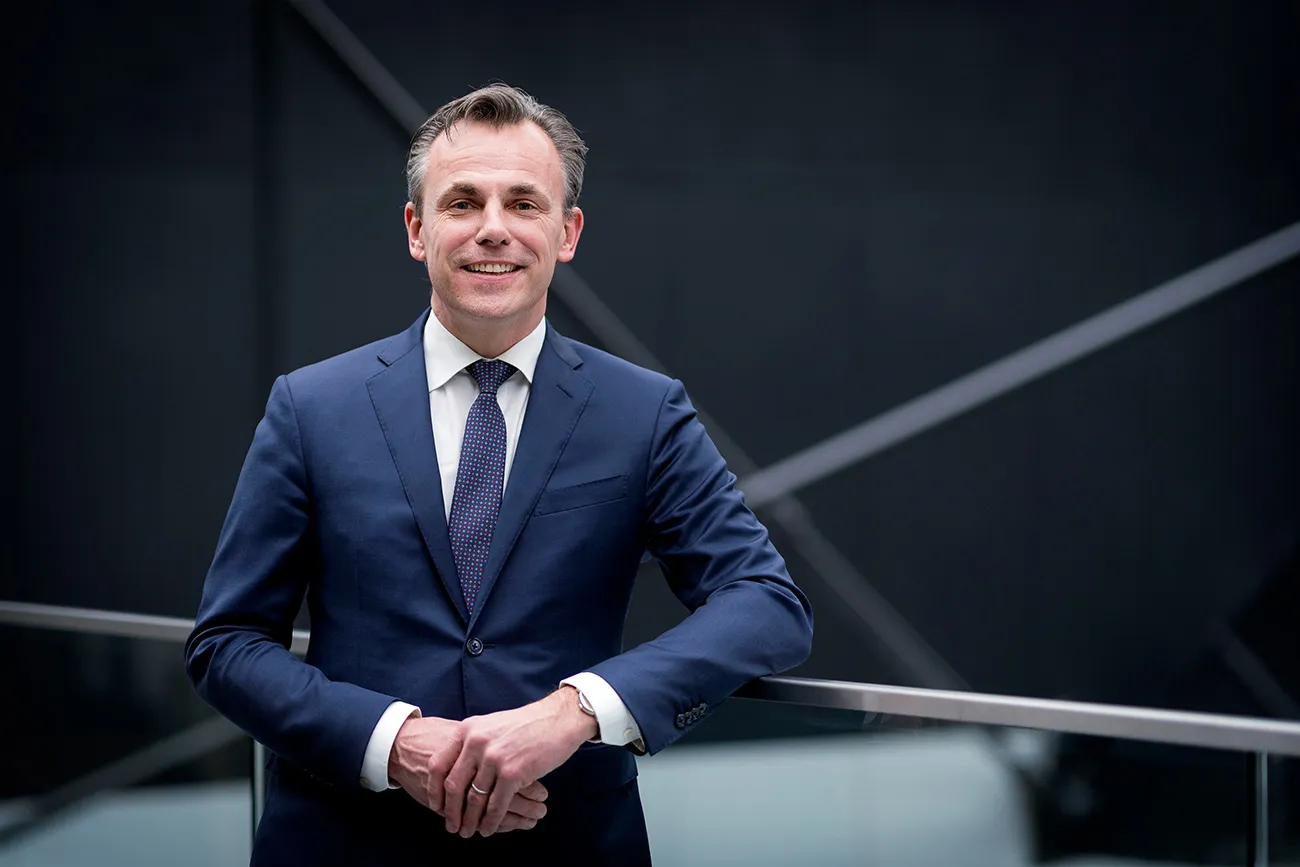
Mark Harbers, Minister of Infrastructure and Water Management
Transport and logistics is an important sector for the Netherlands. After all, Rotterdam, the largest seaport in the Western Hemisphere, can only function with good connections to its hinterland. At the same time, we are all aware of the challenge of making our economy emission-free by 2050. According to caretaker Minister of Infrastructure and Water Management Mark Harbers, we can therefore only remain a leader by doing so sustainably. “My ministry wants to lend the sector a helping hand to make that happen.”
What concrete measures can the transport and logistics sector expect?
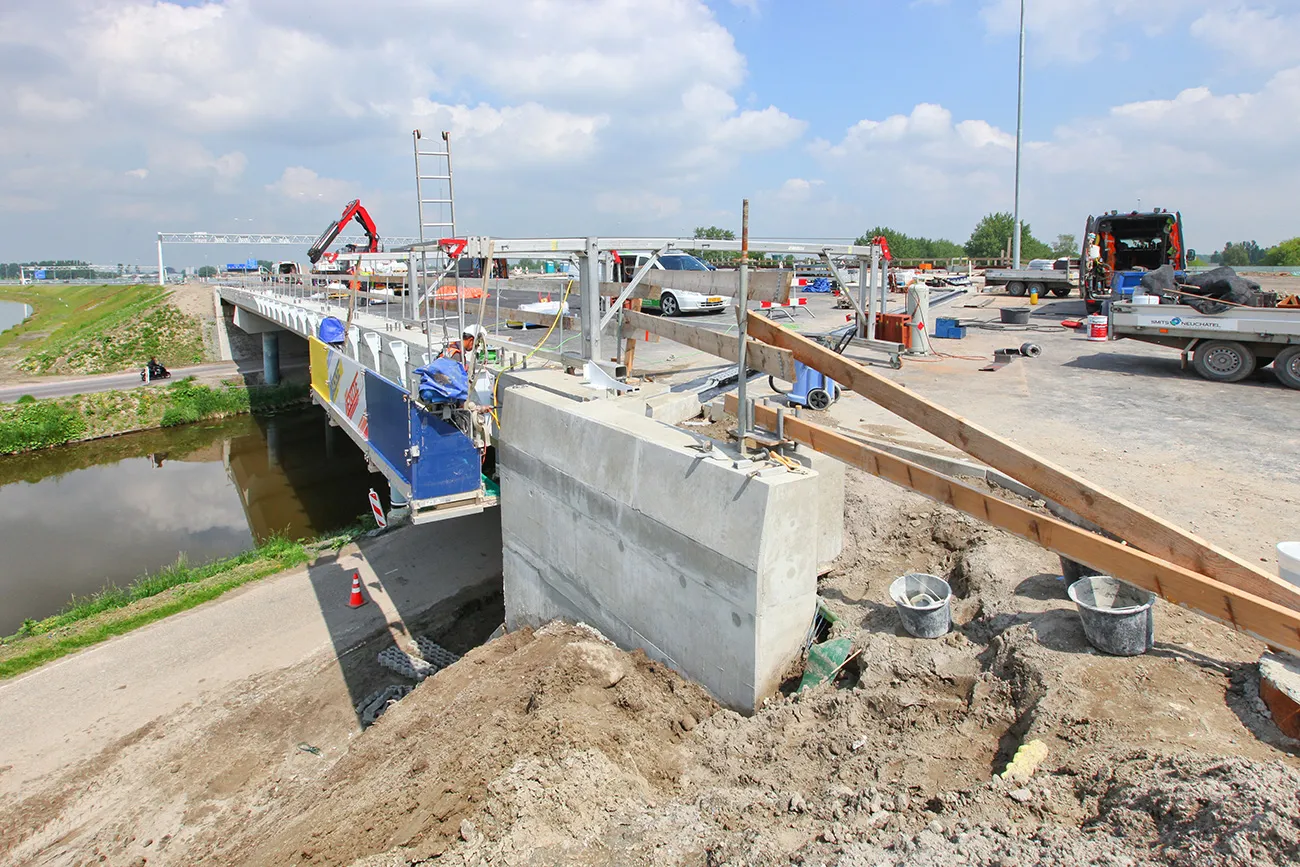
“For example, the introduction of the truck toll in 2026. This is a plan we developed together with the sector. The idea is that Dutch and foreign trucks will pay for using Dutch motorways for every kilometre driven. The toll will also apply to a number of N-roads and some municipal roads. This is to prevent freight traffic from diverting onto these roads. The rate will be determined by the truck’s environmental characteristics and weight class. The lighter and cleaner the vehicle, the lower the rate. The proceeds from the toll will be reinvested in consultation with the transport sector, with the money being used for innovation and sustainability. For example, by providing financial support to businesses purchasing electric and hydrogen trucks, and charging infrastructure.
“We have also agreed with the 30 largest cities that they will introduce zero-emission zones for trucks and vans from 2025. There will be a transitional period, during which cities will initially ban the most polluting vehicles. Together with other authorities, we are now working to expand suitable charging infrastructure so that these measures are also feasible.”
How can you ensure there is suitable charging infrastructure, given that our electricity grid is already reaching its limits?
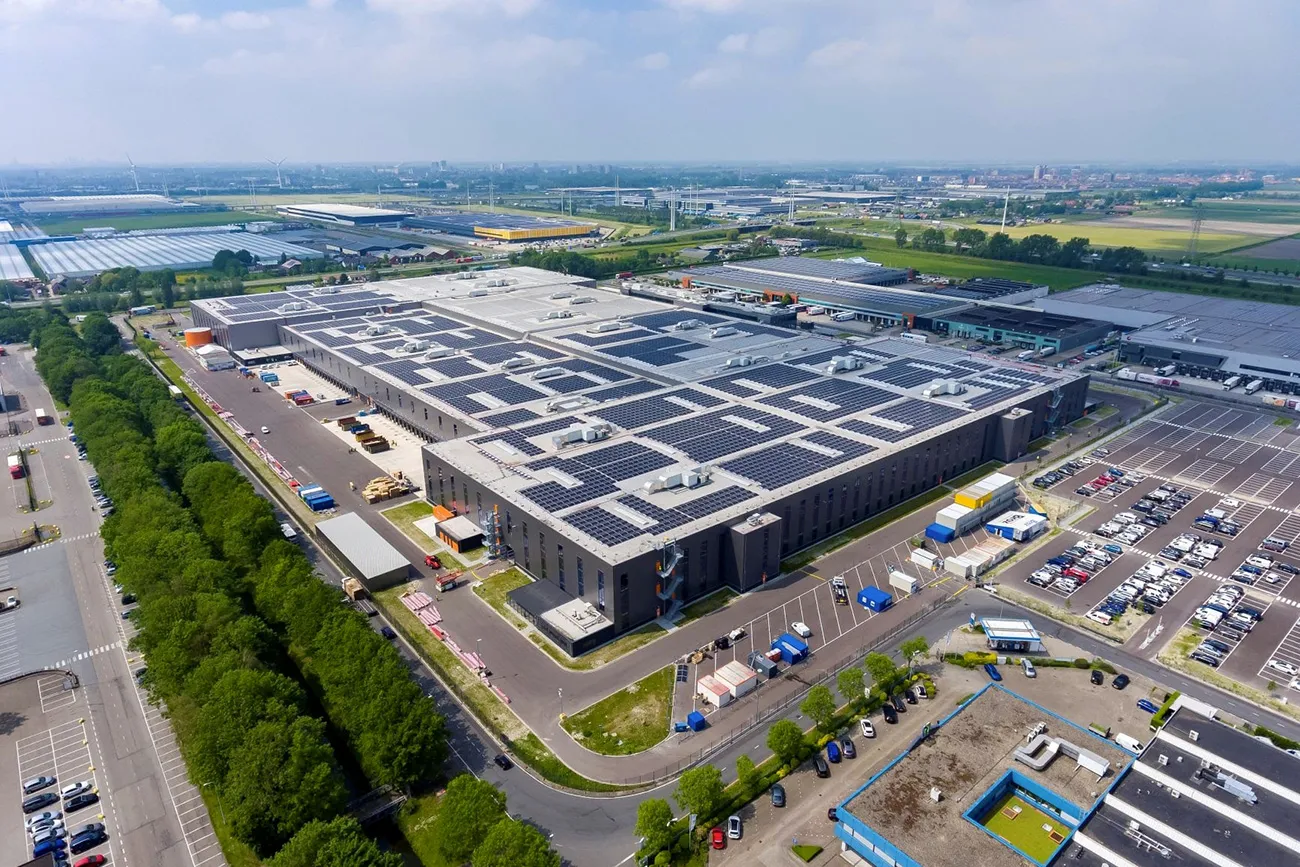
“First, we are addressing businesses’ legitimate concerns through the transitional periods mentioned earlier, as well as exemptions and dispensations. We are also encouraging grid operators to strengthen the electricity grid. But, indeed, it is hard work. We also know by now that more is needed than simply a stronger electricity grid. We will also need to improve electricity storage. That is why I am so pleased that we are working so well with the industry and that transport and logistics companies are thinking things through with us. I strongly believe in cooperation on, for example, business parks. A company that uses electricity during the day could, for instance, use its connection at night to charge the trucks of a neighbouring transport company. That way, they can balance each other’s peaks. We also need to think more carefully about using solar panels on all those flat roofs on and around business parks, and making much more local use of the electricity generated.”
For heavy goods transport over longer distances, electric vehicles are probably not the best option. How can these companies still become more sustainable?
“Hydrogen is probably the most realistic solution in the future. A special subsidy for this will become available later this year. After all, buying a hydrogen truck is much more expensive than buying an electric truck. We are already looking at how to set up the infrastructure for refuelling with hydrogen, together with our logistics partners.
We are also involving related sectors such as inland shipping. You could imagine that a container terminal, already used by trucks and inland vessels, would be a good place to refuel with hydrogen.
“We are also working very closely with the sector to look at how we can reduce the number of transport movements. For example, by combining loads more efficiently. A company such as Coolblue, for instance, has deliberately located its branches in city centres so that it can easily deliver orders by electric cargo bike. But you could also consider cooperation between companies, allowing them to make use of each other’s empty runs.”
There has been a lot of criticism from the market of the requirement for drivers of (heavier) electric vans to obtain a truck driving licence. Why did you withdraw the exemption, and aren’t you worried that this will slow down the transition to more sustainable transport?
“I’m the first to admit that I’m hugely frustrated by this myself. However, European regulations leave me no room to extend the exemption at this point. I have, however, put a whole series of questions to the European Commission about it, because the current rules contain a number of contradictions. For example, a truck driving licence would only be required for the extra weight of an electric van. But if there is no fossil-fuelled version, what is that extra weight? Moreover, only when you take the category C driving test do you learn how the mass of your vehicle affects its stopping distance and other road users. For the RDW and the labour inspectorate, enforcing all this is impossible. That is why I had no choice. But I still hope Europe will provide more clarity so that we can amend this rule. These kinds of obstacles are also part and parcel of a transition such as the one we are going through now. I wouldn’t rule out encountering them more often in the future.”
Another obstacle is the extensive maintenance required on Dutch infrastructure. This is causing major delays and a huge cost burden for the sector.
“There is indeed a lot to be done. We are making the best of a difficult situation. Because of nitrogen-related issues, inflation and labour shortages, we can barely use our budgets for building new infrastructure. We will therefore use that construction funding for major maintenance of our infrastructure. Rijkswaterstaat is planning this now, and hopefully it will lead to efficiency gains. But, indeed, it will cause disruption over the next 25 years. There is little we can do about that. Of course, we will try to minimise disruption as much as possible by not working on several bridges or viaducts in the same region at the same time, and by ensuring there are enough diversion routes.”
You have been caretaker minister for a few months now. Your successor may be less committed to sustainable transport. Aren’t you worried that a new Minister of Infrastructure will reverse many of the measures?
“Of course, I can’t predict the future, but much of the legislation in this area has already been passed by both the House of Representatives and the Senate. We are well under way with its implementation, and at the sector’s request we have even brought forward some of the proceeds from measures such as the truck toll. A future cabinet cannot simply reverse that. We are not an island, either, and agreements on making this sector more sustainable have also been reached in Europe. Since this sector operates internationally more than almost any other, it is difficult to opt out of international agreements. Investing in good time is therefore in the sector’s own interests, too. What’s more, the development of zero-emission trucks can no longer be stopped.”
There has been a great deal of criticism, including from politicians, of the so-called ‘boxification’ of the Netherlands caused by ever-growing distribution centres. Do you think central government should take a more directive role than it has in recent years?
Or should this remain the responsibility of provinces and municipalities?
“I certainly don’t turn a blind eye to this debate. On the other hand, distribution centres are essential, because our groceries and online orders don’t just appear out of thin air. That convenience depends on these ‘boxes’. That does not change the fact that we are making do with scarce space in the Netherlands. Water is part of my portfolio, and the past few months have shown that we need to reserve much more space for it, too. So, in the best Dutch tradition, we will need to agree with everyone involved, central government, provinces, municipalities, water authorities and the various sectors, on how to organise our country as intelligently as possible.”
Question about this story? Ask your question
Keep following this
Get an email when a new story is published. No account needed.
- ThemeLower-emission transport
- SubjectGeneral







