Webinar report: ‘Automating warehouse operations: the road to maximum efficiency’ (LogiVille / POM West Flanders)
On 21 March 2025, LogiVille and POM West Flanders hosted a webinar on automating warehouse operations and the road to maximum efficiency. Industry experts shared insights and practical examples of how companies can optimise their intralogistics through innovative technologies and strategic decisions.
The evolution towards Intralogistics Automation 4.0
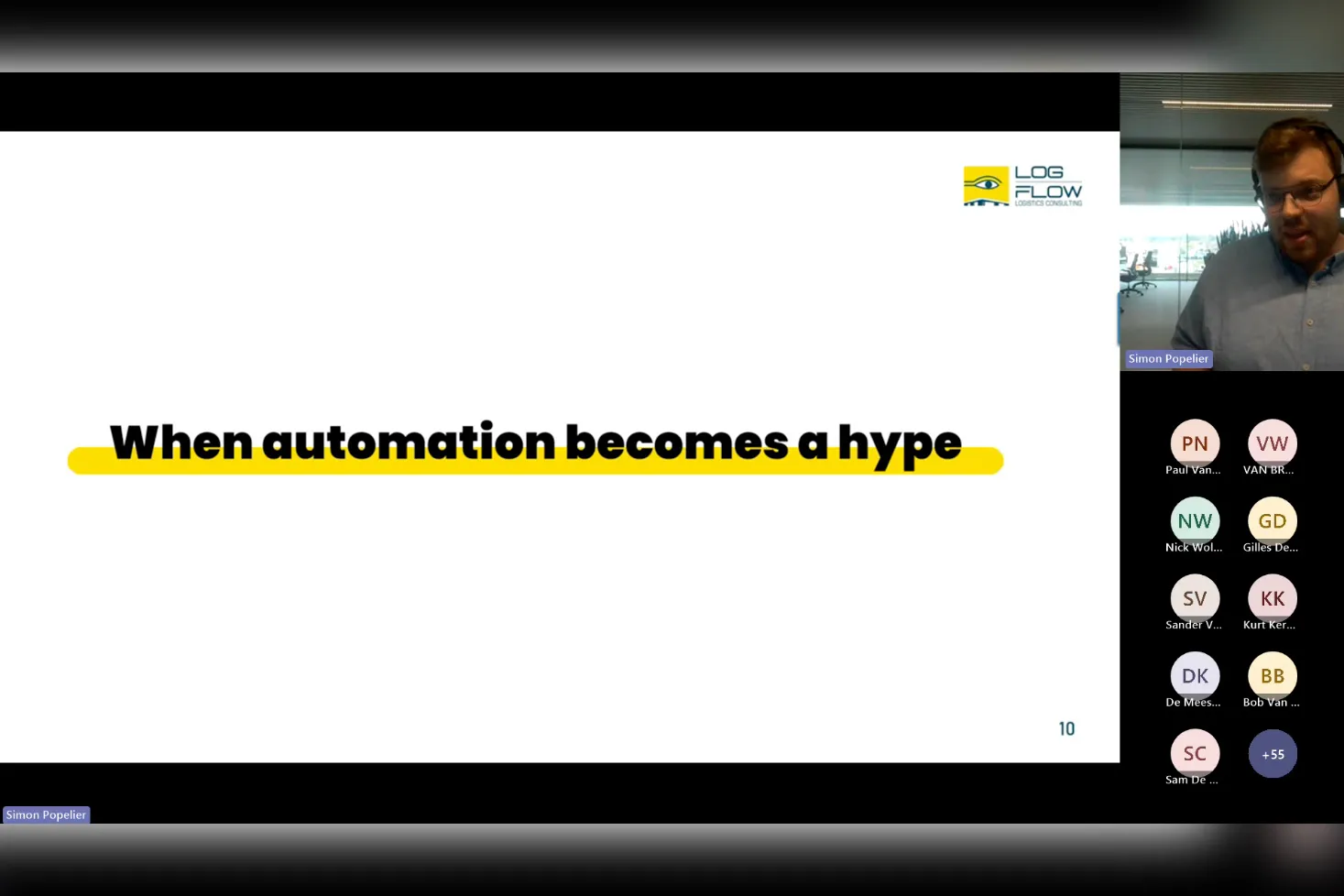
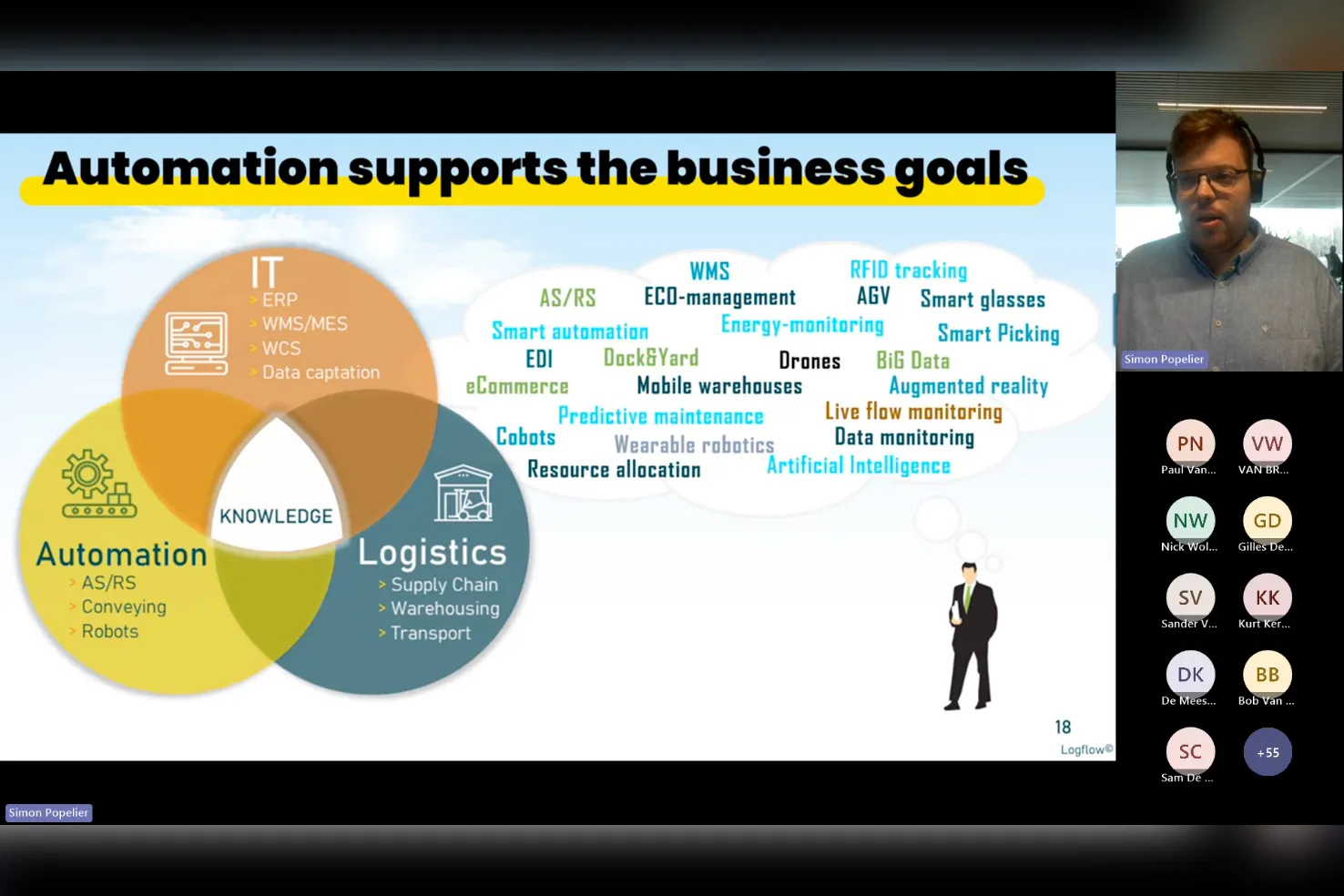
Simon Popelier, innovation manager at Logflow, opened the webinar with a presentation on the pitfalls and opportunities of logistics automation. He warned against the pitfall of the Kaizen method, in which companies limit themselves to small improvements. Instead, he advocated a Kakushin approach: fundamentally restructuring processes to achieve genuine efficiency gains.
Another common mistake is choosing new technologies at random, without an overarching plan. Automation should be a means of achieving business objectives, not an end in itself. Companies must ensure flexibility and scalability in their warehouses and adopt Total Logistics Maintenance. The role of warehouse staff is changing dramatically, with the ‘co-warehouse supervisor’ taking centre stage: a role that combines collaboration and digital skills.
Simon Popelier also emphasised the importance of integration and collaboration across the organisation. Logistics automation affects several departments and must be aligned with IT, HR and operational teams. Successful implementation requires a clear vision and long-term planning, with companies also needing to take account of changing legislation on automation and digital security.
Automation in the Benelux: innovation versus reality
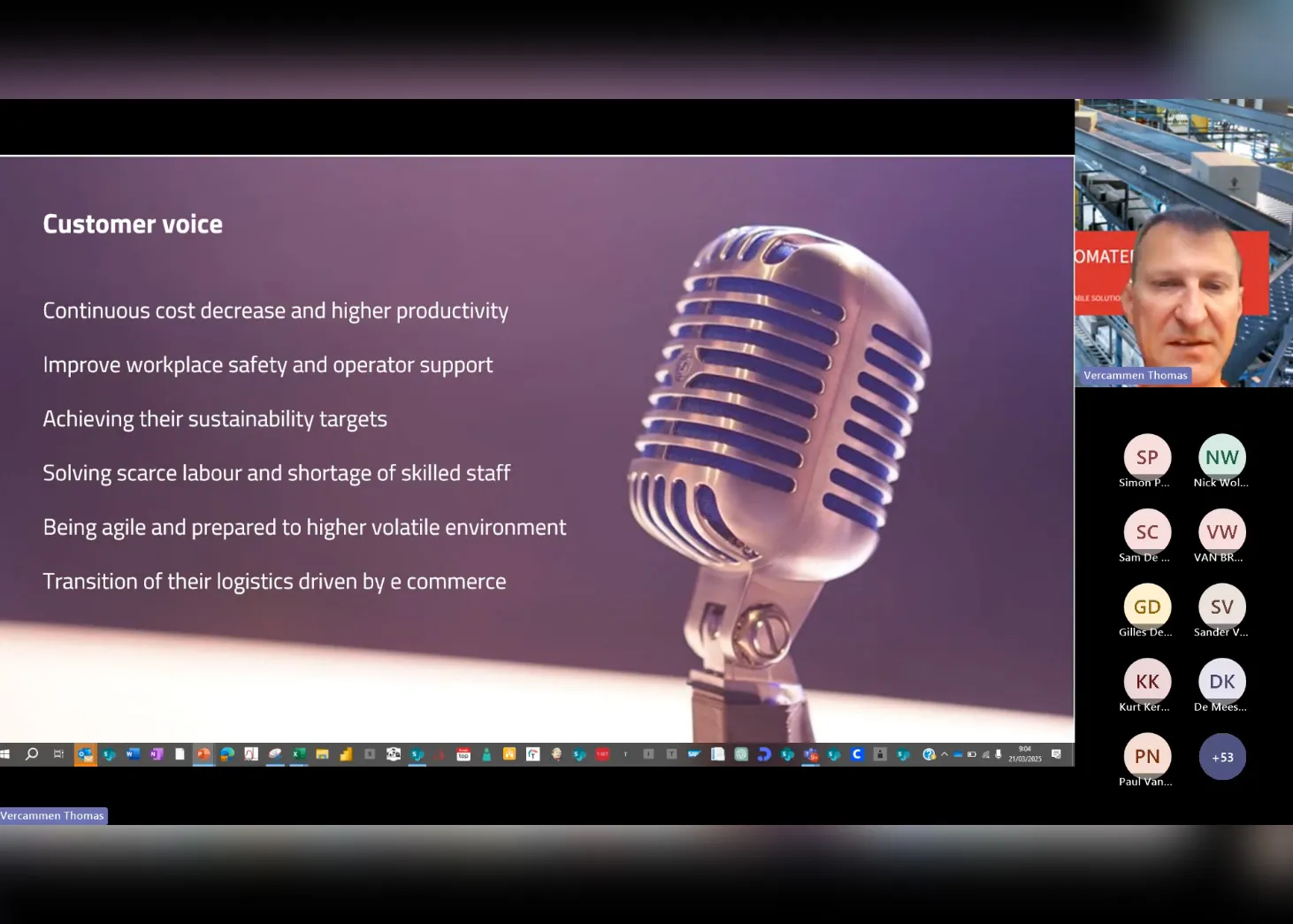
Thomas Vercammen, logistics automation and innovation manager at Toyota Material Handling, stressed the need for a structured approach to automation. His presentation focused on cost savings, safety, sustainability and the need to address labour shortages. Demographic changes are making it harder to attract suitable staff, which means automation will play a crucial role in the sector’s future.
Toyota Material Handling sees a hybrid future in which manual, semi-automated and fully automated processes coexist. Sales of Automated Mobile Robots (AMRs) and Automated Guided Vehicles (AGVs) are growing, as is the use of smart trucks that boost efficiency through intelligent technologies.
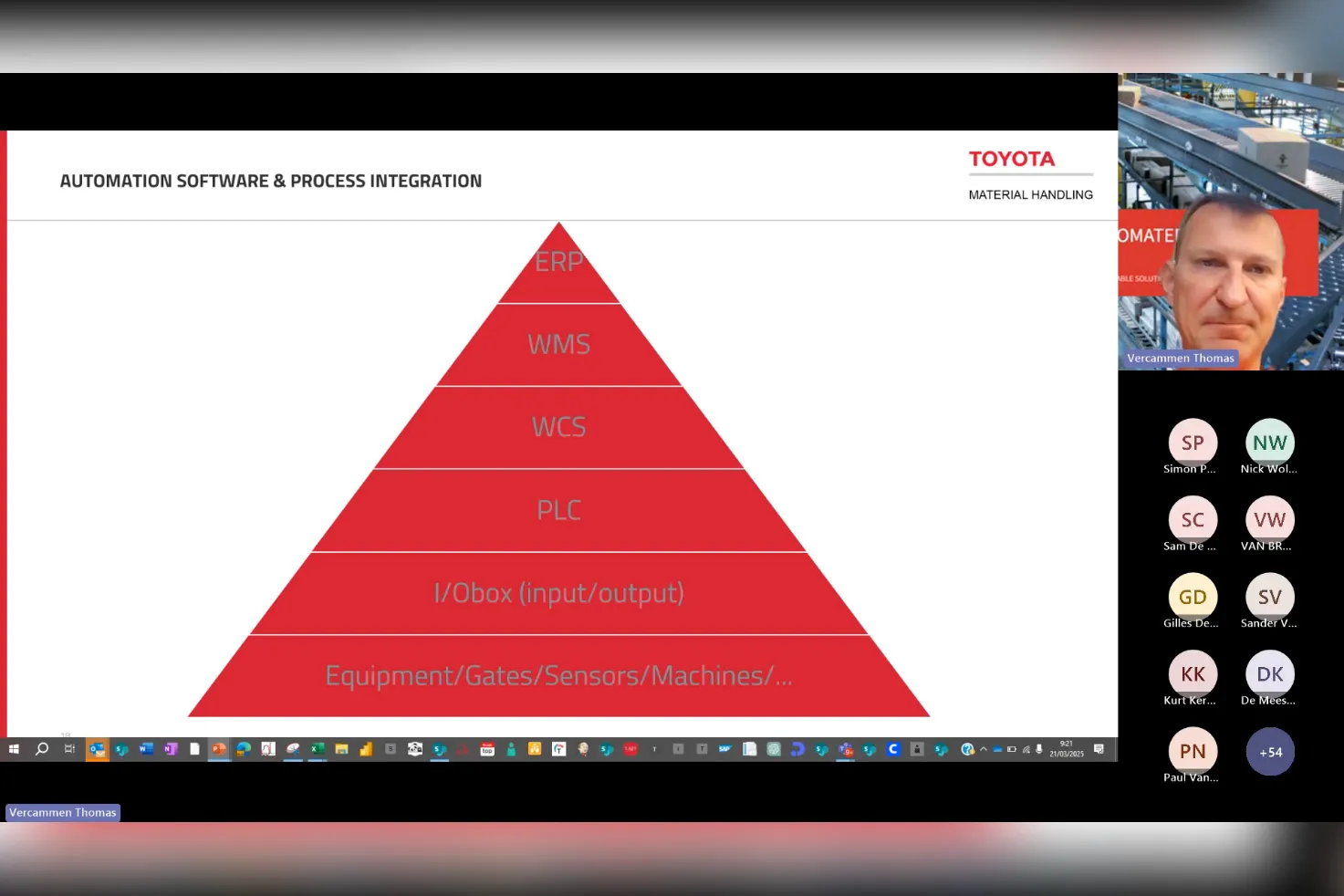
Three components play a key role in intralogistics automation: design, software and hardware. Warehouse design must be flexible and future-proof, taking legal responsibilities and safety requirements into account. Strong software integration is essential for efficiently controlling logistics vehicles and optimising warehouse management. Finally, companies must carefully consider which hardware to use and how to integrate it with existing processes.
A key consideration in automation is collaboration between people and machines. Thomas Vercammen stressed that automation is not just about replacing workers with robots, but also about creating a more efficient workflow in which people can focus on value-added tasks. Companies that take a smart approach to this can strengthen their competitive position and offer employees a safer and more pleasant working environment.
Sustainability is another driving force in the logistics sector. Automation can help reduce energy consumption and waste streams. Examples include smart route optimisation for vehicles and energy-efficient warehouse lighting. Companies should also consider circular solutions and the reuse of materials within their supply chains.
Case study: Cebeo’s new distribution centre
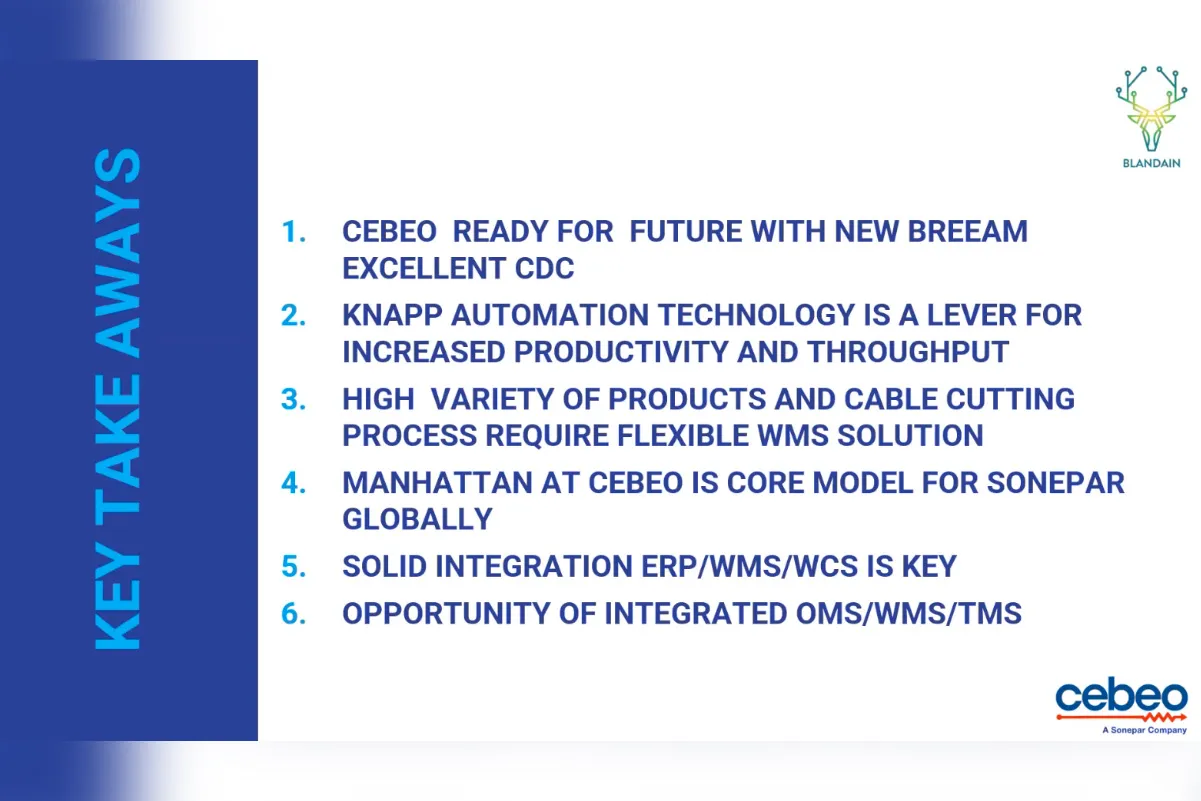
Wim Van Brabant, warehouse manager at Cebeo, presented a practical case study. Cebeo, part of Sonepar, is Belgium’s market leader in electrical materials and decided to build a new central distribution centre (CDC) in Blandain, Wallonia (near Tournai).
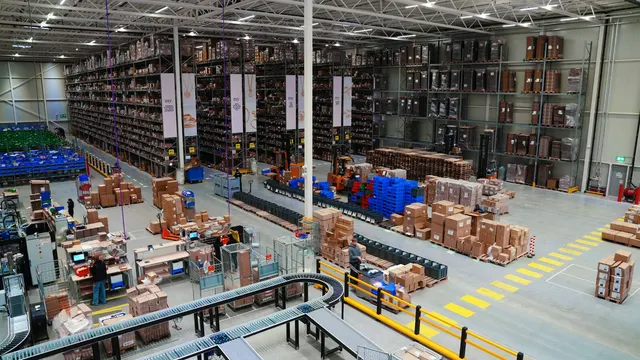
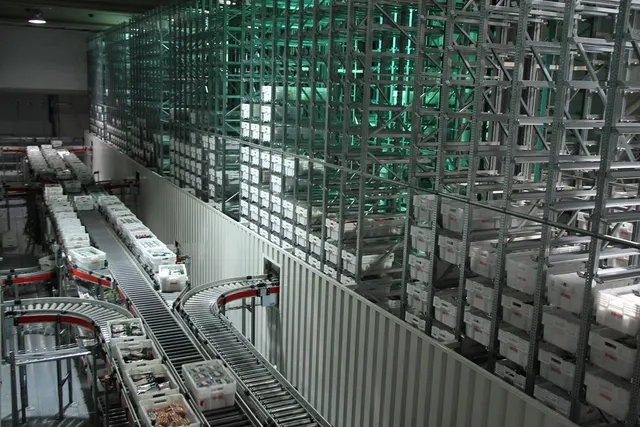
The new CDC covers 42,000 m² and is 18 metres high. It is a semi-automated warehouse with four storage zones: Long & Bulky, Cable, Smallgoods and Pallet Area. There is also a consolidation zone for processing orders efficiently and dispatching them to 53 branches. Sustainability played a major role in the design: the building is BREEAM-certified, requires no fossil fuels and is equipped with 7,000 solar panels and an advanced water reuse system.
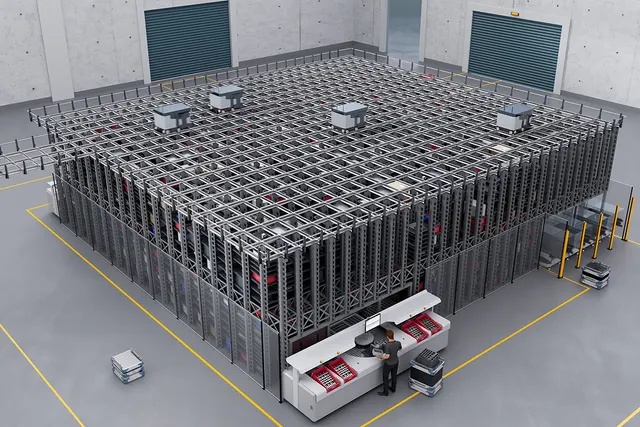
Automation at Cebeo is supported by technology from KNAPP and an integrated ERP/WMS/WCS system. The case study illustrates how smart automation can boost productivity, create a flexible logistics structure and support more sustainable operations.
Alongside efficiency and sustainability, Wim Van Brabant highlighted the importance of scalability. The new distribution centre was designed with future growth in mind, so that the warehouse can be further automated over time without major structural changes. This is a crucial lesson for other companies considering automation: invest in a system that can grow with your business.
The role of employees at Cebeo has also evolved alongside automation. The company invested in education and training to ensure employees can make the most of new technologies. Collaboration between people and machines resulted in smoother operations and improved customer satisfaction.
Summary
This webinar hosted by LogiVille and POM West Flanders gave participants valuable insights into how automation can transform warehouse operations. The key to success lies in a well-considered strategy in which technology is not implemented as an end in itself, but as an integral part of a wider business plan. Flexibility, scalability and digital integration are the foundations of a more efficient, future-focused logistics sector.
Automation offers not only economic benefits, but also helps create a safer and more sustainable working environment. By combining smart technologies with a strategic long-term vision, you can better equip your business to meet economic and societal challenges.
Een zakelijke vraag aan Toyota Material Handling Belgium? Get in touch
Companies in this story
Keep following this
Get an email when a new story is published. No account needed.
- SubjectAutomation
- CompanyToyota Material Handling Belgium
- CompanyKNAPP Benelux BV