‘Ultimately, it’s about what we can add’
Text Marion van Sermondt Beeld Stöcklin Logistik AG
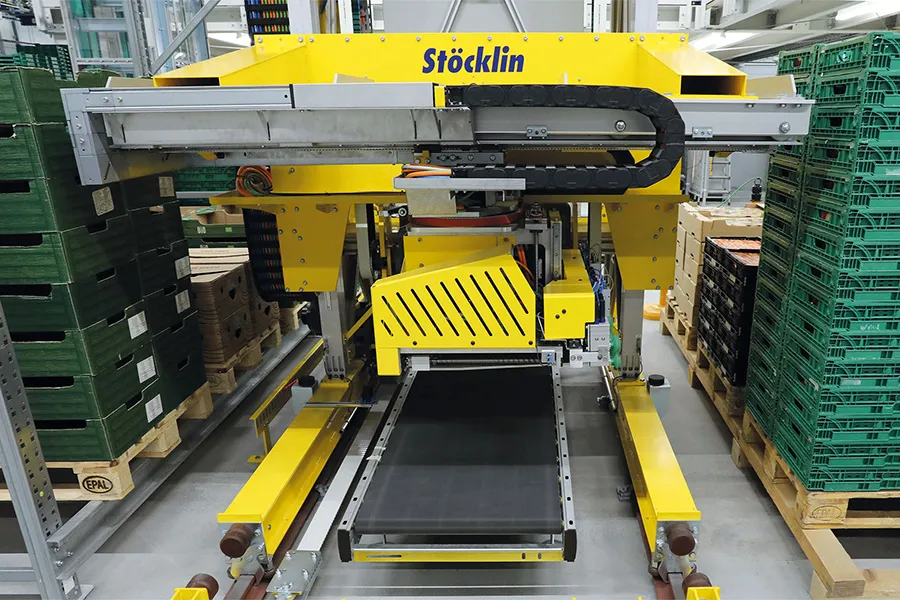
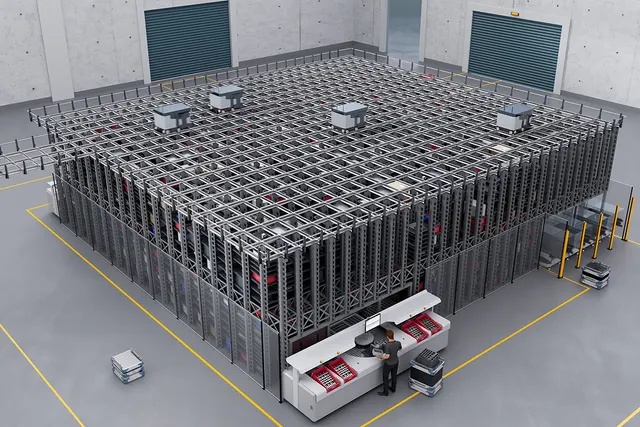
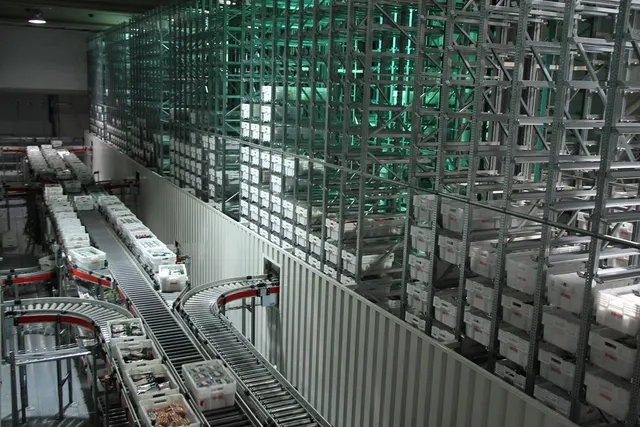
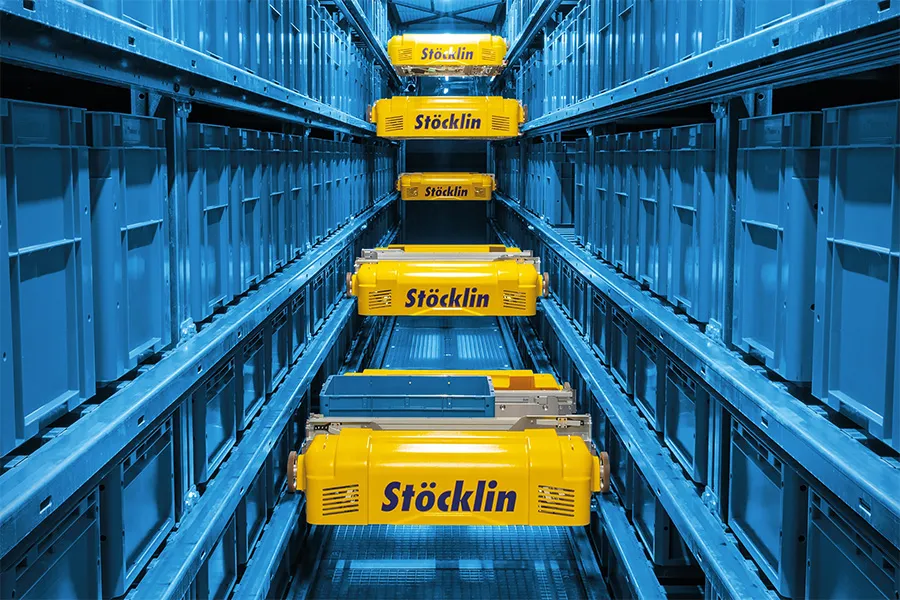
Mechanically picking orders of delicate fruit and vegetables? It can be done. Stöcklin Logistik AG has developed a highly sensitive machine that effortlessly picks and packs even small and particularly delicate orders. Just like manual picking, only faster, more efficient and easier. This unique innovation will be presented at various trade fairs in the coming months, including Fruit-Logistica in Berlin and Logimat in Stuttgart.
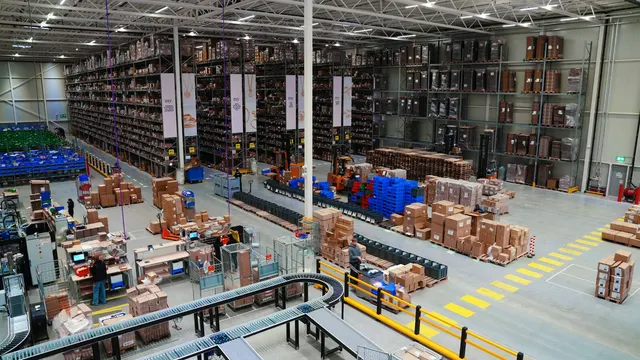
The Swiss Stöcklin Group is an international provider of intralogistics solutions, headquartered in Laufen, Switzerland. It operates worldwide through various local offices, including in the Netherlands. Stöcklin designs, manufactures and delivers turnkey automated solutions to companies across a range of sectors, helping them optimise their internal flow of materials and goods.
Picking fruit and vegetables
Damaris Grütter is chief marketing officer and vice-president of the Stöcklin Group. Asked about the company behind these innovative developments, she launches into an enthusiastic explanation. “We support and guide our customers through the sustainable and digital transformation of their intralogistics. We do this by looking together at their products, markets and target groups, and the opportunities this presents.” She points to the company’s latest design: “Our case picker does something that previously seemed impossible in fruit and vegetable distribution centres. Products can be automatically transferred with great care, without using buffer storage. The products are moved on trolleys from large pallets into packs sized for individual shops. The great thing is that our system packs them in the right order automatically: watermelons at the bottom, for example, then lemons and finally cherries. And it can be integrated into existing buildings and structures. This solution not only makes work faster and more accurate, it also greatly reduces the workload for staff, who have had to pick these types of products manually until now.”
Building relationships
The Stöcklin team will be at various trade fairs over the coming months. Grütter laughs: “The start of the year is always incredibly hectic, but that’s what makes it so much fun. We’ll be at events in Zurich, Poland, Berlin, Paris and even the US.” At Logimat in Stuttgart, they will meet many Dutch and Belgian customers and prospective customers. “We’re really looking forward to it. The BeNeLux is important to us. It’s no coincidence that we’ve had a presence in the Netherlands for more than twenty years. We want to be close to our customers and involved. That’s why we’ll be at Logimat again this year, from 11 to 13 March 2025, together with our Dutch colleagues.”
She continues: “We want to understand what matters. We tailor our products and services in detail to our customers’ wishes and needs. These differ from one sector to another. A trade fair makes it easy to talk to each other face to face. That’s so important. Ultimately, it’s about what we can add, from expanding existing systems to designing a completely new intralogistics solution.”
Staying involved
They also devote considerable attention to service. “Our solutions are future-proof. We think ahead about what is really needed. We remain involved during and after installation, too.” She points to the Dutch market: “There is a great deal of investment in automation and modernisation in the Netherlands. That doesn’t mean we simply replace existing systems without question. We can often extend or improve them. Over the years, we’ve built up expertise in every aspect of intralogistics, from complete new-build projects to making existing systems more sustainable.”
For the Stöcklin Group, sustainability is no empty buzzword. It is reflected in every detail. “We only have a limited time on this planet,” Grütter stresses. “That’s why we believe it’s important to look after our environment. Naturally, that means making our installations and services as energy-efficient as possible. We’re keen to work with our customers on this. But we go a step further and want to invest in our future together.”
Investing in the future
The head office moved to Laufen five years ago. “Our company had been at the same site since 1934, expanding there over the years. We had to choose between renovation and a new-build, and opted for the latter. The old building was in the middle of a residential area, so the site could be used for more housing. We moved to an industrial estate, where we had room to invest in a sustainable office on all sides. That means solar panels, batteries to use energy at the right time, and heating and cooling with a ground-source heat pump. The result is a 60% reduction in our energy consumption. We’re also happy to share this knowledge and experience with our customers.” It’s in the company’s DNA, Grütter says. “For example, we’ve been reusing the energy generated during braking for more than twenty years.”
Using green steel
Stöcklin also invests in sustainable relationships. The company values long-term, close partnerships in which it works with customers to invest in the future. “Intralogistics requires a lot of energy. Together, we look at where we can save energy and how activities can be made more efficient. We also use sustainable materials wherever possible. Our industry uses a lot of steel, a highly polluting material that has been indispensable until now. That’s why we use as much green steel as possible. It is largely recycled and processed using new energy sources.” She recognises that this involves a greater investment for companies. “But it pays off in the long run. And it’s an investment in your future. We’re talking about emissions reductions of up to 60 per cent.”
Sustainable construction with timber
Stöcklin is currently exploring the potential of timber construction in intralogistics. “It’s a very interesting development,” says Grütter. The company is working with several leading research institutes on this. “We’re investigating the possibilities and benefits. Overall, timber results in much lower emissions, because it also absorbs CO2. It may seem more flammable, but in a fire it is only affected locally. Steel, too, will collapse outside the fire zone when exposed to extreme heat. These are all aspects we take into account in our developments.”
Innovating together
Grütter concludes: “We work with our customers in all kinds of ways. We see ourselves as a partner, not just a supplier, of innovative, tailor-made intralogistics solutions. In this way, we help preserve and strengthen our customers’ competitiveness and long-term viability, while paving the way for sustainable and responsible management of materials and goods.”
Question about this story? Ask your question
Keep following this
Get an email when a new story is published. No account needed.
- SubjectAutomation