Smart shuttles in the deep freeze
Text Armand Landman Image Inther Group
At 21 degrees below zero, there is no room for breakdowns. Yet Inther Group manages to run fully automated logistics processes under these extreme conditions. CEO Martijn Herder explains how the company’s frozen-storage solutions, such as its shuttle concept, help meat processor Westfort work faster, use less energy and achieve higher product quality.
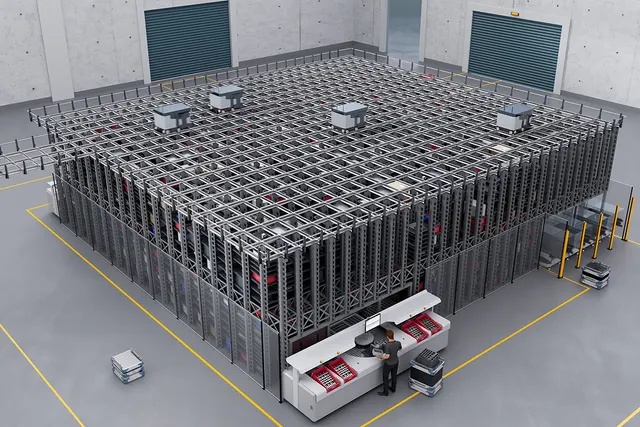
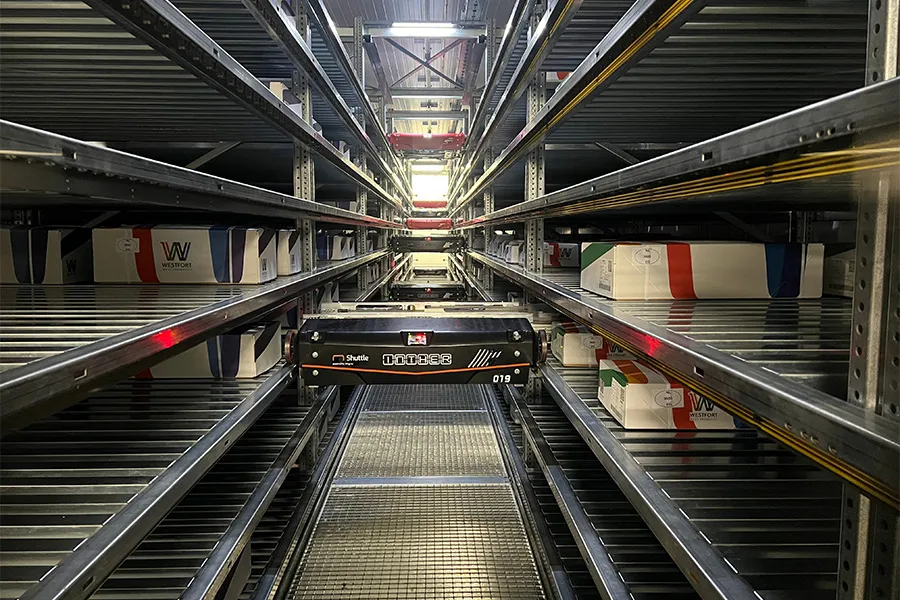
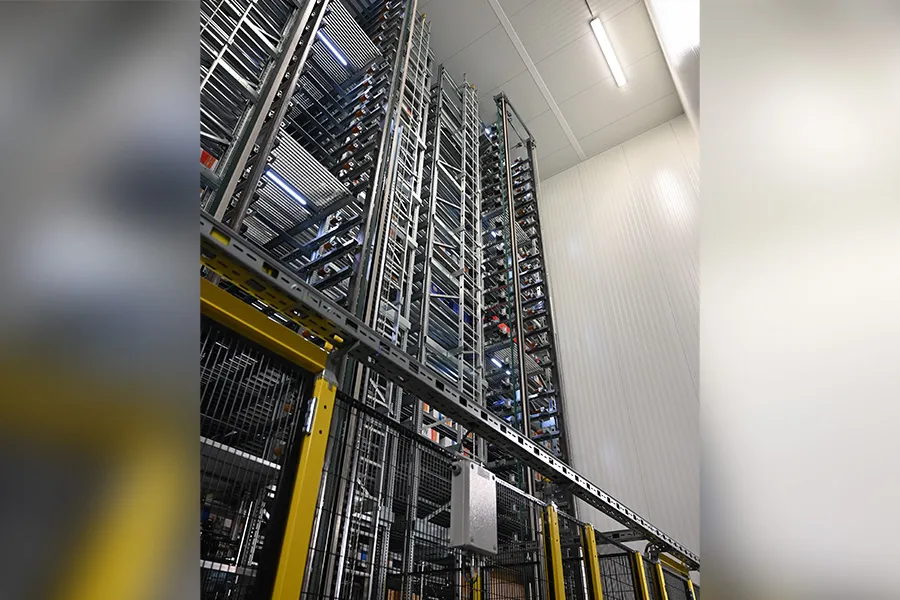
“Frozen storage space is costly, so the more compactly you can store goods, the better,” says Herder. Whereas traditional cold stores hold pallets, Inther uses shuttles: small vehicles that store individual boxes at great heights, up to 20 metres high and three deep. This makes storage at box level possible, which is particularly complex from a technical perspective in a frozen environment. The benefits? Less wasted space, greater flexibility and no manual handling in the cold. “People don’t like working at minus 21 °C,” Herder says with a smile. “Our systems minimise the need for people to be in the freezer, and automation reduces staffing requirements overall, which is no small consideration at a time of labour shortages.”
Westfort as a case study
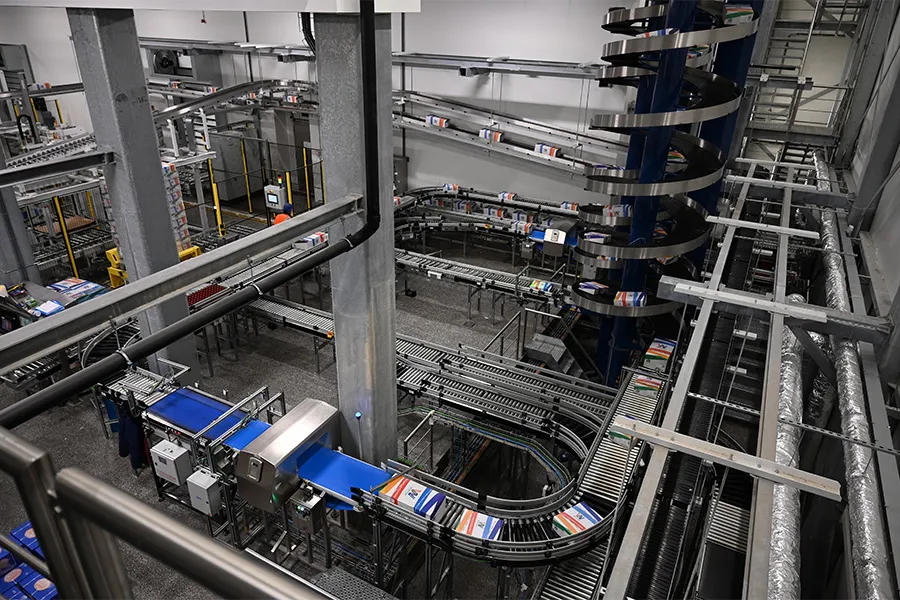
At Westfort Vleesproducten in IJsselstein, Inther’s frozen-storage solution is being put into practice. The traditional freezing process, collecting products in production first, waiting until a full pallet was ready, transporting it and only then freezing it, has been replaced by a fully automated line.
As soon as a box of meat comes off the packaging line, it goes straight into a blast freezer. The product is frozen at high speed, after which the shuttle system stores the boxes, sorts them automatically and builds them into complete pallets.
“You no longer freeze pallets, but individual boxes,” Herder explains. “That saves up to 22% in energy, prevents packaging from becoming misshapen and preserves meat quality. The moisture is retained, so the weight is too, and that is literally worth money.”
Transport also benefits: neatly shaped boxes that have not collapsed make more efficient use of export containers. “At Westfort, that provides an additional 8% of loading space, especially for shipments to Asia,” says Herder.
Reliability below zero
Reliability is crucial in a frozen environment. “Moisture is the biggest enemy,” says Herder. “Our air is genuinely dry. Ice build-up can make rails slippery or block components. That is why every component is specially engineered for these conditions.”
To prevent breakdowns, Inther combines its maintenance experience with data analysis. Sensors monitor power consumption and even the sound of motors. “That lets us spot irregularities early,” Herder explains. “If a bearing starts making a different noise, we can predict when it needs replacing. That’s predictive maintenance in practice.”
Modular and scalable
The system can be installed in existing frozen-storage warehouses, provided the necessary building infrastructure is in place. Herder says: “Many customers start small and expand later. The concept is modular.”
Inther also advises customers on box sizes and material quality to ensure trouble-free operation. “A good box prevents operational problems,” says Herder.
From meat to pharmaceuticals
Although frozen logistics may seem like a niche, demand is growing worldwide. “We’re seeing enquiries from England, Germany and Australia,” says Herder. “And the concept also works beyond the meat industry. We use the same shuttle and vision technology for pharmaceutical customers, in Hema distribution centres and even at BMW.” Knowledge-sharing between sectors accelerates innovation. “We learned a lot from traceability in pharma that we could apply to food. And we’re now using our experience with cold-storage drives in chilled environments.”
Service and peace of mind
Because maintenance in frozen environments requires specialist expertise, Inther often provides resident engineers: its own employees who work full-time at the customer’s site. “They know the system inside out,” says Herder. “That enables us to guarantee uptime of up to 99.99%.” Despite the pressure on the Dutch meat sector, Herder expects the technology to become widely adopted. “Whether it’s meat, chicken or fish, demand for efficient, reliable frozen logistics will continue to grow worldwide.”
A business enquiry for Inther Group B.V.? Get in touch
Companies in this story
Keep following this
Get an email when a new story is published. No account needed.
- SubjectAutomation
- CompanyInther Group B.V.