How EuroSort is responding to e-commerce growth and higher volumes
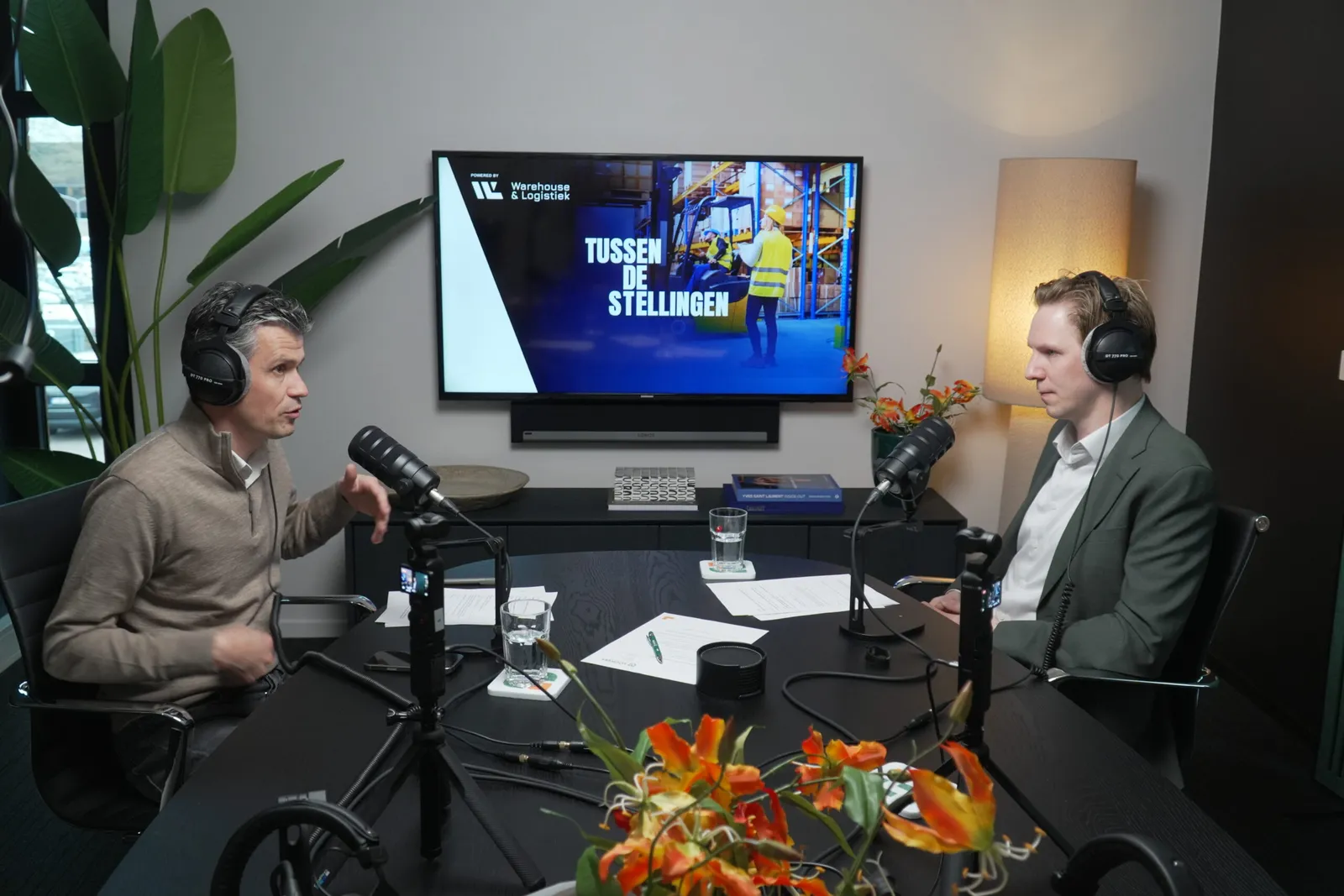
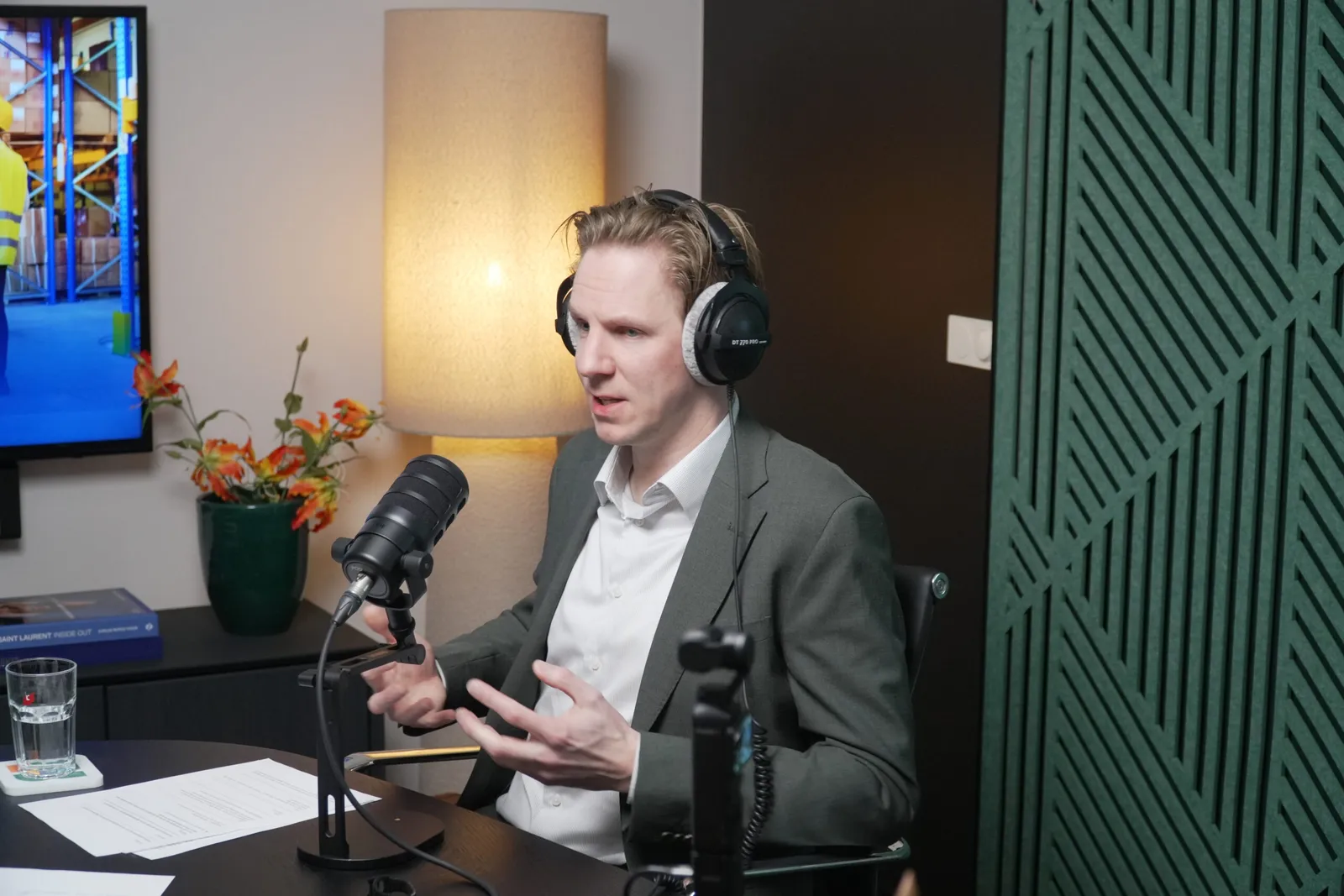
In this episode of Warehouse & Logistics (EU), host Roel van Gils talks to Rens Gehling, commercial director at EuroSort, about the crucial role of sorting solutions in modern logistics. From the impact of e-commerce and changing order patterns to smart automation and scalable systems, find out when automation really becomes essential and how companies can work more efficiently with fewer errors and lower costs. An in-depth discussion about innovation, market trends and the future of logistics processes.
Conversation with Rens Gehling (EuroSort)
Host: Roel van Gils
A business enquiry for EuroSort Systems? Get in touch
Full transcript
Alle hoofdstukken (19)
- Introducing the topic of sorting
- When automation becomes essential
- The trend towards more orders with fewer items
- What EuroSort does
- At what volume does sorting become worthwhile?
- Where sorting is used in the warehouse
- What the sales and design process looks like
- Why automation pays off
- Adapting to customer needs and market trends
- The launch of e-sort
- Reactions at LogiMAT
- Market trends and the role of robots
- Working with other suppliers
- Why simplicity is central
- Dutch technology and competition from China
- 25 years of EuroSort and looking ahead
- Fully automated sorting solution in Poland
- The role of AI at EuroSort
- A final tip for listeners
Introducing the topic of sorting
Roel van Gils Welcome to a new episode between the warehouse racks of Warehouse & Logistics (EU). Today, we’re taking a closer look at the world of logistics and automation. And believe me, it’s a lot more interesting than it might sound, because behind almost every parcel you receive is a smart sorting system. Joining me today is Rens from EuroSort. Rens, perhaps you could introduce yourself.
Rens Gehling: Yes, I’m Rens Gehling. I’m commercial director at EuroSort.
Roel van Gils There you go. Welcome once again.
Rens Gehling: Thank you.
Roel van Gils We’ll kick off with three statements, as we do on our podcast. You can answer yes or no, and then we’ll explore the subject in more depth. First statement: without automation, logistics companies simply won’t be able to survive much longer.
Rens Gehling: It’s really a “yes, but”. Yes, but.
Roel van Gils Yes, but. Yes or no?
Rens Gehling: For all medium-sized and large companies, it’s definitely a yes.
Roel van Gils Well, we’ll come back to that in a moment. Statement 2: many companies don’t always see the different automation options available to them. Definitely yes or no?
Rens Gehling: Yes.
Roel van Gils Yes. And statement 3: it’s a clear trend that logistics systems need to be able to handle higher volumes and fewer items per order.
Rens Gehling: Agreed.
Roel van Gils Agreed. There you go. Would you like to respond to those statements now, or shall we say…
Rens Gehling: Anything goes.
Roel van Gils: Anything goes. Well, let’s do that straight away. Statement 1: so you can’t manage without automation. I think you were pretty clear about that.
Read the full transcriptCollapse transcript18 more chapters
When automation becomes essential
Rens Gehling: Yes. Well, the way I see it, if you’re a small business owner, and of course many start out in logistics too, it’s not necessarily essential to invest heavily in automation straight away. First, you want to get your business up and running and build your revenue. But once you have a certain volume and a customer base that comes back every day, you’ll soon be looking at some level of automation. That could start with a very simple conveyor belt. But as you grow, you’ll need to invest in automation. Otherwise, you simply won’t be able to meet the expectations of the market, your business or your customers.
Roel van Gils The second statement was that many companies don’t always see the different automation options available to them.
Rens Gehling: Yes, I think so too. I think many of the companies I speak to, the customers I speak to, know their own processes inside out. They’re the experts, of course, and have all the knowledge, but they don’t always know what else is happening in the market or what’s possible. In general, any form of automation often requires changes to your current process. So you have to think differently from the way you work now. And the logistics market is vast, with a huge range of options and a lot of diversity, so not every company can see the wood for the trees.
Roel van Gils What advice would you give?
Rens Gehling: My main advice is to go in with an open mind. Go and have a look, talk to companies. Don’t go in saying: this is what I need. I see that a lot. Just have an open conversation. And try not to, at least when we as a company approach a customer, we take an enquiry-led approach and do a lot of consultative selling. What do you need? Really try to understand the customer’s challenge and what they need. Not every company does that. Some simply say: we have this product, and then try to push it. That’s not how we work.
The trend towards more orders with fewer items
Roel van Gils And finally, let’s come back to that third statement before we get into the subject in more depth. Logistics systems need to be able to handle higher volumes and fewer items per order.
Rens Gehling: Yes, one hundred per cent. Traditionally, and I’ll say pre-COVID, a lot of goods were delivered to shops and businesses, B2B. COVID brought a major shift towards online, with a lot of goods going directly to the end customer, B2C. That means a shop received a lot of items per order. These days, customers order just a few items. You and I order online at our computers, but only one, two or three items at most, and click buy. That creates a completely different dynamic in your logistics process. You have to adapt to it. And that ties in exactly with your statement.
Roel van Gils Yes, thanks, Rens. Let’s go back to the beginning. You say: we know all about sorting, from left to right, from large to small. What exactly do you do?
What EuroSort does
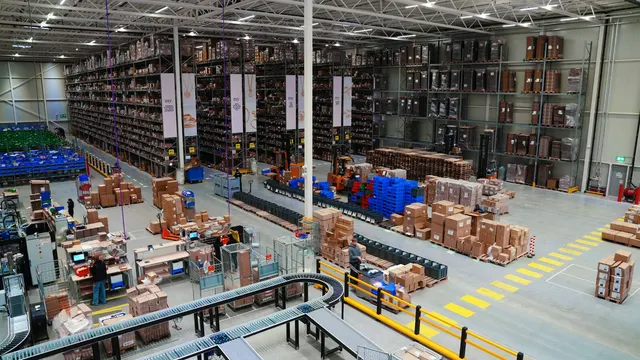
Rens Gehling: Well, EuroSort is a company specialising in sorting solutions, in the broadest sense of the word. We look at any process we can improve and try to tackle it. That even starts with order picking. It’s something you can improve right from the start of the fulfilment process by using sorting.
Roel van Gils Could you give an example of how that works with order picking?
Rens Gehling: Yes. Say you have a small warehouse. You walk in, pick a number of items and then walk back to fulfil an order. As the number of orders increases, you end up spending a lot of time walking around and picking items from your warehouse. The logical next step is to say: you know what, I’ll pick a batch of the same SKU, the same item, take it over to a sorting solution and sort it by customer or company. That means I can create much more throughput and capacity to serve my customers, with far less movement around my warehouse. You do that through automation, through a sorting solution.
Roel van Gils And you mentioned sorting from large to small. What sort of products are we talking about? Clothes, for example, in terms of size. Can you tell us a bit more?
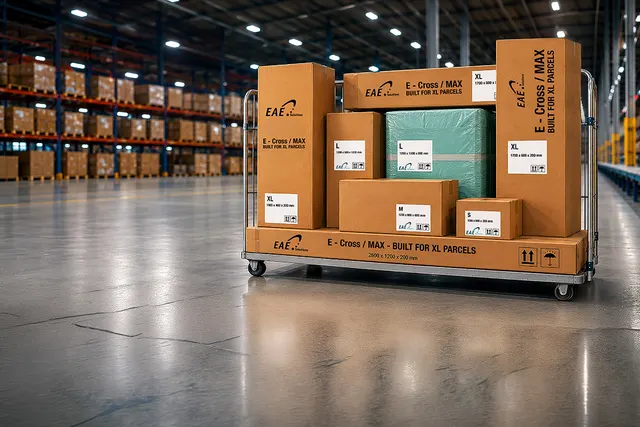
Rens Gehling: Certainly. We work across a wide range of markets. These include fashion, with clothing being one of our focus markets. Consumer products, whether electronics, books or anything else you might buy in a shop, as well as toys, can all be good markets for us. Post and parcels are another familiar example. So the markets are broad, and the products are too. We’re known for handling pretty much everything, including what we call non-conveyable items. In other words, products that are difficult to transport can all be handled by our solutions.
Roel van Gils But white goods too? Surely not?
Rens Gehling: Yes, those too. Well, sorry, not white goods: no large washing machines or fridges. That’s not our focus. We do have an upper limit. With white goods, you’re quickly looking at pallets and handling, which calls for a different type of automation.
Roel van Gils So mainly smaller items, up to a certain size?
Rens Gehling: Yes. Perhaps the key thing EuroSort is known for is high capacity, particularly for items, in as small a footprint as possible. Floor space is quite expensive, after all.
At what volume does sorting become worthwhile?
Roel van Gils At what point does a company think: we really need to do something about sorting?
Rens Gehling: What you often see is that companies start with some kind of conveyor belt or a basic form of sorting. That’s below the level we operate at. So, just between us, that’s what I’d call the very small business. But once you’re looking to sort three or four thousand items per hour, we soon come into the picture. We also supply very large systems. For example, we have a system in the Netherlands that handles 150,000 items per hour. Those are serious volumes, of course.
Roel van Gils Yes, that’s a pretty large system too. But when it comes to companies, does it usually start with inefficiency?
Rens Gehling: Yes, it often starts… Well, inefficiency depends on the perspective you take, of course. The customer may not see it as inefficient, but they’ll say: I want to take the next step, I want to work more efficiently. I want to handle more volume, or improve my delivery reliability. That’s when you move to an automated sorting solution.
Roel van Gils And then you look at how to do it more intelligently?
Rens Gehling: Exactly. First, you talk to the customer. What’s your challenge? What does your logistics flow look like? How do goods arrive? How do they need to leave? What’s the volume? What type of orders do you handle? What products do you have? Based on that, well, EuroSort has more than five hundred systems in operation, so we have a lot of references and experience to draw on and can guide the customer through the options. These are the possibilities. Then we have a proper conversation about what’s right for you. We create a customer-specific solution using existing, proven technology.
Where sorting is used in the warehouse
Roel van Gils You also see sorting used in different areas, don’t you? When goods arrive, for example, or with returns. It can be used in several places around a warehouse.
Rens Gehling: Definitely. I think sorting is best known in two areas: fulfilment, or order picking, and despatch, when you need to sort goods for a lorry or van. But it has many other applications. It can be used for incoming goods, and we’re also seeing a lot more returns. We all send parcels back. Many customers buy several shirts, for example, but only one fits. Or shoes. The rest go back. It’s a growing market, unfortunately. It’s actually unnecessary, but it happens. That means another round of sorting. So wherever you look and think: more goods are coming in, I need to sort them. Or sort them back down to item level. For example, you might receive hundreds of thousands of goods but want to sort them back to SKU level, Stock Keeping Unit, or product type. Sorting can be used for that too.
Roel van Gils Yes, okay. But no two warehouses are the same. How do you approach that?
Rens Gehling: Yes, that ties in with what we just said. We really look at the customer. What do you need? What does your flow look like? The technology you apply, whether mechanical or software-based, or the control system, is different every time.
Roel van Gils Yes, and I assume the type of product matters too?
Rens Gehling: Yes, definitely.
What the sales and design process looks like
Roel van Gils And what does that process look like?
Rens Gehling: In general, it’s fairly standard. Solution-based selling. The first stage involves a lot of fact-finding. That’s where you spend most of your time. Then we often say: we have a particular concept, with a certain level of performance and a certain price. That’s how you start the conversation with the customer. If it’s not a good fit, we adapt it. There are several iterations of this process, until we eventually arrive at a solution that makes the customer say: this really meets my needs and fits my logistics business. Then you flesh out the details. And, of course, eventually the customer makes a purchase. I think it’s important to emphasise this: when you reach that point, you need to be realistic. You’re effectively entering into a marriage. We’ll be working together for the next ten or twenty years. You won’t be able to get rid of us. That’s a light-hearted way of putting it, but I think it’s important. We really are a partner, not a supplier. So it’s not a case of making a purchase, delivering it and walking away. In logistics, especially with sorting solutions, you’re talking about strategic investments at the heart of an operation. They simply have to keep running. You need to be able to rely on each other. You need to trust in the reliability, quality and service a company provides, because those are essential.
Roel van Gils Are you genuinely distinctive in that respect, or is this characteristic of the sector and the market?
Rens Gehling: I think we are distinctive in this respect, because we really do go the extra mile. I don’t mean that we offer extra services. For us, the relationship and our reputation matter more than always making a profit on a project. We have a saying: every customer is a reference customer. That has to be the case. And I can honestly say that every customer of ours would speak positively about us if you called them. And really, the proof is in the pudding. Existing customers keep coming back and buying more. To me, that proves we deliver a good service. I don’t think that’s true of every company.
Why automation pays off
Roel van Gils When does automation really become worthwhile?
Rens Gehling: The main thing you see is that labour is still a major constraint. It’s the number one driver of automation. You also see peak workloads increasing. That’s ultimately where you make your money. You need to be able to deliver around the holidays and at similar times. That’s not always possible with people, so you automate. Reliability is another factor: do you deliver on time, and do you deliver the right goods? The more you automate, the fewer mistakes people can make in a process, and the more reliable it becomes.
Roel van Gils Yes, that’s something a lot of companies say: they look at the investment, but automation always pays off. Can you explain that further?
Rens Gehling: Yes, I think it does. But automation has been my passion my whole life. I don’t see it as something that incurs costs. I see it as an investment that ultimately delivers greater returns and enables you to grow your business. So if you really believe in your company and can see that it’s successful, I wouldn’t wait to automate. How much should you invest to begin with? That depends very much on your projections. If you have fairly aggressive growth projections, I’d go straight for a decent-sized automation system. We also offer several levels of automation. The core is often the same, but you can automate a lot more around it, even within a sorting solution. We simply give the customer options. We say: okay, this is possible, or this isn’t. To give you a concrete example, I had a conversation with a customer yesterday. They’re sorting fashion items, a few shoes, lots of clothing and some accessories. That calls for a sorting solution. We visited a reference customer. They said: yes, it’s perfect. It’s exactly what suits them. But do you also want us to feed in the empty boxes? Do you want us to discharge the complete orders? Do you want us to pack them? Do you want us to label them with shipping labels? Do you then want us to sort them again by van, or not? Those are choices. You don’t have to automate those steps, but you can. Depending on where a customer is in the process, I’d advise them to include them.
Roel van Gils And can customers always scale it up later, or is that difficult?
Rens Gehling: Absolutely. Scaling up is straightforward. Floor space is often the limiting factor for many customers. That happens to be one of our major strengths. We offer very high capacity within a smaller floor area.
Roel van Gils And how many items per hour are we talking about before a sorting solution becomes worthwhile?
Rens Gehling: A small sorting system with a conveyor belt and a few destinations starts at around a thousand items per hour. That’s manual. But our solutions start to become attractive at around four or five thousand. That’s when you’re talking about loop sorters.
Adapting to customer needs and market trends
Roel van Gils How do you adapt your solutions to customer needs and market trends?
Rens Gehling: On the one hand, by having a broad portfolio that enables us to offer customers the right solution. We also continue to develop our products very effectively. We keep a close eye on market trends and on what’s happening with our customers. We talk to them about their challenges, take that feedback away and come back with new innovations that give customers a competitive advantage. Perhaps we’ll talk later about what we launched at LogiMAT last week. The e-sort is a perfect example.
Roel van Gils You’ve already made the link. Perhaps you could tell us a little more about it now.
The launch of e-sort
Rens Gehling: Yes, we launched e-sort at LogiMAT last week, following a year of development, customer feedback and gathering market intelligence. It’s a solution designed specifically for e-commerce and omni-channel. What have we done? We’ve multiplied the number of destinations at each sorter discharge by a factor of eight to sixteen. This goes back to what we said right at the beginning, our third point. We’re seeing an increasing shift towards e-commerce, which means many more orders but far fewer items per order. For your material handling equipment, that means you need to be able to create many more locations. But you don’t want to do that if it takes up a lot of floor space. So how do you create more locations in a smaller floor area? We’ve come up with a solution, and it’s already been an overwhelming success.
Roel van Gils Is it a completely new solution, an enhancement, or an additional variant based on your existing system?
Rens Gehling: It’s an enhancement, but effectively an additional option for our system. We call it something with a smart roll. It’s essentially an automated put wall. We sort into the put wall. But that means you have… We have the traditional version, which we call batch sortation. It’s basically a rectangular box that can handle a certain capacity. Many suppliers offer these in different sizes. They have limitations in terms of floor space, capacity and products. We’ve scaled up our loop sorters with technology so that we can handle large volumes very efficiently and cost-effectively. We can also combine them with traditional sorting solutions. So you don’t have to choose just one solution to address a problem, such as needing more destinations or wanting to handle e-commerce. We can combine it with your existing business. That means we can create a complete solution for a customer and meet the needs of the market much more effectively.
Roel van Gils And can customers who already have one of your systems running upgrade to eSort?
Rens Gehling: Yes, they can. We’re currently looking into it with several customers in the Netherlands.
Roel van Gils Right, that certainly makes it even more special or interesting.
Rens Gehling: Yes. What I particularly like is that what we’ve come up with is very much in EuroSort’s DNA. It’s not revolutionary in the sense that we’ve invented completely new technology, down to the nuts and bolts. But the concept and the way we’ve implemented it are new and revolutionary. It didn’t exist before. It’s truly unique. Yes, we really are the first. I think many companies look at one another and come up with a similar solution that’s just a little smarter, better or cheaper. We say: no, we really look at the market. What solution does the market need? What will the demand be over the next five years? And we respond to that. Of course you look at the competition, but not in order to create a copycat of something that already exists.
Roel van Gils E-commerce has been around for quite a long time. Why are you launching this system now?
Rens Gehling: The answer is that we’ve grown rapidly over the past five years and have been hugely successful. There wasn’t yet such a strong need to launch lots of new products. There was simply a lot of demand, particularly because of COVID. We delivered many large systems and roll-outs, and that was our focus. So our focus was very much driven by operations. Now that focus is also shifting towards strategic insight. That’s an area I work on myself as well.
Reactions at LogiMAT
Roel van Gils And what was the reaction to eSort at LogiMAT?
Rens Gehling: Overwhelming. I don’t think we’ve ever had such a good trade fair, with so many leads and so much footfall. We were busy non-stop, literally. Even on the last day, which was quite unusual, we were busy right up until the end.
Roel van Gils Even when you’re already packing up and everything, but…
Rens Gehling: Yes, well, you have to remember that we’re not the biggest company. We’re not a large integrator generating billions in revenue. But my whole team was in conversation constantly, both with existing customers and with lots of new customers who suddenly recognised us. They weren’t companies saying: yes, but I have that problem. I’m walking past here and I can relate to this. And then you start a conversation. People are genuinely very enthusiastic.
Roel van Gils I see. For companies that are interested, for example, how long does it take for the machine, the sorting system, to be installed at their site? What’s the lead time?
Rens Gehling: It depends, of course, on the scale of the project. I’d say the average is somewhere between six and ten months. Sometimes it can be quicker, but it can also take a bit longer if it’s a huge project.
Market trends and the role of robots
Roel van Gils With all that going on at LogiMAT, I imagine you didn’t get the chance to walk around the trade fair. I can understand that. But perhaps you have a good overview of the other trends shaping the market. Do you have a sense of those? Can you tell us a bit about them?
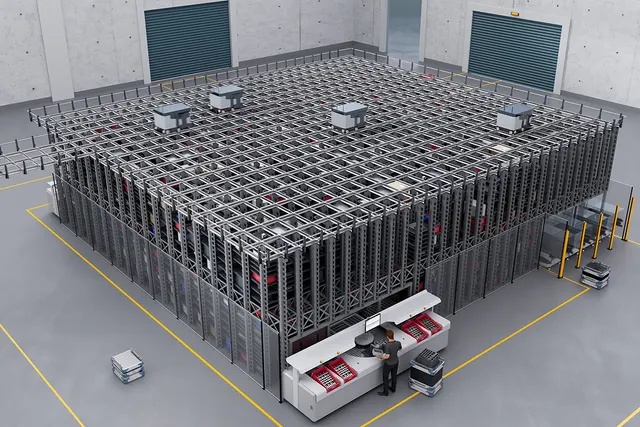
Rens Gehling What I have noticed, having spent some time looking around, is a very strong trend towards AMRs, all those autonomous robots driving around. I think there is a limit to that, too. What you can see, and this may be useful to share from my perspective, is that there are established benchmarks. AMR was one of them: a black box where you put things in and everything happens automatically. Great. Or you have a storage system, an AS/RS, an automatic storage and retrieval system. AutoStore and shuttle systems used to be big names. I think they are now in a bit of a decline.
Roel van Gils Well, yes?
Rens Gehling Yes, because what we are seeing with our solutions is that there are limits in terms of capacity, floor space and investment. Our solution shows that, when you use it in combination with those systems, for example, a sorting solution integrated fully automatically with an AutoStore, you get more throughput, so greater capacity, a smaller footprint and lower investment. So it has benefits on several fronts. And that ties in with what we said right at the start about those racking systems: keep an open mind. Don't think, ‘OK, this is a black box that solves everything, so I'll just make it as big as I need.’ If you can genuinely integrate and combine different systems, you end up with a more competitive solution. And we are slowly seeing that approach come back. But it does mean that, as a supplier, we need to show customers and the market what is possible.
Working with other suppliers
Roel van Gils So you also have to work with suppliers of other systems?
Rens Gehling Absolutely, absolutely.
Roel van Gils Is that already happening?
Rens Gehling Yes. We supply different types of customers. That could be an end customer, a business owner, large or small, it doesn't matter, or an integrator. We provide turnkey solutions ourselves, as we call them. But we can also supply part of a solution to a larger integrator, who incorporates it into a wider system. We often see those solution design teams, whether they are from a third-party logistics provider or an integrator, and we try to bring them on board and train them in what we offer. We also work with consultants: make sure you're aware of what's possible.
Roel van Gils Your website says, in big letters, ‘We believe in simplicity.’ What exactly do you mean by that? It could be interpreted in several ways.
Why simplicity is central
Rens Gehling At its core, it means we believe in avoiding unnecessary complexity. You could also say, ‘Keep it simple.’ We aim to provide customers with a solution that is high quality, reliable and efficient, without adding too much unnecessary technology, sensor equipment or software, which ultimately only creates long-term risks for maintenance and reliability.
Roel van Gils Today, you also said that you are basically entering into a marriage.
Rens Gehling Yes, absolutely. Our machines are also known for their low maintenance costs and very good total cost of ownership. I’d like to give an example, which might be interesting. We had a major American customer over towards the end of last year, a big name that most people in Europe will know, too.
Roel van Gils Go on, tell us.
Rens Gehling I’ll leave it at that for now, but we already supply them with quite a lot of machines. We also have a branch in America as part of EuroSort. They come to us, visit customers and see our factories. They ask, ‘Oh, where is A, B, C?’ It isn’t there. We don’t need that complexity or sensor equipment. What we supply is often focused entirely on mechanical sorting, but with very smart controls and a clever concept. The customer says, ‘So I barely have to maintain it?’ That’s right. But it still delivers the capacity you need and doesn’t cost the earth to… To explain, we all know, for example, the cross-belt sorter. It’s the gold standard in the market. It offers high capacity, performance and flexibility, but it also comes with a certain price tag to buy. It costs a lot to maintain, including the electricity and technicians. We have a crosstray. What is a crosstray? It is essentially a mechanised version of a cross-belt, with no drives, just a purely mechanical sliding mechanism, but fully enclosed. So we can overcome the disadvantages of a cross-belt, because it can handle all items, including non-conveyables, while costing a fraction of the price and a fraction of the maintenance. It’s a very popular solution with many of those customers.
Roel van Gils Does energy consumption also come down, or is it practically nothing?
Rens Gehling Compared with other solutions, yes, I’d say.
Dutch technology and competition from China
Roel van Gils You’re also a Dutch company. Are your products made in the Netherlands as well?
Rens Gehling Yes, we’re Dutch. The core technology in everything we supply worldwide comes from the Netherlands, from our head office near Weesp, close to Amsterdam. But we do buy in items such as conveyor belts from specialists. I mean, we’re not going to develop a packaging machine ourselves.
Roel van Gils Yes, you’d never make the investment back.
Rens Gehling No, so the core sorting technology is developed in the Netherlands. Everything around it, such as conveyor belts and labellers, we buy in through partners.
Roel van Gils Are you affected by companies from China in that respect?
Rens Gehling Yes and no. I think China as a whole is putting significant pressure on the industry. It doesn’t matter which company you talk to. It’s well known in the automotive industry, for example, but also in logistics. You see a lot of suppliers. Every year there’s another one, but I also see very clearly that there are limits to what they offer.
Roel van Gils But they often undercut prices, for example?
Rens Gehling Yes, well, they have volume, which obviously puts pressure on prices, but they also receive a lot of support, including state subsidies, and they want to penetrate the market. So they often bid at cost price or very low, and win projects. But after 5 or 6 years of being active in the market, I’m noticing that their business model is changing. Suddenly, they start making different demands and having different requirements. And customers are also discovering that service and reliability matter. So who do I call?
Roel van Gils So that service isn’t there, or at least…?
Rens Gehling Yes, it’s often difficult, much more difficult. As EuroSort, I guarantee my product. We’re always there, one way or another, to make sure the system keeps running, not just for a few years but for 10 or 20 years.
25 years of EuroSort and looking ahead
Roel van Gils Finally, I believe you’re celebrating your 25th anniversary this year. Tell us, what can we expect? Are you doing a special anniversary edition? We’re still…
Rens Gehling We’re not making a big fuss about it yet, but we are indeed 25 years old. We’ve grown from a small company, starting out in a garage like most small businesses, into a truly established player, a leader in the sorting world, with a broad portfolio. So what does 25 years mean to us? It’s a milestone, recognition of where we are now, and also a great opportunity to look ahead. Where will we be in another ten years?
Roel van Gils Well, in those ten years…
Roel van Gils Give us a little glimpse of what’s to come.
Rens Gehling What we want to do is offer sorting solutions in a broader range of applications. In the sorting domain, we want to offer complete solutions. That doesn’t mean we’ll sell or advise on warehouse racking, because we don’t have the expertise or manufacture it ourselves. But we want to offer solutions for everything that happens after that, from order fulfilment through to loading into the lorry or van. We want to provide this both as a complete package for end customers and as partial solutions for other integrators or partners who want to work with us.
Roel van Gils So you may be broadening your offer?
Rens Gehling Yes, taking care of the customer. And we haven’t really touched on this yet, but you can see that labour is a driving factor, and of course costs are too.
Roel van Gils Yes, of course.
Rens Gehling I really believe in hyper-automation, what we call dark factories, or genuinely low-labour environments. Things go in and come out, with almost no people involved. We have a site like that, and recently released a video of it in Poland. It’s a complete, fully automated sorting solution, covering induction, sorting and processing.
Fully automated sorting solution in Poland
Roel van Gils No people involved?
Rens Gehling No, except for checks, or handling the occasional exception, such as an item with a barcode that isn’t positioned properly. You still need that, but only occasionally. If you take that process further, I believe it can be fully automated. And I believe that EuroSort will be able to provide solutions to make that happen.
Roel van Gils But coming back to that company in Poland, it’s interesting. Did you do the whole thing, so to speak? Did you handle the entire sorting part of the project?
Rens Gehling Yes, yes, yes. But it’s also a combination of… Yes, exactly. There is storage and order picking before that, of course, and in this case, after our system… We sorted items into a box or tote. It is automatically closed and processed. That’s where our scope ended. This customer had further handling after that, which we didn’t do. But we can do that for other customers, so it’s part of our range.
Roel van Gils Was this a pilot project, or is it already…?
Rens Gehling No, it’s been running for five years now.
Roel van Gils Oh, it’s been running for five years already?
Rens Gehling Yes. We have many systems out there, but because they’re often unique and give customers a competitive edge, they don’t want us to publish anything about them. The customer wants to keep it under wraps. They don’t want their competitors to know that this is already possible and exists.
Roel van Gils Yes, are you already getting new enquiries for that?
Rens Gehling Yes, definitely. We get a lot of interest.
Roel van Gils And you’re not allowed to talk about them?
Rens Gehling No, not always. It’s something we work on with customers. I say, especially now with all the AI tools and exposure, SEO, SEA and GEO, how can we make these use cases visible and share them publicly? But that’s often not possible. Many companies simply won’t allow it. They say, ‘We have these systems in place. They’re unique and give us a competitive advantage, so keep them secret.’
The role of AI at EuroSort
Roel van Gils Looking a little further ahead at developments, you mentioned AI just now. Are you likely to be investing in that as well?
Rens Gehling Yes, AI too, but I see AI in two ways. I see it as a driver that can help our organisation work more efficiently. Just as you could use AI to record and transcribe this.
Roel van Gils In fact, we do.
Rens Gehling: That doesn’t surprise me. It’s a way of creating efficiency. We’re doing a lot of that in our organisation too. We have quite a few projects underway in that area. I also see it as a second enabler, allowing us to formulate problem statements using our knowledge. So you really create a database within your own environment, within your company, where you get AI to come up with solutions that enhance your products, perhaps in ways you hadn’t thought of yourself. We have a few examples where you think, ‘Oh, hang on, that’s actually a great result.’ It’s something you could have thought of and created yourself, but not in the timeframe in which AI reached that conclusion and substantiated it.
A final tip for listeners
Roel van Gils Interesting. Yes, definitely. Finally, what tip would you like to leave our listeners with at the end of this conversation?
Rens Gehling: Good question. My tip would be to keep looking ahead. Keep looking for opportunities. Don’t focus solely on what you’re doing now, and don’t just think in terms of a kind of funnel. ‘Okay, I need this.’
Roel van Gils That’s very difficult, of course, isn’t it?
Rens Gehling: Yes, I think it’s very difficult to get an overview of the whole market. But be open-minded and just start a conversation. And if you realise, ‘Well, this isn’t it’, then stop there and keep looking. I really think that, especially in the logistics world, there’s a lid for every pot. There’s so much on offer. You can definitely find what you need.
Roel van Gils Yes, LogiMAT proved that again, for example, didn’t it?
Rens Gehling: Yes, one hundred per cent.
Roel van Gils Okay, Rens, thank you for this conversation.
Rens Gehling: My pleasure.
Roel van Gils And thank you for listening. Until the next podcast.
Companies in this story

Keep following this
Get an email when a new story is published. No account needed.
- SubjectAutomation
- CompanyEuroSort Systems