How can you store flammable substances practically and in compliance with regulations?
Text Carolien Klees Beeld Asecos
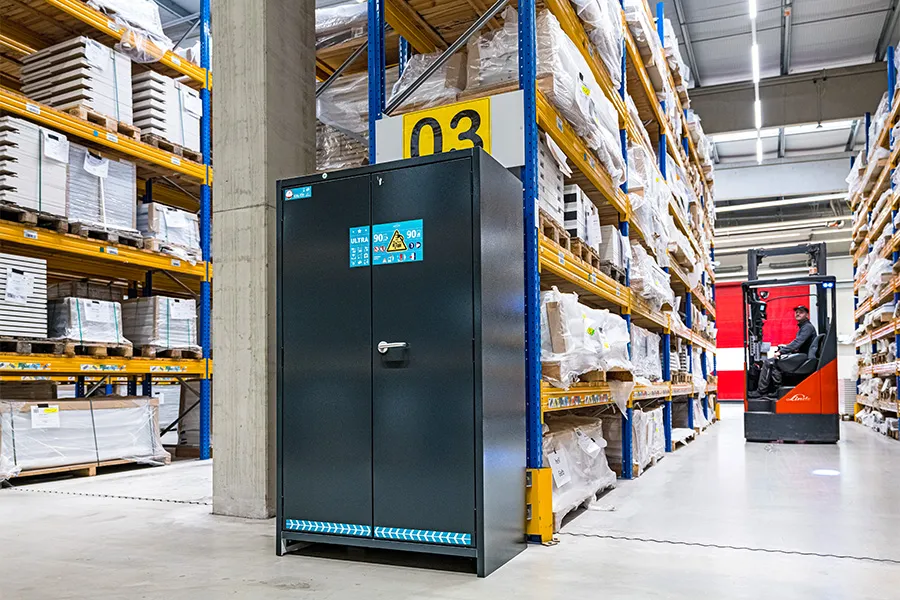
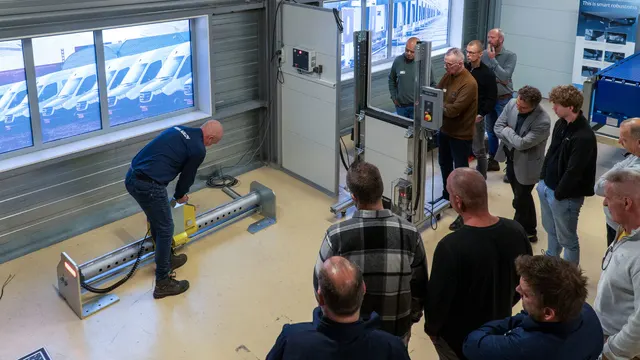
You may not have considered it, as this product was originally developed for laboratories, but a fire-resistant safety cabinet with folding doors is ideal for warehouses! A hinged door needs the full width of its swing, which is not very practical for order picking. Henk Niewenhuis gave us this and many more tips when we spoke to him about the dangers of flammable substances in warehouses. He is managing director of Asecos, the leading market leader in safe storage solutions for hazardous substances: “Today, more and more sites are being set up to supply end customers directly. At these hubs, where order picking takes place, there is no longer a storage facility, but what is known as a forward picking stock. This means different regulations apply, and you need to have a safe storage facility.”
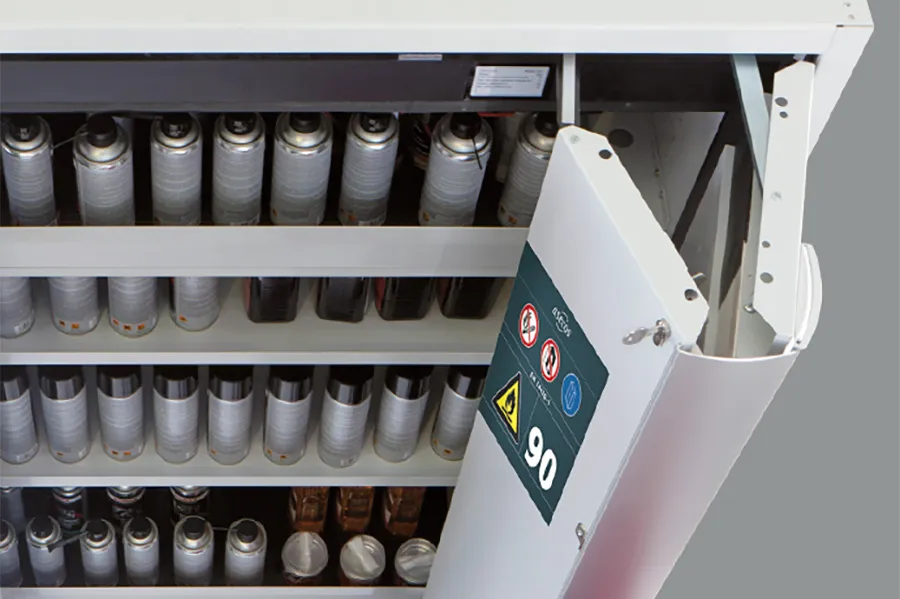
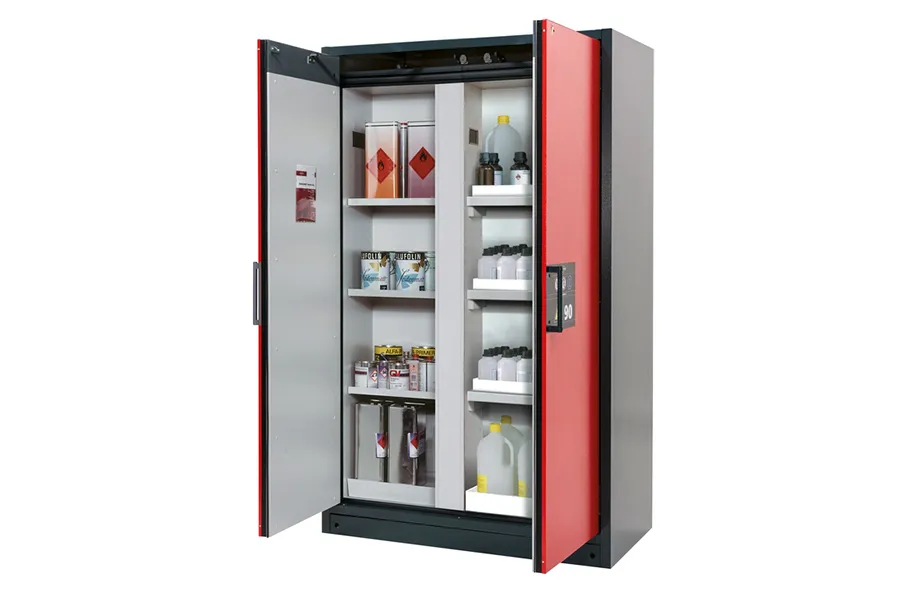
Asecos is the world’s largest manufacturer of fire-resistant safety cabinets built in accordance with European standard EN 14470 parts 1 and 2. “A fire-resistant safety cabinet with folding doors is highly functional for order picking in a hub. The doors can be left open, so you do not have to open and close a door every time you take out a product. And as folding doors only need half the swing space, they are no longer a major obstruction in the aisles. The great thing about these cabinets is that, in the event of a fire, they are secured so that the doors will close. This prevents the hazardous substance inside the cabinet from contributing to the fire outside it.”
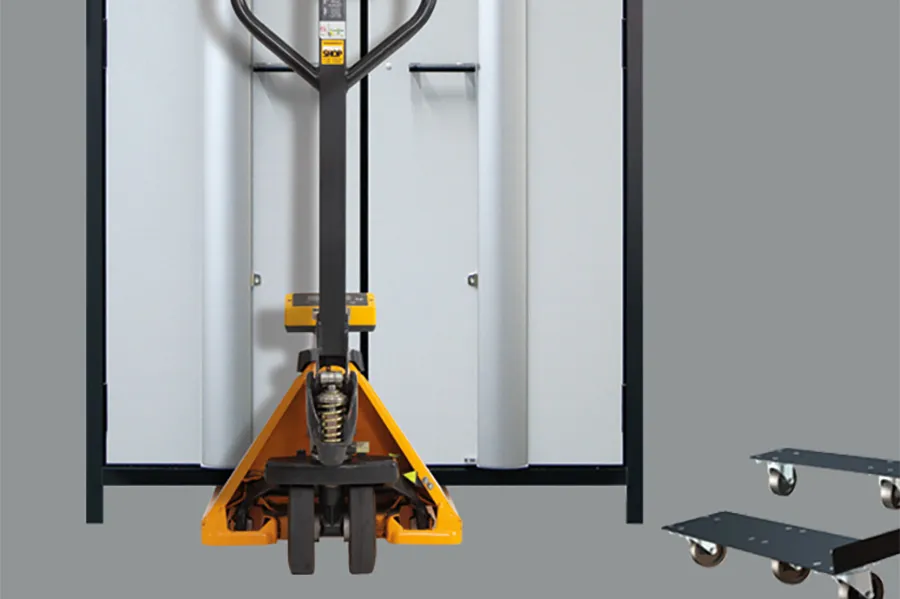
Asecos’s Q-Phoenix cabinets have these features. Asecos is unique in being the only manufacturer to equip the cabinet with an integrated transport plinth. “Thanks to this transport plinth and the extremely robust construction, the cabinet can easily be removed from beneath a racking bay with a forklift and moved elsewhere.”
Standards
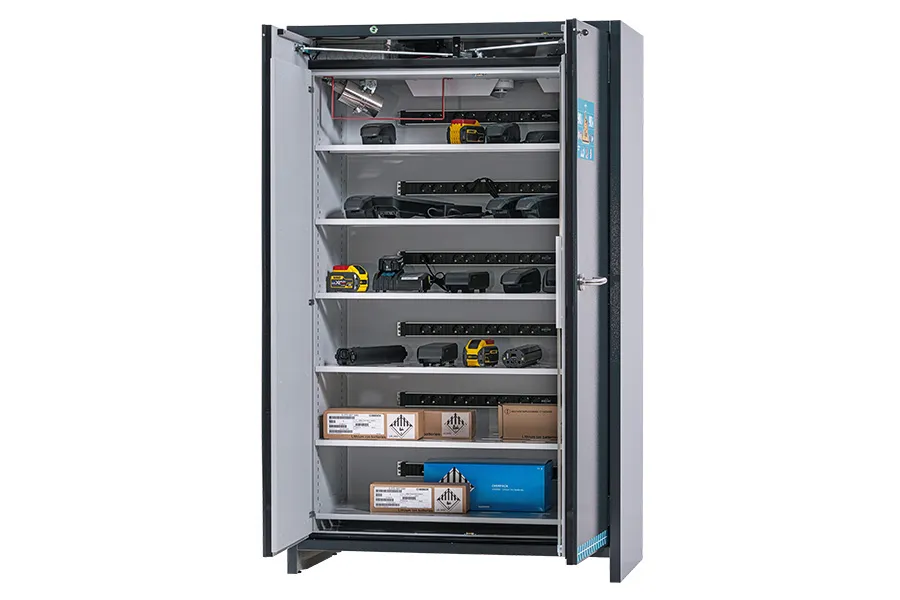
Niewenhuis also points to the benefits of separate fire compartments: “The Q-Phoenix cabinet has a fire-resistant partition that creates two hermetically sealed storage compartments. This naturally contributes to safety. When choosing a fire-resistant safety cabinet, it is also important to check whether it meets certain standards. Our cabinets comply with EN 14470-1, and offer the highest fire resistance under this standard, from outside to inside, at 90 minutes.”
Spill trays
For those using spill trays to prevent liquid from reaching the packaging below in the event of a leak, Niewenhuis offers an important piece of advice: “Make sure the spill tray is made of the same material as the packaging. For example, if the packaging consists of plastic bottles, we recommend using our plastic trays rather than steel spill trays. The leaked substance could react with the steel.”
Inspection
Another point Niewenhuis makes concerns inspection. “Racking must be inspected regularly, and the same applies to fire-resistant safety cabinets. While you can have racking inspected by someone within your organisation, that is not permitted for a fire-resistant safety cabinet! Our technicians are also qualified inspectors, so if required, we can carry out both inspections annually.”
Storage of lithium-ion batteries
Finally, Niewenhuis advises considering the dangers of lithium-ion batteries and the specific guidelines for storing them. “Warehouses are full of goods containing lithium-ion batteries, which can catch fire spontaneously. Think phones, laptops and scanning equipment for order picking. For more information, I would refer you to the article in the previous issue of this magazine.”
A business enquiry for Asecos? Get in touch
Companies in this story

Keep following this
Get an email when a new story is published. No account needed.
- ThemeAutomating goods flows
- SubjectWarehouse equipment & safety
- CompanyAsecos