‘These mobile racking systems never break down’
Text and images SSI Schäfer
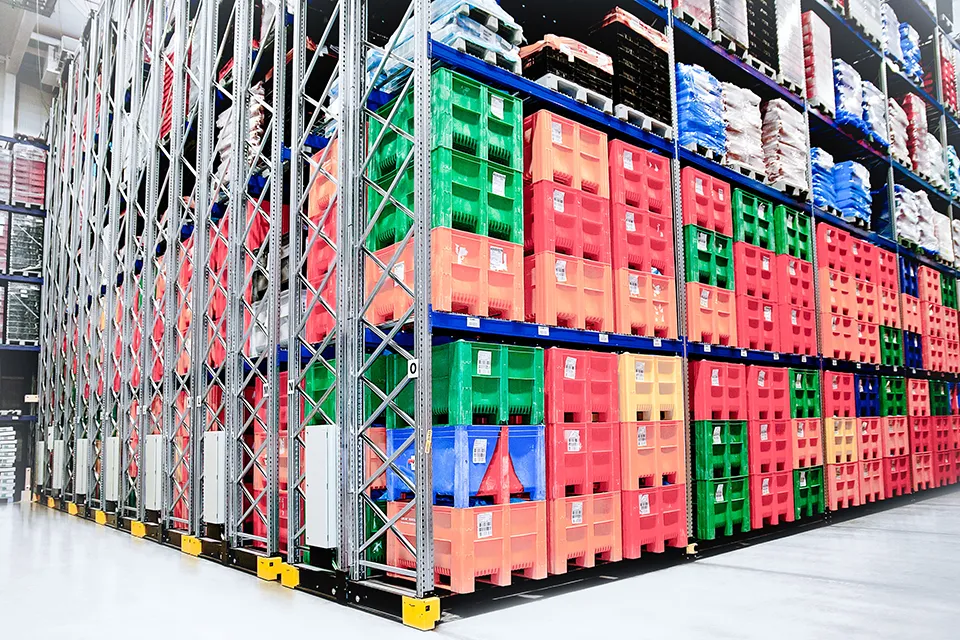
Logistics service provider Vice Versa has 25 freezer rooms in Oss, with almost 70,000 storage locations. Most are fitted with mobile racking supplied by SSI SCHÄFER. Co-owner Guus van den Boogaard of Vice Versa is deliberately opting for quality. “We can’t say no to our customers. And these mobile racking systems never break down.”
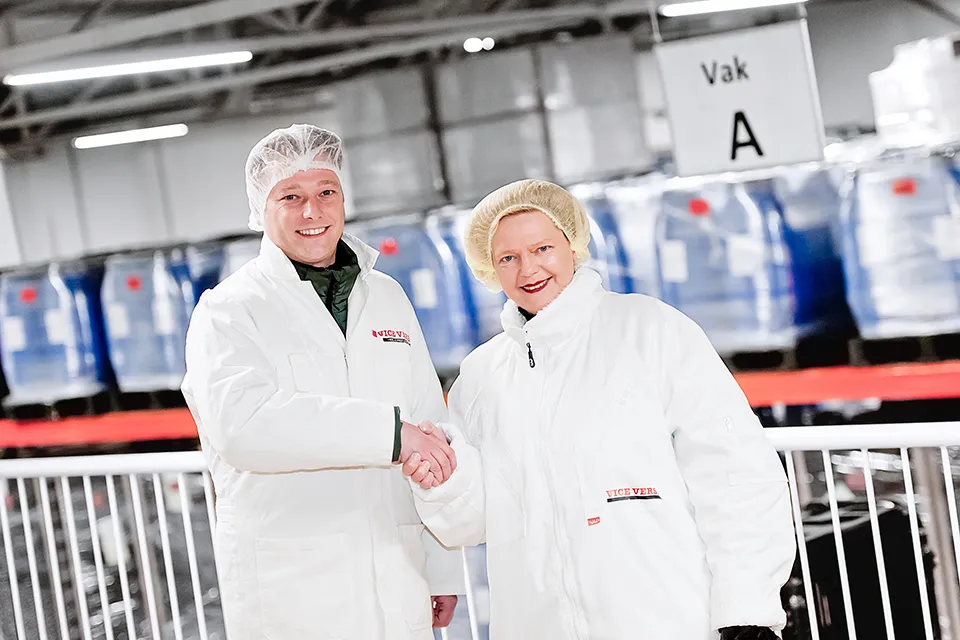
In 1985, Tonnie van den Boogaard bought his first delivery van. It marked the start of Vice Versa, a logistics service provider that today plays a key role in the food industry. “Our main customers are meat processors, who buy meat from deboning plants and deliver it to food retailers and food service companies. We collect crates of fresh meat from the deboning plants and freeze them. We store the pallets of meat in one of our freezer rooms until the meat processor calls them off. When that happens, we temper the meat and transport it to the processor. We take the crates of finished products back with us, then pack and store them,” says Guus van den Boogaard, Tonnie’s son and co-owner of Vice Versa. “Our freezer rooms hold enough stock to supply the food retail and food service channels with meat, bread, ice cream and vegetables for six weeks.”
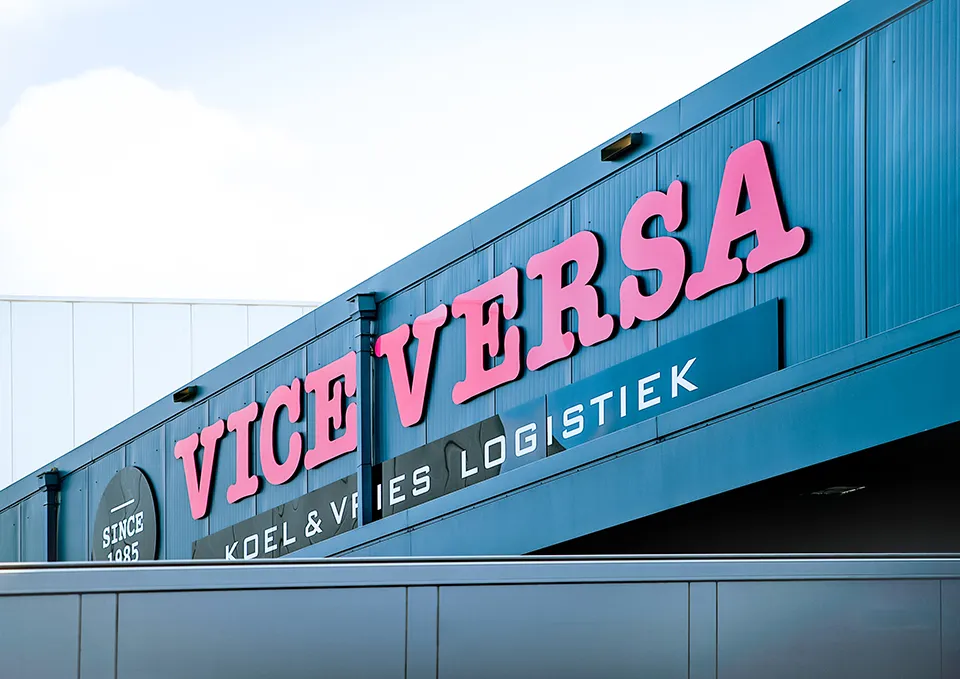
Taking as much off customers’ hands as possible
The figures are impressive. Vice Versa has six blast freezers in Oss, with capacity for 1,200 pallets. At a temperature of -40 degrees and a wind speed of 100 kilometres per hour, the logistics service provider needs just 48 hours to freeze 2 million kilograms of meat. “Only at -40 degrees does the cold reach the core of the meat quickly enough,” says Van den Boogaard, who is responsible for technology and operations at the family business.
Vice Versa also has three crate-washing machines of its own, which clean 40,000 crates a day. “By the time the product reaches the supermarket, we’ve already washed each crate three times,” explains Van den Boogaard. “We want to take as much off our customers’ hands as possible, so they can focus on what they do best: cutting and processing meat into spare ribs, burgers, chicken nuggets and other finished products.”
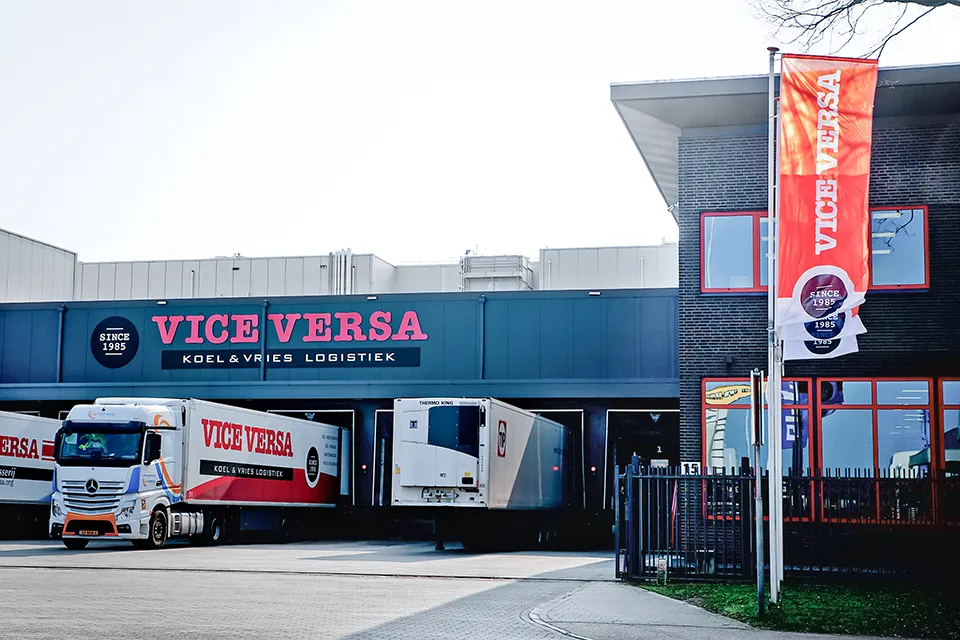
An eye for detail and quality
Vice Versa aims to be as self-sufficient as possible. The family business has its own workshop, vehicle wash and filling station for its fleet of seventy vehicles. Its in-house technical service ensures that the refrigeration systems, crate-washing machines and reach trucks are used to best effect. “This is work we enjoy,” says Van den Boogaard, who runs the day-to-day business with his brother Koen and sister Mireille, having taken over from their father Tonnie. “We do what the customer asks, honour our commitments and stay flexible. And we reinvest the money we earn back into the business.”
Their passion for the work is reflected in their knowledge, experience and attention to detail. For example, if a meat processor wants to make mince, the temperature of the meat is raised in one of Vice Versa’s tempering rooms from -20 to -9 degrees. Not a degree lower, because then the meat would be too hard for the processor’s mincer. And not a degree higher, because then the meat would be too soft to pack neatly. “Every type of meat has its own texture and specifications,” says Van den Boogaard.
Alongside its attention to detail, Vice Versa also focuses on quality. Most finished products are delivered on full pallets, but customers can also call off goods by the box. Vice Versa has set up an order-picking process for this. “This takes place in a freezer room at -20 degrees, keeping the cold chain intact as far as possible and ensuring quality.”
Doubling storage capacity
The rapid growth of Vice Versa shows that its strategy is paying off. In 2004, the company opened its first freezer room. It now has 25 freezer rooms in Oss, with total storage capacity of 65,000 to 70,000 pallets. They are not filled with meat alone: around twenty per cent of the stock consists of other frozen products, such as ice cream, bread, pizzas, vegetables and a small amount of pharmaceutical products from MSD Biotech Oss. Van den Boogaard says: “We have grown entirely organically. Over the years, we have continued to add freezer rooms to meet our customers’ growing demand.”
The first freezer rooms were fitted with standard pallet racking, which is still in use, Van den Boogaard stresses. “We want to keep it that way. Some pallets are in storage for only a few hours before they need to be dispatched. When products have such a high turnover, it’s useful to be able to put them away and retrieve them quickly.”
As the need for storage capacity increased, the company began looking for more compact storage methods. “We want to make the best possible use of each freezer room, not only in terms of storage capacity but also energy consumption. The higher the storage density, the less air we need to cool and the greater the energy cost savings. That’s why we opted for mobile racking, which means we need only one aisle in each freezer room. This allows us to almost double storage capacity.”
“They never break down”
The search for mobile racking led to SSI SCHÄFER, which offered the best value for money. Van den Boogaard is particularly impressed by the quality of the drive technology. When a racking system, including its pallets, starts moving, it shifts a total weight of 300 tonnes or more. This requires a solid mobile base that will not bend, and a controlled drive system that prevents skewing. “We’ve been using SSI SCHÄFER’s mobile racking for seventeen years without any problems. They simply never break down. If we do have problems, it’s because of something we’ve done ourselves, for example, if we hit the racking with a reach truck.”
High quality is extremely important to Vice Versa. “We can’t say no to our customers. If we can’t supply a supermarket chain with burgers, they’ll go to a competitor,” says Van den Boogaard. “That’s why we have a full-service contract with SSI SCHÄFER, with a two-hour response time. Fortunately, we hardly ever need to call on them. We keep our own stock of spare parts, and our technical service can resolve most faults itself. Once a year, an SSI SCHÄFER maintenance team comes in to inspect everything and replace worn parts.”
Safe and easy to use
The mobile racking is easy to use. Reach truck drivers can open an aisle using a remote control from their heated cab. Usually, however, they get out and press the button on the racking. “Of course, the racking is fitted with safety sensors. It won’t move if someone is walking in the aisle. If it does move, the employee can activate the emergency stop with a foot. Even so, we ask our drivers to check for themselves that the aisle really is clear. We mustn’t assume the technology will always work,” says Van den Boogaard.
The mobile racking has additional safety features. Each mobile base is fitted with rubber buffers, which ensure that there is always some clearance between the racks. All storage locations have mesh decks to prevent plastic pallets from sliding and slipping off the steel beams. The travel speed is limited to four metres per second: slow enough to prevent loads from falling, but fast enough for efficient operation. “It takes no more than a minute to open an aisle. Our reach truck drivers never have to wait. The next aisle opens while they take a pallet away,” says Van den Boogaard, adding that the company opted for extra-wide aisles. “Aisles are usually around 3.5 metres wide. To give our drivers enough room to manoeuvre, we chose a width of 4.2 metres. Collision damage is particularly undesirable with mobile racking.”
SSI SCHÄFER from now on
For the first freezer rooms fitted with mobile racking, SSI SCHÄFER supplied only the mobile bases. The racking was supplied by a local racking supplier that Vice Versa had worked with for years. When this supplier ceased trading, Van den Boogaard decided to source the racking from SSI SCHÄFER as well. In total, this covers fourteen freezer rooms built in five phases. “Once, we went elsewhere and gave in to a low quote from another supplier, but that mobile racking has caused nothing but problems. Since then, we’ve only chosen SSI SCHÄFER,” says
Van den Boogaard,
The final phase was completed in 2023: a 1,500-square-metre freezer room with 5,500 storage locations. Installing the mobile racking presented a number of challenges. “We placed the order in 2021, in the middle of the Covid pandemic, when SSI SCHÄFER, like everyone else, was dealing with high steel prices and a shortage of electronic components. We needed the freezer room for a customer looking for storage space for four million frikandellen. Production started before the freezer room was operational. Because we kept communicating well with each other, the supply problems were resolved to our satisfaction and we still managed to store all the frikandellen.”
Staying flexible
Van den Boogaard looks back on the long-standing partnership with satisfaction. In his view, SSI SCHÄFER has proved to be a reliable partner that is easy to work with. “They think along with us and respond quickly to questions. Communication is direct. And, like us, they’re not necessarily the cheapest, but they are the best.”
Van den Boogaard cannot yet say when the next freezer room will be built. The Vice Versa site on Kanaalstraat in Oss has no room left for expansion. “One thing is certain: if we expand, we will continue to rely on mobile racking. Other solutions are of course possible, such as a fully automated storage system, but we want to remain flexible. SSI SCHÄFER’s mobile racking allows us to do that.”
Have a business enquiry for SSI SCHÄFER BV? Get in touch
Companies in this story

Keep following this
Get an email when a new story is published. No account needed.
- ThemeMore warehouse space
- SubjectMaterial handling
- CompanySSI SCHÄFER BV