The future resilience of logistics: not a destination, but a journey
Text en beelden Management Producties
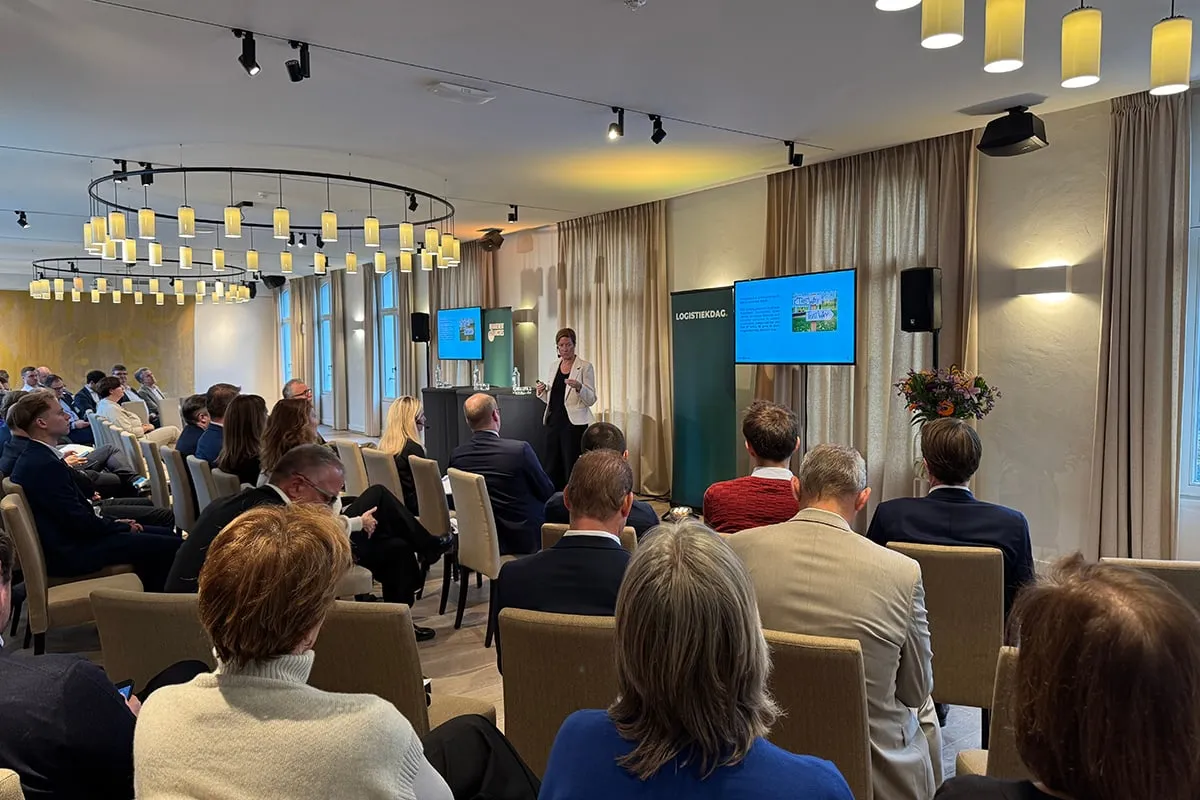
8th edition of Logistiekdag België focuses on sustainability, transparency and resilience
Logistiekdag België took place in Antwerp on 14 November 2024, bringing together professionals for an inspiring conference on the logistics sector’s major challenges and opportunities. The central theme was ‘Sustainable, transparent and resilient’. It was particularly relevant given geopolitical tensions, the energy transition and the rapid rise of artificial intelligence (AI). From customers to suppliers, the conference brought professionals from across the logistics chain together to safeguard the future resilience of their organisations. A programme combining plenary sessions with interactive workshops explored in depth the key issues affecting the supply chain and logistics today.
Leading through disruption
The conference highlighted the importance of visionary leadership, particularly in times of disruption. Anne van de Poel (Supply Chain Director Northern Europe, Bonduelle) delivered the keynote address on the subject. She said leaders need to adapt to current changes by focusing on trust and empowerment. “You need to strike a balance between long-term thinking and developing a North Star to guide your organisation,” she said. According to Anne, it is important for leaders to show vulnerability and help their teams develop new skills and capabilities. One audience member asked how to work with Gen Z, who join a company with different motivations. In such cases, it is essential to encourage open communication, agree working practices together and work jointly to improve the organisation.
The impact of geopolitical disruption
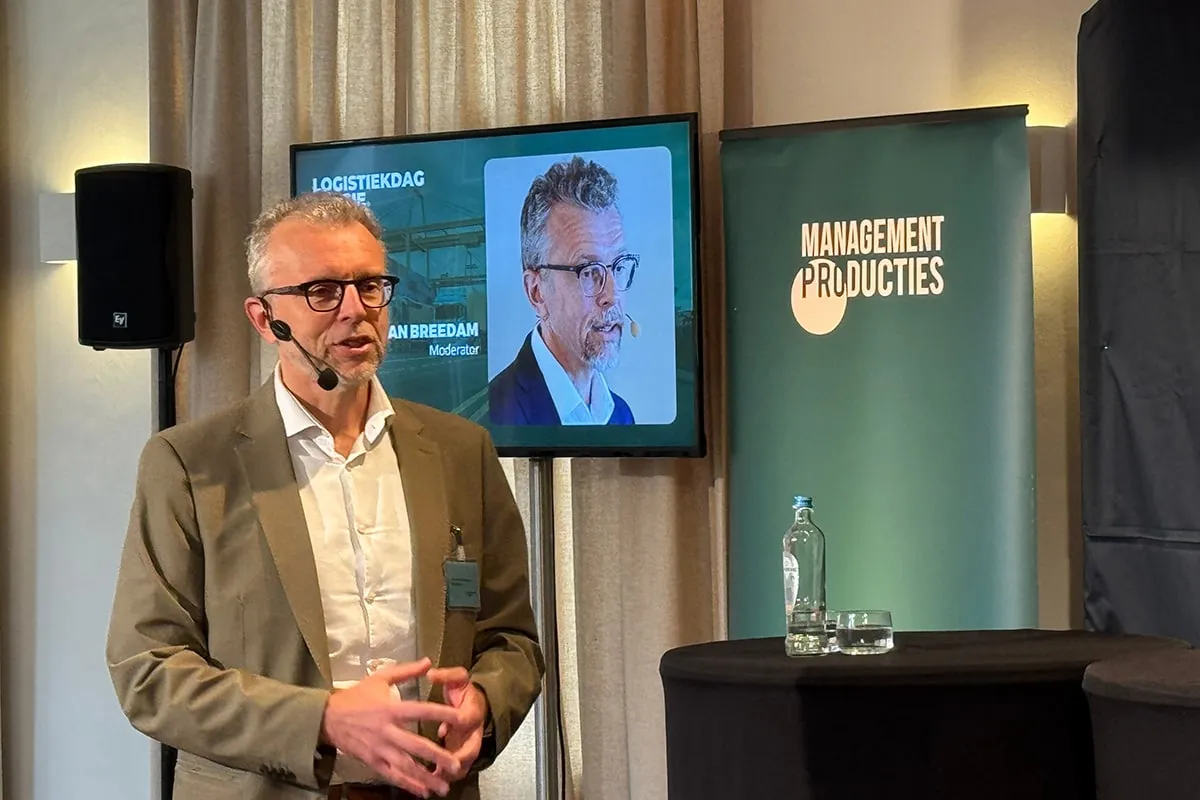
The impact of geopolitical developments on logistics was a key topic of the day. Supply chain expert Alex Van Breedam, moderator of Logistiekdag België, said that sourcing materials remains a problem in many cases because of geopolitical instability. Supply chain expert Kevin Verbelen (Agoria) cited the example of a Chinese company that holds a year’s supply of excavators in stock.
In future, this could lead to overstocking in Europe as a result of US trade restrictions. “If you depend on your supply chain and legislation, nearshoring can be a solution,” said Kevin. He warned, however, that increasing the number of production sites could drive up costs, making ‘local for local’ a wiser option than friendshoring. Despite the challenges, Kevin emphasised the new opportunities. For example, the need to recycle more and more waste in Europe (because exporting it is becoming too expensive, ed.) could lead to new markets. “Owning assets is becoming sexy again,” said Yves Letange, Managing Director Europe at PSA BDP, highlighting the shift from just-in-time to just-in-case.
Key to a CO2-neutral future
Sustainability naturally played a prominent role at Logistiekdag België. Anke Roeyen, Associate Director Strategic Projects at Coca-Cola Europacific Partners (CCEP), shared her organisation’s ambitious target to achieve net zero by 2040 across scope 1, 2 and 3 emissions. “90 per cent of our emissions are indirect, so working with suppliers is crucial,” Anke emphasised. The focus was on reducing emissions through collaboration across the wider supply chain. Serge Gregoir, CEO of Eutraco, spoke about transport decarbonisation and the role of ‘coalitions of the willing’ in investing in electric trucks. “We are convinced this is the right choice for the future,” he said, adding that the investment would pay off in the long term. This shows that sustainability is not only an ethical choice, but can also be a strategic and financial one.
The logistics chain of the future
A session on the logistics chain of the future made it clear that logistics is increasingly a journey rather than a destination. Ann Vervecken, Global Head of Value-Based Pricing for Multiregional Accounts at DHL, said future-proof supply chains are not an endpoint but a journey: an ongoing process of adaptation and improvement. The importance of collaboration was also emphasised: companies need to work not only internally but also with external partners to create flexible, efficient and sustainable chains. The focus was not on quick wins, but on strategic collaboration for long-term benefits, with an emphasis on CO2 reduction and achieving economies of scale. At DHL, they work with customers to identify the value they can genuinely add, and use this to set the price together.
Automation and efficiency
Automation in logistics was discussed at length during the session on the ‘warehouse of the future’. Tommy Niemierowski (IKEA) observed that Belgians remain strongly attached to traditional cash & carry models, while the rest of the world is moving more quickly towards online orders. This has an impact on automation. Bryan Beutels, who this summer moved from a major logistics service provider to technology company Element Logic Benelux, said the key to the future lies in automating efficiently. “The sooner we can invest in sustainability and efficiency, the sooner we can move forward,” he said. Bryan believes automation should be seen as a stepping stone. More companies would be better off taking small steps towards automating their warehouses. They can build on these later to create more value with fewer resources.
Embracing innovation
Session chair Professor Roel Gevaers shared a number of valuable takeaways. “The most important lesson today is that, internationally, generative AI is already helping companies make supply chain decisions. There is more we can do with it in Belgium.” He also highlighted the growing role of transport companies in investing in generating their own energy. Initially, this is a major cost, but it offers considerable potential for the future. These innovations, together with the growing impact of geopolitical developments, will continue to transform the logistics sector in the years ahead. Alex Van Breedam, CEO of Tri-Vizor and professor, highlighted the shorter supply chains we are likely to see as a result of upcoming tax measures and companies travelling shorter distances. “The big question is whether we can find a lever to shorten supply chains and make them more sustainable at the same time, to offset higher taxes,” said Alex. The future of logistics therefore lies in finding smart solutions that both reduce the environmental footprint and improve operational
efficiency.
Taking impactful steps together
Logistiekdag België in Antwerp provided valuable insights into how companies can prepare for the future in an ever-changing world. Sustainability, transparency, collaboration and technology play a crucial role in making supply chains future-proof. The key to success lies in taking small but impactful steps that can be taken together to make logistics more sustainable, efficient and resilient. With the right leadership and strong collaboration, companies can not only overcome today’s challenges, but also prepare for a more successful and sustainable future.
Want to attend the 9th edition of Logistiekdag België? Mark 23 October in your brand-new 2025 diary now!
Question about this story? Ask your question
Companies in this story
Keep following this
Get an email when a new story is published. No account needed.
- SubjectMaterial handling
- CompanyElement Logic