Cut emissions and costs with an LHV
Text Carolien Klees Images CSE/Volvo Trucks
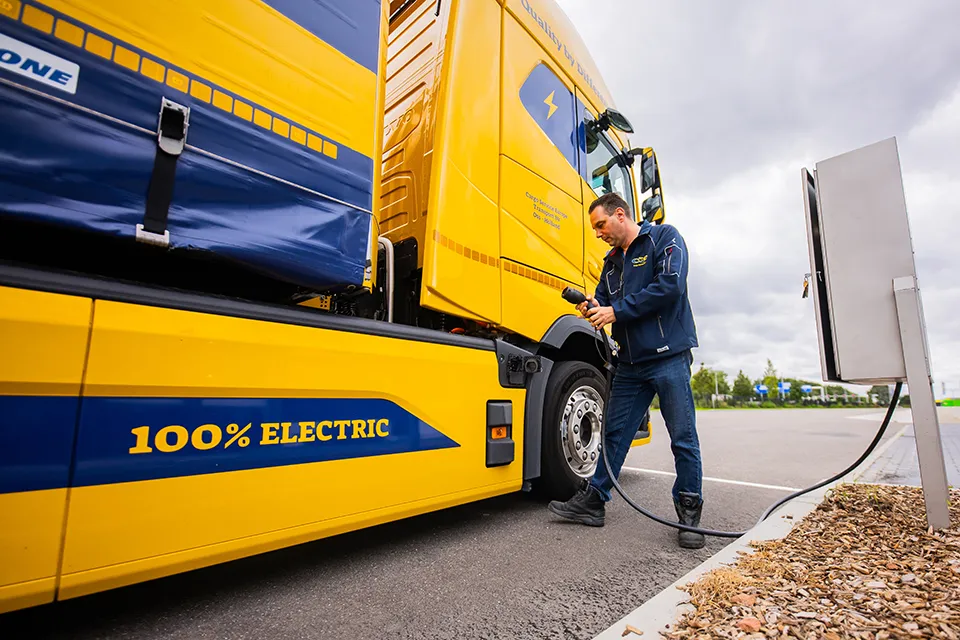
CO2-neutral transport
In its drive to operate as sustainably as possible, Cargo Service Europe (CSE) has already taken significant steps. This logistics service provider specialises in transporting and storing empty drinks cans for major brands such as Coca-Cola and Red Bull. It is now working on the next phase of its sustainability strategy, carrying out test drives abroad with its electric Volvo trucks. Anita Leeijen, Group CFO at CSE, is convinced that end customers will specifically request CO2-neutral transport in the future.
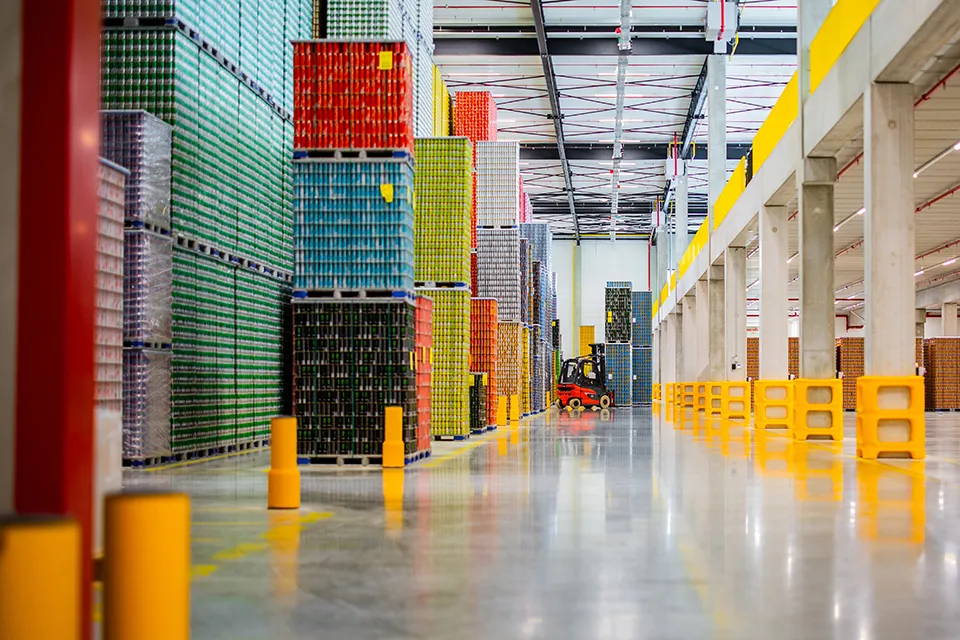
In its drive to operate as sustainably as possible, Cargo Service Europe (CSE) has already taken significant steps. This logistics service provider specialises in transporting and storing empty drinks cans for major brands such as Coca-Cola and Red Bull. It is now working on the next phase of its sustainability strategy, carrying out test drives abroad with its electric Volvo trucks. Anita Leeijen, Group CFO at CSE, is convinced that end customers will specifically request CO2-neutral transport in the future.
“At the moment, sustainable transport is mainly being driven by us, and customers are responding enthusiastically. But I am fairly sure they will start asking for it themselves in the future.”
Sustainability strategy
Taking the burden off customers, innovation and sustainability are key elements of the company strategy. “Our new sorting machine is a good example. Cans are stacked with paper sheets between the layers, known as layer cards. Until recently, these were sorted by hand, with an employee deciding whether a layer card could be used for another cycle. That is subjective and therefore not 100% reliable. We have designed a sorting machine to make the process faster, more hygienic and more consistent. This results in fewer rejected sheets and therefore less waste.”
Optimal charging infrastructure
CSE has also made its transport operations considerably more sustainable. It specialises in transporting and storing empty drinks cans. Around 2021, it moved away from diesel and replaced its entire fleet with trucks powered by Bio-LNG and electricity. It chose Volvo Trucks for a reason: “We wanted reliable vehicles that offer our drivers a good place to work, and we were looking for the best possible balance between price and quality. We chose Volvo Trucks because they meet these requirements and are known as a partner that takes the time to understand your needs. Our decisions were also shaped by sound advice from our Volvo dealer, BAS Truck Center.”
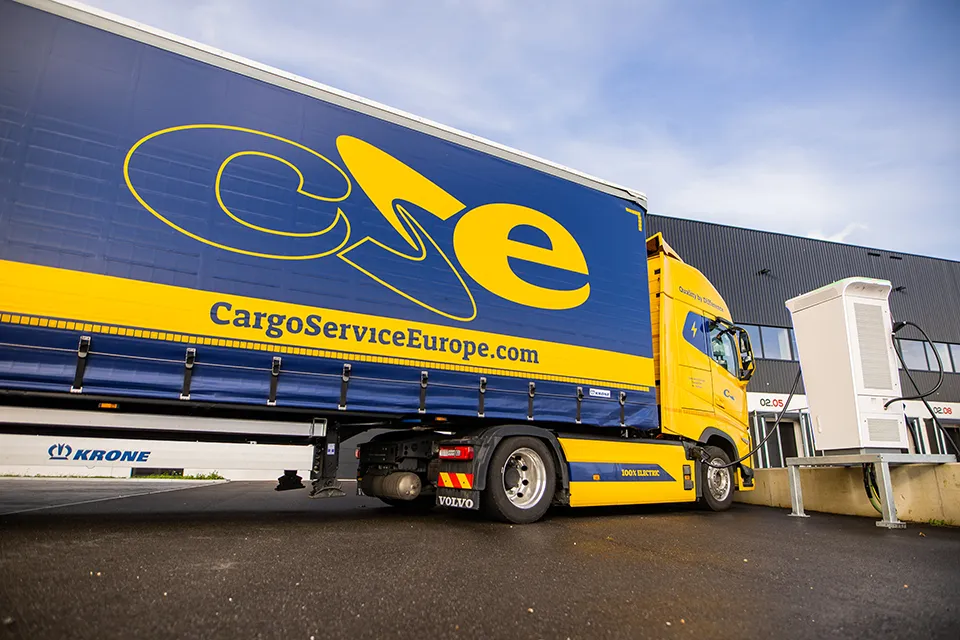
The company purchased 75 Volvo (Bio-)LNG trucks and four Volvo Electric trucks. To provide optimal charging infrastructure, solar panels have been installed on the roofs of its warehouses in Born and Weert, and the company is also exploring the possibility of installing them at its Oss site. A private charging station has also been built in Weert, and CSE plans to install one at each of its other two sites in the future. The warehouses are BREEAM-certified, demonstrating sustainable performance not only in terms of energy, but across the board, from waste and water to management and health.
Greater payload capacity
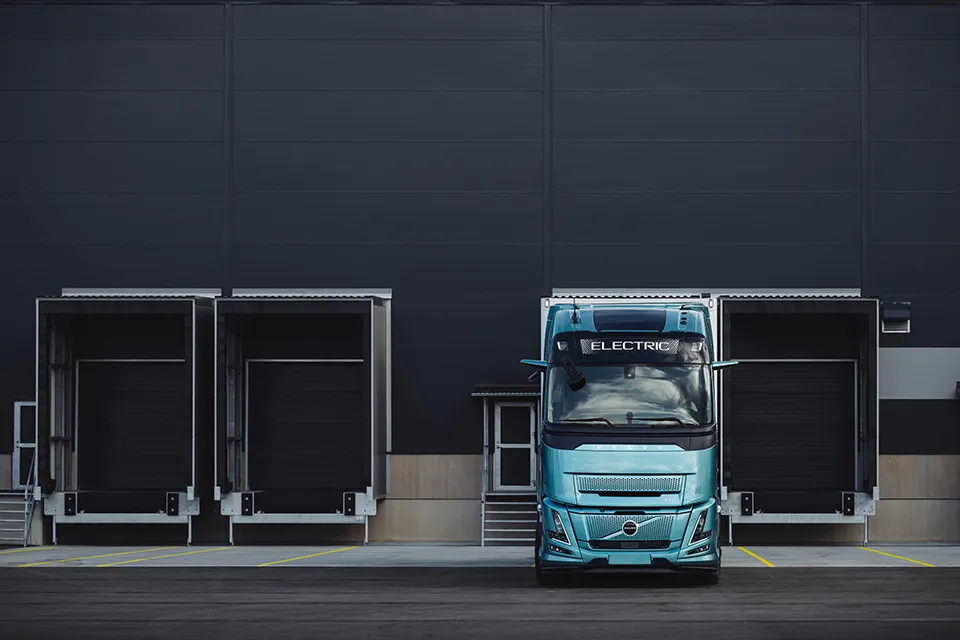
Volvo Trucks recently reported that CSE had passed the 60,000-kilometre milestone within a few months with the LHV version of the Volvo FH Electric. Averaging more than 12,500 kilometres a month, this is the highest mileage achieved to date in the Netherlands by an electric combination of this kind. At this rate, it will cover more than 150,000 kilometres a year. Transport companies are increasingly choosing LHVs because of their greater payload capacity. The increase in fuel consumption, or energy consumption in this case, is outweighed by the additional payload capacity. Overall, this saves costs and reduces CO2 emissions, particularly when companies choose an LHV with a biogas powertrain, such as CSE’s Volvo FH460 running on (Bio-)LNG, or an electric truck. “We are now also deploying our electric trucks as LHVs to reduce the number of journeys. And because we are also running them on solar power or electricity, we are achieving two things at once.”
Test drives
“We are also currently testing how far we can travel with the Volvo FH Electric abroad, particularly in Germany. We are carrying out test drives with different loads and finding out which charging stations are accessible. We are in regular contact with Volvo to discuss our findings and the new models we might use in the future. For example, we are considering switching to the Volvo FH Aero Electric.” The FH Aero’s lower air resistance has a positive impact on range, especially over long distances.
Question about this story? Ask your question
Keep following this
Get an email when a new story is published. No account needed.
- SubjectMaterial handling