A broad view of intralogistics
Text and images Toyota Material Handling
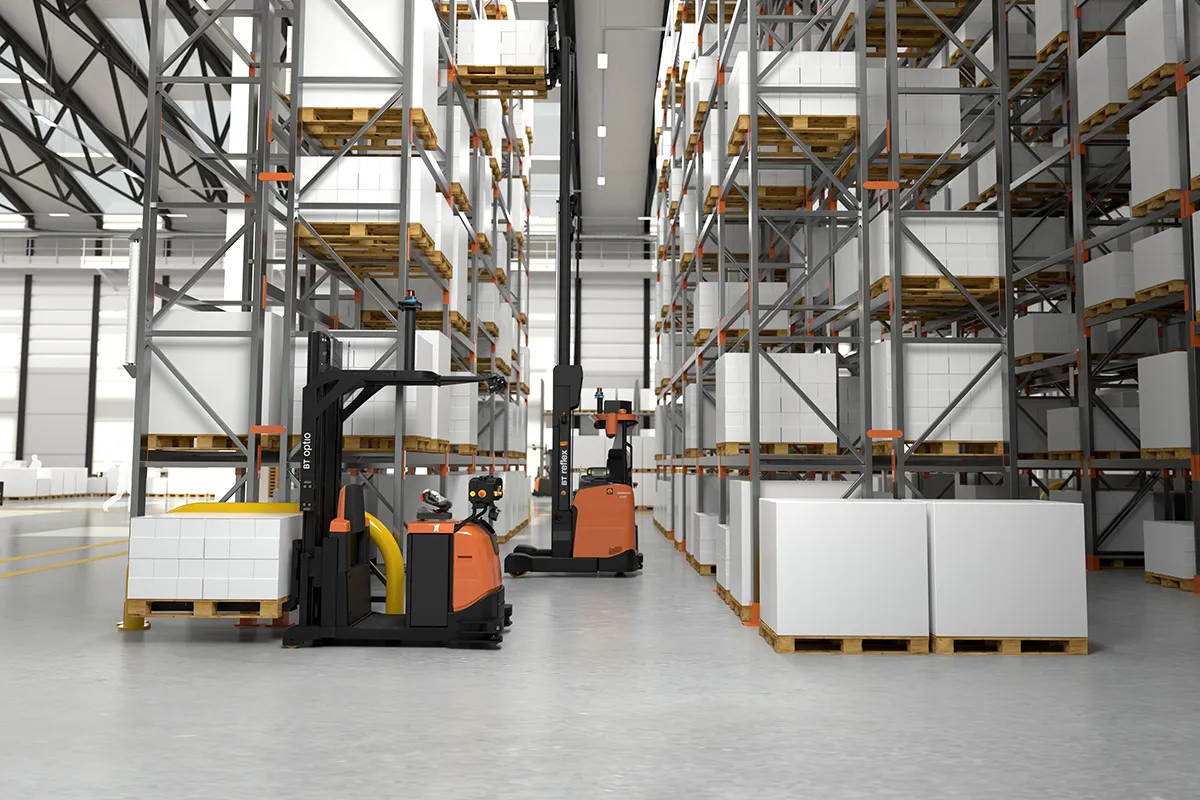
Automating warehouses and production environments with common sense
Warehouse automation is no longer a futuristic idea, but companies’ approaches to it vary enormously. For Thomas Vercammen, Logistics Automation & Innovation Manager at Toyota Material Handling Belgium, automation is not an end in itself. It is about tailoring solutions to the customer, with people, processes and future-proofing in mind. “Technology is important,” he says, “but real progress lies in combining innovation and ergonomics with a realistic view of warehousing.”
Toyota Material Handling is known for its extensive range of products, including forklift trucks, warehouse trucks, AGVs and robotic solutions. But according to Vercammen, there is much more to it than hardware alone. “We have had a very strong service model for forty years,” he explains. “From hire purchase and service contracts to complete automation projects. Today, we draw on that experience at every step towards robotics.”
Toyota Material Handling Belgium serves a broad customer base: almost 85 per cent of all Belgian VAT-registered businesses can use our solutions in one way or another. “Our customers operate in every sector imaginable,” says Vercammen. “Any organisation that needs to move something physical from point A to point B is a potential customer.”
Automating step by step
Although technology is evolving rapidly, Toyota remains cautious and pragmatic in its approach. “We are sparing in our use of automation,” Vercammen emphasises. “Automation should make warehouse operations better, safer and more efficient, not more complex or fragile. That is why I advocate step-by-step automation.”
This phased approach almost always starts with a proof of concept. “We first test it in the customer’s real-world environment. Is the flow right? Does the data match reality? Can we deliver the promised performance? Only once the physical test, whether at our site or the customer’s, or through simulation using our digital twin, has produced convincing results do we move on to industrial automation.”
Proof of concept and transparency
Toyota Material Handling is known for its strong commitment throughout automation projects. “We enter into robust contracts,” says Vercammen. “We ensure that the results promised in the ‘solution description’ are always achieved, in line with the latest legal standards: ‘no cure, no pay’.”
The service provider also takes on a great deal of the financial burden. “We finance many automation projects ourselves. We assess a customer’s creditworthiness ourselves. In a low-margin sector, that is a significant added value. And it obliges us to take a very critical look at the quality of our logistics solutions.”
People remain central
Although automation is often associated with robotics, Vercammen sees people as the starting point. “It is never intended to make people redundant,” he says. “It is there to improve ergonomics, prevent errors and enable employees to focus on tasks with greater added value.”
He envisages a “hybrid” future that develops “step by step”: a mix of manually operated vehicles, semi-automated tools such as RTLS systems and one-dimensional shuttles, and fully autonomous robots. “The challenge is to strike the right balance between what is best kept manual, for example because of peak management or excessive process complexity, and which processes to automate in a way that justifies the ROI and CAPEX.”
“We also like working with customers who bring their own consultants or external software and hardware partners, as well as with trusted partners in our ecosystem. We then make sure that everything is assessed together for feasibility, aligned and properly integrated.”
Long-term thinking matters more than ROI
At many companies, automation starts with financial motives, but Vercammen adds some nuance. “A strong return on investment is valuable, but it does not guarantee a profitable system over ten years. Your business model may change in the meantime. That is why automation must be flexible, scalable and future-proof.”
Another crucial aspect is cybersecurity. “An automated warehouse uses big data, connectivity and software integrations. Security, both physical and digital, is therefore an absolute priority for us.”
Zero-fail mindset
Automation is rarely carried out in an empty warehouse. “We usually implement while the customer continues with day-to-day operations,” says Vercammen. “It is like living in a house while renovating it. That calls for meticulous planning, extensive consultation and a zero-fail mindset.”
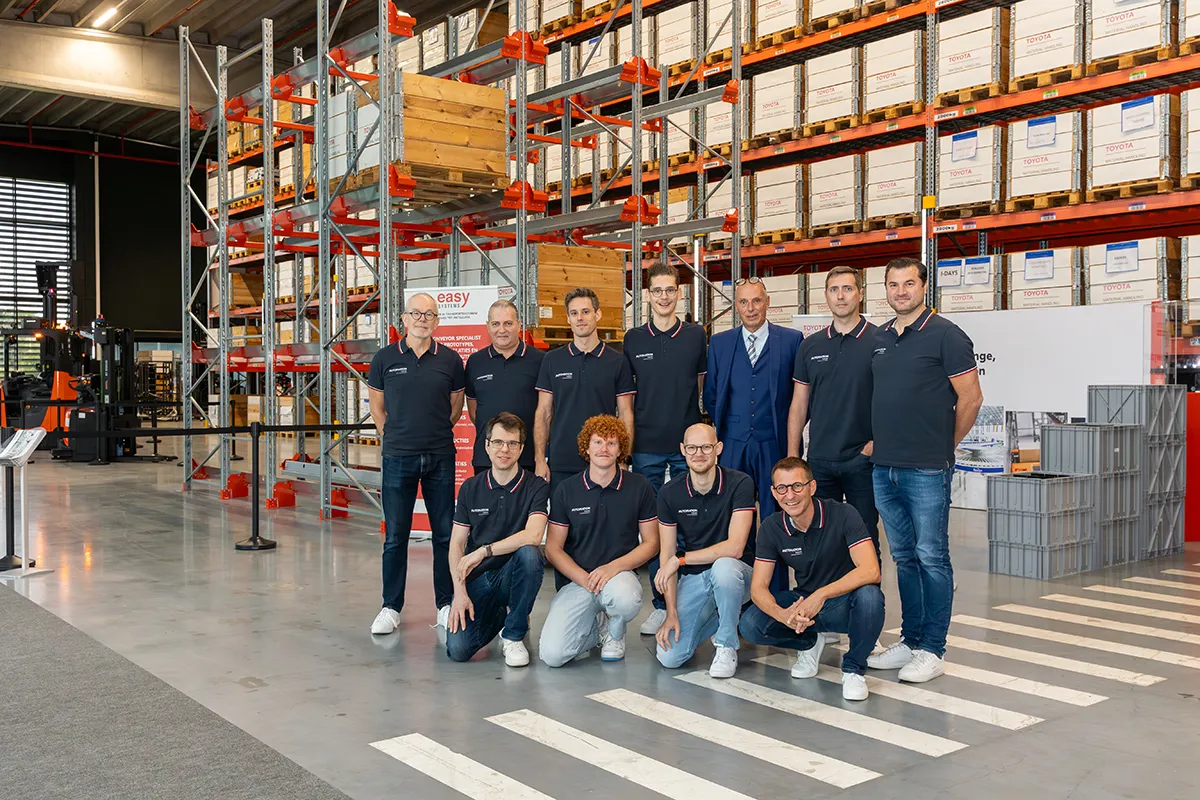
“But it is still a people business. Wherever people work, mistakes can happen. But mistakes are there to learn from and put right. Our implementation team is very strong: they have a great deal of experience and work well together. It is really a large group of friends who take pride in delivering quality work.”
Een zakelijke vraag aan Toyota Material Handling Belgium? Get in touch
Companies in this story
Keep following this
Get an email when a new story is published. No account needed.
- SubjectMaterial handling
- CompanyToyota Material Handling Belgium