












Warehouse automation: 8 steps to make implementation more successful
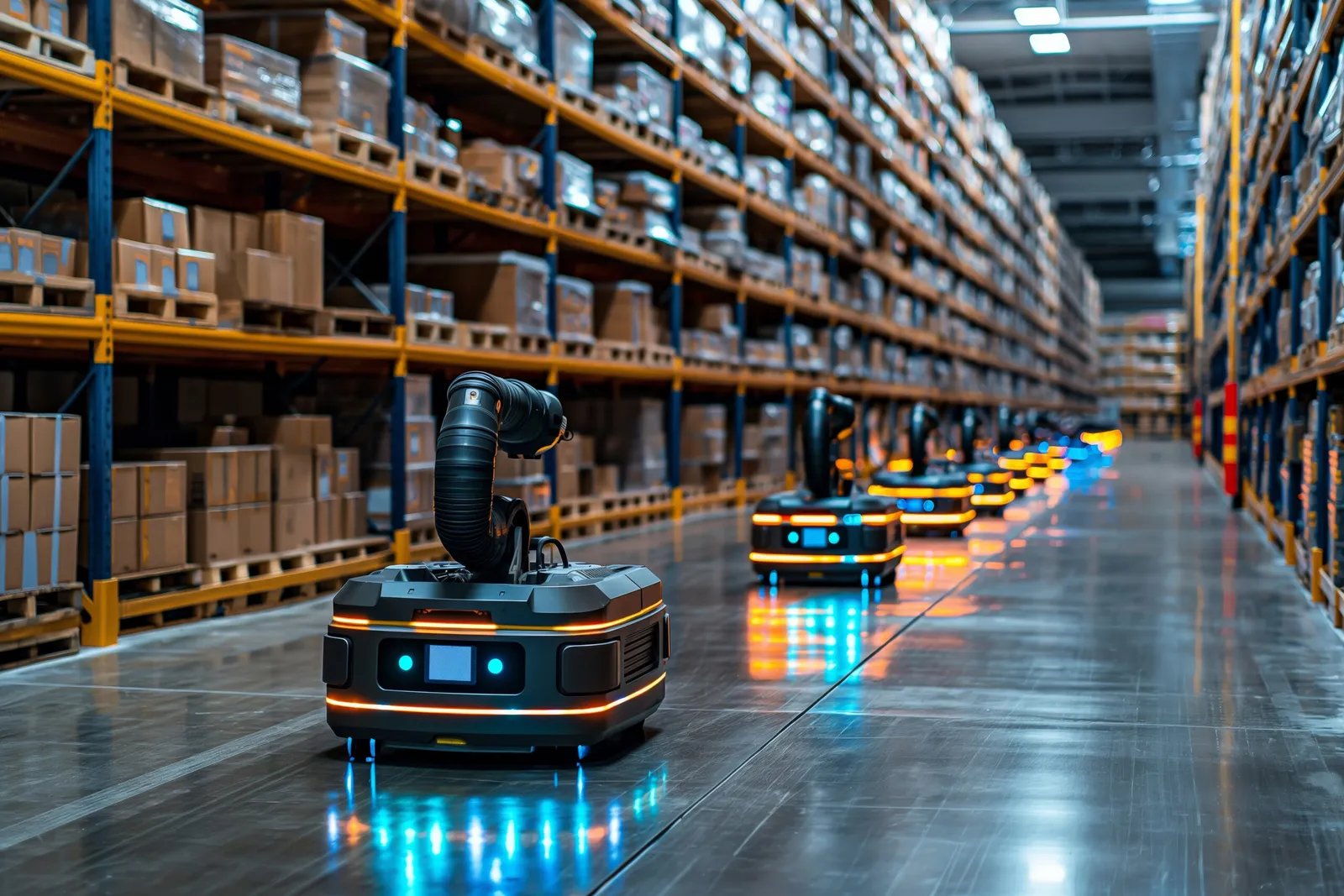
Warehouse automation is no longer a distant prospect. For many businesses, it is now a practical response to rising order volumes, staff shortages and growing expectations around speed, accuracy and flexibility.
As investment in warehouse automation continues to increase worldwide, more and more organisations are moving from planning to implementation. But although the business case is often clear, implementation rarely comes without challenges. Automation projects bring together multiple systems, suppliers, stakeholders and operational dependencies. This means success depends not just on the technology, but above all on how well the entire process is managed.
For logistics decision-makers, then, the challenge is not just whether to automate, but how to do so in a way that delivers returns over the long term.
Based on our experience with automation projects across different sectors, we have identified eight elements that consistently make the difference between a smooth process and a challenging project.
1. Start with the problem, not the technology
A common mistake is to start with the solution rather than the challenge.
Before making investment decisions, it is important to be clear about exactly what needs to improve. Is it capacity, staffing, picking efficiency, quality, ergonomics or throughput? In some cases, automation may not even be the answer. Process optimisation, a better layout or adjusted working methods can sometimes make a big difference without requiring major investment.
Strong projects start with an honest analysis of current bottlenecks and a clear, measurable definition of success.
2. Involve your WMS partner from the outset
Warehouse automation is never just about technology, but about collaboration between systems.
The Warehouse Management System plays a central role in directing processes and connecting manual and automated flows. When the WMS partner is brought in too late, problems often arise around responsibilities, data flows, interfaces and testing.
Bringing this partner to the table from the outset helps suppliers coordinate more effectively and avoids rework later in the process.
3. Think about integration early
Integration is often the decisive factor in automation projects.
The WMS, ERP, Warehouse Control System (WCS) and other layers must work together as a single whole. If integration is only considered later, this often leads to fragmented logic, broken data flows and so-called ‘islands of automation’: solutions that work independently but not together.
A clear integration strategy defines who manages which logic, how information is exchanged, how exceptions are handled and how the solution will support future changes.
4. Be clear, but stay flexible
The specification phase turns ambitions into concrete decisions.
Clarity is crucial. Unclear scope, vague responsibilities and limited documentation often lead to delays, additional costs and changes later in the project. As well as functional requirements, factors such as uptime, scalability and performance must also be clearly defined.
At the same time, it is important not to overdo customisation. Too much customisation makes it harder to make changes later. A modular approach centred on configuration offers greater flexibility and makes future extensions easier.
5. Treat implementation as teamwork
During implementation, collaboration becomes at least as important as the design.
Internal teams and external partners must remain well aligned. This calls for clear agreements, regular coordination, shared monitoring and a structured approach to risks and changes.
The role of end users is often underestimated. Super-users and operational teams often spot practical bottlenecks that others miss. Involving them early improves both ease of use and user acceptance.
6. Take commissioning seriously
The commissioning phase is where theory and practice come together.
This phase takes time. Solutions need to be tested several times, and systems must prove themselves under realistic conditions, including peak loads. Clear acceptance criteria are essential so that everyone has the same understanding of what ‘working’ means.
When testing is cut short because earlier phases have overrun, problems often emerge later. Saving time on testing rarely saves time overall.
7. Go-live is not the finish line
Go-live often feels like the finish line, but it is actually the start of a new phase.
Even well-prepared projects encounter issues when they go live. These often disappear after an initial stabilisation period, only to resurface later as volumes increase and complexity grows.
That is why it is better to view go-live as a gradual process. Additional support, rapid decision-making and operational readiness remain essential after launch.
8. Keep improving after go-live
The real value of automation only emerges after implementation.
Once the system is running stably, operational data reveals new opportunities for improvement. These may include bottlenecks, delays, equipment utilisation and disruptions to flows. This is where continuous improvement becomes crucial.
More and more companies are also using digital twins and simulations to test scenarios before making changes in the live environment. This helps limit risks and further optimise performance without disrupting operations.
In conclusion
Warehouse automation is not purely a technology project, but an operational change that requires clear decisions, strong collaboration and realistic expectations.
Successful companies treat automation as a journey: they start with the right problem, involve the right partners at the right time, test thoroughly and continue to improve after go-live.
Automation can have a major impact on efficiency, scalability and resilience, but only when the entire operation is viewed and managed as a single whole.
The insights in this article are based on Consafe Logistics’ latest guide to warehouse automation.
Read the full eBook: The 8 Steps to Successful Warehouse Automation Implementation [link].
Een zakelijke vraag aan Consafe Logistics B.V.? Get in touch
Companies in this story
Keep following this
Get an email when a new story is published. No account needed.
- ThemeAutomating goods flows
- SubjectGeneral
- CompanyConsafe Logistics B.V.







