












‘There is a mismatch between what companies want and what makes sense’
Text Armand Landman Beeld RoboTobor, Adobe Stock
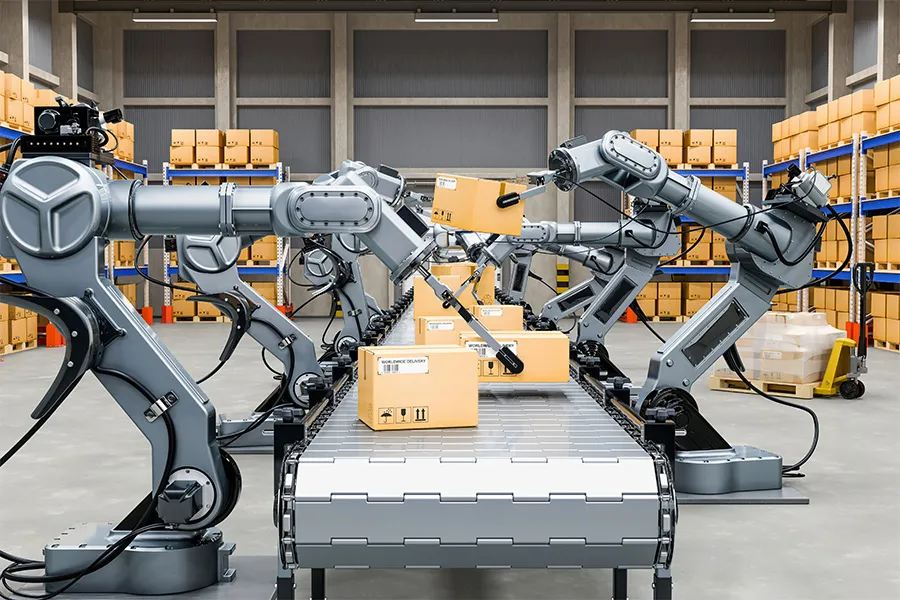
Patrick Verkerk, founder and owner of RoboTobor and a strategic adviser on robotics, believes the future of the logistics sector will increasingly depend on advanced technologies. However, he warns the industry against making ill-considered decisions. “One of the biggest challenges in the robotisation of logistics processes is the lack of knowledge. Especially among SMEs.”
According to Verkerk, robotisation in the logistics sector has grown rapidly in recent years, primarily because of labour shortages and the need to work more efficiently. “Ten years ago, a viable business case was still the main driver of investment in robotisation,” Verkerk explains. “Today, the main reasons are labour shortages and the complexity of logistics processes.”
Verkerk has extensive experience across various industries, from manufacturing to food processing. He points out that robotisation is no longer just about cutting costs, but also about ensuring operational continuity. “It is no longer just about return on investment (ROI); companies are also looking for solutions that will keep their businesses running despite staff shortages.”

Knowledge
One of the biggest challenges in the robotisation of logistics processes is the lack of knowledge within companies, especially among small and medium-sized enterprises (SMEs). “Robotisation is multidisciplinary,” Verkerk stresses. “It involves mechanics, electronics, software and more. Large companies often have their own robotics specialists, but this is much more difficult for smaller businesses.”
Verkerk also notes that there is sometimes a mismatch between what companies want to automate and what actually makes sense to automate. “Companies sometimes want to start with a very difficult process, when they would be better off starting simply. My job is to help them set priorities and make them aware of what does and does not work.”
Plug&Play Marketing
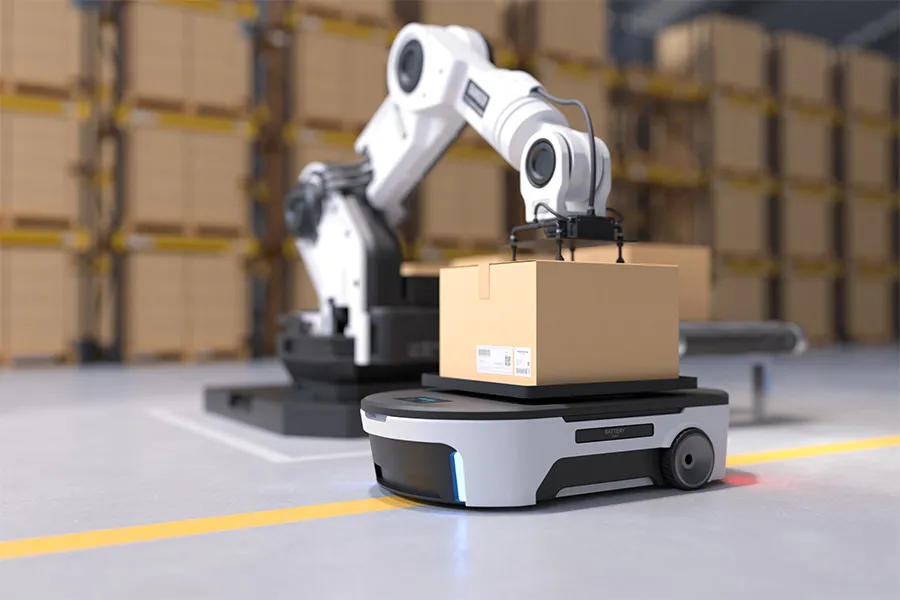
Verkerk also criticises what he calls ‘Plug & Play Marketing’, particularly in relation to Autonomous Mobile Robots (AMRs). “The market has changed considerably over the past five years with the rise of AMRs,” he explains. “AMRs are often promoted as flexible solutions that can be easily integrated into any conceivable layout, navigate autonomously and avoid obstacles. The reality, however, is much more complex. The autonomy of AMRs makes their performance difficult to predict, makes static calculations and simulations more difficult, and the need to meet safety requirements can significantly reduce their flexibility.” According to Verkerk, the performance of these robots is often overstated, leading to unrealistic expectations among companies investing in these technologies.
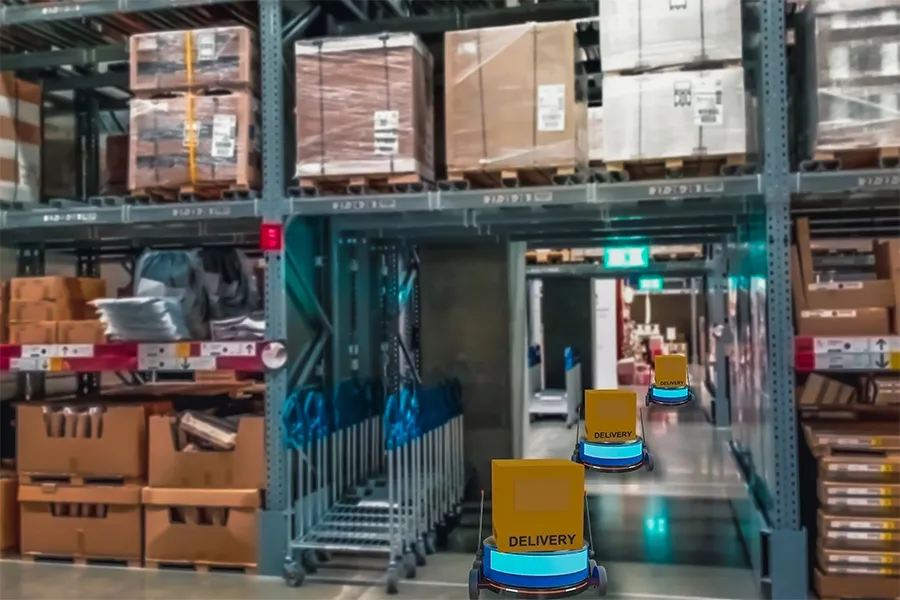
Verkerk also draws a clear distinction between AMRs and Automated Guided Vehicles (AGVs). He explains that AGVs have traditionally been developed by companies with in-depth integration expertise, while AMR manufacturers focus mainly on product development and revenue, often outsourcing integration to third parties. “This outsourcing results in a lack of experience and expertise in intralogistics among the parties carrying out the implementation,” says Verkerk. “The so-called Plug & Play approach fails to account for the complexity of integrating AMRs and AGVs into existing logistics systems, which can lead to significant bottlenecks and inefficiencies.”
The LMTRF method
To provide companies with better guidance on their robotisation projects, Verkerk developed the LMTRF method, which stands for Layout, Material flow, Technology, Routing and Formula. This method helps companies analyse their logistics processes in a structured way and implement the right robotic solutions. “The point is to first understand what you want to achieve through robotisation before proceeding with purchasing and implementation,” says Verkerk.
Verkerk stresses that robotisation requires a tailored approach and that standard solutions are often not enough. “Every company has unique processes and challenges. The success of robotisation depends on how well the solution is tailored to the specific needs of the company,” he says. “It is essential to ask the right questions from the outset and not be afraid to say: this does not work.”
Verkerk expects the role of robotics in logistics to continue growing, especially with the emergence of technologies such as AI and 3D mapping. “We can already see robots getting better at recognising objects and adapting their behaviour to their surroundings. This will further improve the safety and efficiency of logistics processes.” However, he warns that the technology is not yet perfect. “Autonomous mobile robots often still fail to deliver the performance expected of them. They encounter practical problems, such as obstacles in their path, which current AMR technology still struggles to handle in some layouts.”
The right choices
With RoboTobor, Verkerk intends to continue helping companies make the right choices in robotisation during the coming years, which are crucial for the sector. Drawing on his experience and the LMTRF method, he offers companies a practical approach to optimising their logistics processes. Although the challenges are considerable, Verkerk sees great potential in the further development of robotisation in the logistics sector. “Robotisation is not an end in itself, but a means of improving your business processes and making them more efficient,” Verkerk concludes. “It is important to remain realistic and analyse carefully what does and does not work for your specific situation.”
Question about this story? Ask your question
Keep following this
Get an email when a new story is published. No account needed.
- ThemeAutomating goods flows
- SubjectGeneral







