












Sustainable aluminium façade elements for new-build DC UTR06
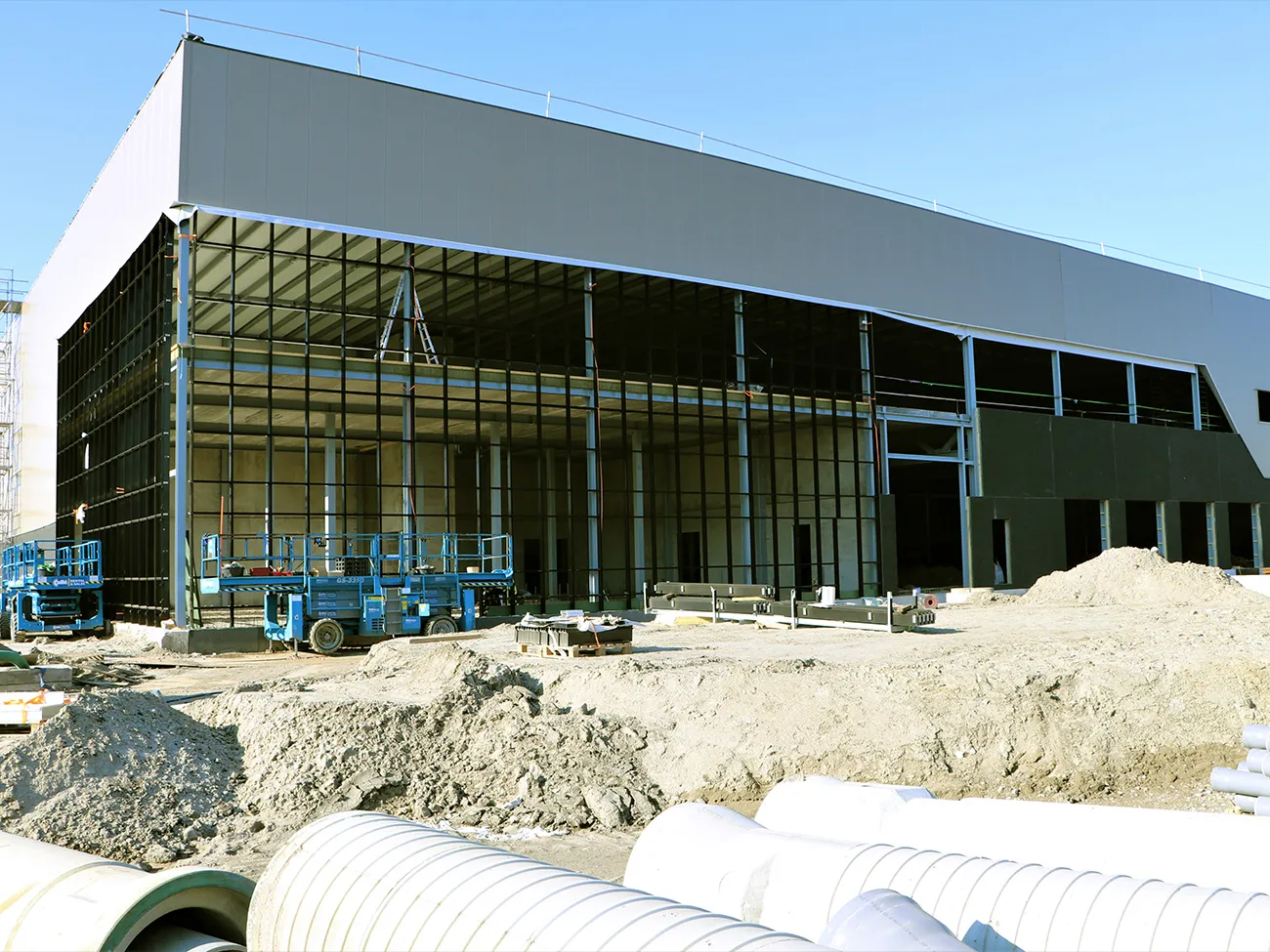
UTR06. This Intospace project involves the construction of three warehouses and a four-storey car park on a single plot, with a combined area of approximately 59,752 m2.
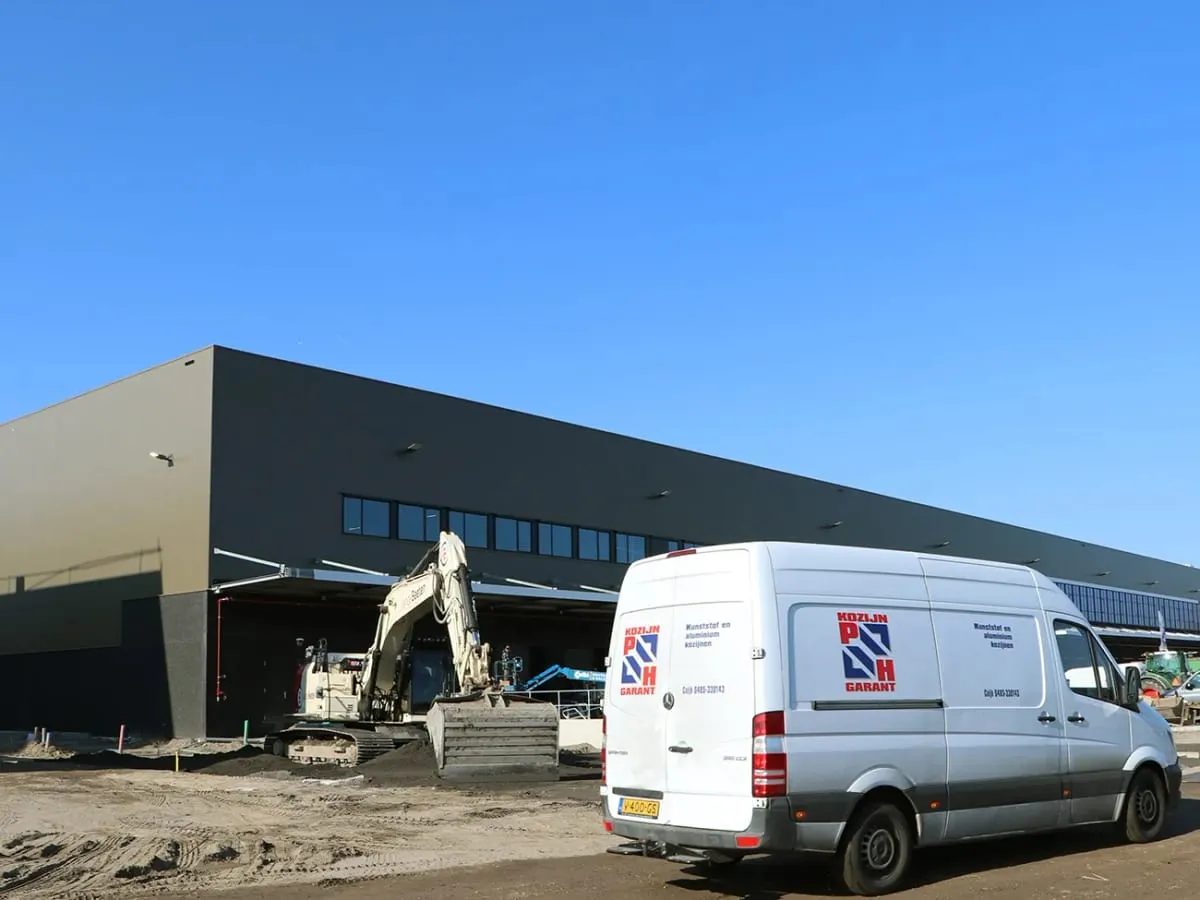
DC UTR06 is under construction on a brownfield site beside the Amsterdam-Rhine Canal, on the Lage Weide industrial estate in Utrecht. This Intospace project involves the construction of three warehouses and a four-storey car park on a single plot, with a combined area of approximately 59,752 m2. Sustainability is central to the design and construction of the distribution centre. The target is a BREEAM-NL ‘Excellent’ rating. The use of recycled end-of-life aluminium façade elements makes a significant contribution towards this goal. The aluminium curtain walls and window frames for DC UTR06 are made using SAPA aluminium profile systems. SAPA, like WICONA, is part of Hydro Building Systems. Kozijn Garant is responsible for manufacturing, supplying and installing the systems.
“Commissioned by main contractor Wouters Schijndel and based on Quadrant4’s aesthetic 3D/BIM design, we produced the construction drawings for all the aluminium curtain walls, window frames, windows and doors, including the associated construction details,” says Rudy Heijligers, owner of Kozijn Garant. “Wouters Schijndel’s project planners checked our drawings and provided feedback where necessary, after which we made a few further optimisations. Once the main contractor had approved them, we started production straight away.”
Trusted partners
Wouters Schijndel is a trusted client of Kozijn Garant, says Heijligers. “In the past, we have also supplied aluminium façade elements made using Hydro CIRCAL recycled aluminium for distribution centres operated by Zalando (Bleijswijk), H&M (Nieuwegein), fonQ (Utrecht), Kuehne + Nagel (Utrecht), Picnic (Utrecht) and Albert Heijn (Zaandam). The same applies to various distribution centres for Mainfreight in Zaltbommel and ’s Heerenberg, Kelders and Holland Food Service in Wijchen, and Tesla in Tilburg. The experience we gained on these projects has proved invaluable here. The result is a smooth and well-organised construction process.”
Hydro CIRCAL is one of the most sustainable aluminium alloys in the world, says Marc van den Nieuwenhof, Area Manager at Hydro Building Systems Netherlands. “Hydro CIRCAL is high-quality aluminium that contains at least 75% recycled end-of-life aluminium (post-consumer scrap), recovered from windows and façades in existing buildings. The higher the recycled content, the smaller the carbon footprint. This project uses 100% Hydro CIRCAL 75R!”
Lowest carbon footprint
Melting aluminium for new applications uses just 5% of the energy required to produce primary aluminium, Van den Nieuwenhof emphasises. “So the higher the proportion of recycled post-consumer scrap, the better for our cities and the environment. Aluminium can also be recycled indefinitely without any loss of quality or material properties. We have now scaled up production in the Benelux to the point where we use only Hydro CIRCAL for SAPA profile systems in the Benelux. The production process is fully traceable and the product is certified by an independent body, DNV-GL. Hydro CIRCAL has the lowest carbon footprint in the world, at approximately 2.3 kg of CO2 per kilo of aluminium. That is 86% lower than the global average for primary production (16.7 kg of CO2). This enables us to assure project developers, architects and investors that their projects meet all the requirements for sustainable building certifications such as BREEAM, LEED and DGNB, while helping to create a better world.”
Minimal offcuts
All profiles for DC UTR06 are delivered to Kozijn Garant’s factory in Cuijk, powder-coated in the specified colour (RAL 9011), in lengths of 6.5 and 7 metres and in easy-to-handle stillages, says Heijligers.
“On arrival, every profile is thoroughly inspected. A sawing machine then cuts the products to size, with a cutting list ensuring accurate dimensions. We cut all profiles as efficiently as possible, keeping offcuts and waste to a minimum.”
At the machining department, holes are drilled, locks and drainage channels are milled, and other preparatory work is carried out. “The profiles are then assembled using cleats, and the gaskets and ironmongery are fitted. The windows and doors are also hung here,” says Heijligers. “In warehouses B and C, automatic sliding doors are being installed alongside standard doors. We gather all the products and, in close consultation with the site managers and planners, transport them to the site just in time, where we carry out the installation.”
LARGE VOLUME, HIGH CONSTRUCTION SPEED
The main challenge on this project is the volume, combined with the high construction speed, he says. “In total, we are manufacturing, supplying and installing 2,500 m2 of curtain walling, approximately 12 metres high and divided into 1-metre-wide sections, as well as 550 m2 of window frames. We are also supplying the cladding material for the car park and storm-resistant screen blinds for the offices. For the latter, we have brought in a solar shading partner, who is responsible for supply and installation based on our measurements.
Question about this story? Ask your question
Who worked on DC UTR06
- contractorWouters SchijndelIn this story
- 3D/BIM designQuadrant4In this story
- production, supply and installationKozijn GarantIn this story
- aluminium profile systemsSAPAIn this story
- aluminium profile systemsHydro Building SystemsIn this story
Keep following this
Get an email when a new story is published. No account needed.
- ProjectDC UTR06
- SubjectGeneral
- CompanyWouters Schijndel
- CompanyQuadrant4
- CompanyKozijn Garant
- CompanySAPA
- CompanyHydro Building Systems







