












Safety in warehouses and distribution centres: how to prevent vehicle impact damage and accidents
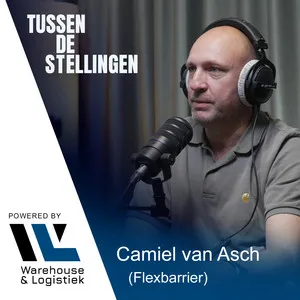
A safe working environment is essential in warehouses, distribution centres and industrial settings. Yet collisions, damage and near misses involving forklifts and other materials-handling equipment happen every day. In this episode of Tussen de Stellingen, host Roel van Gils talks to Camiel van Asch, managing director and owner of Flexbarrier, about the biggest safety risks on the shop floor. They discuss how companies can prevent damage, the role of impact protection, floor marking and safety barriers, and why good housekeeping, behaviour and smart technology are indispensable for a safe, future-proof warehouse.
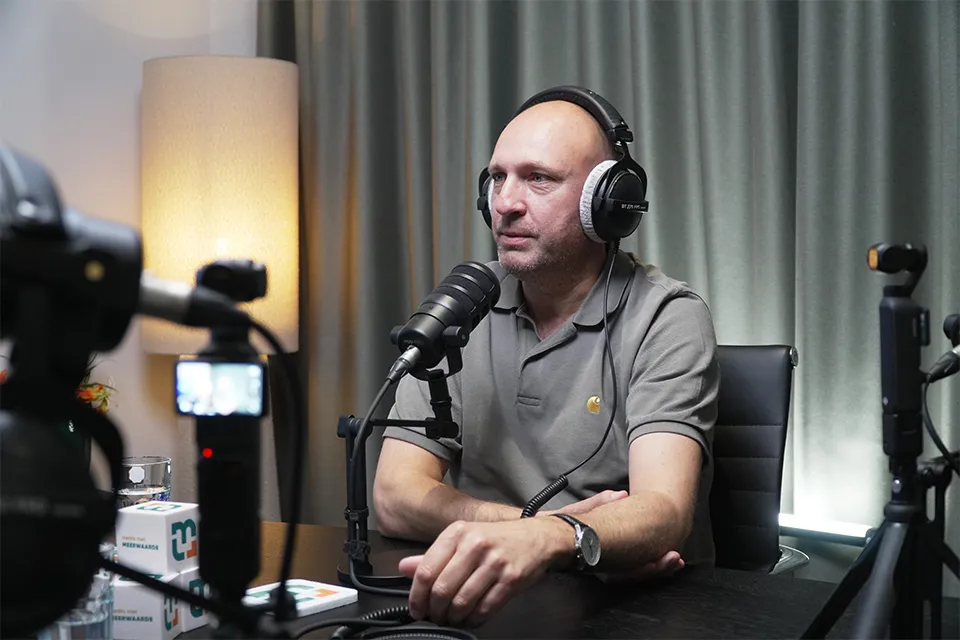
Interview with Camiel van Asch, Managing Director of Flexbarrier B.V.
Host: Roel van Gils
Have a business enquiry for Flexbarrier? Get in touch
Full transcript
All chapters (16)
- Workplace safety
- Damage and unsafe situations in practice
- Awareness of safety risks
- Causes of damage
- Automation adds to the challenges
- What the best companies do differently
- From assessment to advice
- Floor marking as part of safety
- Floor markings or impact protection
- Steel or plastic?
- Safety fencing
- Pallet gates on mezzanine floors
- Innovation: sensors and smart detection
- Why plastic is increasingly preferred
- What will the safe warehouse of the future look like?
- Safety starts with behaviour
Workplace safety
Roel van Gils A toppled check-in kiosk worth €10,000, a racking bay almost driven clean through, a forklift driver who just misses a colleague. These are not isolated incidents. Every day, situations arise in warehouses, distribution centres and industrial settings that can have serious consequences for people, equipment and business continuity.
Roel van Gils In this episode of Tussen de Stellingen, we discuss workplace safety. Why are risks increasing? What role do automation, labour shortages and logistics growth play? And above all, how can you prevent accidents before they happen?
Roel van Gils Joining me is Camiel van Asch from Flexbarrier. Camiel, welcome.
Camiel van Asch Thank you.
Roel van Gils Tell us a little about yourself.
Camiel van Asch Yes, of course. My name is Camiel van Asch. I’m managing director and owner of Flexbarrier. Flexbarrier specialises in impact protection and a number of related products. Our aim is to make workplaces safer and prevent damage and accidents. We mainly work in logistics and industry, in the Netherlands and Belgium. That’s our focus, every day.
Damage and unsafe situations in practice
Roel van Gils So you visit these kinds of companies every day. What do you see? Can you give us a few examples?
Camiel van Asch Plenty. I’m already smiling. I won’t name any names. Some places in the Netherlands are very safe and well organised. People are proud of the company they work for. They look out for their colleagues and take care of the equipment, stock, racking, columns and building, especially when it’s new.
Camiel van Asch As that sense of involvement declines, for example when the proportion of agency workers rises and their connection with the company weakens, you also see more damage. It’s much like your own home or car: when it no longer looks so good, you often take less care of it. The same applies in logistics and industry. The number of damage incidents, and sometimes accidents too, simply goes up. We see this every day in all sorts of ways.
Roel van Gils Can you give us some examples?
Camiel van Asch Certainly. I always take before-and-after photos. I could build up quite a collection of the ‘before’ shots. Sometimes entire passageways have been driven through. At other times, you see the forks of a forklift have gone straight through the wall above a doorway. You really wonder how that could have happened.
Camiel van Asch If that column is still supporting the building, I want to get back outside as quickly as possible.
Camiel van Asch You see the same with racking. Sometimes it’s half bent out of shape.
Roel van Gils They then prop it up, as it were.
Camiel van Asch Yes, they take the first steps. But really, you know it needs to be replaced. Sometimes they wait to see if it gets picked up during an inspection.
Camiel van Asch You also see situations where someone is sitting at a desk on the shop floor, with PPTs and forklifts constantly passing around them. I think: I wouldn’t want to sit there, knowing all that internal traffic is moving right behind me. Those are exactly the kinds of situations we notice.
Read the full transcriptCollapse transcript14 chapters remaining
Awareness of safety risks
Roel van Gils We can address these situations, but are companies aware of the risks?
Camiel van Asch Yes, they are, by and large. The good thing is that I often walk around a site with the warehouse or site manager. They are usually well aware of some of the risks. The question, of course, is whether safety is genuinely a priority within the company. Most companies put safety high on their list of priorities. The next question is how much they actually do about it.
Camiel van Asch You can say, ‘Safety is extremely important here.’ But you also have to act on it. I can tell how important it really is to someone when I walk around the site with a site or warehouse manager. I can also get a sense of whether there’s a budget for it. I often find they’ve already thought about a number of situations. That’s when we can move forward.
Camiel van Asch During a walk-round, we also spot plenty of things they hadn’t noticed. That’s the added value of our advice. We can talk them through it. For example, I might say: ‘Have you realised there’s someone sitting at a desk there?’ It may not have been on their list, but I’d add it. They can then decide for themselves what to do about it.
Roel van Gils But you’ve brought it to their attention.
Camiel van Asch Yes, exactly. I’ve noticed it. There are also some differences between types of company in the Netherlands. Some have a US parent company. Safety is hugely important to them, particularly given the risks and potential financial consequences. In those cases, budget is often no issue at all, or at least much less important. Safety simply has to be ensured.
Camiel van Asch Other organisations, especially in logistics, operate on very tight margins. Everything has to be fast and efficient. That can leave less room and budget for safety, because the operation needs to run as efficiently as possible.
Causes of damage
Roel van Gils What are the usual causes of these kinds of incidents?
Camiel van Asch It’s mainly down to the forces generated by materials handling. With a manual pallet truck, they’re fairly limited. But once you’re dealing with a forklift, the forces are enormous. The weight of the vehicle, the driver and the load all come together.
Camiel van Asch When that combination hits something at six, ten, twelve or even fifteen kilometres per hour, the impact is enormous. That’s the source of a lot of damage. It will always happen. As long as materials-handling vehicles are moving, whether indoors or outdoors, there’s a risk. Outside, that often means lorries or vans, but wherever there’s movement, there’s risk.
Automation adds to the challenges
Roel van Gils But it sounds as if safety is becoming increasingly challenging.
Camiel van Asch Definitely. As more processes become automated, you see that reflected in warehouses and factories. They contain machinery and automated systems in which substantial investments have been made. There’s always a boundary between the area used by materials-handling vehicles and the automated area.
Camiel van Asch The two must never come into contact. If they do, and someone enters the automated area, the consequences can be enormous. An entire operation can grind to a halt, quite apart from the extensive damage to the automated system.
What the best companies do differently
Roel van Gils You said at the start that there are big differences between companies. What do the best companies do differently?
Camiel van Asch They keep things organised and tidy. Without necessarily referring to the 5S model, which includes Safety, you can see that safety is genuinely part of the culture. It’s visible on the shop floor. There are messages on the walls, safety is discussed at morning briefings, and there’s structure throughout the building.
Camiel van Asch A tidy room isn’t automatically a safe one. But on a shop floor, in a warehouse or factory, I do see that good housekeeping gives people peace of mind. When you reinforce that structure with floor marking and impact protection, things become even clearer. That’s when you see companies that really have their house in order.
Camiel van Asch At companies where that isn’t the case, the warehouse is often just a mess. And then the likelihood of damage increases too. If people take care of things, they stay tidy. If they don’t, the trouble starts.
Roel van Gils So safety isn’t just a cost. You also need to have the right organisational arrangements in place.
Camiel van Asch Yes, absolutely.
From assessment to advice
Roel van Gils You said you don’t just supply products. You manage complete projects. How does that work?
Camiel van Asch This is how it works. At some point, we approach a company or they approach us. Nine times out of ten, we suggest starting with a site visit. That gives us a feel for the situation. We can see the traffic flows, whether the shop floor is busy or quiet, and whether there are valuable or fragile items in the building.
Roel van Gils So, an initial assessment.
Camiel van Asch Yes, exactly. We simply call it a site visit. We go to a warehouse or factory and walk around together. We can then give some initial advice, perhaps suggesting solution A or solution B. We pull it all together and prepare a summary in the form of a presentation.
Camiel van Asch We accompany the presentation with a quotation. During the presentation, I show what I’ve noticed. If I’ve identified twenty situations, that doesn’t mean the customer wants a quote for all twenty. The customer sets the priorities. They might say: do these ones, but leave those for now. We then incorporate that into the final advice and quotation.
Roel van Gils Yes.
Camiel van Asch So we start with some advice. We discuss it with the customer. I always say we do it together. It’s not just my project, it’s ours. Safety is what we work on every day, but from that point on it’s something the customer owns too.
Roel van Gils Do you focus purely on your own products, or do you give broader advice as well?
Camiel van Asch Yes, absolutely. If something goes beyond our products, we’re not afraid to point that out. There are sometimes issues we don’t deal with ourselves, but we still bring them up. We now have a number of partners and contacts we can refer customers to. We exchange phone numbers and say: try getting in touch with that company. Our services start with advice during the early stages. If it becomes a project, we manage it from start to finish. That can include installation, if the customer wants it. The customer can also do it themselves if they have the people and time. Otherwise, we take care of it.
Floor marking as part of safety
Camiel van Asch Floor markings are also becoming an increasingly important part of our business. Floor markings and impact protection are closely related. You can fit walkways with impact protection. These sometimes lead to a pedestrian crossing where people need to cross. That helps us create clarity, order, visibility and structure on the shop floor.
Roel van Gils But ideally, you also include installation?
Camiel van Asch No, we simply try to manage it. It’s an option for every customer. Of course, we’d like to sell something, but I’ll only sell you something if that’s what you want too.
Roel van Gils Why is that final step, the installation, so important?
Camiel van Asch Because we employ professional installers who know how to communicate with the customer on the shop floor. We often find that the situation has changed between the time the equipment is ordered and when it is installed. Our installer may be on site for several days and then see other things. So we may end up adjusting the original design.
Roel van Gils Really?
Camiel van Asch Yes. We work it out on site. We make it fit and get it done there and then. Customers appreciate that.
Floor markings or impact protection
Roel van Gils You’ve already mentioned a few products: impact protection and floor markings. Which solutions are used most often?
Camiel van Asch Everything comes down to budget. Sometimes a section of floor marking, which costs less than impact protection, can already provide a certain level of safety. You can mark out areas on the floor and say: nothing can be left here. But it’s still just a marked area. Someone can always put something in it.
Roel van Gils Of course.
Camiel van Asch Take it from me: if they need the space, they’ll put something there anyway. That stops once you install impact protection. Then they simply can’t. So you’re taking a further step towards controlling and fixing the situation. That does, of course, require a bigger budget. Depending on the product or solution we offer, you can improve safety step by step.
Roel van Gils Yes, I see.
Camiel van Asch But of course, that also significantly improves safety.
Roel van Gils That’s true.
Steel or plastic?
Roel van Gils And I understand that plastic is gaining ground in impact protection.
Camiel van Asch Yes, that’s right. I always distinguish between indoor and outdoor use. And depending on the location, we look at what’s going on there. What types of vehicles are operating outside? Are they lorries or flatbed trucks? Do the forklift trucks also go outside? That’s another question.
Camiel van Asch Indoors, we also look at what vehicles are operating. In some areas, only manually operated pallet trucks are used. They have a much lighter impact than a forklift truck or reach truck. So we always start by looking at what happens in that particular area. What’s the best solution here?
Roel van Gils Yes, but steel or plastic?
Camiel van Asch Yes. Taking into account what the customer wants and what vehicles operate indoors or outside, we often choose a steel solution outdoors, sometimes combined with concrete.
Roel van Gils Mainly because of the heavier loads, I suppose.
Camiel van Asch That’s right. The impact is simply greater there. Steel offers a wide range of strength options. You can even fill a steel bollard with concrete. That gives you a really robust solution for lorries.
Camiel van Asch Historically, steel was widely used indoors. Today, there’s a clear trend towards plastic. In existing buildings, steel impact protection is increasingly being replaced with plastic. It’s flexible, absorbs the force of an impact and reduces damage to both the impact protection and the material handling equipment.
Camiel van Asch You can see this trend in existing buildings, but new buildings are also increasingly being fitted with plastic impact protection from the outset. The thinking is: let’s use the right option from day one.
Roel van Gils Because there are different grades of that too.
Camiel van Asch Yes, definitely.
Roel van Gils And less consequential damage as well.
Camiel van Asch Yes.
Safety fencing
Roel van Gils Right. You’ve talked about floor markings and impact protection. Do you also supply safety fencing?
Camiel van Asch Yes. Machine guarding.
Roel van Gils So people can’t walk into it.
Camiel van Asch Yes. These are mesh fences that you can’t actually reach through. You mustn’t be able to access the machine, for any reason. It’s already a familiar sight in industry. You see it a lot in factories.
Camiel van Asch You’re seeing it more and more in warehouses too. There are an increasing number of areas within a warehouse that need to be secured. With safety fencing, a door, security measures and, for example, a badge reader, we can create a kind of cage or segregated zone within a warehouse. That way, goods can be stored securely.
Camiel van Asch It’s becoming more common because warehouses often contain different types of products with different values.
Roel van Gils Right, but what about separating areas for different tenants, for example?
Camiel van Asch That happens too. Someone might build a 50,000-square-metre warehouse, often with room to grow. It’s rare for the full 50,000 square metres to be needed straight away. There may still be 10,000 or 20,000 square metres available for the time being.
Camiel van Asch Then you can say: dock doors 1 to 12 are ours, and we’ll rent out dock doors 13 to 18, together with the storage space behind them. We can install a mesh partition wall, which can later be easily removed or reused elsewhere. That creates a clear division between party A and party B.
Pallet gates on mezzanine floors
Roel van Gils And finally, we have pallet gates.
Camiel van Asch Yes, you often find them on mezzanine floors.
Roel van Gils Yes.
Camiel van Asch Sometimes you come across mezzanine floors where they’re missing. Then I wonder: how do they get a pallet up here and take it back down? The person working up there isn’t safe. They’re just looking down into a gaping hole.
Camiel van Asch So you still see risks like that, and I think: this could really be done differently or better. You can use sliding systems, possibly automated ones. You can provide workers with fall protection. Or you can install a pallet gate.
Camiel van Asch A pallet gate always creates a safe working situation. The pallet can be placed safely while the person working on the mezzanine remains protected. They can never fall through the pallet gate. That’s another way to improve safety on the shop floor.
Roel van Gils So those are basically your four product categories.
Camiel van Asch Yes. Impact protection is the largest category, followed by floor markings and then the other categories. My colleagues and I also occasionally explore other products in warehouses and factories. Why? Because new developments are emerging.
Camiel van Asch One example is LED projection. This isn’t floor marking with paint, but markings projected from the ceiling. You hang an LED projector from the ceiling and it projects lines or, for example, a pedestrian crossing onto the floor.
Innovation: sensors and smart detection
Roel van Gils That’s a good lead-in, perhaps. Looking at developments in existing products, have there been any major innovations?
Camiel van Asch Yes. When it comes to impact protection, which has traditionally been made of steel, there’s certainly a trend towards plastic. Plastic has several advantages over steel, mainly its flexibility and ability to absorb impact.
Camiel van Asch Another thing you’re seeing, more with plastic than with steel at the moment, is the use of sensors in bollards. Some impact protection systems have a sensor built into the bollard. This lets you detect where most collisions occur.
Roel van Gils Where the greatest impact is.
Camiel van Asch Yes, where the critical points are, where vehicles have hit the impact protection. You can then create a kind of heatmap showing the locations where the greatest impact occurs.
Roel van Gils That’s where it’s critical.
Camiel van Asch Exactly. You can also create a heatmap of traffic movements, showing all the routes being taken. Then you can ask yourself: should I take a closer look at that corner, perhaps, in relation to the people who work or walk there? Have I made it safe enough?
Camiel van Asch You’re also seeing technology combined more and more often. For example, we implemented a solution with impact protection along a walkway and a pedestrian crossing displayed using LED projection. As long as no forklift truck is approaching, the crossing is visible and people can cross through an access gate.
Camiel van Asch When a forklift truck approaches, the crossing disappears automatically and the gate locks. It all works using sensors. You have to wait until the forklift truck has passed. You can also configure the system the other way around, so that pedestrians have priority.
Camiel van Asch So you’re increasingly seeing technology combined with traditional forms of impact protection. The use of sensors alongside them is clearly growing.
Roel van Gils You’re really seeing that more and more.
Camiel van Asch Yes.
Why plastic is increasingly preferred
Roel van Gils With steel impact protection, you can see when it’s been damaged. Perhaps that’s less obvious with plastic?
Camiel van Asch That’s right. With steel, you see the damage straight away. With plastic, much less so.
Roel van Gils So the question is, of course: to what extent is safety still guaranteed?
Camiel van Asch When steel impact protection takes a direct hit, it’s effectively written off. It bends, dents appear, the anchors can come loose and sometimes even the floor is damaged. It may still be standing, but it’s no longer doing its job properly.
Camiel van Asch I see that very often. I’ll walk past a barrier like that and give it a kick. The customer usually isn’t too pleased, but then I ask: do you want to leave it like this, or shall I include it in the quotation? We laugh about it together, but they know they need to do something about it.
Camiel van Asch Plastic is a good solution in that situation. It’s much more flexible than steel. Not infinitely flexible, of course, because ultimately it still has to stop the vehicle.
Roel van Gils It still has to retain its strength, in the end.
Camiel van Asch Exactly. Plastic also causes much less damage to the vehicle. It’s like a car scraping along a crash barrier. You can immediately see the damage to both the barrier and the car.
Camiel van Asch The same goes for a forklift truck. I visit sites where the forklift trucks are in a terrible state. A forklift truck is worth a considerable amount, of course. If you want to trade it in later, a buyer will also see that it’s taken quite a few knocks.
Roel van Gils It’s been through a lot.
Camiel van Asch Yes, it’s had a good life. That also means extra depreciation on your material handling equipment. In that way, plastic impact protection pays for itself compared with steel.
Roel van Gils And how long does plastic last?
Camiel van Asch It’s excellent. With steel, you often find that an entire barrier or post has to be scrapped after being hit. With plastic, it’s often only a few components that are damaged. You don’t have to replace everything. You simply order the damaged components and restore the system to its original condition using a combination of existing and new parts.
Roel van Gils It’s also more sustainable.
Camiel van Asch That’s right. Even though it’s plastic, and some people may see that as less sustainable, this approach allows us to make it as sustainable as possible.
What will the safe warehouse of the future look like?
Roel van Gils Okay. So, looking to the future, what do you think a safe warehouse will look like?
Camiel van Asch I’d actually come back to what we were talking about earlier. Just last week, I visited a customer who is doing a great job of tackling this. We submitted a substantial quotation for an existing warehouse that’s currently in a bit of a mess.
Camiel van Asch The warehouse manager is going to bring some structure to it. That brings me back to the 5S model, or whatever theory you use. Make sure there’s order, cleanliness, calm, visibility and safety.
Camiel van Asch This warehouse manager understood that well. He explained to the management that productivity could increase if the warehouse were cleaner and better organised. For example, you’d spend less time looking for pallets. There would be less damage, and employees would have to make fewer unnecessary movements, with or without the support of automation.
Camiel van Asch Looking for a pallet takes time. The lorry is waiting, the driver is ready and the load needs to go out. If you get a better handle on that, it delivers an immediate benefit.
Camiel van Asch We were talking about an investment of around 100,000 euros in impact protection. That sounds like a substantial amount. But if it makes you consistently more productive and safer, and you consider the volume of goods coming in and going out every day, you’ll recoup that investment quickly.
Camiel van Asch You can then put together a business case for the management team. They can easily say: this is justified.
Camiel van Asch I also have an example from a meat processing company. Damage to doors, openings and walls there cost around 200,000 euros a year. The investment to protect all the critical points came to around 80,000 euros.
Camiel van Asch The expectation was that this would reduce annual damage from 200,000 euros to around 100,000 euros. You don’t need to explain to anyone that an investment like that will pay for itself. It was approved very quickly.
Roel van Gils And did it deliver?
Camiel van Asch Yes. Fortunately, we have customers we’ve been working with for years, precisely because it works.
Roel van Gils So they also report back on the results.
Camiel van Asch That’s right. Sometimes I’m sent videos or photos of situations on the shop floor. You can see how the damage happened. We both just look away for a moment and think: how could this have happened?
Roel van Gils But it does happen.
Camiel van Asch It does. In the Netherlands too.
Safety starts with behaviour
Roel van Gils Finally, Camiel, what message would you like to leave our listeners with?
Camiel van Asch We’re living in a time when the labour market is tight. A lot is being asked of people. We all have to work that bit harder with the same staffing levels, because there are no extra pairs of hands available.
Camiel van Asch That means we’re automating further. It requires investment, but ultimately it also delivers a return.
Camiel van Asch My main message to warehouse managers and site managers is: keep a close eye on the people on the shop floor and their behaviour. In many warehouses, people from different backgrounds and cultures work together. That’s precisely why safety must remain high on the agenda.
Camiel van Asch Ultimately, safety depends on behaviour. If you can guide that behaviour in the right direction as a warehouse manager or site manager, then you’re a star in my book. But you can only do so much, because we’re human, and we always will be.
Roel van Gils But floor markings are very universal, of course. Everyone understands them.
Camiel van Asch That’s right. The same goes for impact protection, signage and all the other visual solutions. They make it clear to everyone what’s expected.
Camiel van Asch I hope every warehouse manager and site manager keeps safety high on the agenda, and takes real action on it. I hope they get the necessary budgets from management.
Camiel van Asch First and foremost, try to guide people’s behaviour. And where that doesn’t work, because that’s simply the reality, you can use the solutions and products available for that purpose.
Roel van Gils Great. Thank you. And make the most of it.
Camiel van Asch Thank you.
Companies in this story
Keep following this
Get an email when a new story is published. No account needed.
- ThemeSafe and healthy warehouse work
- SubjectGeneral
- CompanyFlexbarrier







