












How innovation and sustainability are shaping the evolution of industrial floors
Text Carolien Klees Beeld Van Berlo
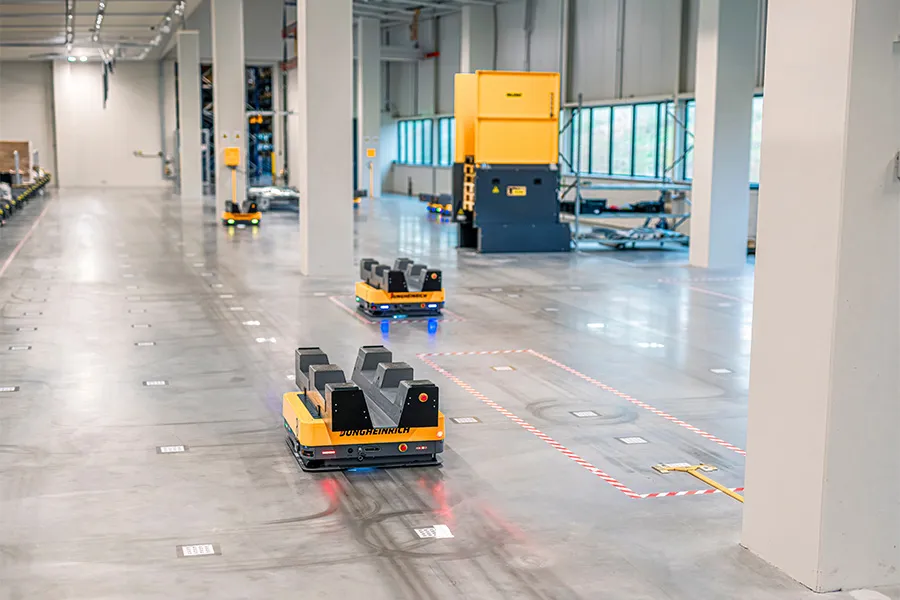
Industrial floors have evolved enormously over the past two decades. What began as a purely structural element is now a crucial factor in the success of modern warehouses and distribution centres. What has changed, and what is the best industrial floor today? We asked Daniël Toonen, senior sales engineer at Van Berlo vloeren. For 45 years, this flooring specialist has combined craftsmanship with innovation, and sees every day how sustainability, circularity and technology reinforce one another.

According to Toonen, the evolution of industrial floors reflects a combination of technological progress and changing attitudes. “In the past, the floor was a necessary evil,” he says. “In the 1990s, concrete was simply poured, either in 5 by 5 metre sections or in 30 by 30 metre sections. Over the past two decades, we have transformed a product to which little value or technical consideration was attached into a quality product in the broadest sense of the word.”
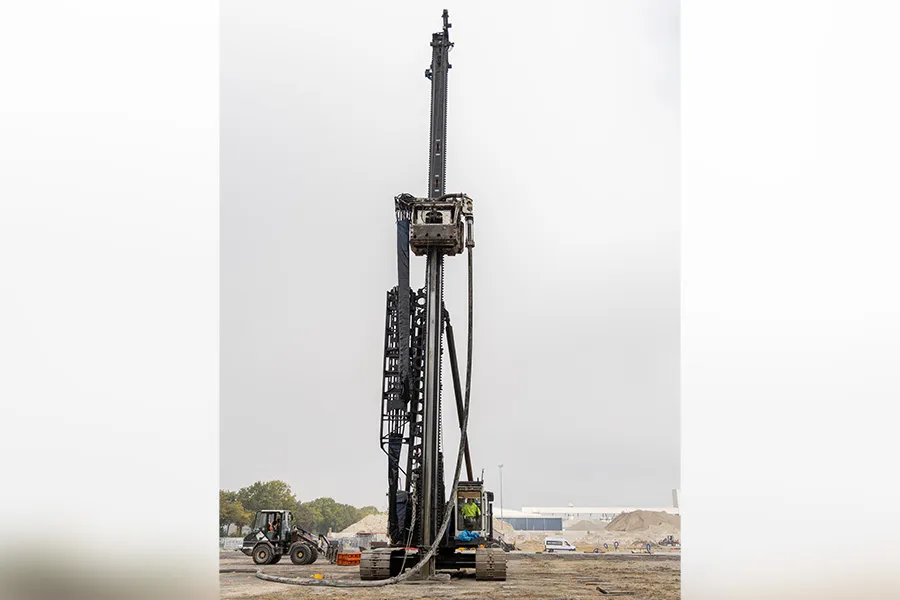
Mini Vibropalen
“In 2000, Van Berlo began marketing a highly effective foundation pile for floors, known as the Mini Vibropaal. It is a compact, efficient and cost-effective foundation pile for floors. This made high-quality foundations a much more accessible option,” Toonen explains. “The solution is technically superior and more attractive in terms of price. This has greatly improved the quality of floors in logistics environments.”

Digital progress
Around the same time, Van Berlo began developing the jointless floor in collaboration with a consultancy. It offers numerous advantages. Toonen gives a few examples: “It allows greater flexibility in racking layouts, reduces maintenance costs, improves hygiene and reduces wear and tear on equipment. It also helps prevent downtime and ensures business processes run smoothly. Expensive robots and machines can only perform optimally on a floor that is flat, smooth and stable. Advanced logistics technologies only function on a stable, level surface. Every crack, joint or other irregularity disrupts workflow. This also improves safety. For example, forklifts can be sensitive to uneven floors when it comes to maintaining their balance.”
Sustainable and crack-free
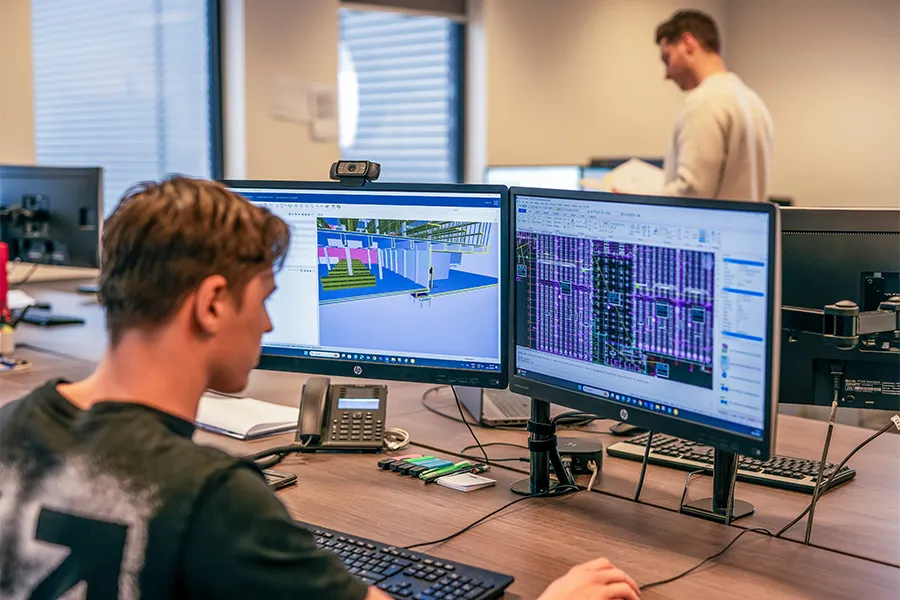
Around 2016, Van Berlo began research with TU Eindhoven into improving floor quality. “Our aim was to develop floors that cannot crack. And we succeeded! But the technology that emerged from this work also made a significant contribution to reducing CO2 emissions. This led to the development of our Greymatter technology, an optional solution that enables customers to further reduce their environmental footprint while also improving quality.” Toonen also points to the bigger picture: “The way a floor is designed ultimately determines its environmental benefits. Good design means less material, lower costs and a smaller environmental impact.”
International team
The extensive knowledge and expertise needed to create a good industrial floor are still found mainly in the Netherlands. “Our country is leading the way in this area. In many countries, this expertise is still largely unknown.” Van Berlo has therefore recently embarked on a new path: expanding its international profile and developing a leading role as a centre of expertise for sustainable, jointless floors. To support its international expansion, it has assembled a specialist team, of which Toonen is a member. Van Berlo has now completed several flooring projects abroad, including in Belgium, Italy, Germany, Denmark and England.
Een zakelijke vraag aan Van Berlo – smart concrete floors? Get in touch
Companies in this story
Keep following this
Get an email when a new story is published. No account needed.
- SubjectGeneral
- CompanyVan Berlo – smart concrete floors







