












How do you design a future-proof warehouse? From feasibility study to implementation
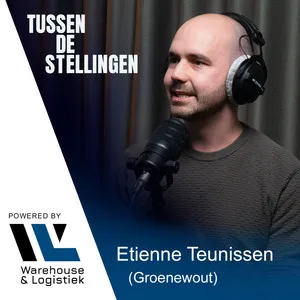
Interview with Etienne Teunissen (GROENEWOUT CONSUL. & ENGINEERS)
Host: Roel van Gils
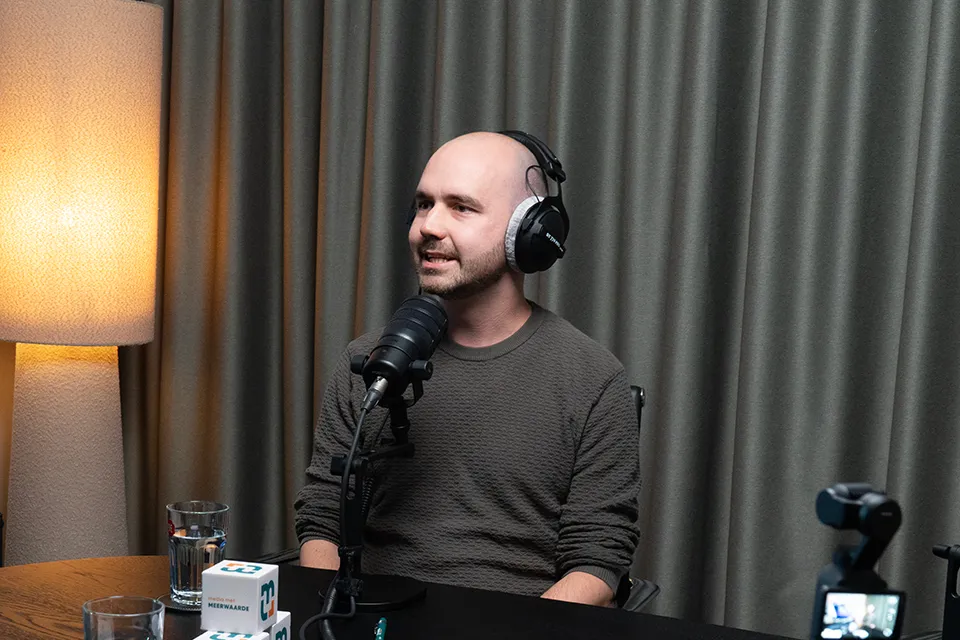
How do you design a warehouse that performs optimally today and tomorrow? In this episode of Tussen de Stellingen, host Roel van Gils talks to Etienne Teunissen, Senior Consultant at Groenewout, about the complete journey of a warehouse project. From the initial feasibility study and data-driven scenario analyses to supplier selection, implementation and go-live. The latest developments in warehouse automation, AMRs, flexibility and the role of employees during periods of change are also discussed in depth.
A business enquiry for Groenewout B.V.? Get in touch
Full transcript
All chapters (22)
- Introduction
- Getting a warehouse project started
- Working with data
- Different scenarios
- Reaching a decision together
- Developing the chosen concept in more detail
- Detailed design or bringing in suppliers
- Designing from the inside out
- Challenges during the tender phase
- Selection and detailed engineering
- Preparations for construction
- On-site installation
- Commissioning and staff training
- Groenewout’s role
- When is a project successful?
- Trends in warehouse automation
- Where to start with automation
- The added value of Groenewout
- Looking ahead to 2030
- Advice for organisations
- Bringing operations on board
- Closing remarks
Introduction
Roel van Gils Welcome to another episode of Tussen de Stellingen, the Warehouse Logistiek Benelux podcast. Today, we’re taking a look at the world of warehouse projects. How does a new warehouse come about? What decisions are made before the first spade goes into the ground? And how do you ensure that a design works in practice once it is operational? To discuss this, I’m joined by Etienne Teunissen from Groenewout, a specialist in warehouse design and implementation. Welcome, Etienne.
Etienne Teunissen Yes, thank you.
Roel van Gils Tell us a bit about yourself.
Etienne Teunissen I’m Etienne Teunissen. I have a background in mechanical engineering and studied in Delft. After that, I worked for two logistics systems integrators. Five years ago, I joined Groenewout as a logistics consultant. I focus on everything within the four walls, mainly automation projects.
Roel van Gils So, the technology?
Etienne Teunissen Yes, the technology.
Getting a warehouse project started
Roel van Gils Most people picture a building with racking, machines and processes. But where does a project like that actually begin?
Etienne Teunissen It really starts with a good design. We often start with data. First, we look at what the customer does now and how they want to grow in the future. That helps us map out their logistics requirements, both for now and for several years from now, depending on the planning horizon we agree on. We then use that data to look at different concepts.
Roel van Gils But customers come to you with an idea, such as wanting a new build or an extension, or something along those lines?
Etienne Teunissen Yes, there’s usually something behind it. They may have the opportunity to rent a new building, or they may be facing another challenge. They need to scale up, or their current logistics set-up is no longer working for them. There’s usually something that makes them think: okay, this is a good time to take a fresh look at our logistics.
Read the full transcriptCollapse transcript20 more chapters
Working with data
Roel van Gils So it starts with data, you say?
Etienne Teunissen Yes, often it does. Data is the easiest way to look at different scenarios objectively and make the right comparison.
Roel van Gils And what kind of data are we talking about? Data on what they do? What do you need?
Etienne Teunissen Ideally, as much as possible. We want to know everything about stock, replenishment and so on, in quite a lot of detail. But we can also work at a higher level, looking at how many order lines they process each day, what their requirements are and their storage capacity. So it could be anything from a single Excel file to twenty files that we analyse together to build a complete model.
Roel van Gils Are customers aware that they need this data to move forward?
Etienne Teunissen These days, generally yes. Most customers have a lot of data available, so it’s often very straightforward. And as I said, we can also work with less data. In that case, we rely more on interviews and a tour of the warehouse floor. Even so, we can build up a picture of the current situation. We need to understand the starting point so that we can compare the new models properly.
Roel van Gils So you don’t just start drawing and building straight away?
Etienne Teunissen No, no, definitely not.
Different scenarios
Roel van Gils What are the key decisions at that early stage?
Etienne Teunissen It’s mainly about scenarios. We often start by looking at a completely manual scenario, for example, and comparing it with a number of alternatives. These usually differ in their level of mechanisation. So you might have a fully manual scenario, one with a little more automation, and another that makes use of everything possible. That gives you a range of options. They’re not necessarily the final solution.
Roel van Gils Do you present those to the customer, or do you fine-tune them together?
Etienne Teunissen We work on them together. We model each one in detail, looking at the impact on the number of people on site, building utilisation, the floor space required and how much the business can grow with that concept.
Roel van Gils Yes, and also its flexibility for the future.
Etienne Teunissen Yes, some concepts can accommodate a company’s growth for longer than others.
Roel van Gils But do you still often see fully manual operations?
Etienne Teunissen Yes, sometimes. It really depends on the products. Some customers’ products aren’t suitable for full automation. It also depends on the capacity you need. If you have a smaller operation with awkward products, large wooden boards, for example, and you don’t handle many order lines, automation is often not the answer. You can still look at how to optimise the manual process, but automation can be difficult.
Reaching a decision together
Roel van Gils So you have a number of scenarios, and then the customer chooses one, or a bit of this and a bit of that, or perhaps a combination.
Etienne Teunissen Yes, you reach a decision together. You start with a number of scenarios, perhaps three, four or five. Then we hold workshops with the customer to discuss them. We can provide an objective, purely numbers-based perspective, while also discussing qualitative factors such as flexibility, quality and sustainability. Those kinds of aspects are better explored in a workshop setting.
Roel van Gils And how long does this initial phase, as we might call it, take?
Etienne Teunissen A feasibility study usually takes around twelve to sixteen weeks, depending somewhat on the project. That’s really the starting point.
Developing the chosen concept in more detail
Roel van Gils Right, the starting point. Once the study is complete and a choice has been made, what happens next?
Etienne Teunissen During the feasibility study, we choose a concept somewhere around week eight to twelve. We then develop that chosen concept a little further. The aim is to give the customer a clear idea, by the end of the study, of what to expect and what they need to look at. It’s not a detailed design, but you’ll already have a block layout and an idea of how everything will be arranged in the warehouse. It’s really the first step towards taking that concept into the next phase.
Roel van Gils And that’s essentially the end of the feasibility study?
Etienne Teunissen Yes, that’s part of the twelve to sixteen weeks I just mentioned.
Roel van Gils Then you move on to the next phase.
Etienne Teunissen Yes, that’s right. You can develop the concept you’ve chosen in more detail.
Roel van Gils Such as? What do you mean by that?
Etienne Teunissen For example, you could look more closely at goods storage. You can develop the model further to determine exactly what types of locations you need and how many of each. You can also create a Material Flow Diagram (MFD), showing how many lines need to be processed per hour. Everything gets taken one step further, really.
Detailed design or bringing in suppliers
Roel van Gils Is everything already known at that stage, in terms of what it will look like?
Etienne Teunissen Yes, it can be. It’s a choice. You can take that route, or you can contact suppliers early on, keep the tender process a little more open and work towards a genuine collaboration with the supplier. The next phase is about selecting a supplier, often starting with a Specification of Requirements.
Roel van Gils A supplier in what sense?
Etienne Teunissen One that can deliver the solution. That could be one supplier or several. We often start with a PvE, or Specification of Requirements. Depending on what you want, you can set out your expectations in great detail. In that case, all you really need from the supplier is a sounding board and a price proposal. Or you can leave it more open. You already have a direction: for example, you’re considering full mechanisation or automating a packaging solution. Then you ask the supplier to contribute ideas on the concept. That means you don’t need to do as much of the detailed design yourself.
Designing from the inside out
Roel van Gils But you design from the inside out? The building doesn’t drive the design, whether it’s a new build, redevelopment or extension.
Etienne Teunissen Yes, ideally you design from the inside out. But in practice, customers often already have an option on a building, for example, or are planning an extension to their current premises.
Roel van Gils So space is the limiting factor?
Etienne Teunissen Often, yes. Ideally, you design the logistics first and then look for a building to suit. In practice, it’s often the other way around, though that can work perfectly well too.
Challenges during the tender phase
Roel van Gils What challenges do companies often face at this stage? Can you give us some examples? What are the biggest challenges?
Etienne Teunissen During the tender phase?
Roel van Gils Yes, during the tender.
Etienne Teunissen I think it can be difficult to commit to a concept. At some point, the whole organisation has to choose a direction. That can feel quite daunting, because suddenly it becomes very real. It’s final. Before that, you’re still exploring and everything is possible. Gradually, you commit more and more to one path, and that’s when doubts can start to creep in again. Should we look at that other option after all? Should we consider this a bit longer? That can be a challenge.
Roel van Gils Are suppliers involved in that process, or is that a choice?
Etienne Teunissen They often are. It’s usually a joint process. Suppliers have more knowledge of certain areas, so they can bring a different perspective. It’s very useful to involve them.
Roel van Gils But then it really is final, and that’s when it starts to take shape. Or at least, that’s when it starts to feel real, it seems.
Etienne Teunissen Yes, so you’re working with the requirements specification and are in contact with those suppliers, often several of them. That’s when the selection process can get under way.
Roel van Gils You still need to do that, of course.
Etienne Teunissen Yes, absolutely. Or at least it’s something I would always recommend doing.
Selection and detailed engineering
Roel van Gils You’re in a process where challenges and expectations can still change, of course. You need to build in that flexibility too. You always have to take that into account.
Etienne Teunissen Yes, and you can see that reflected to some extent in how fixed the requirements specification is. Sometimes it’s very clear-cut, and within a few months you have a quote and have reached an agreement. If the process is more open-ended, it takes much longer and involves many more iterations. You revisit the concept and make further changes. That takes longer, but it’s also very informative. Often, the company itself doesn’t yet know exactly what it’s looking for. A tender phase like that can be very useful for a company to discover what it wants and what the right solution is.
Roel van Gils Yes, I see. Is the next phase then straight into implementation, or is there another step in between?
Etienne Teunissen No, the next phase is contracting and selection. Once everything has been finalised, you move into detailed engineering with the supplier. At that point, you have a sales layout showing everything in broad blocks. It’s accurate in broad terms. After that, you move into detailed engineering. You receive detailed DWG drawings for approval. There are building interfaces, covering everything from sprinklers and lighting to any changes needed to the building, which may not have been entirely suitable for what you wanted to do. Then there are various other things, such as interfaces with the WMS. How exactly will the processes be carried out on the warehouse floor? All of that is worked out during the detailed engineering phase.
Roel van Gils And do you lead that process, or do you take on the coordination?
Etienne Teunissen Yes, we can speak on behalf of the client, or alongside them, to represent their interests during that phase. We can also draw on our experience from other projects. It’s during detailed engineering that you can refine certain things, so they cause fewer problems in practice later on.
Preparations for construction
Roel van Gils I suppose we’re moving from one phase to the next. What comes next?
Etienne Teunissen Once detailed engineering is complete, the supplier gets seriously to work. As a client, you usually have a little less to do at this stage. They start production and manufacture and purchase all the materials. A lot of it happens in their own factory. You stay in contact, of course, but your role is smaller during this part.
Roel van Gils You might already start making some preparations in the new building or extension.
Etienne Teunissen Yes, definitely. I’m working on a project now where the pallet racking has to be moved to make room for the automation that’s coming in. So you start by emptying the bulk warehouse, moving things, dismantling the racking and rebuilding it elsewhere. That way, you create space in advance and prepare the operation for everything that’s going to happen on the warehouse floor.
Roel van Gils And then things really get going, so to speak.
Etienne Teunissen Yes. The operation needs to be ready too, especially if the work is taking place while it’s still running. A lot is going to happen.
Roel van Gils That brings a lot more challenges with it, of course.
Etienne Teunissen Yes, that’s right. Noise and a lot of space being taken up. Usually, you’re doing this because, for example, your warehouse is full. Then suddenly you need to clear a lot of space to build something new.
Roel van Gils That sounds very strange, of course. I mean, contradictory.
Etienne Teunissen Yes, you need to think it through carefully together, especially with the operations team. You need to involve them properly. Orders still have to keep going out throughout that period.
On-site installation
Roel van Gils So the suppliers are all building their equipment. At some point, they arrive with it. What happens next?
Etienne Teunissen There can be a lot of equipment. Suddenly, several lorries arrive with a large amount of material that all needs to be stored. Then they start building on site. They often begin by setting out all the lines. At first, you don’t see anything happening, but a lot of marking out is going on. Everything is laid out, and then the installation gradually begins. It often starts with the steelwork, depending on the project, of course. Building racking, building mezzanines. Then more and more automation is added. For example, the conveyor lines are installed. First, everything is done mechanically. Then the electrical engineers get to work and connect everything. After that, you move into the commissioning phase. That’s when the systems actually start running.
Commissioning and staff training
Roel van Gils And, of course, the staff need to be involved or trained to work with the new installations.
Etienne Teunissen Yes, that’s right. During the commissioning phase, the supplier also starts testing. They carry out all kinds of tests, and wherever possible, you want to involve the operations team as soon as you can, so they can take part in the testing and start learning how to work with the equipment and the new way of working. They can also see how a station works and provide input if needed. That way, they’re already involved during the testing phase.
Roel van Gils So the transition to going live is seamless.
Etienne Teunissen Yes, exactly. As well as the training they receive, taking part in the testing helps them become more familiar with the technology and makes the go-live smoother.
Groenewout’s role
Roel van Gils And is that where your involvement ends?
Etienne Teunissen No. At any point in the process we’ve described, our involvement can come to an end. Sometimes we only do the feasibility study. Sometimes we do the feasibility study and the tender. On other projects, we handle everything from A to Z. This is another point at which our involvement could end, with us stepping back and the client taking over once implementation begins. But we can also stay involved, support the go-live, oversee the ramp-up and then, if necessary, carry out further optimisation. It all depends on the collaboration. You work closely with the client throughout the process, so they’re able to take over and carry on themselves at any point.
When is a project successful?
Roel van Gils And how do you know when a project has really been successful?
Etienne Teunissen I think after a year.
Roel van Gils Oh, it really takes a year?
Etienne Teunissen Yes, a year after go-live. Once everything is running well and the dust has settled, you know whether it’s been successful. And if it hasn’t, you know what still needs to be done to make it successful. Sometimes there’s still some optimisation to do. You may need to make a few small adjustments to improve things. But after a year, you can really say whether a project has been successful.
Trends in warehouse automation
Roel van Gils You’re right in the thick of it, of course. You’ve already mentioned a few developments. What are you seeing most of these days? What are the latest trends and developments in warehouses?
Etienne Teunissen We’re definitely seeing a lot of automation. These days, almost every feasibility study asks what can be done in terms of automation. In the past, we had a lot of projects where we only looked at manual concepts. Now, an automation concept is included almost every time. It’s very much on clients’ minds. And not always necessarily because of the business case. Sometimes it’s about improving quality or the availability of staff. In the past, we always saw that everything had to have a five-year payback period. Now, companies are sometimes willing to go beyond that. They say: we’re committed to automation. How can we make it happen?
Flexibility is another common theme. Concepts that are easy to scale and can grow as the company grows.
Roel van Gils Such as? Can you give some examples?
Etienne Teunissen AMR concepts, for example. They’re fairly flexible to scale up. You can start with a lower investment, then review your needs each year and see whether you need to scale up. You can also pause for a year without having to invest again straight away. With traditional concepts, you often see half the system installed in year one, with a plan to add the other half five years later. That’s less flexible.
Roel van Gils And with an AMR, can you automate parts of your operation, for example?
Etienne Teunissen Yes. Take a picking process, for example. You could start with 1,000 order lines per hour and increase that to 1,500 and then 2,000 each year. You scale up step by step and buy more robots as you need them.
Where to start with automation
Roel van Gils Ideally, which process would you automate first if you had no automation at all?
Etienne Teunissen Packaging, often.
Roel van Gils Yes, packaging.
Etienne Teunissen Yes, often packaging. It usually has the shortest payback period. It has great potential for automation and is relatively easy to implement in the operation. The operations team can adapt to it quite easily. The impact is less significant than, for example, a goods-to-person system, which changes the entire way of working. Packaging mainly affects the final process in your warehouse and can be automated as a relatively standalone element. That makes it a good first step for companies that haven’t done any automation yet.
Roel van Gils OK. Then, logically, you move on to the other processes.
Etienne Teunissen Yes. A feasibility study might produce a plan that starts with automation in year one. If that runs well, you move on to picking and look at how you can automate it. The feasibility study will already set out the end goal. For example, what the warehouse should look like in 2030, with the plan to implement it step by step.
The added value of Groenewout
Roel van Gils What sets Groenewout apart for its clients?
Etienne Teunissen I think it’s mainly our experience in logistics. We’ve seen a lot of projects and have also delivered many projects from the feasibility study right through to implementation. That means we know not only how to design something, but also what needs to be taken into account in practice. That experience means you can factor in, during the design phase, many of the things you’ve encountered on implementation projects. For example, what went wrong and what you can prevent through the design now. Think about phasing the go-live, or how to work during construction in an existing operation. What do you need to take into account? All that experience helps.
Looking ahead to 2030
Roel van Gils If we look ahead to 2030, or perhaps even further, where do you think we’ll be? What do you expect the level of automation to be? Or will we go back to racking, with robots walking around?
Etienne Teunissen I think the trend we’re seeing now will simply continue, with more automation. Perhaps piece picking will finally take off. That means robots picking individual items out of a box. It’s something we’ve been following for years, but it still isn’t widely used because the technology isn’t quite where we’d like it to be. But I think we’ll certainly see progress in that area.
Roel van Gils And what about safety? I can imagine robots and people moving around together. Isn’t that an issue?
Etienne Teunissen No, it actually works very well. The main thing to consider is making sure the robots aren’t constantly stopping for safety reasons. If you route your entire manual process through the robot flows, the robots will do nothing but wait for people. Some separation is therefore good not only for safety, but also for maintaining the robots’ efficiency.
Advice for organisations
Roel van Gils If you could give one piece of advice to organisations and listeners thinking about a new warehouse or automation, what would it be?
Etienne Teunissen It would be to give proper consideration to that first phase: the feasibility study.
Roel van Gils That really is the most important thing.
Etienne Teunissen Yes. You often see companies quickly settling on a single concept. Or going straight into discussions with one supplier.
Roel van Gils Or basing it on past experience.
Etienne Teunissen Yes, or because they have a good relationship with a supplier. Then they immediately start designing something together. I’d recommend taking a step back first, looking at things from a broader perspective and comparing different concepts side by side. That’s ultimately where you determine what your logistics will look like over the coming years. If you invest a few extra weeks in this, you’ll have a much better end result a few years down the line.
Roel van Gils And how long does a project like that take?
Etienne Teunissen It varies. From the feasibility study to implementation takes at least a year, and that’s if you move very quickly. For example, if you’re automating a packaging line. Usually, it takes somewhere between two and four years, depending on the scale of the automation.
Roel van Gils And the size of the building is obviously a factor too.
Etienne Teunissen Yes. If it’s a large-scale automation project, with a large building and lots of racking, everything takes longer.
Bringing operations on board
Roel van Gils Any other final advice?
Etienne Teunissen Make sure you bring operations on board. I think that’s the other important thing. Involve the operations team at the right time, let them contribute, and make sure they know what’s going to happen, what to expect, how they can prepare and what’s going to change.
Roel van Gils So really bringing the people on board?
Etienne Teunissen Yes. I think that’s sometimes still underestimated. You don’t want to involve them right at the very start either. During the feasibility study, things are still very conceptual, and it’s often too early. But you do want to involve them at the right time, because valuable input can come from the shop floor. A lot will ultimately change for them.
Roel van Gils Yes, I understand.
Etienne Teunissen It’s also good to get them enthusiastic about the concept and the new way of working. You want them to see the benefits and look forward to working with the new automation, rather than seeing it as a threat.
Closing remarks
Roel van Gils Okay. Well, Etienne, thank you for your insights. Thanks for coming. And thank you to our listeners for listening.
Companies in this story
Keep following this
Get an email when a new story is published. No account needed.
- SubjectGeneral
- CompanyGroenewout B.V.







