












From afterthought to the warehouse operating system
Text Kris Vandekerckhove Beeld iStock
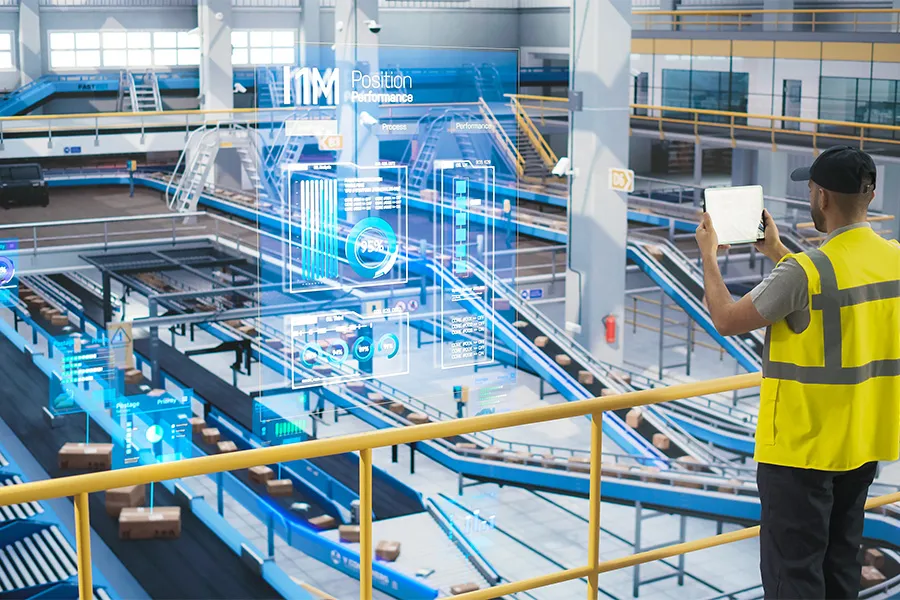
The warehousing landscape in the Benelux is changing rapidly: margins are under pressure, delivery windows are getting shorter and disruptions remain unpredictable. In 2026, data is shifting from “reporting by-product” to the operating system of the operation. Companies that use data intelligently are not just managing KPIs, but driving real P&L impact: lower inventory levels, faster throughput and reduced costs of failure.
Successful digitalisation does not start with AI, but with the basics: consistent product and location data, clear process definitions and a single source of truth. Standards (such as uniform barcodes and data fields) and well-managed master data enable integration between the WMS, TMS, e-commerce platform and finance. Add event streaming (real-time events such as inbound arrival, pick start and loading bay door closure) and you have a data layer that reflects live operations.
From visibility to control: real-time visibility
Sensors, scanners and telematics provide end-to-end visibility: where is the pallet, how long is a trailer waiting, and what is pick productivity in each zone? The traditional daily report becomes an operational control tower with alerts and “next best action” recommendations. The aim is not just to describe what happened, but to predict what will become a bottleneck in two hours and replan proactively.
AI is coming of age in concrete use cases:
- Demand forecasting and replenishment that take seasons, promotions and weather into account reduce safety stock without compromising service.
- Intelligent slotting places fast-moving items close to dispatch and adapts dynamically to peak patterns.
- Labour planning predicts capacity gaps by the hour and assigns tasks to teams or cobots.
- Quality and safety: vision AI detects damage or incorrect labels at the gate.
Human-in-the-loop is essential: planners confirm or correct AI recommendations. This keeps knowledge within the team and builds trust. Many applications also run on edge devices in the DC, keeping latency low and making privacy easier to safeguard.
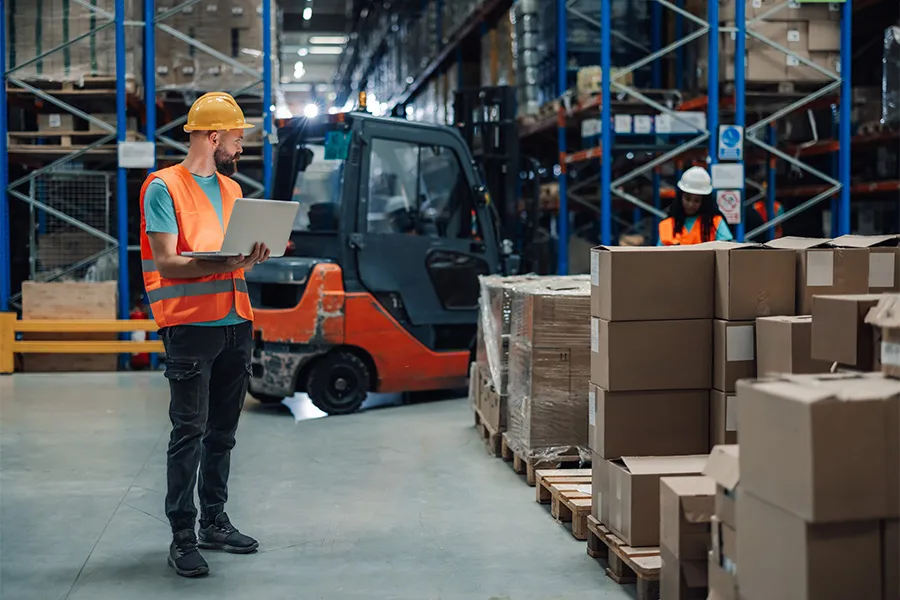
Digital twin: making decisions with confidence
A digital twin (the virtual copy of the DC) brings “what if” scenarios to life. What happens to your throughput if you add another sorter? How does a change to traffic routes affect congestion? Energy management also benefits: simulate when to charge, cool or store autonomously to avoid peak rates. Decisions become measurable rather than a matter of opinion.
Security, compliance and data trust
The more data flows there are, the greater the risk. Zero-trust access, encryption, network segmentation and regular vendor audits are not IT afterthoughts, but operational prerequisites. Privacy-conscious designs (data minimisation, pseudonymisation) make collaboration with customers and partners easier and faster to approve.
Digitalisation fails not because of technology, but because of change. Three roles are becoming central: the operations product owner (the link between the warehouse floor and IT), the data engineer (responsible for reliable pipelines) and the data translator (who translates business questions into algorithms and back). Combine this with targeted upskilling: from order picker to system operator, from planner to orchestrator.
Roadmap for 2026
Start small, scale fast.
- Choose one value stream (e.g. inbound to putaway) and instrument it fully with events and dashboards.
- Implement one AI use case with a clear financial KPI (e.g. 10% fewer urgent trips through better dock planning).
- Establish governance: data quality owners, security checks and a weekly cycle of improvements.
Conclusion: In 2026, data is no longer a reporting product, but the backbone of agile logistics. Those who build a solid data layer, deploy AI with focus and bring their people along will turn the warehouse from a cost centre into a competitive advantage.
Question about this story? Ask your question
Keep following this
Get an email when a new story is published. No account needed.
- SubjectGeneral







