What are the rules for safely storing lithium-ion energy storage devices?
Text Carolien Klees Beeld Asecos
The use of lithium-ion batteries has increased enormously in recent years. However, these batteries can catch fire spontaneously. In addition to the risk of fire and explosion, toxic fumes can be released, which can even be fatal in large quantities. Warehouses are full of products containing these batteries. How can you best protect your staff and business, and what about regulations and insurers?
We asked Henk Niewenhuis, director of Asecos. As the market leader in safe storage solutions for hazardous substances, the company has a wealth of expertise. And thanks to its pioneering spirit, it began exploring the safest way to store lithium-ion energy storage devices ten years ago. Niewenhuis says: “The positive and negative terminals of these batteries are separated by a separator. If the separator is damaged, the battery can catch fire spontaneously. However, as a user, it is impossible to tell whether such damage is present, for example as a result of poor quality or a fall. Charging a battery also increases the risk of fire, and this often happens overnight without supervision.”
Risk
“Warehouses are full of goods containing lithium-ion batteries. Think phones, laptops, electric bicycles and toys. There is also scanning equipment used for order picking. And don’t forget the storage of used or returned products, where you have even less idea what has happened to the battery. It is important to think carefully about the safety of these energy storage devices, which can catch fire spontaneously.”
Advice
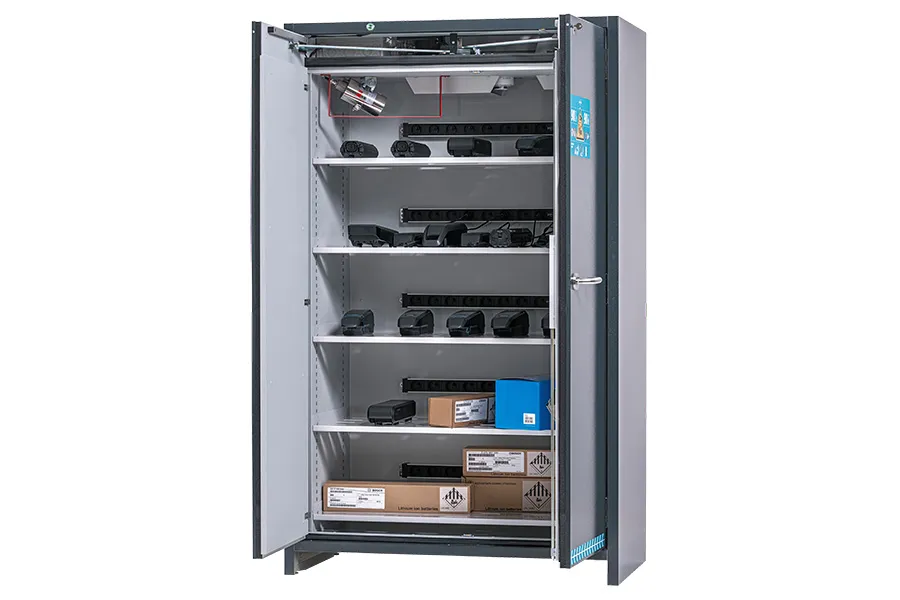
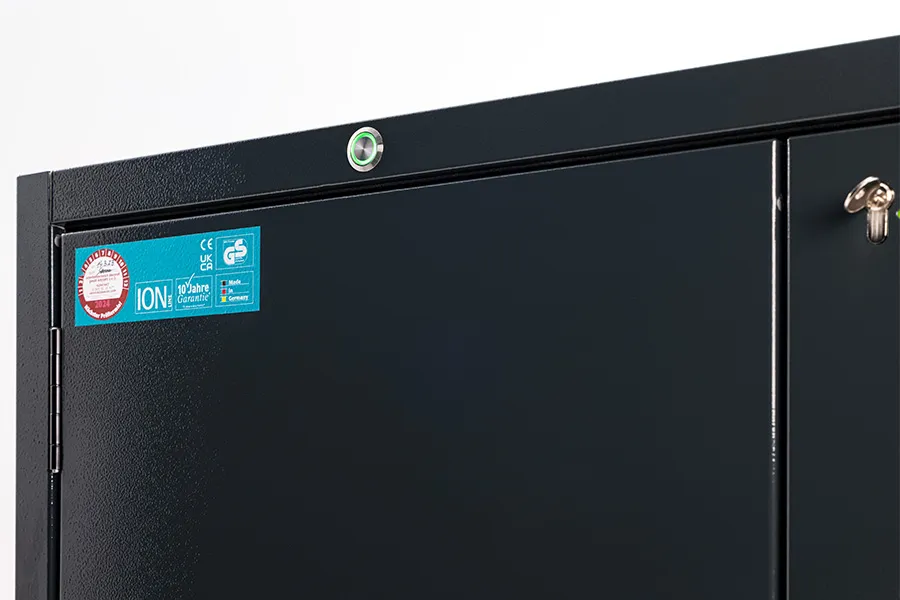
According to Niewenhuis, companies wishing to safely store and/or charge their lithium-ion energy storage devices in a fire-resistant cabinet would be well advised to seek information from reliable organisations with sufficient expertise. “There is still a great deal of uncertainty about the regulations, and many manufacturers still lack sufficient knowledge. The only way for you as a user to be sure is to ask for certificates, such as the European EN 1447-1, which help you separate the wheat from the chaff. Also check with your insurer whether it has any requirements.” You can also use handy tools to get a clearer picture, such as the configurator on the Asecos website.
Regulations
There has recently been some clarity on the safe storage of lithium-ion batteries, thanks to the new PGS 37 regulations. “In addition, the German VDMA 24994 guideline came into force last year, and some insurers are already referring to it. Germany has also put forward a proposal for a European standard based on this VDMA guideline. We believe this guideline is incomplete, and our cabinets go considerably further. In any case, a European standard will take some time, but in the meantime there is a good chance that insurers will impose more stringent requirements.”
Fire safety
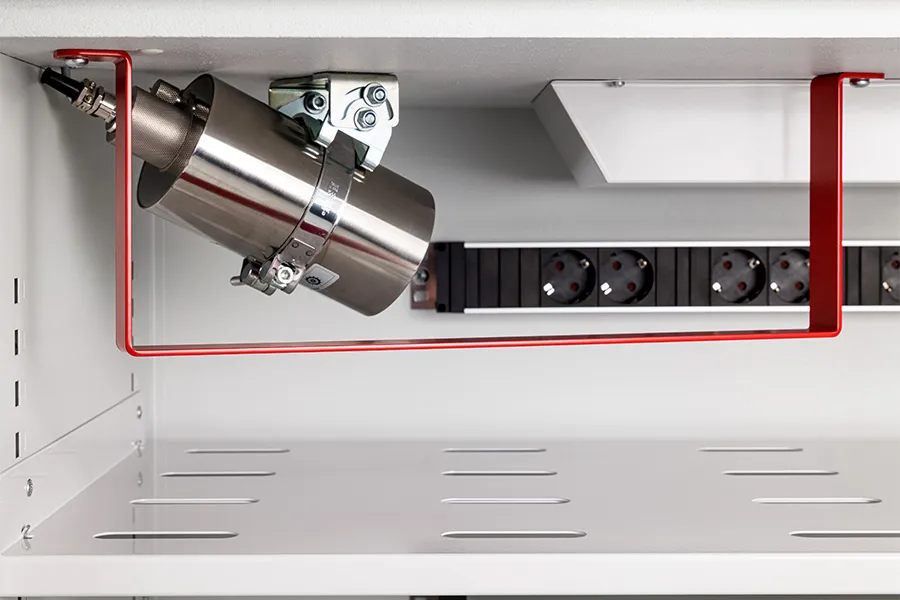
Because Asecos began developing fire-resistant cabinets for storing and/or charging lithium-ion batteries at an early stage, its products already fully comply with the new PGS 37 guideline. “Our cabinets already complied with the EN-14470-1 standard, which stipulates, among other things, that fire resistance from the outside in must be at least ninety minutes. But since a lithium-ion battery produces its own oxygen, we have also made the cabinets fire-resistant from the inside out.” Asecos went a significant step further by equipping its lithium-ion cabinets with alarm detection and making them smoke-tight and explosion-proof. Asecos is also the only manufacturer whose cabinet is certified in accordance with the GS principle EK5/AK4 22-01.
Asecos’s considerable head start not only makes its cabinets the most fire-safe, it also gives customers confidence that they are making a sound investment in view of future requirements and legislation.
A business enquiry for Asecos? Get in touch
Companies in this story

Keep following this
Get an email when a new story is published. No account needed.
- SubjectWarehouse equipment & safety
- CompanyAsecos