Warehouse racking inspections: what is required and what is assessed?

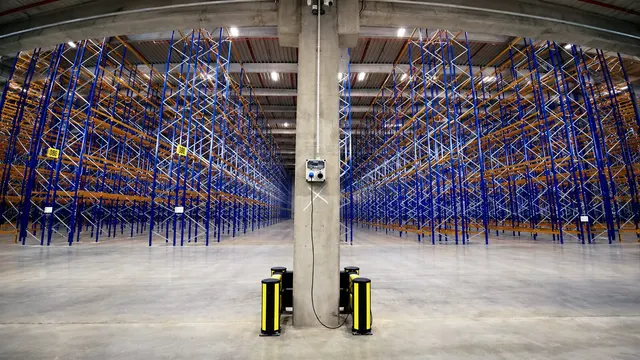
Many warehouses in the Netherlands use racking every day, with systems remaining in service for years without a complete, up-to-date inspection file. This does not automatically mean there is a problem, but it does show that inspections are not always organised systematically in practice.
At the same time, legislation sets clear requirements for safety and the use of work equipment. Warehouse racking is explicitly covered.
Legal framework: duty of care and inspection
Under the Working Conditions Act, responsibility rests with the employer. Article 3 requires employers to provide a safe working environment, including the equipment used to carry out work. While this may sound general, the Working Conditions Decree gives it practical effect.
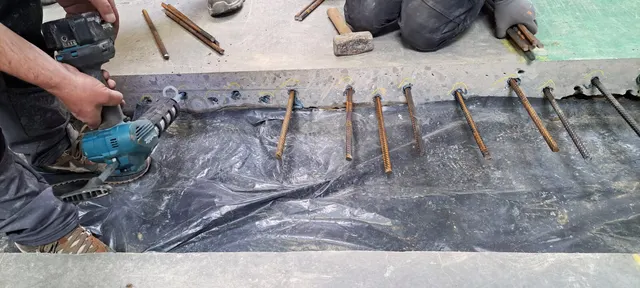
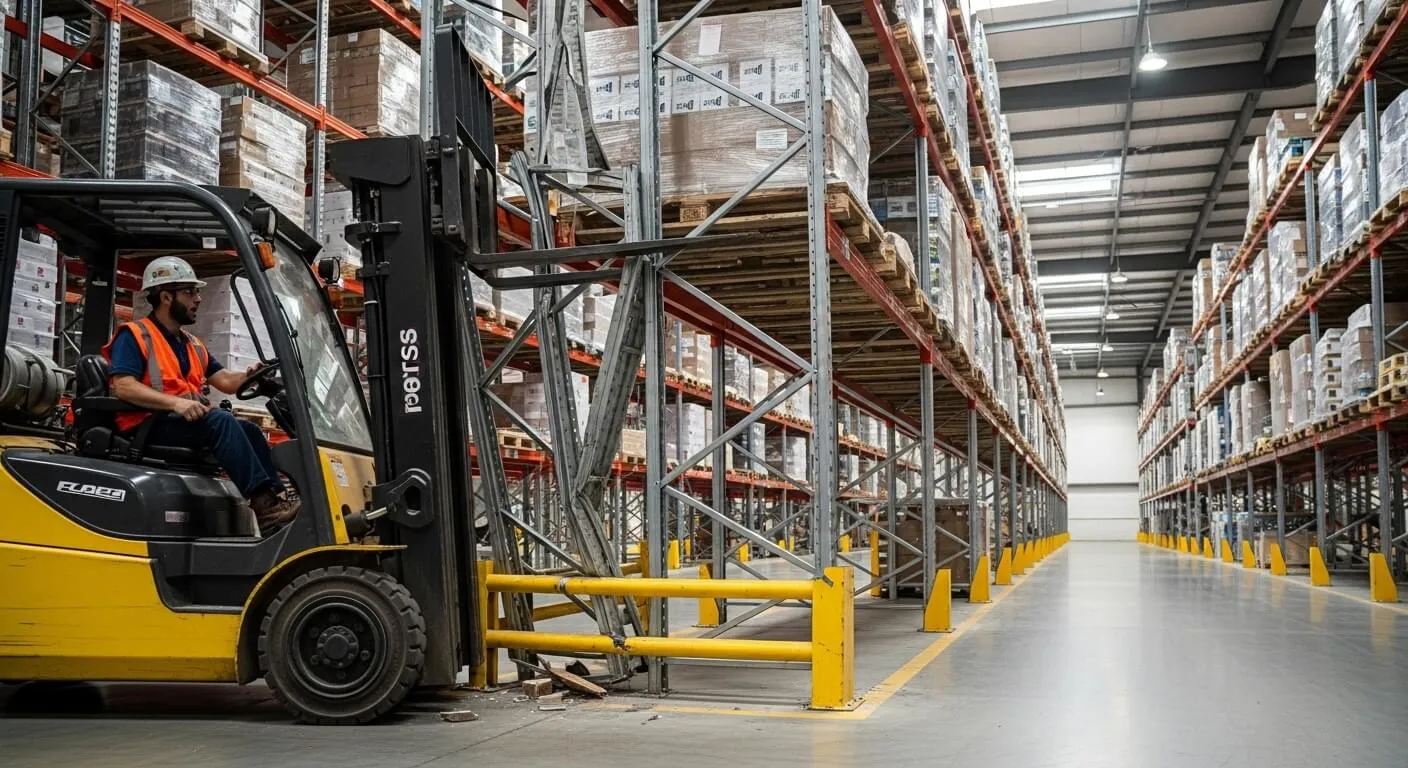
Article 7.4a sets out when inspections are required. There is no single fixed point in time; rather, inspections are needed in a number of situations that arise in practice. These include the period immediately after installation, as well as whenever racking is modified, moved or reassembled. Regular use is also a factor, as are situations in which damage occurs, for example following a collision.
How often an inspection must take place depends on use and risk. In practice, an annual inspection is often used as a baseline, particularly in warehouses with intensive use.
Documentation, however, is not optional. Inspections must be traceable. This means reports must be available at the workplace and produced during an inspection by the authorities.
The RI&E (risk assessment and evaluation) also plays a role. It should explicitly cover risks associated with racking, such as instability, falling goods or damage caused by in-house transport. The Arboportaal of the Ministry of Social Affairs and Employment (SZW) provides extensive background information on how employers can meet these obligations in practice.
European standards as a practical reference point
Alongside legislation, the EN 15635 standard is widely used in practice. It provides guidance on organising the safe use and maintenance of racking. In the Netherlands, it is often used as a reference for inspections and audits.
One notable feature of EN 15635 is that it is not concerned solely with annual inspections. Instead, the standard takes account of daily practice as a whole, including internal checks and external assessments.
Any employee who notices or causes damage should report it immediately. Regular internal visual checks are also usually carried out, often weekly. These internal checks effectively form the first line of defence.
The next level is an annual inspection by an external expert, who takes a technical view of the entire structure.
As part of this system, one person is often appointed to oversee the process. The standard calls this person the PRSES. In practice, they ensure that reports are followed up, inspections take place and documentation is kept up to date.
Other standards, such as EN 15512 and EN 15620, play a more background role. They determine how racking is designed and which tolerances are acceptable. Organisations such as NEN publish these standards and additional practical guidelines to help apply them in a warehouse environment.
How damage is assessed in practice
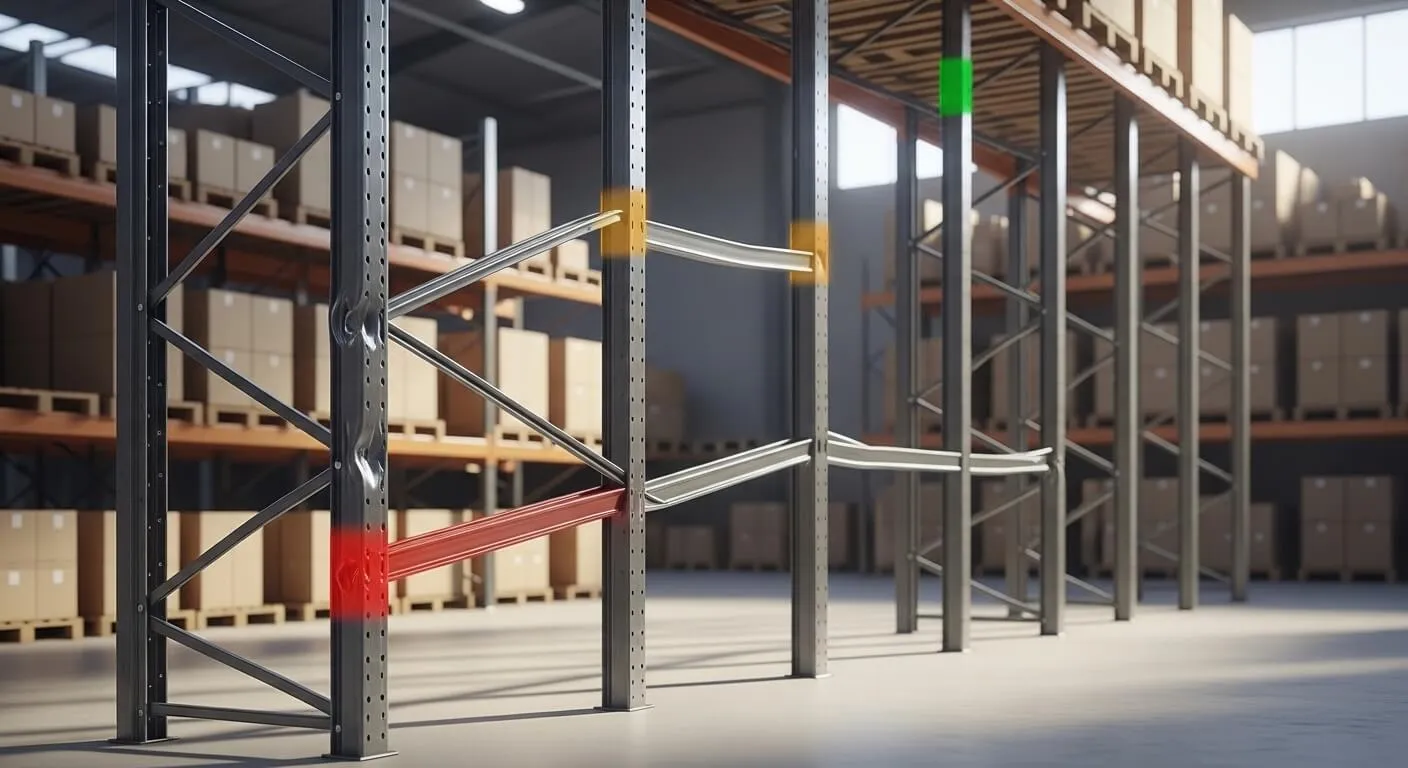
During inspections, damage is not only described but also classified. This is usually done using a colour-coded system that helps determine quickly what action is needed.
Minor deformations often remain within safe limits. They are recorded and followed up at the next inspection. When damage exceeds those limits, the situation changes. For example, a bay may first need to be unloaded before it can be used again.
There is little room for debate when damage is more severe. Immediate action is required, such as taking part of the racking out of service and replacing components.
The important thing is that damage is not static. What seems minor today can escalate if left unrepaired. That is why follow-up matters more than simply identifying the damage.
What an inspector actually looks for
A technical inspection goes beyond visible damage. The inspector assesses how the structure behaves as a whole.
Uprights are checked for deformation and misalignment. This is particularly relevant in the lower sections, where most impact damage occurs. Beams reveal a lot about loading and use. Deflection, connectors and welds provide indications of structural loading.
Less conspicuous components also matter. These include missing locking pins or locks that do not work properly. Floor anchorage is another critical point. If baseplates are not properly secured, the stability of the entire structure is compromised.
Inspectors also look for things that are often overlooked, such as protective equipment and load notices. The latter are essential for knowing the actual load capacity of the racking.
Warning signs you cannot ignore
Regardless of scheduled inspections, some situations call for immediate action. Racking that is visibly leaning or moves under load needs urgent attention. The same applies to missing components or anchorages coming loose from the floor.
More subtle signs can also be significant. Noises, slight movement or unexpected deformation often indicate that something is wrong.
Incident analyses across the sector reveal a recurring pattern. Damage is rarely caused by a single factor; it is usually the result of several factors combined. Collisions, inadequate follow-up on damage and a lack of oversight often play a part.
The importance of a complete inspection file
For organisations looking to get a handle on inspections, documentation is usually the place to start. Not just because it is required, but because it provides insight.
A good file shows how racking was assembled, how it is used and what has happened to it over time. Inspection reports, repair records and training records complement one another.
The annual inspection is generally carried out by an external provider, ensuring an independent assessment. Internal checks remain important too, precisely because they are more frequent.
When documentation is missing, it becomes harder to demonstrate that the duty of care has been met. This can have consequences in the event of incidents or in discussions with insurers.
Getting started with inspections
For many organisations, the challenge is not a lack of knowledge but a lack of organisation. Inspections are often only addressed after an incident or during an audit.
Establishing a structured process brings peace of mind. Clear responsibilities, fixed inspection intervals and well-organised documentation make all the difference.
Companies looking to professionalise this process regularly work with specialist providers such as Rejuva. They help establish inspection processes, carry out checks and bring the complete racking file up to date.
Question about this story? Ask your question
Keep following this
Get an email when a new story is published. No account needed.
- ThemeMore warehouse space
- SubjectWarehouse equipment & safety