Capturing hazardous vapours prevents harm to health and the risk of fire and explosion
Text Carolien Klees Beeld Asecos
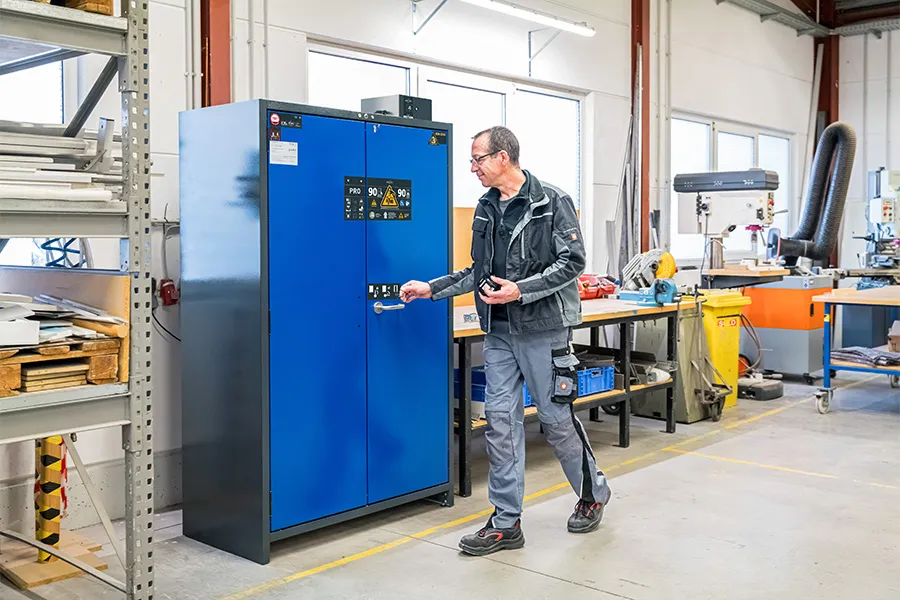
The smell of hazardous vapours in your warehouse can cause discomfort, but it is also an important warning. These vapours can harm health and pose a fire and explosion risk. “If you smell something as soon as you open the storage cabinet, you need to find out what substance it is and what effect it could have on health and safety,” advises Henk Niewenhuis. He is director of Asecos, a company with extensive expertise as a market leader in safe storage solutions for hazardous substances. With innovative safety cabinets, ventilation equipment and air purifiers, Asecos helps create a safe working environment.
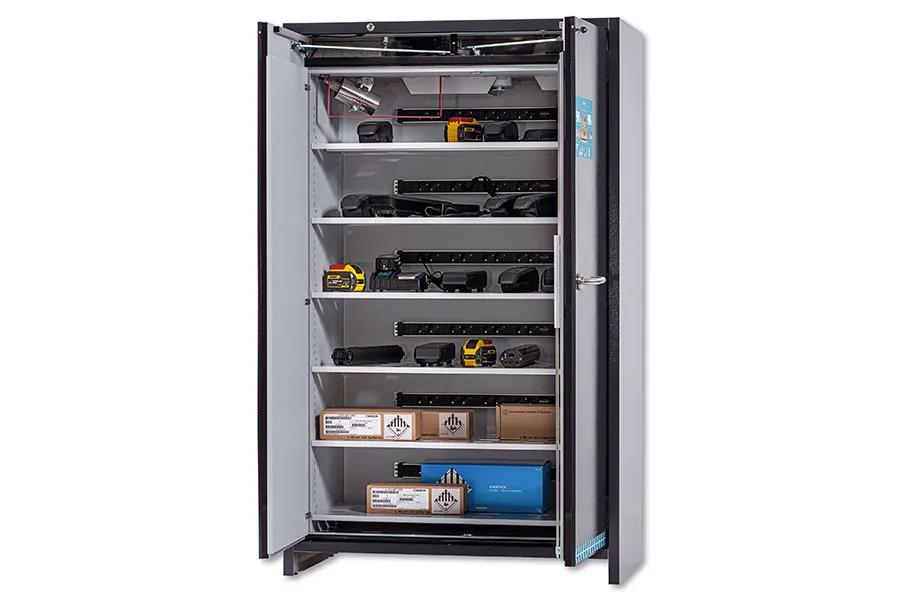
Flammable liquids such as petrol, white spirit and alcohol, as well as acids, alkalis and toxic substances, can release hazardous vapours. Capturing these vapours is essential whenever there is opened packaging inside a cabinet. “If the primary packaging has not been opened, diffusion cannot occur,” explains Niewenhuis. “But as soon as you smell something, that is a clear signal to find out what substance is involved and how to protect staff and the surrounding area. Even low concentrations can have serious effects. Various exposure limits have been established under occupational health and safety regulations.”
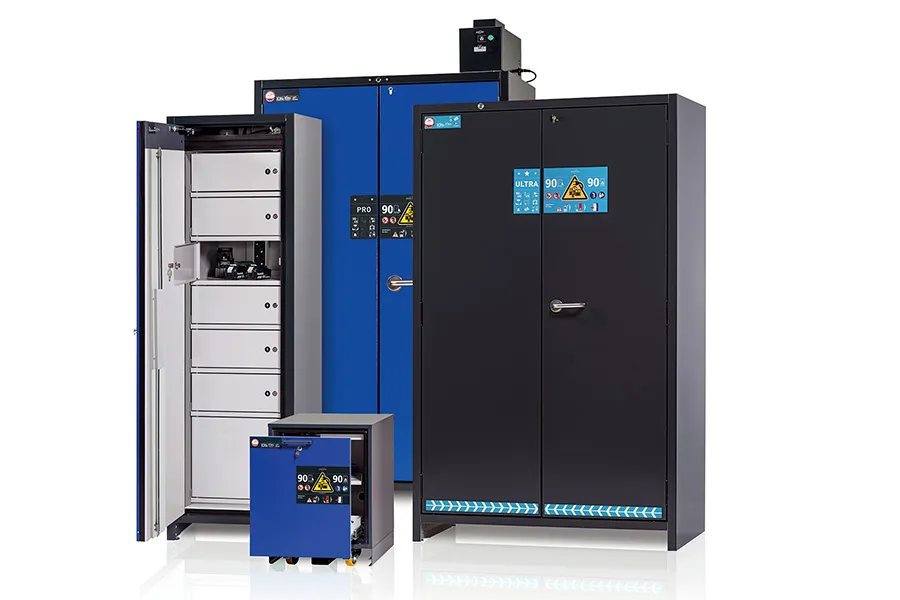
Smart solutions
The existing infrastructure is one of the factors to consider when choosing the right extraction solution. “If a building ventilation system is already in place, the ventilation unit can be connected to it. If not, we look at whether the air can be discharged directly outside,” says Niewenhuis. “If the cabinet is against an external wall, a short duct can be used to discharge the air outside. Natural draught will then provide sufficient extraction. If that is not the case, a ventilation unit must be installed in between. We look at how many cubic metres of air need to be extracted, and there is a rule for this: when dealing with highly flammable substances, the air change rate must be at least ten times per hour. For toxic vapours, it must be as high as 120 times per hour. We supply various models of ventilation unit, each with a different air change rate.”
Recirculation
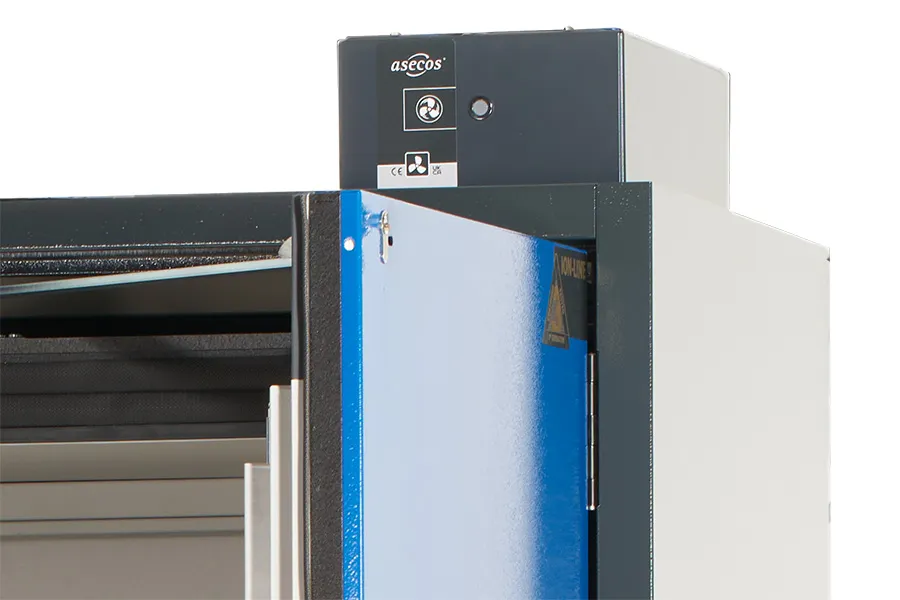
However, drilling and other building work is sometimes undesirable, for example in a listed building or for financial reasons. In such cases, a recirculating filter unit can provide a solution. It extracts air from the cabinet, filters it and returns the purified air to the room. Another advantage of this type of extraction is that the working environment does not lose heat or cool air to the outside, making ventilation more energy-efficient.
Asecos’s UFA.025.030 recirculating filter unit incorporates a range of innovations that make ventilated fire safety storage cabinets even safer. “It has a colour display with a signalling system to show filter saturation, operating status or error messages. We have added an extra step for filter saturation. A green light starts flashing at 70 per cent saturation, letting the user know that the filter is still purifying the air sufficiently, but will need to be replaced soon. At 90 per cent saturation, the light turns red and replacement is essential.”
Additional safety
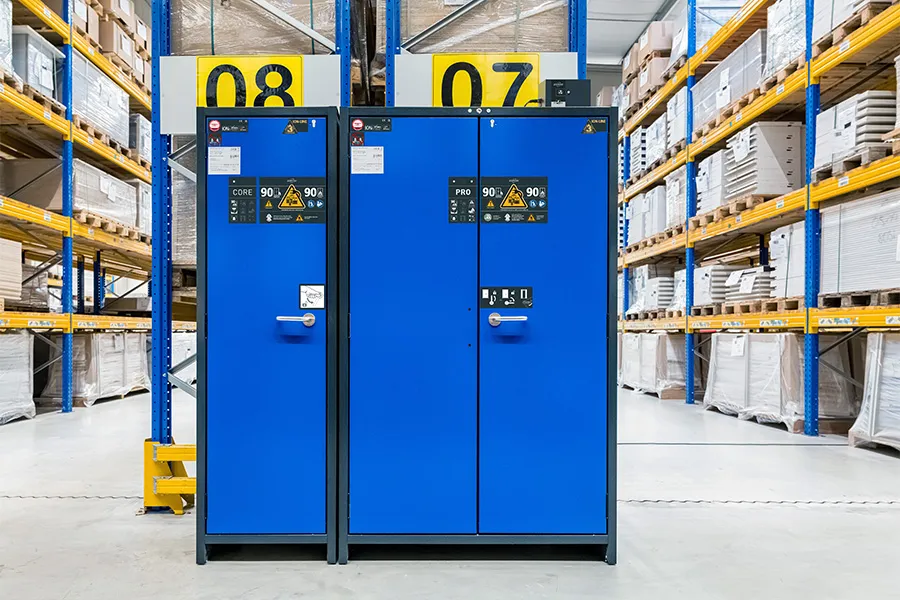
Asecos offers additional protection with the Safety Assistance System option, which can be factory-installed in the fire safety storage cabinet. Niewenhuis: “This flow monitor continuously checks the airflow. If the ventilation is not working optimally, it issues a warning with a red light. In other words, it provides a visual warning to the employee about to open the cabinet. This extra layer of safety helps keep staff alert at all times and further minimises risks in the working environment.”
A business enquiry for Asecos? Get in touch
Companies in this story

Keep following this
Get an email when a new story is published. No account needed.
- SubjectWarehouse equipment & safety
- CompanyAsecos