












Why the workplace is key to flow, ergonomics and productivity
Text Carolien Klees Beeld Human Workspace
Working smarter pays off
Warehouses are investing heavily in automation, software and expansion. But it is the operators’ workplace that largely determines how smoothly the process actually runs. Is the printer in the wrong place? Do staff have to keep looking for cardboard? Or is the working height not suited to the employee or task? These issues lead to unnecessary movements, delays and physical strain. Frodo Rijk, owner of Human Workspace, says process improvement therefore starts at the workplace. “An ergonomic and efficient workspace saves a lot of time in practice. Just as importantly, it increases employee satisfaction and helps prevent staff from being unable to work.”
Human Workspace develops and supplies ergonomic, modular workstations for sectors including logistics. The company’s extensive product range is unique in the industry and makes it possible to respond flexibly to a wide range of customer requirements.
Future-proof
This flexibility is becoming increasingly important. Warehouses are changing rapidly as a result of growth, seasonal peaks, digitalisation and automation. “You need to be able to adapt your workbench quickly and efficiently, so you can continue using it in the future,” says Rijk. This makes a workstation not only ergonomic, but also adaptable for long-term use. A table used as a packing station today can later become part of an automated line with a few minor adjustments. This could include connections to conveyors, IT hardware or systems in which operators enter or check products. And almost everything we supply can be adjusted without tools.”
From ergonomics to efficiency
To configure workstations, Human Workspace starts with an on-site analysis. “It starts with getting the height right. This can vary depending on the employee, product and task. Then come the details that often have a major impact in practice: the position of monitors, keyboards, printers, scanners, packaging materials and tools. Anything that is positioned too high, is too far away or has to be searched for each time costs time and energy,” says Rijk. By positioning materials, screens and tools logically at the workstation, walking distances are reduced and operators can work faster, more consistently and more comfortably. This has a direct impact on processing speed and, ultimately, warehouse output.
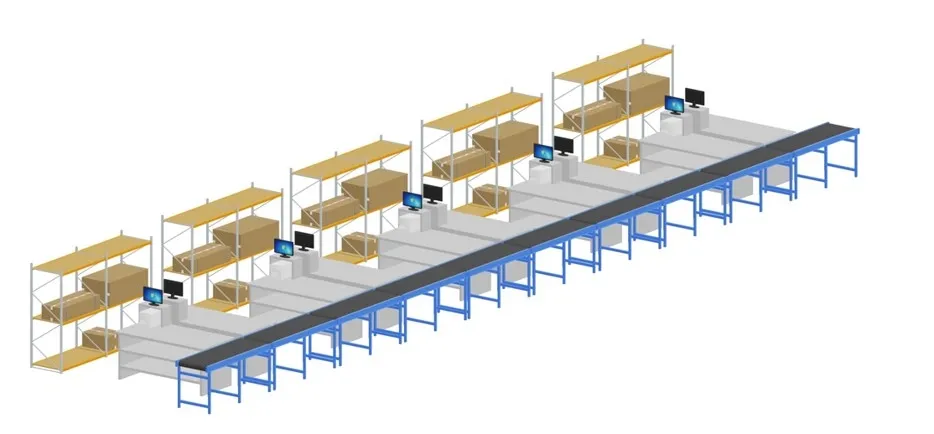
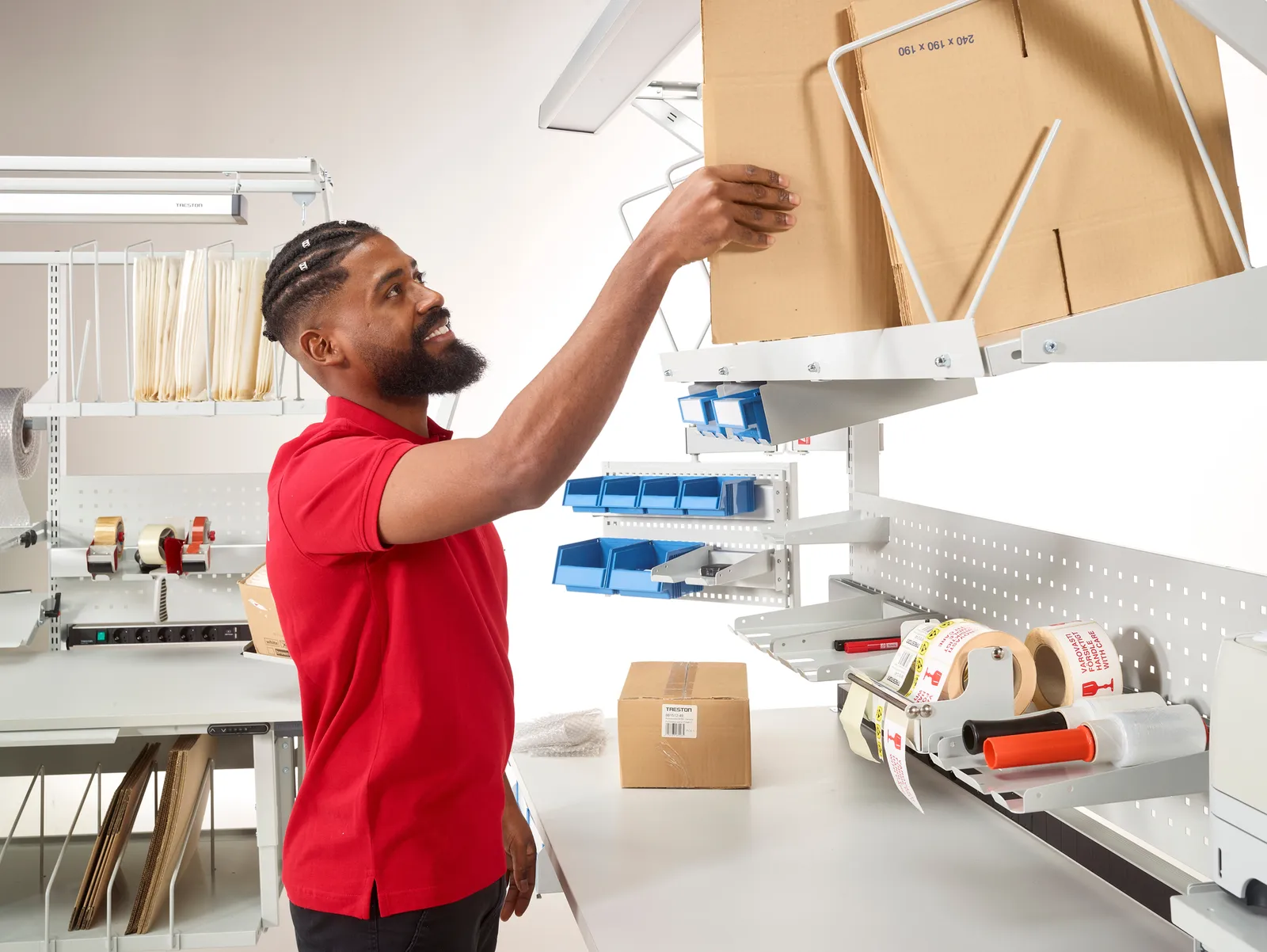
Human Workspace designs the best-fitting workstation together with the customer
To do this, the company draws on its extensive knowledge gained across various sectors, not only logistics but also assembly, high-tech and automotive. “Our products are therefore perfectly aligned with the principles of lean logistics and continuous improvement.”
Lean logistics
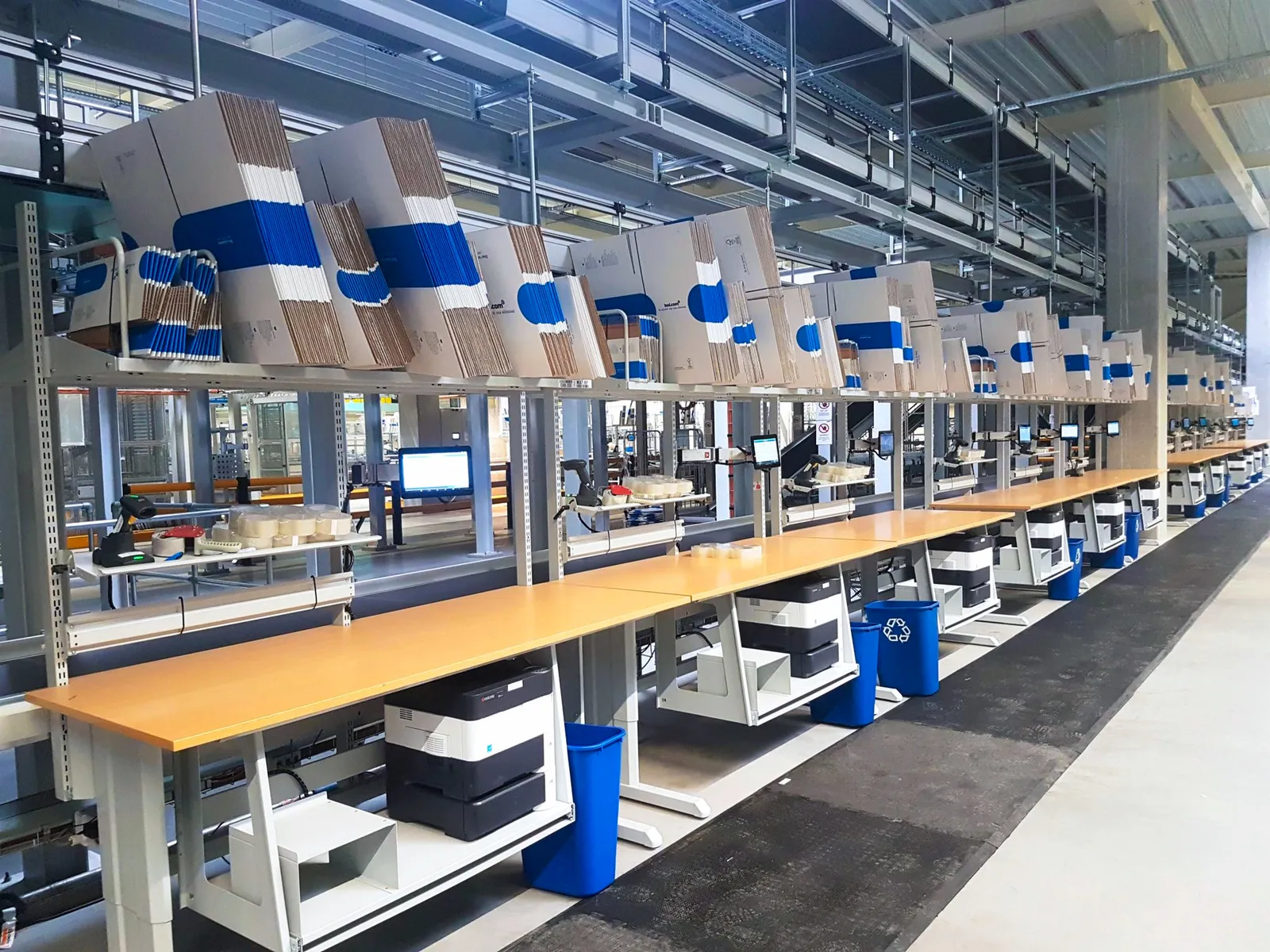
One example is the flexible Treston workstation systems for manually packing orders, which Human Workspace installed at PostNL. The height-adjustable packing tables are designed so employees do not have to reach or lean unnecessarily. Monitors are mounted on adjustable arms, and packaging materials are within easy reach. A pick-to-light solution controlled by the WMS was also chosen, so packers can see immediately what action is required. The workstations thus contribute to a more efficient packing process and a pleasant working environment.
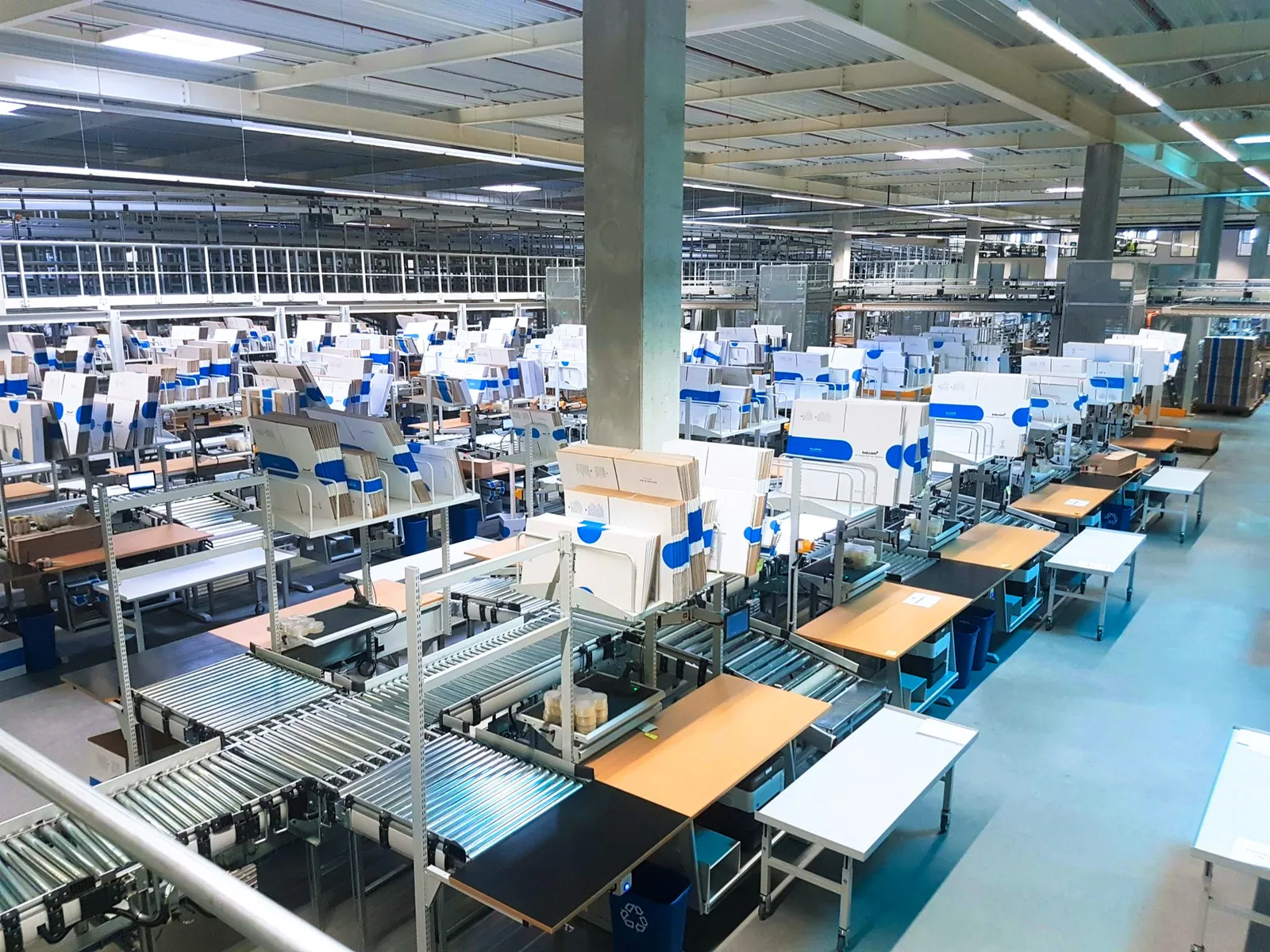
Fast order processing combined with a comfortable workstation for operators was also central to the construction of bol.com’s fulfilment centre. Human Workspace therefore installed a number of workstations. Goods receiving now has a mobile table for Value Added Services activities. Several troubleshooting tables are located throughout the building, while the outbound area has various packing tables, supplemented by packaging trolleys and packing accessories.
A business enquiry for Human Workspace? Get in touch
Companies in this story
Keep following this
Get an email when a new story is published. No account needed.
- ThemeSafe and healthy warehouse work
- SubjectGeneral
- CompanyHuman Workspace







