












Regeneration of traction batteries
Text Alon Winnen Beeld Regbat
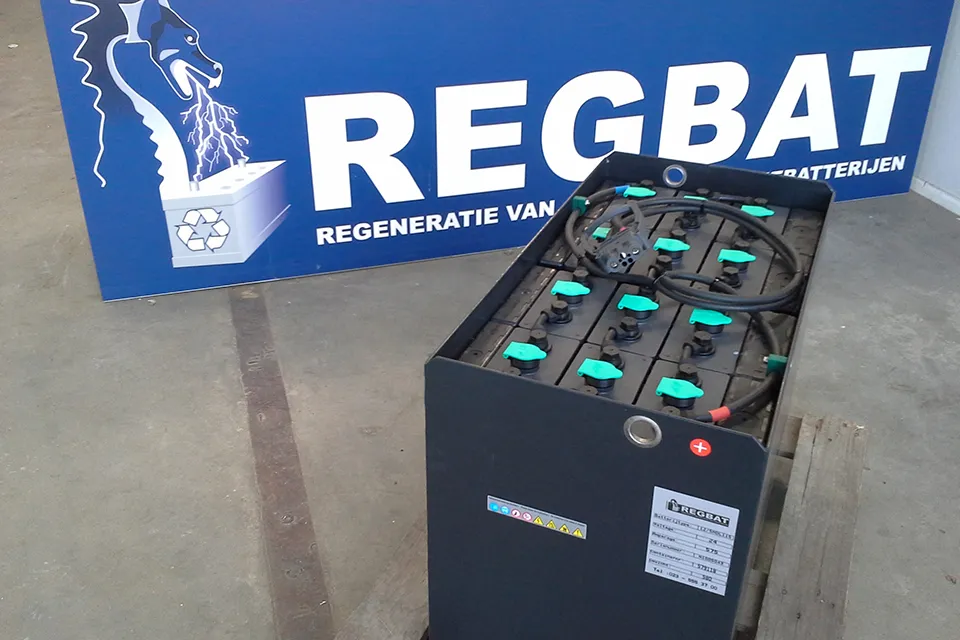
‘Cost-saving and environmentally friendly’
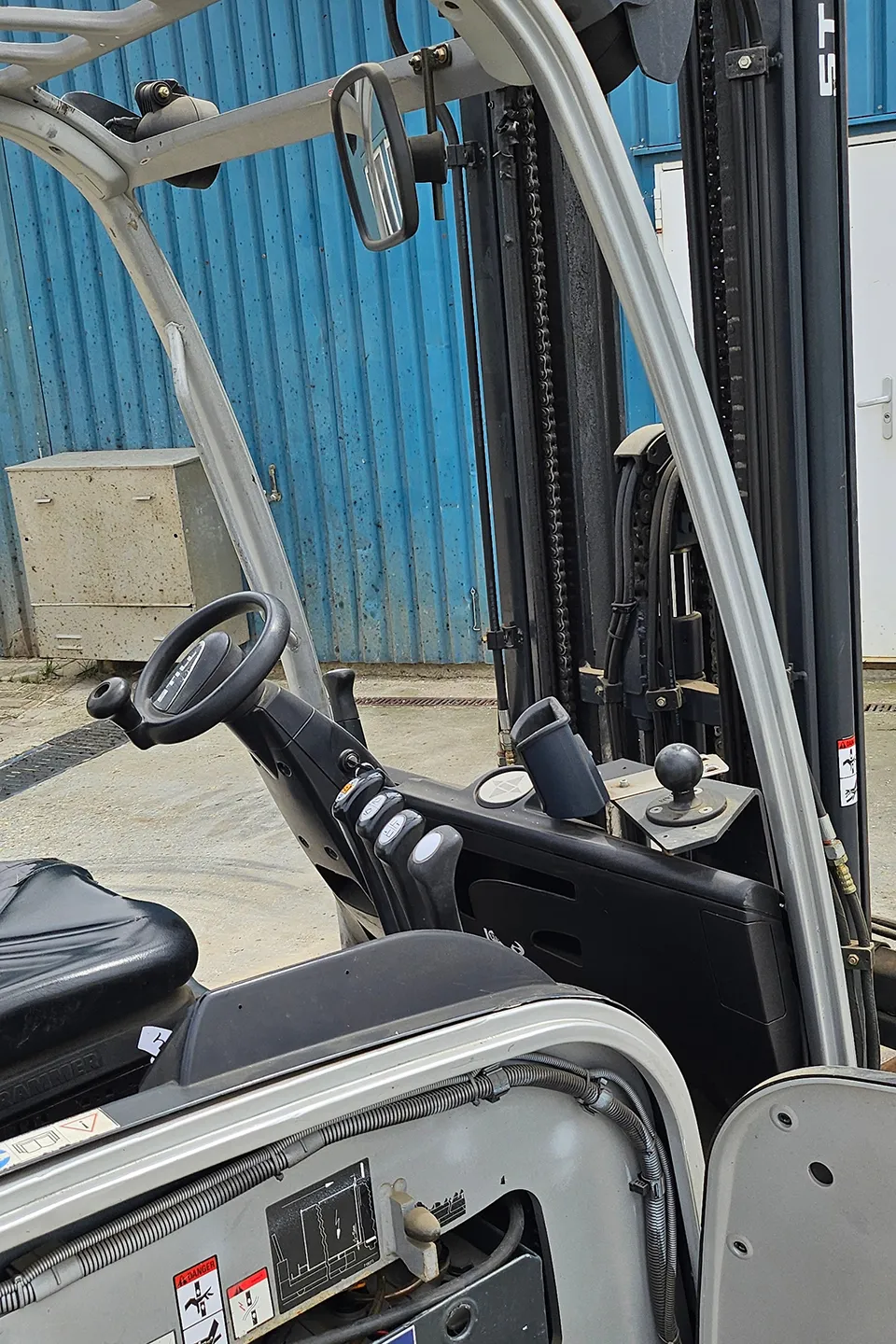
Traction batteries are indispensable in the logistics sector. From electric forklifts and pallet trucks to mobile elevating work platforms and cleaning machines, they all run on traction batteries. If there is a problem with a battery, a new one is often bought straight away. But that is by no means always necessary. Regbat offers a sustainable, cost-saving alternative: regeneration.
Theo de Wit, owner of Regbat, speaks enthusiastically about his company: “We have been supplying batteries since 2011, both new and used, but regeneration sets us apart from other traditional suppliers. We are based in Hoofddorp and have built up a large customer base. That is why we opened a second branch in Helmond six years ago. We now receive traction batteries from all over the Netherlands, with customers asking us to regenerate them. It makes sense, because regenerating a traction battery is environmentally friendly and saves you a considerable amount of money.”
A tangible contribution to the circular economy
A traction battery is expensive. “When a battery loses capacity, we often see customers opt to buy a new one. But with many batteries, regeneration can recover the lost capacity. Regeneration extends the service life of your traction batteries, and they also use less energy. After regeneration, the battery uses 10 to 15 per cent less electricity while charging.”
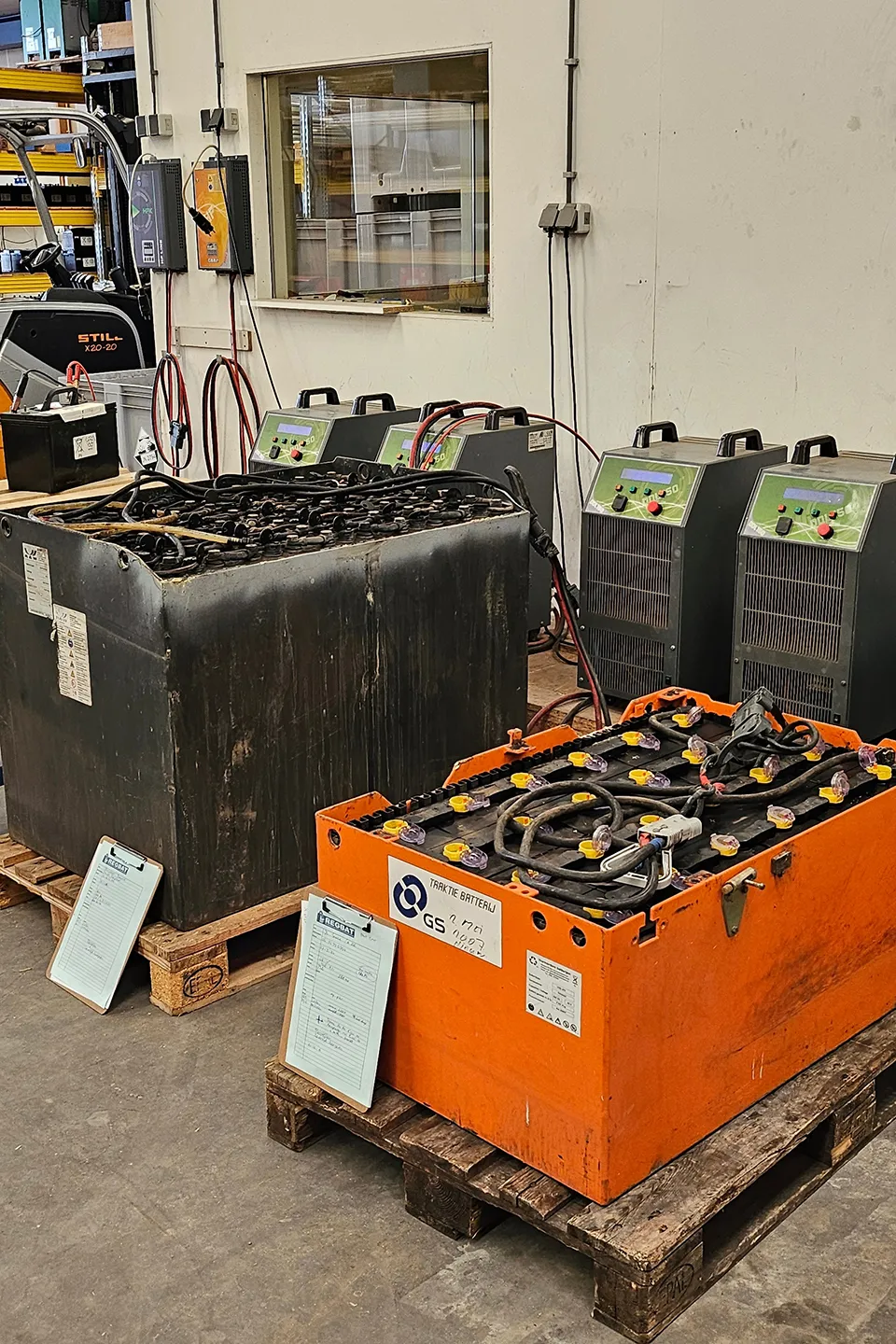
Sustainability remains an important issue in the sector. More and more companies have to meet circular economy targets. “Many companies offer advice on this, but we provide a practical solution. Batteries and traction batteries are expensive and have an environmental impact. Regeneration gives them a longer or second life, which is good for the environment and for your wallet,” says De Wit. “This gives companies a practical way to take steps towards meeting their circular economy targets and obligations.”
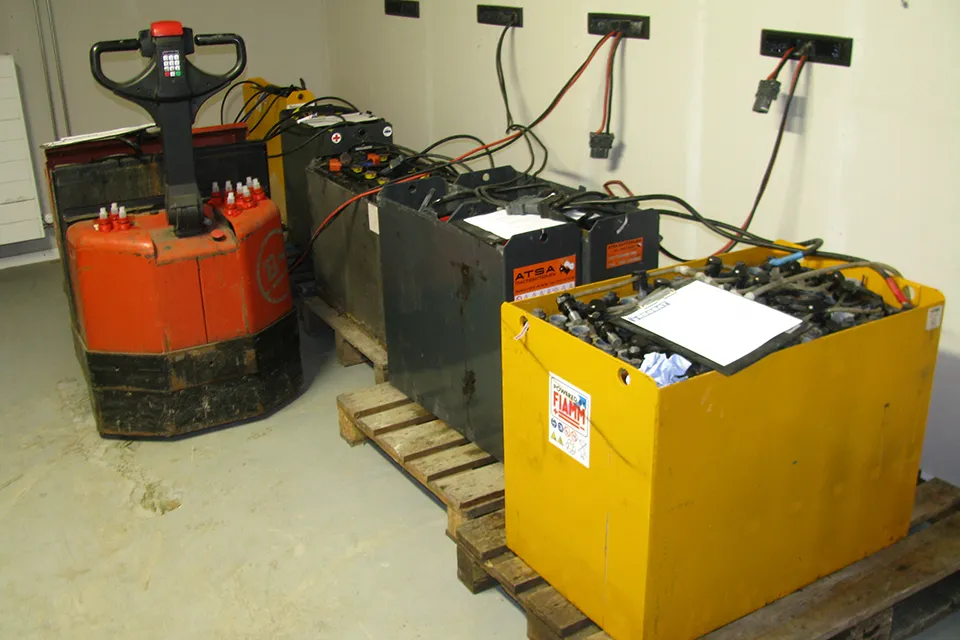
“Regenerating a battery is also 70 per cent cheaper than buying a new one. What’s more, all our customers receive a guarantee on the end result. We test the capacity after regeneration and can demonstrate that the battery performs better, so we guarantee that too.”
The approach: no cure, no pay
Regbat operates on a no-cure, no-pay basis. De Wit explains: “Customers always ask in advance: ‘How much better will regeneration make our battery?’ Understandably, because it is an important factor in their decision. But we cannot see inside the battery either. So when a traction battery arrives, we start by testing it. This tells us how much of the lost capacity we can recover. Sometimes the battery has simply reached the end of its life, or there is another problem. We are honest about that. We give the customer an evidence-based recommendation, and if regeneration does not go ahead, the battery is returned free of charge. We cover the cost of the test.”
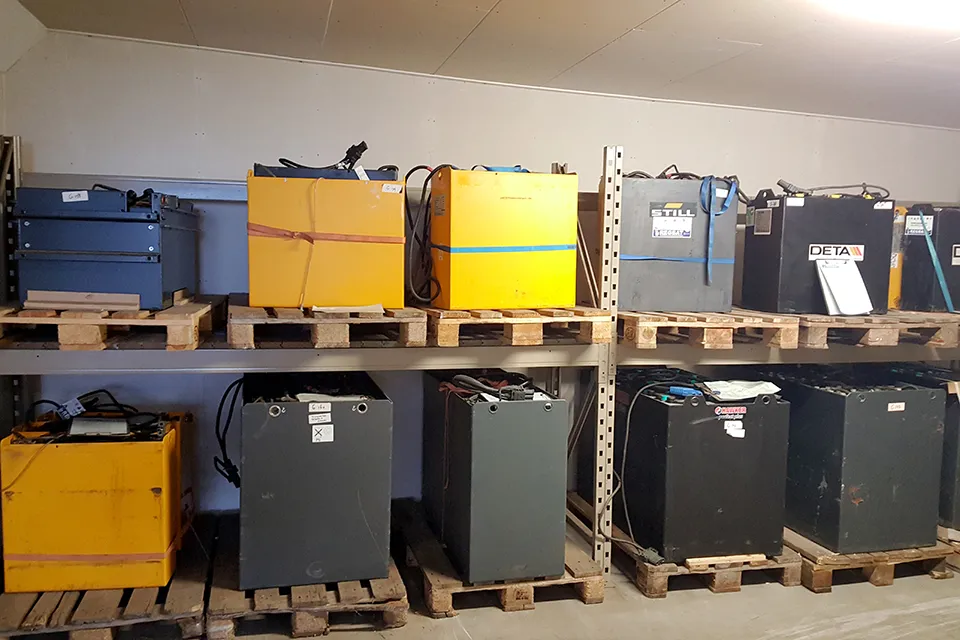
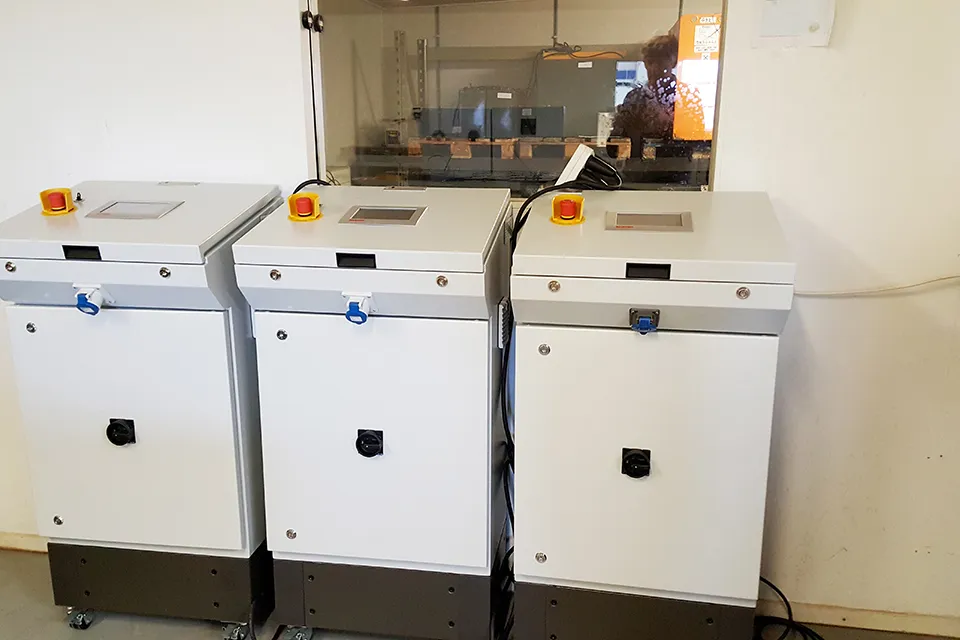
“If we can improve the capacity, we get to work on regeneration. During the process, we remove lead sulphate from the lead plates, restoring capacity. The battery spends 1 to 3 days in the regeneration machine, which we built under our own patent. After treatment, the battery is tested twice. We can show the customer the test results, including how many ampere-hours the battery can deliver again. The end result? A battery with restored capacity that will serve the customer for years to come.”
Energy storage
Recently, Regbat has also moved into another area: environmentally friendly, cost-saving energy storage solutions. Through LFP Batteries, it supplies batteries and inverters for energy storage. “Households and businesses with solar panels often generate more electricity than they need during the day, which they can use later, for example in the evening,” De Wit explains. “Businesses can store surplus energy in a battery and use it later. We provide a full-service offering, supplying systems for mobile applications, homes, businesses and industry, from 500 watts to 1.5 megawatts or more. Together, we can save money in an environmentally friendly way.”
Question about this story? Ask your question
Keep following this
Get an email when a new story is published. No account needed.
- SubjectGeneral







