












The end justifies the means
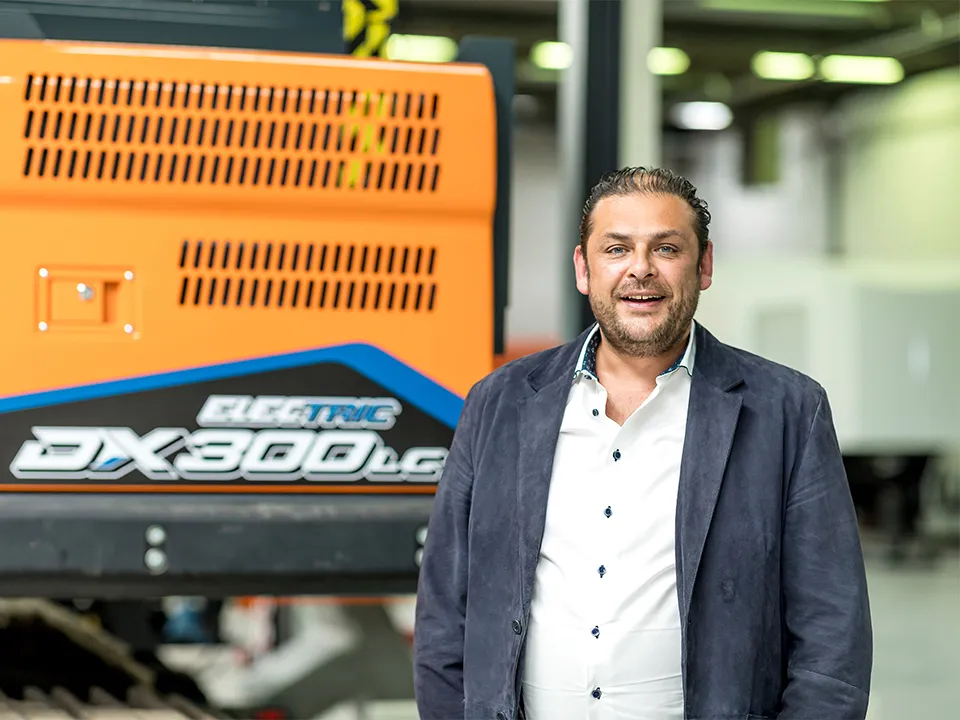
Despite, and partly thanks to, the coronavirus crisis, the construction industry is in a state of flux. There is also a great deal happening in the area of equipment. Climate targets for 2025 and 2030 are prompting construction groups to invest in electrically powered machines.
That is good news for the environment, but when it comes to safety, quality and CE requirements, many conversion specialists are not taking things seriously enough. I am close enough to the action, sometimes literally, to know that there are plenty of cowboys operating in this field too. I have even come across electric construction equipment from a manufacturer of fairground rides… I dread to think what might happen, because accidents are bound to occur. Fortunately, so far they have all ended without serious consequences.
Statements like these do not make me popular, but the end justifies the means. The Green Deal towards an emission-free construction site is a long road that will take years. The first steps in this transition have been taken, but one misstep caused by a lack of knowledge about this new technology could set us back a long way. Ultimately, the industry will pay the price. Do not make the mistake of simply adding electric machines to your range, because that will only cost money, increase the risk of errors and mean that after-sales service is not up to scratch. That is why I advocate a clear division between machine manufacturers on the one hand and specialists in electric drive technology on the other. Stick to your core business and outsource this high-tech element.
WORKING TOGETHER
UMS is not taking the easiest route here, but the fact that I have sat down with almost all the major OEMs in the equipment sector in recent months reinforces my view that the thinking behind interchangeable battery packs is sound. We are not talking forklift technology, but an automotive solution in which (triple) redundancy is central. The electrification of construction machinery remains a playground for engineers. It is time for an integrated transition agenda, with stakeholders working together to carry out the right analyses and agree on a clear direction based on the findings.
If you ask me, the days of emission-free machines tethered to charging cables are numbered, and the hydrogen story will soon prove to be a fairytale. At around €1 per kW of energy from hydrogen, it is simply too expensive for mobile applications. That is, if the logistics are even feasible. With green electricity, battery-powered machines work out at 6 cents per kWh. Do not forget that construction machinery consumes a lot of energy as part of the energy transition. A four-person household uses an average of 10 kWh of electricity a day for all the appliances in the home. Powering a 30-tonne excavator electrically requires at least 400 kWh a day. Put twenty such excavators together and their consumption is already on the scale of an entire residential neighbourhood.
The market is calling for a uniform solution on which the entire infrastructure can be based. UMS offers one in the form of a modular multikit. At its core is a replaceable battery pack. We are currently holding talks about standardising it. No more hassle with different plugs, but one standard for all machines in every country. Users can buy, rent or lease the LFP battery to keep costs attractive and bring banks and insurers on board too. Only by working together can we make the ideal of a 100% emission-free construction site both achievable and affordable.
Question about this story? Ask your question
Keep following this
Get an email when a new story is published. No account needed.
- SubjectGeneral







