












Taking the lead
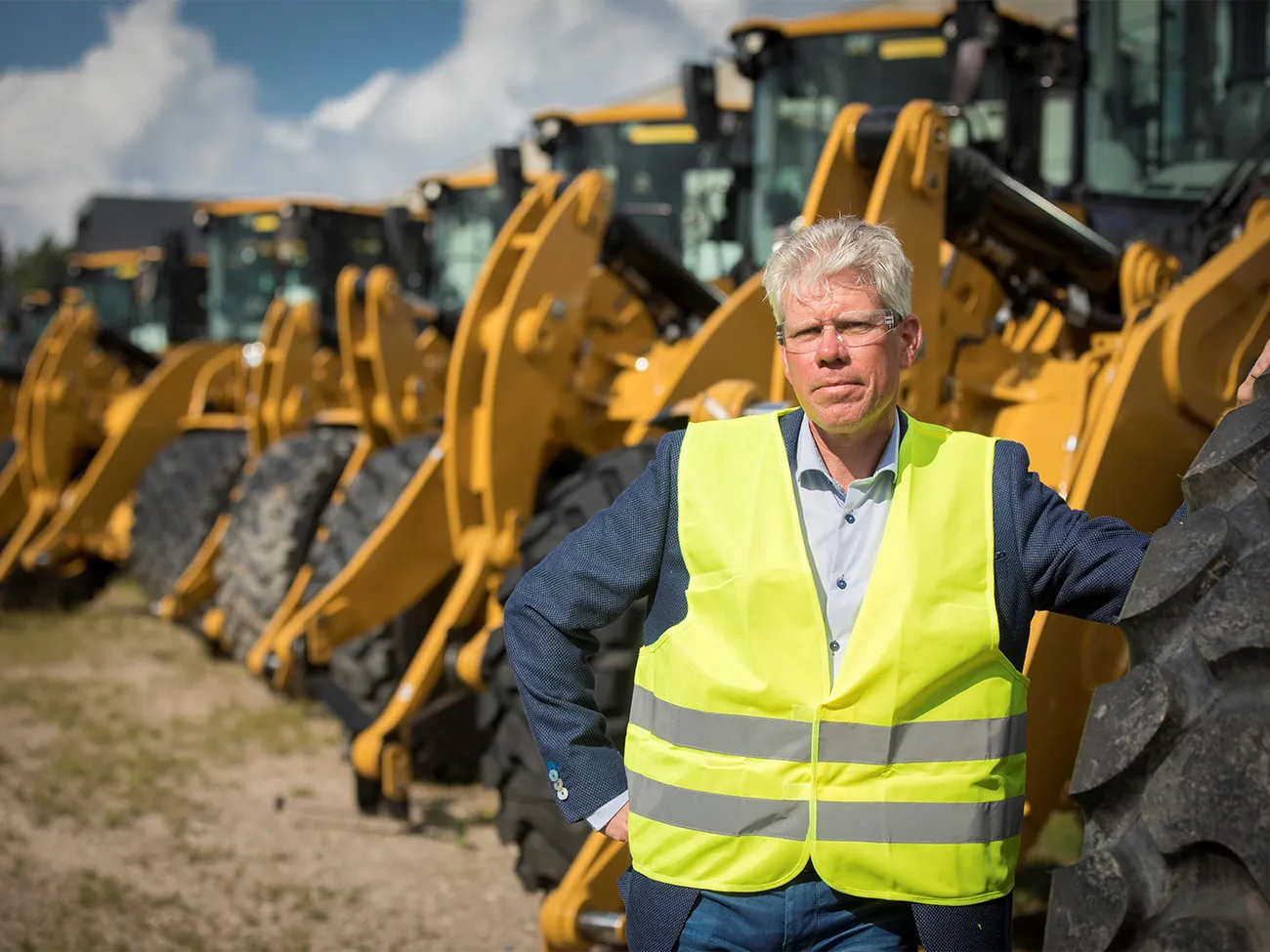
I would like to use this column to discuss sustainability in the civil engineering and infrastructure sector. For a long time, the government focused on transport and industry to reduce CO2 emissions, leaving mobile machinery out of the spotlight. But nitrogen and particulate-matter pollution, particularly from diesel engines in urban centres, has now put our sector firmly in the firing line, and the tide is clearly turning. While other sectors are somewhat paralysed, the construction industry is rising to the challenge, and I am seeing all kinds of initiatives emerge to address the sustainability issue. This goes to show once again that ours is a can-do sector, with enormous creativity.
At the same time, this transition cannot happen overnight. The government would ideally have everything running on electricity already, but that is not how it works in practice. There are still intermediate steps to take on the way to zero emissions, which is the clear end goal. It is too easy to overlook the fact that, in the short term, increasingly fuel-efficient, cleaner engines can also save fuel and reduce particulate emissions. Switching from dirty to clean diesel and the Het Nieuwe Draaien campaign can make a substantial contribution to reducing emissions. Is this the solution? Certainly not, but it can do a great deal to cut emissions drastically right now.
WELCOMING INNOVATION
It is good to see us taking the lead in the search for an emission-free or low-emission construction site. Yet much of it is still pioneering work, with existing machines being converted. I have mixed feelings about this, because it demonstrates our sector’s creativity and problem-solving approach. I wholeheartedly welcome that innovation. On the other hand, there are safety concerns. Is everything being done properly, so that it does not create a dangerous situation under demanding conditions? In that respect, it is good that trade associations, suppliers and users are coming together in all kinds of partnerships to establish what is and is not possible, and how best to mitigate the risks.
We cannot have a situation where we say: this machine is sustainable, but not safe. That is why it is important for the sector to show what we are working on and what will be possible in the longer term. The transition to zero emissions cannot be achieved in one go. It is a journey of small steps to reduce emissions. That could mean changing the machine, the way it is operated, or both. I think the government is good at translating its ambitions into requirements as a client, through tenders, but it needs to engage more with businesses about what is realistic and what is possible. What alternatives are available while a zero-emission solution is not yet on the market?
It is difficult to predict the future: will it be electric or hydrogen? I do not know, and even the experts disagree. It is important to gather as much information as possible through initiatives and pilot projects. But we also need to give each other room and learn from one another by sharing knowledge. We are getting it wrong if everyone tries to reinvent the wheel just to have an electric alternative available because it is specified in the tender. It is all well and good to ask for one, but if those machines are not yet available in large numbers and are not being checked for that reason, then ultimately we are doing the environment a disservice.
Question about this story? Ask your question
Keep following this
Get an email when a new story is published. No account needed.
- ThemeSafe and healthy warehouse work
- SubjectGeneral







