












SPRYG hosts 15th edition of Logistiek Vastgoed België: trends and challenges in logistics real estate
Text Geert Van Cauwenberge Beeld Geert Van Cauwenberge / SPRYG
Flexibility, energy management and land use are reshaping the landscape
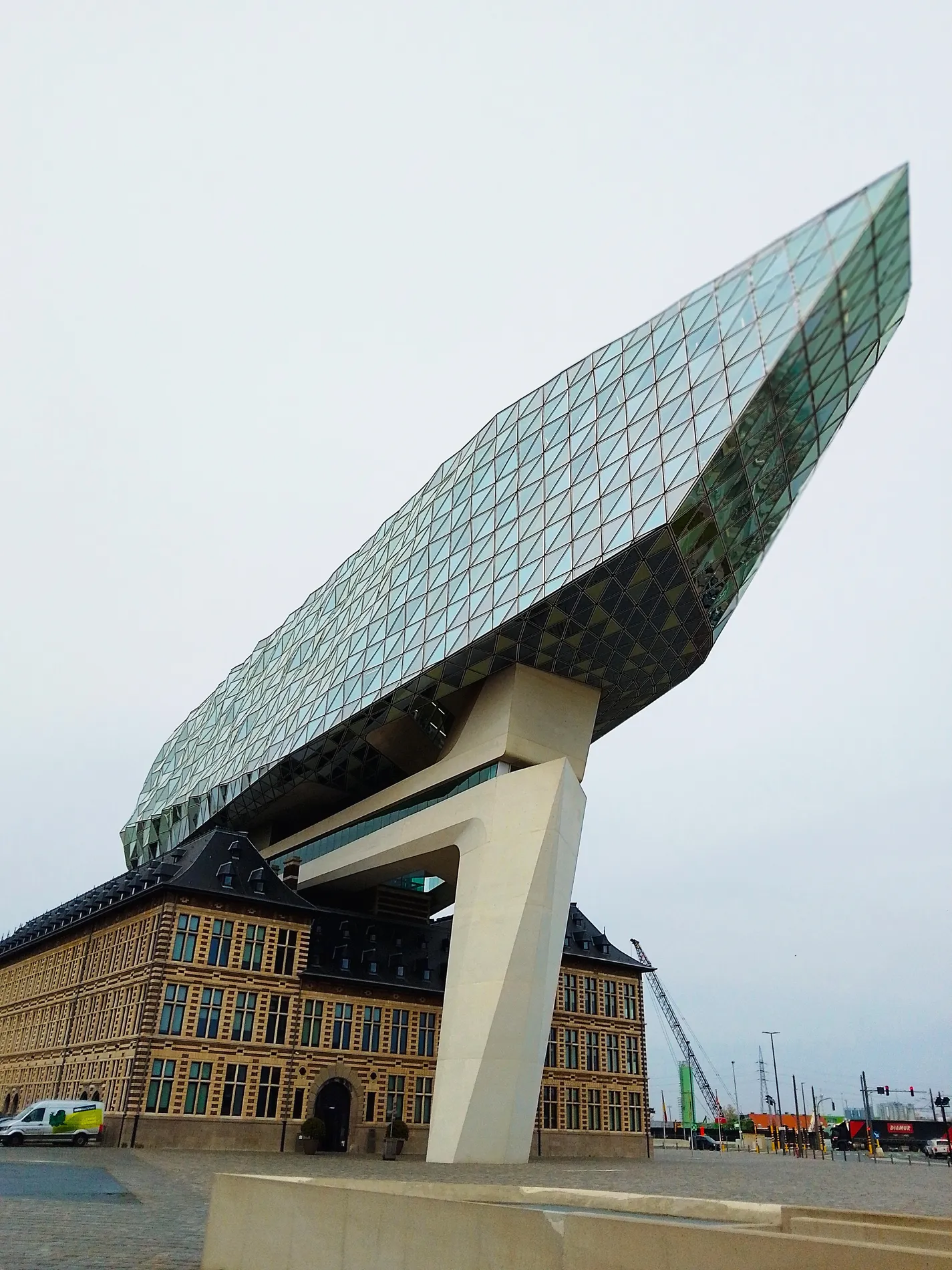
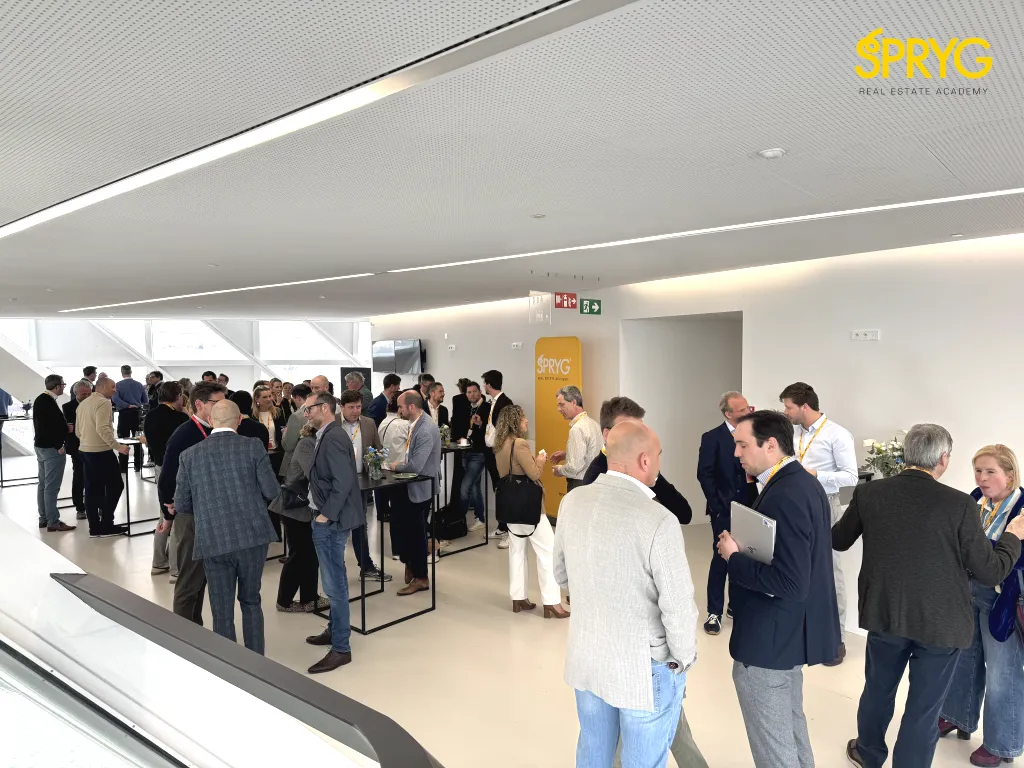
On 24 March 2026, SPRYG hosted the 15th edition of Logistiek Vastgoed België at Antwerp’s Havenhuis. The well-attended study afternoon, moderated by Christophe Wuyts (Head of Industrial Agency at Ceusters Vastgoed), made clear that the sector is at a turning point. Whereas logistics real estate was once relatively predictable, geopolitical shifts, technological developments, energy challenges and growing land scarcity are now creating a more complex reality.
According to Johan Beukema, managing partner at Buck Consultants International, traditional, globally organised supply chains are increasingly giving way to regional, flexible networks. Companies are bringing production and distribution closer to their markets to make their supply chains more robust and less vulnerable to international disruption.
As a result, we are seeing a shift from static to dynamic supply chains, with data, digitalisation and continuous monitoring taking centre stage. For Europe, this means logistics flows are being reshaped. Central and Eastern Europe are growing in importance, while Western Europe is under pressure from higher costs and a limited supply of land available for logistics development.
New solutions for urban logistics
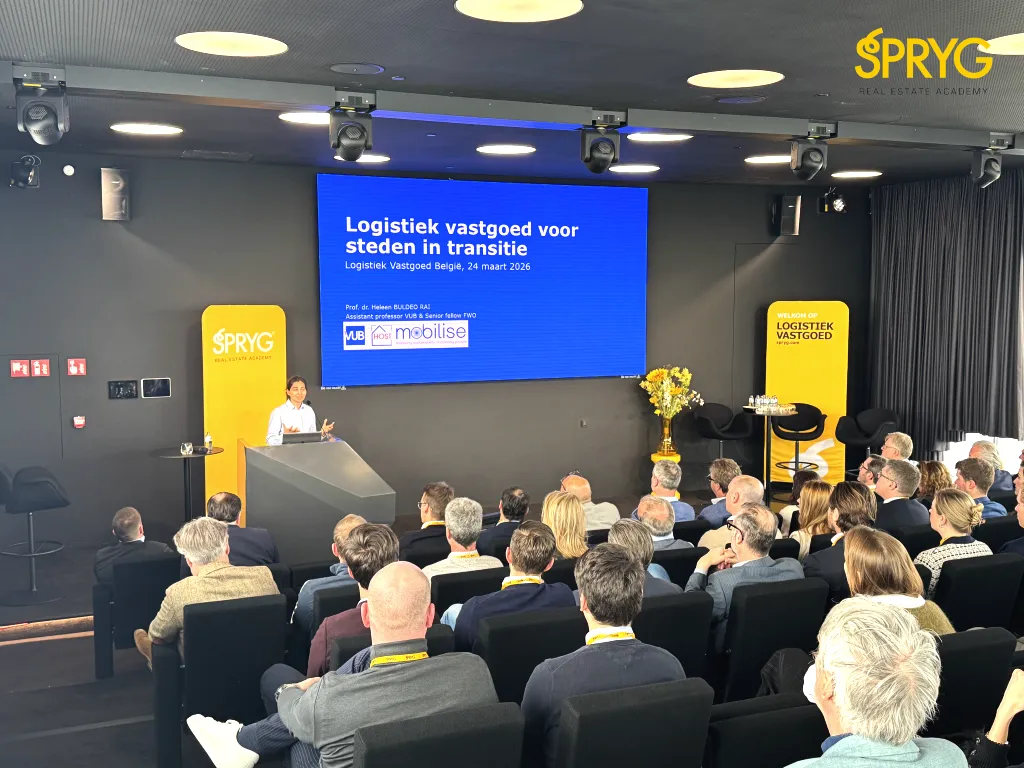
The effects of this pressure on space are most visible in urban areas. The rapid growth of e-commerce is running up against physical and organisational constraints, resulting in inefficient and less sustainable last-mile distribution. Prof. Dr Heleen Buldeo Rai (VUB) highlighted the potential of urban logistics hubs, such as those already operating in cities including New York, Paris and Amsterdam. By consolidating deliveries and organising them closer to end users, transport movements can be reduced. This requires a fundamental shift in the approach to logistics real estate, with greater emphasis on vertical warehouses, mixed-use development and integration into the urban fabric. Alongside technical challenges, policy factors also play a part: without tailored regulation and spatial planning, implementation remains complex.
Energy as a strategic factor
Energy has meanwhile become a core component of logistics real estate. According to Robin Bruninx, CEO of Encon, electrification, the growth of data centres and geopolitical uncertainty are putting increasing pressure on Belgium’s electricity grid. Grid congestion is therefore becoming a structural problem. Logistics operators are increasingly taking an active role in energy management. Investment in on-site energy generation, storage and smart control has become essential. Solar panels, batteries and charging infrastructure are now integral to new developments. As a result, logistics real estate is evolving from a purely operational asset into an energy platform that also generates value in this area.
Automation as a response to constraints
Alongside energy and space, labour shortages are another major challenge. Companies are facing a shortage of staff and are looking for ways to organise their processes more efficiently. Jonathan Bytebier, sales manager at Movu Robotics, highlighted the key role automation can play. Innovative technologies such as 2D and 3D shuttle systems make it possible to optimise both new and existing warehouses. Their flexibility and scalability lower the barriers to automation.
Scarcity demands strategic choices
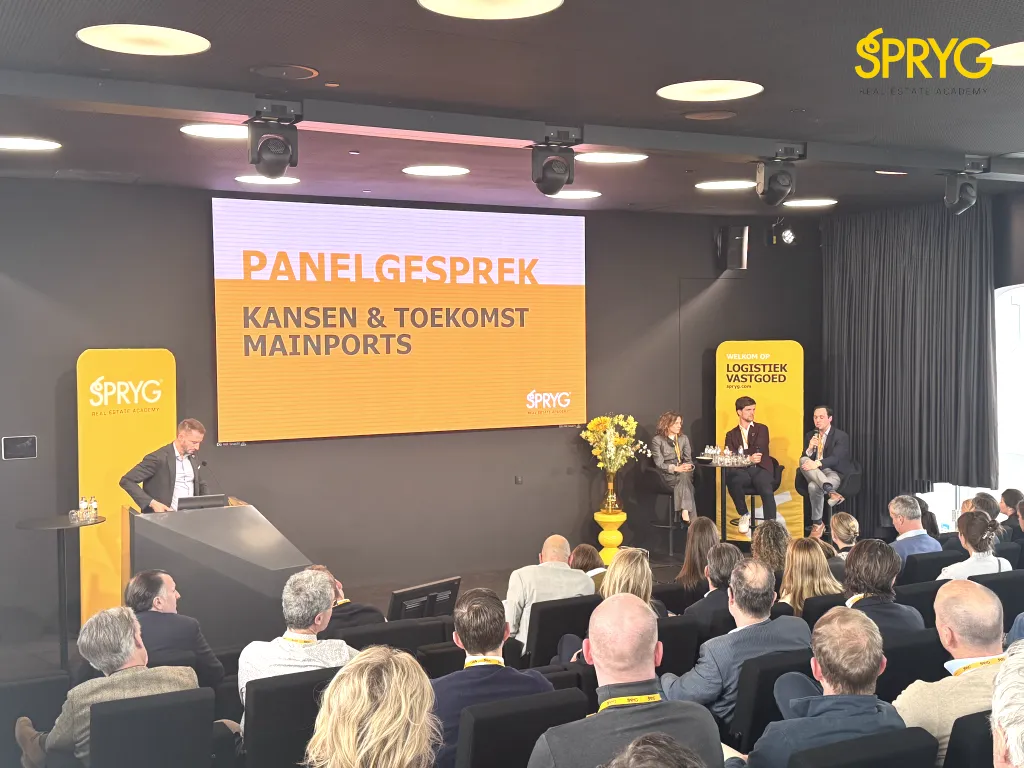
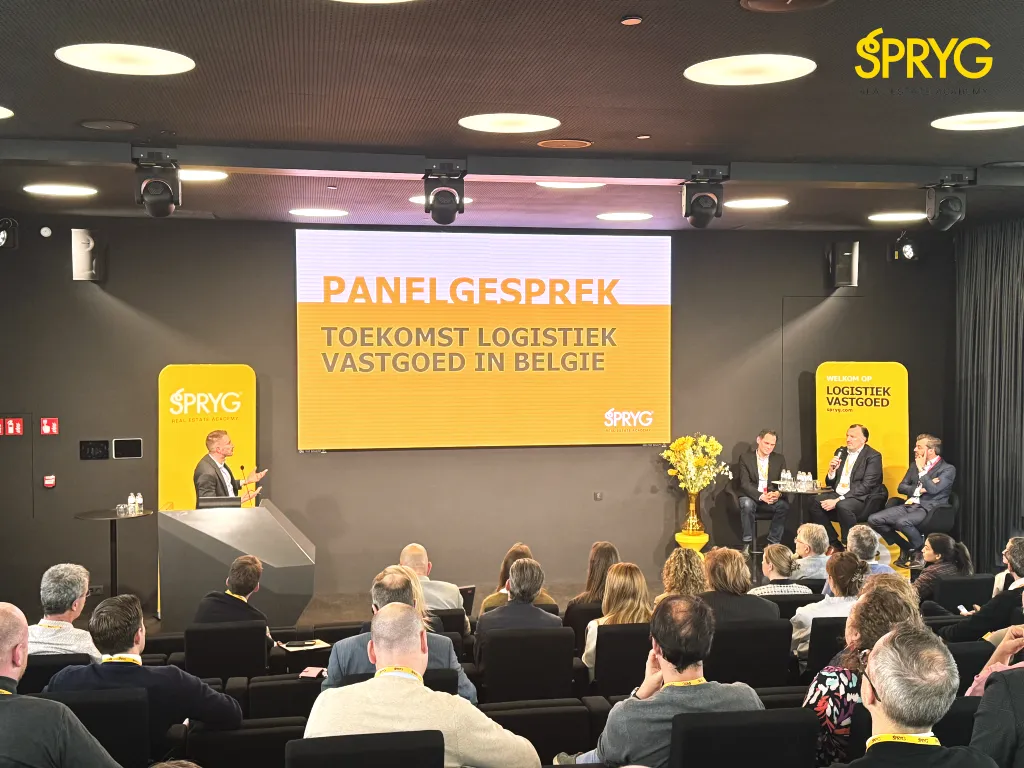
The limited availability of land for logistics development in Belgium was a recurring theme in the two closing debates. In the first panel discussion, featuring Ivo van Hauten (VLAIO), Xavier Van Reeth (Montea) and Henri Van Bockxelaere (Weerts Group), it became clear that the land actually available in Flanders is even scarcer than is often assumed. Policy is therefore increasingly focused on more efficient land use through redevelopment, mixed-use development and strategic planning.
For companies, this translates into a growing need for flexibility. Large plots in prime locations are rare, meaning operations are increasingly spread across different locations. At the same time, attention is shifting from large-scale new-build projects to the conversion of existing sites. Energy is once again a decisive factor in this context. Locations with available capacity or the potential for on-site generation are becoming more attractive, although accessibility remains essential for certain users.
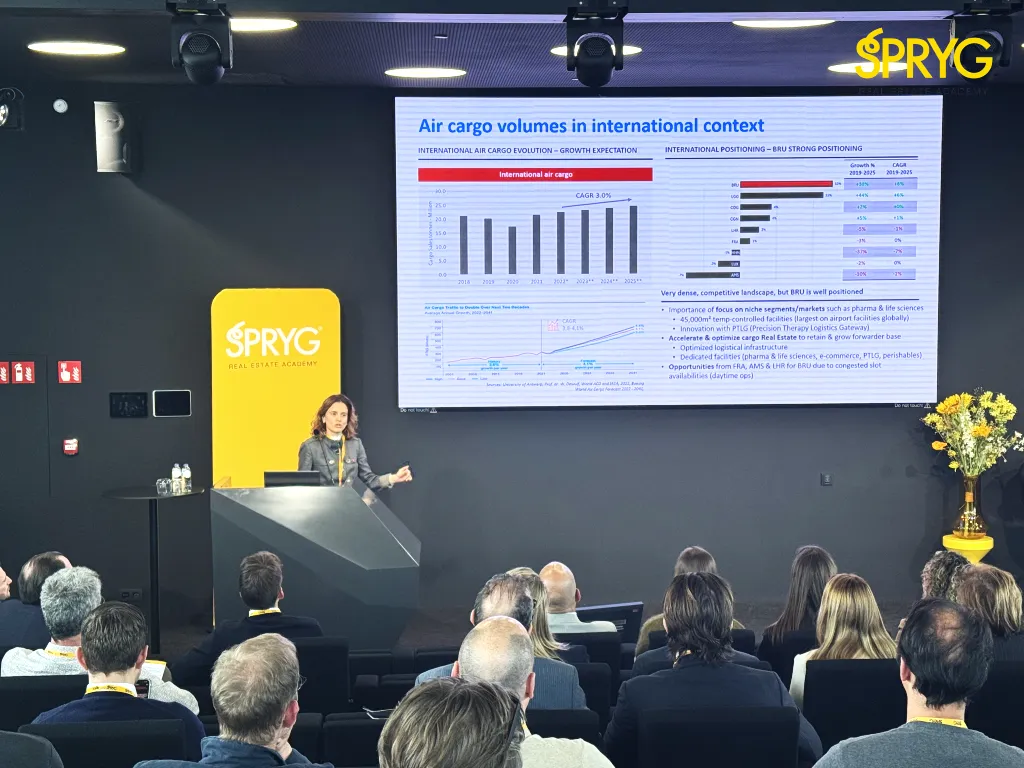
Space is also coming under increasing pressure at Belgium’s main ports and airports. In the second debate, featuring Fred Baert (North Sea Port), Dries Van Gheluwe (Port of Antwerp-Bruges) and Emilie Beusen (Brussels Airport Company), the focus shifted from expansion to optimisation. Brownfield development is gaining importance, while complex permitting procedures and international competition create additional challenges. Energy and sustainability are driving a necessary transition and will be decisive for the future of logistics real estate.
Question about this story? Ask your question
Keep following this
Get an email when a new story is published. No account needed.
- ThemeLogistics property that grows with you
- SubjectGeneral







