












Secure destruction of confidential waste requires a watertight approach
Text Anse Keisse Beeld Renewi
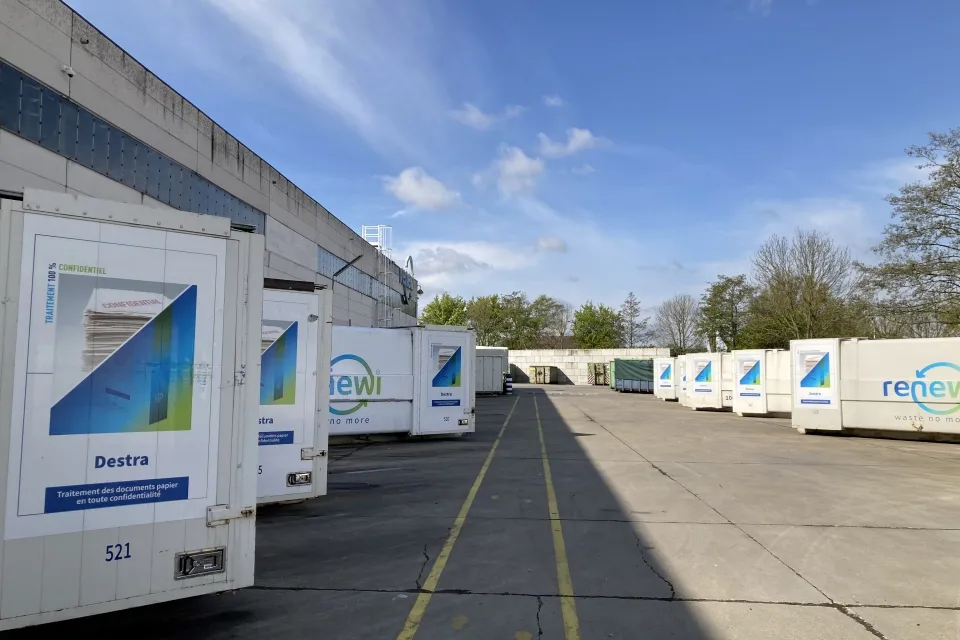
Digital media, confidential archives, sensitive products such as certain textiles or medical materials: confidential data come in many forms. They all have one thing in common: if they are not collected and destroyed correctly, the consequences can be serious, ranging from data breaches and reputational damage to legal penalties. More and more companies are therefore reviewing their approach to confidential waste. Renewi offers specialist solutions that combine security, compliance and circularity. Steven Neels explains what the process involves in practice.
Businesses in Flanders handle large volumes of sensitive information every day. Despite ongoing digitalisation, confidential data still circulate in physical form surprisingly often. Digital media play an important role, but personal data, contracts and medical records also remain widely stored on paper. In addition, there are numerous products, such as textiles and medical materials, that must be securely destroyed for a variety of reasons.
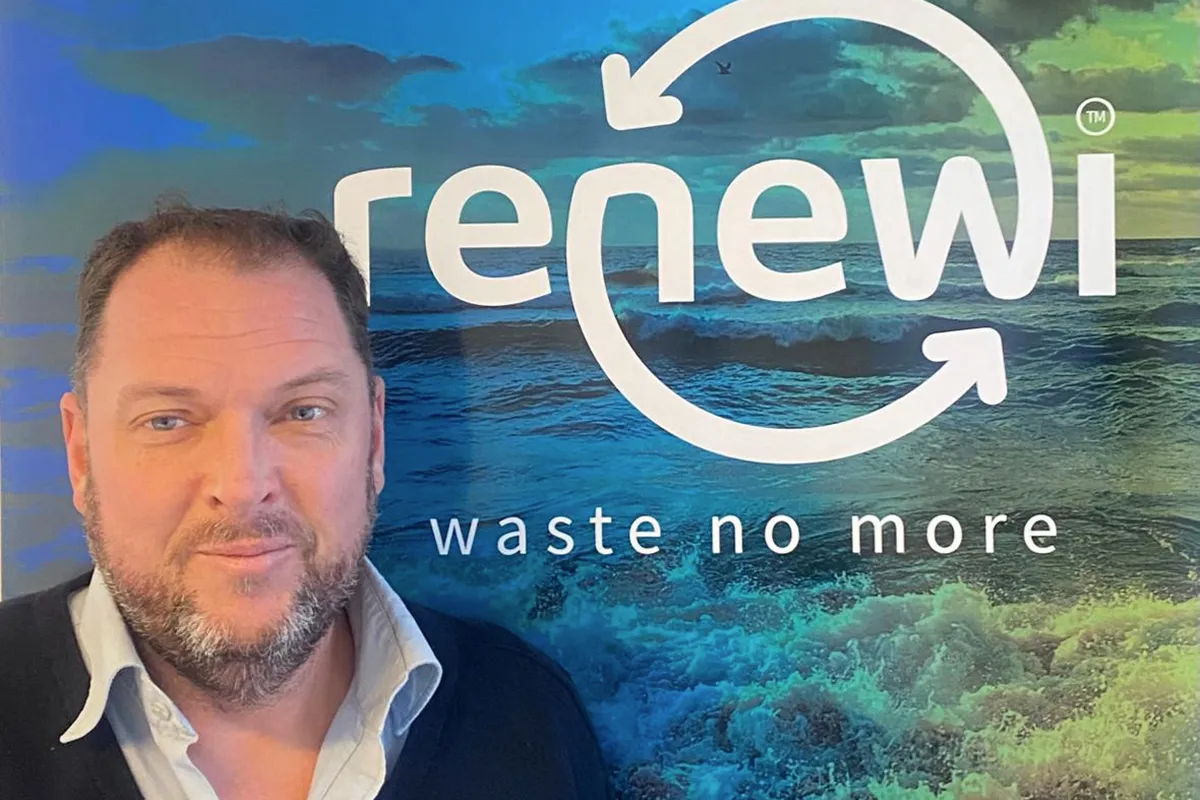
These confidential data also pose a risk that is often underestimated. “Data security is no longer a minor concern,” says Steven Neels, site manager at Renewi in Lokeren. “A small mistake can have serious consequences.”
The situation varies considerably from one sector to another. “Healthcare providers, government departments and legal services remain heavily reliant on paper,” says Neels. “Archives and older information media that need to be securely destroyed also remain in circulation.” That is why he believes it is crucial for companies to review their processes regularly: “Confidential waste does not disappear by itself. What is stored correctly today could pose a risk tomorrow.”
Security from collection to destruction
What all these waste streams have in common is the need for absolute certainty, not just during destruction itself, but throughout the entire process. At Renewi, that starts with collection. “Customers are given locked containers, like a kind of ‘letterbox’, in which documents and products can be deposited securely. The containers are collected while locked and remain locked until they are processed at our site,” explains Steven Neels. “We manage the keys. That is essential to maintaining customer trust.”
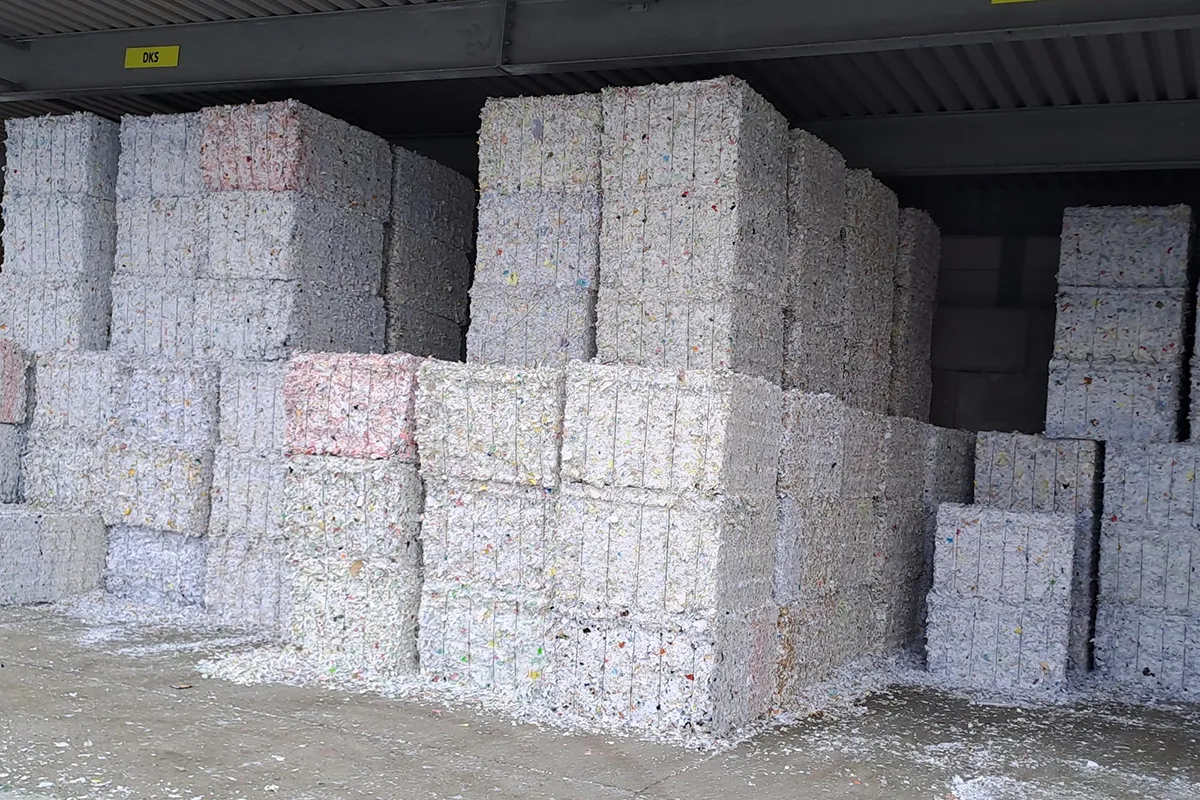
Once they arrive at Renewi’s site in Lokeren, the containers are not destroyed straight away. They are first stored, still locked, for a short time. “If a customer suddenly realises that a document they still need is inside, we can retrieve it during that period,” Neels explains. The destruction process begins only afterwards, in a secure, enclosed hall. First, non-paper materials are removed, after which everything is shredded. Other confidential goods are processed appropriately, depending on their nature.
Strict controls and tangible proof
Confidential waste is processed in Lokeren in a strictly controlled environment. This plant handles confidential waste streams from across Flanders, with a specialist team of around ten employees, including a dedicated core team that works exclusively with confidential materials. “Access to this specific area is strictly controlled,” says the site manager. “Employees are screened and visitors always sign a declaration. Traceability here is not a formality, but a basic requirement.”
Customers also receive a monthly destruction certificate, which includes details such as dates and volumes, as well as confirmation that everything has been handled in accordance with the rules. “That certificate is important. It gives companies peace of mind and tangible proof for audits or inspections.”
Secure and circular
What sets Renewi apart is its combination of data security and circularity. After destruction, the paper or product is recycled and reused as a raw material. “Security and sustainability are not mutually exclusive,” says Steven Neels. “On the contrary. Anything that can be recycled is actually reused. We also make the maximum effort to recover non-paper materials.”
This approach requires investment, but Renewi believes it is essential. “We see companies becoming increasingly aware of their responsibilities, not only to their customers but also to society.”
Awareness is key
Companies often have no shortage of good intentions, but they do lack insight into exactly what happens to confidential waste. “We regularly welcome customers who want to see how the process works. That is when you notice awareness growing. Many companies do not realise how significant the impact of a careless approach can be.”
That awareness is becoming ever more important, especially now that data security is rising up the agenda. Steven Neels concludes: “Confidential destruction is not a cost, but an investment in protection, trust and the future of your organisation.”
Question about this story? Ask your question
Keep following this
Get an email when a new story is published. No account needed.
- SubjectGeneral







