












LogiMAT reaffirms its role as an international driving force in intralogistics
Text Kris Vandekerckhove Images various sources
With record figures across the board, LogiMAT 2026 has once again underlined its position as a leading trade fair for intralogistics. Nearly 70,000 visitors and more than 1,600 exhibitors from around the world gathered in Stuttgart to explore the latest developments in warehouse automation, software and material handling.
This year, the strong international presence was matched by the distinctly commercial nature of the event. Numerous exhibitors reported concrete leads, project enquiries and even immediate orders, confirming LogiMAT as a true working trade fair where innovation and business go hand in hand.
The focus was on flexibility and scalability in an increasingly complex logistics environment. From advanced sorting systems and autonomous vehicles to compact automation solutions for e-commerce and returns, the sector is proving resilient and continues to invest, even in challenging economic times.
But how did all this translate on the exhibition floor? We spoke to a number of exhibitors.
Visibility and product presentation take centre stage
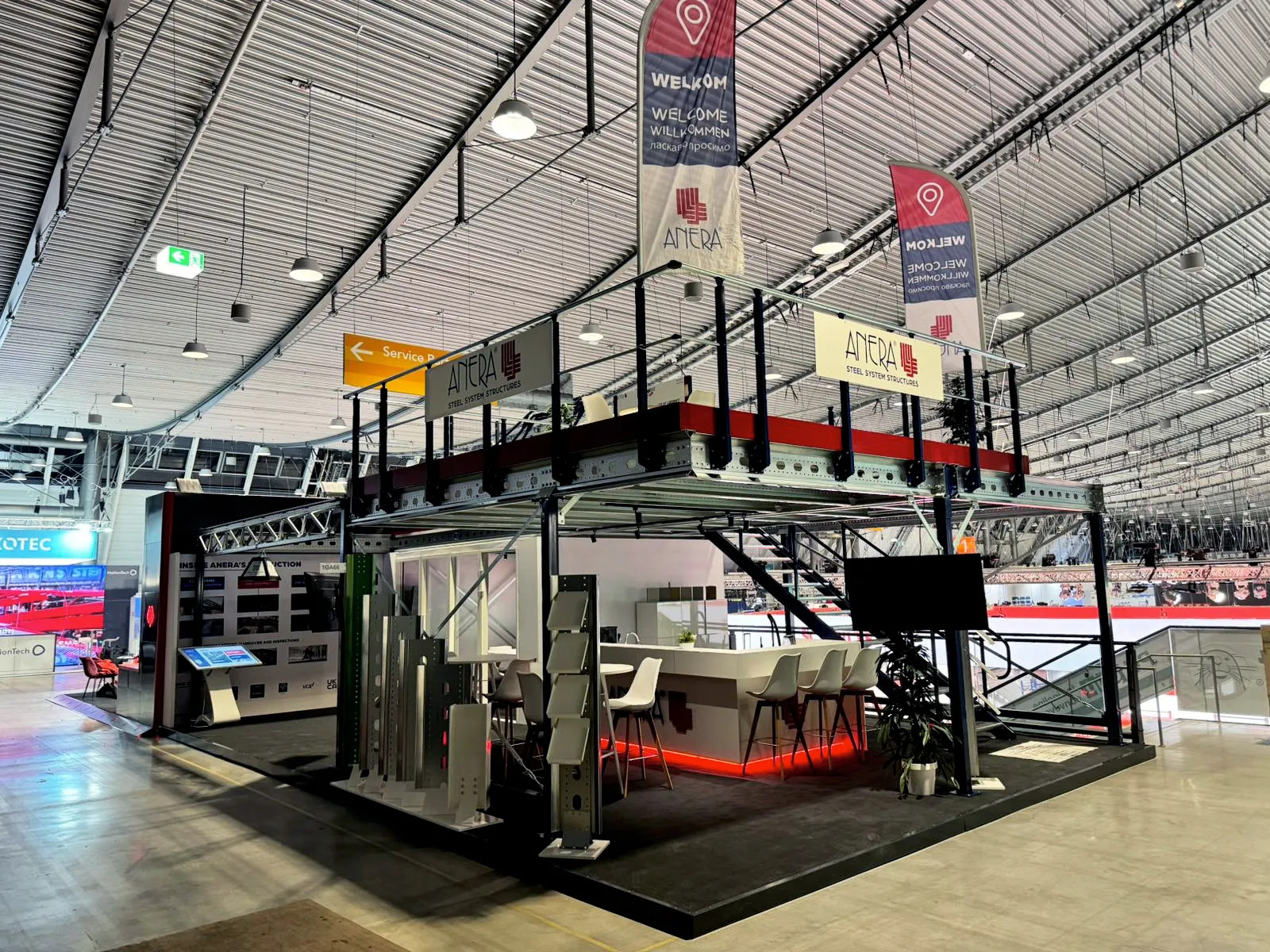
For Anera, exhibiting was a successful experience once again. “After being actively present for several years, we find that partners can locate us more easily and deliberately include a visit to catch up in their trade fair plans,” says Niels Deijkers, Marketing at Anera.
With its own stand, Anera deliberately opted for a combination of visibility and hands-on product presentation. A mezzanine floor was a key attraction, allowing the company to give visitors a tangible demonstration of its solution. “Partly, it was about showcasing our product, but also about raising our profile and speaking to partners in person,” says Deijkers. As with many trade fair appearances, networking also played an important role.
Based on internal feedback, Anera is looking back positively. “Every year we review the experience and learn from it, with the aim of becoming a little more professional again next year. But ultimately, it’s all about the conversations!” For the company, taking part was therefore a valuable way to strengthen its partnerships.
Innovation and tangible results
For EuroSort, exhibiting this year was particularly successful. “It was probably one of our best editions ever,” says Rens Gehling, Commercial Director at EuroSort. “It was really busy: our team was talking to people non-stop, and even on the final day we had new customers stopping by.”
The highlight of the stand was the launch of the new E-Sort, presented to visitors as a fully fledged product for the first time. The solution addresses the rapid growth of e-commerce, where increasing numbers of small orders are shipped directly to consumers. “Whereas in the past you had fewer orders with many items, now it’s the other way round. We’ve developed E-Sort to meet that need.”
The technology makes it possible to multiply a single outlet into numerous sorting points, delivering high throughput within a compact footprint. The solution can also be combined with existing systems, enabling both B2B and B2C flows to be handled within a single installation.
The market response was particularly positive. “We had plenty of traffic, but also concrete confirmation that this really is a bullseye,” says Gehling. “That has already translated into new project enquiries.”
Although digitalisation is playing an increasingly important role in commercial processes, EuroSort believes that targeted trade fair participation remains clearly relevant. “You need to be selective, but this is an event you simply have to attend,” Gehling concludes.
A turning point for automation
For VMS, the trade fair confirmed a clear market trend. “I felt we had reached a real tipping point,” says Niels van der Sloot of VMS. “Companies are beginning to realise that the model of relying on cheap, readily available labour is under pressure.”
According to Van der Sloot, rising labour costs and the more limited availability of staff are prompting organisations to look more seriously at automation. This trend has been evident among major international players for some time, but now seems to be spreading to a wider range of companies.
The stand therefore focused on practical automation solutions. An automatic truck-loading solution, in which an autonomous forklift loads pallets into lorries, attracted attention. There was also strong interest in a Box Opener, a robot that automatically opens incoming boxes, a process that is still often carried out manually today.
“These kinds of repetitive tasks are ideal for automation,” says Van der Sloot. “We can see that companies are now keen to make real progress in this area.”
The overall impression? Positive, with a clear shift in mindset. “That growing awareness was the most important signal I took away from the trade fair,” he concludes.
A targeted approach to the market
For Easy Systems, the trade fair went entirely according to expectations. “It was in line with what we had in mind beforehand,” says David Taverniers of Easy Systems. “And it’s definitely worth doing again.”
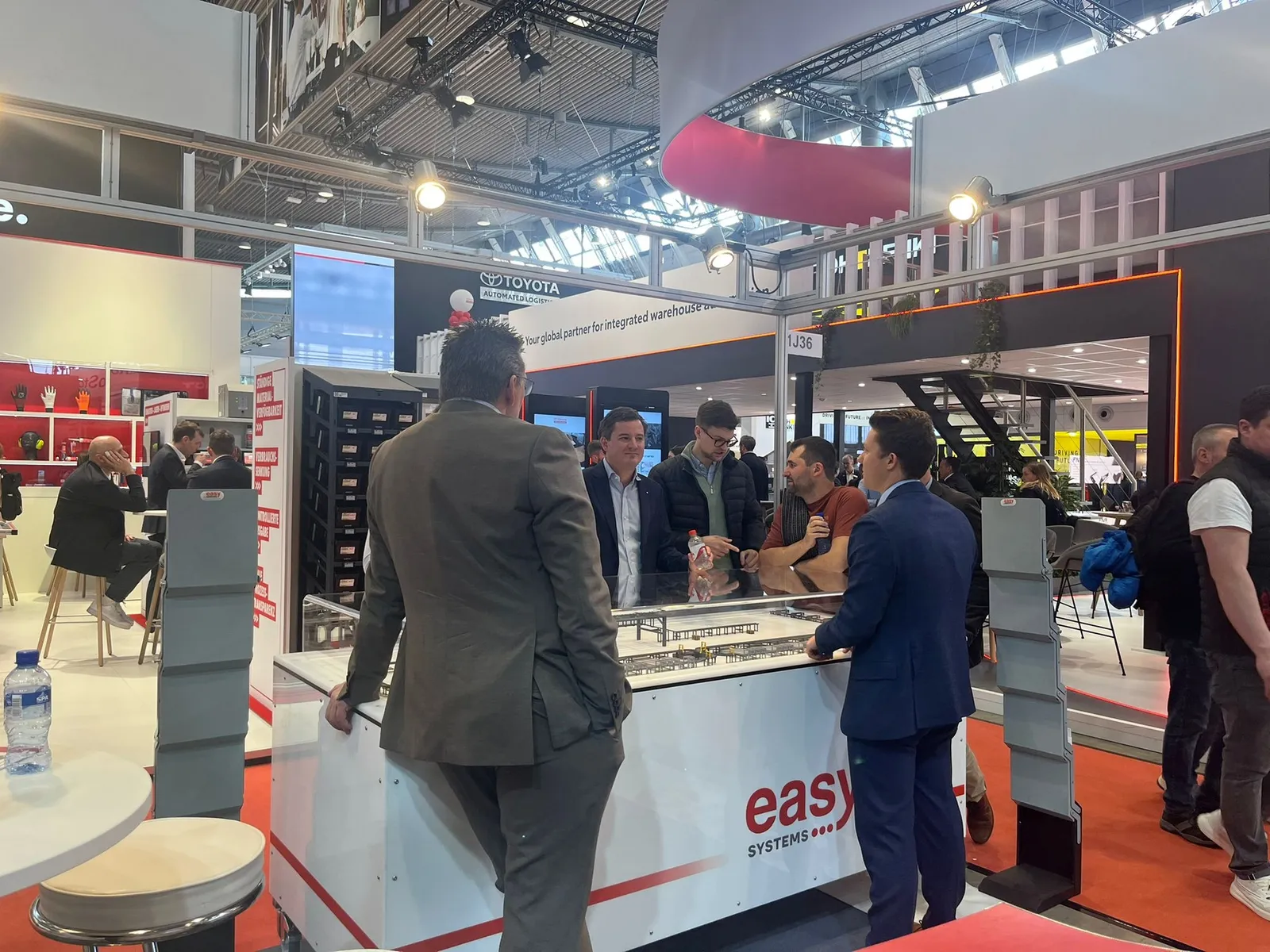
The company’s deliberate focus on the Benelux market stood out. Unlike most exhibitors, who communicate internationally, Easy Systems chose to present its stand exclusively in Dutch and French. “If you’re not ready to deliver in certain markets, you shouldn’t create expectations there either,” the company says. “You only get one chance to make a first impression.”
The approach paid off. The stand attracted visitors from the right regions, helped by the recognisable language. “For example, we saw companies stop spontaneously because of the Dutch text. That confirms that this focus works.” Easy Systems intends to maintain this approach in future. It is already considering an even stronger Benelux focus, for example with a concept that actively involves customers and partners at the stand. “We really want to continue focusing on targeted contacts and relevant conversations,” Taverniers concludes.
Changing visitor behaviour
Haagh Protection is pleased with its participation in the trade fair. “There were a lot of visitors, and we were able to gather some good leads,” says Kay Mullenders of Haagh Protection. At the same time, the company is seeing a clear shift in visitor behaviour.
“A lot of people walk past, take photos and move on,” says Mullenders. “But later they show up in our inbox with a specific enquiry.” According to him, lead follow-up is increasingly happening in a more anonymous way, with visitors not immediately leaving their details at the stand. “Visibility and presenting your products properly are very important for this. You can see that people know how to find us.”
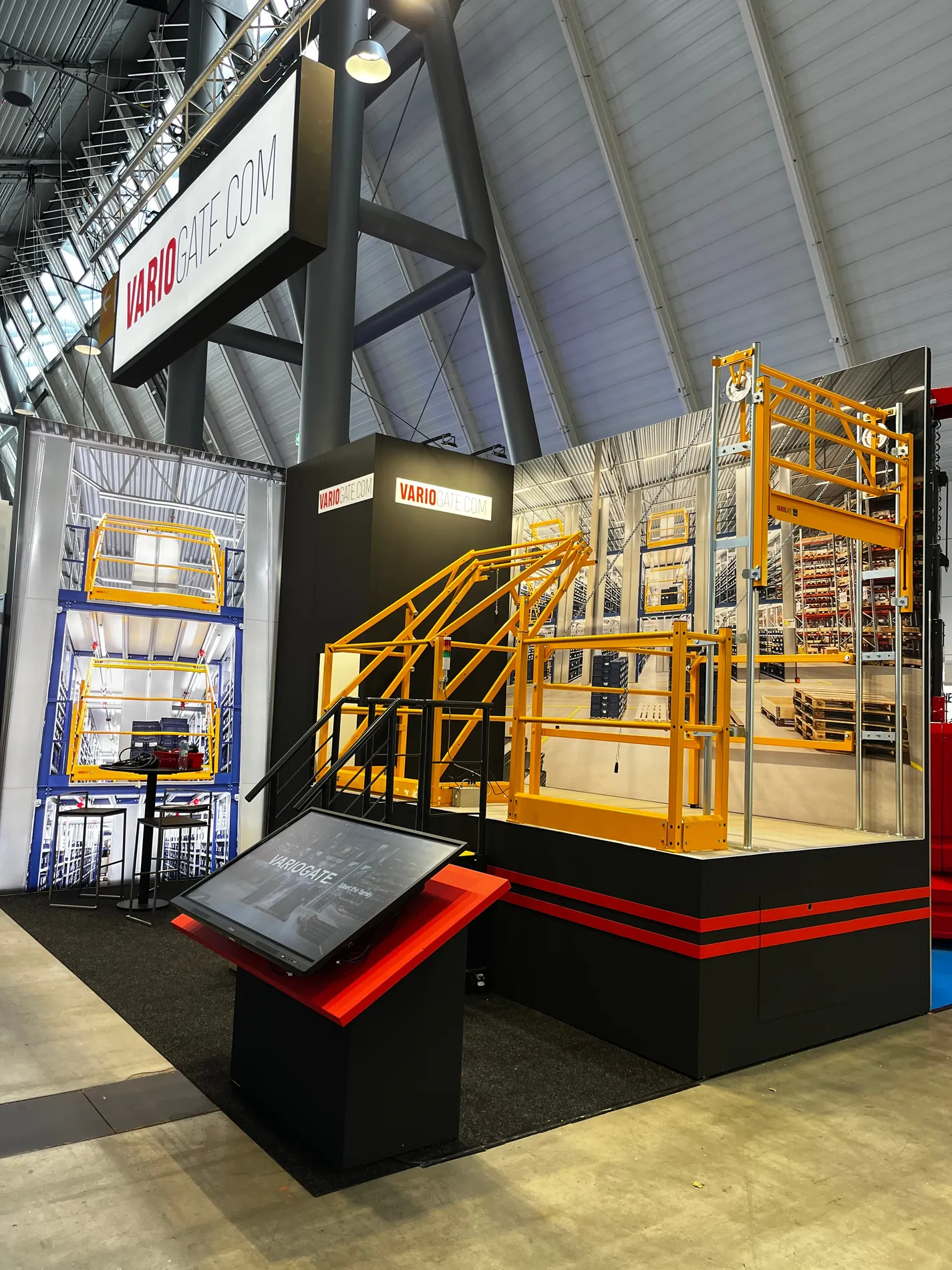
At the stand, Haagh Protection presented its Variogate pivoting gates, safety solutions that guard pallet openings on mezzanines and work platforms to prevent falls. The system works like an airlock, with the opening never accessible from both sides at the same time. The company showcased two versions: a conventional pivoting gate that swings around the loading area, and a vertical version developed specifically for locations with limited installation space. Both solutions combine safety with the smooth flow of goods at height.
The combination of interest in the products and targeted follow-up means Haagh Protection is looking back positively on its participation. “So far, I’m certainly pleased,” Mullenders concludes.
Demand for fine sorting is growing
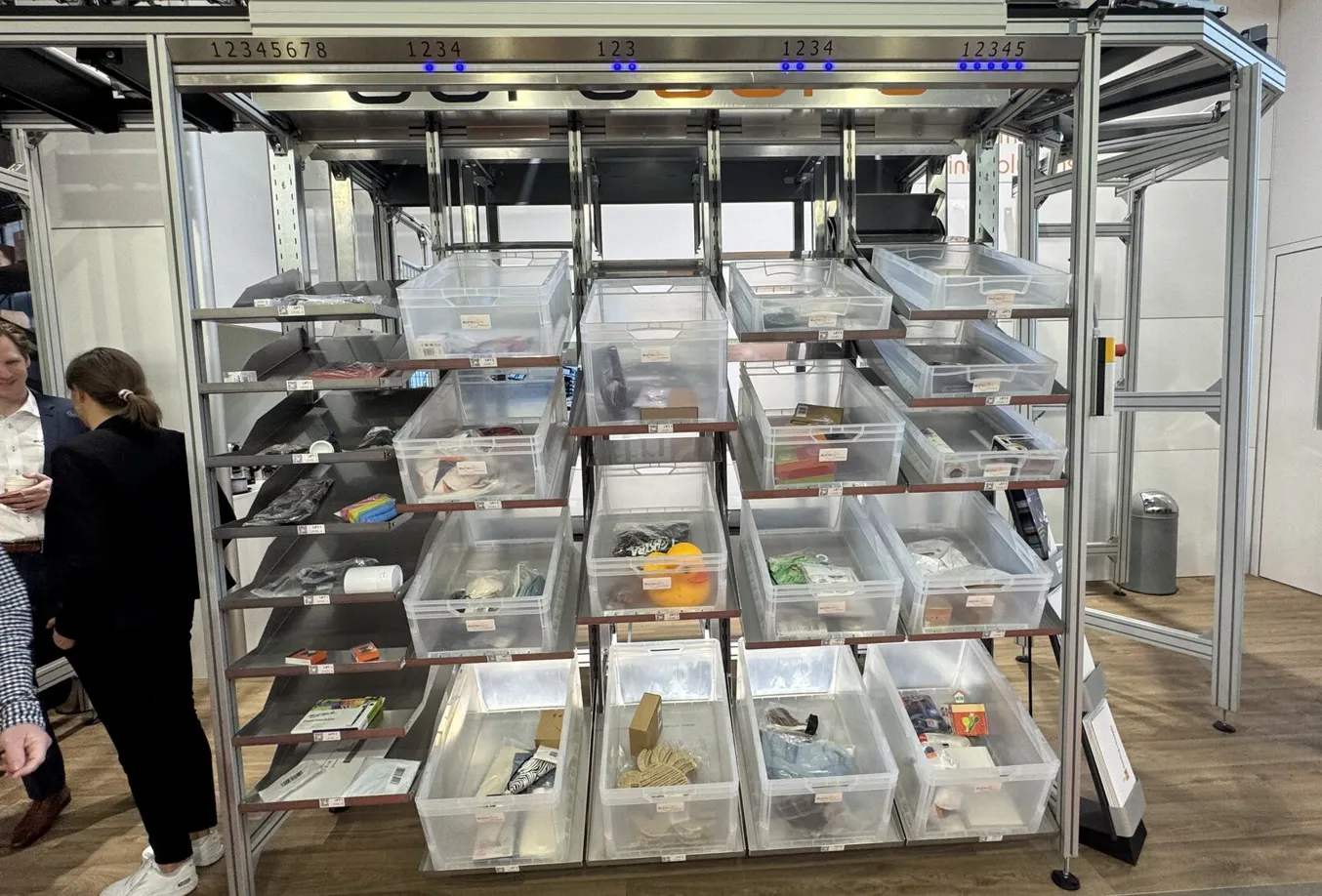
Collo-X is looking back positively on the trade fair, where the company clearly reaped the benefits of stronger market positioning. “We did things a little differently this year and also made a bigger impact,” says Floris Hendriks of Collo-X, the logistics division of Farmasort. “Our product is now better known, and we saw that reflected in the visitors to our stand.”
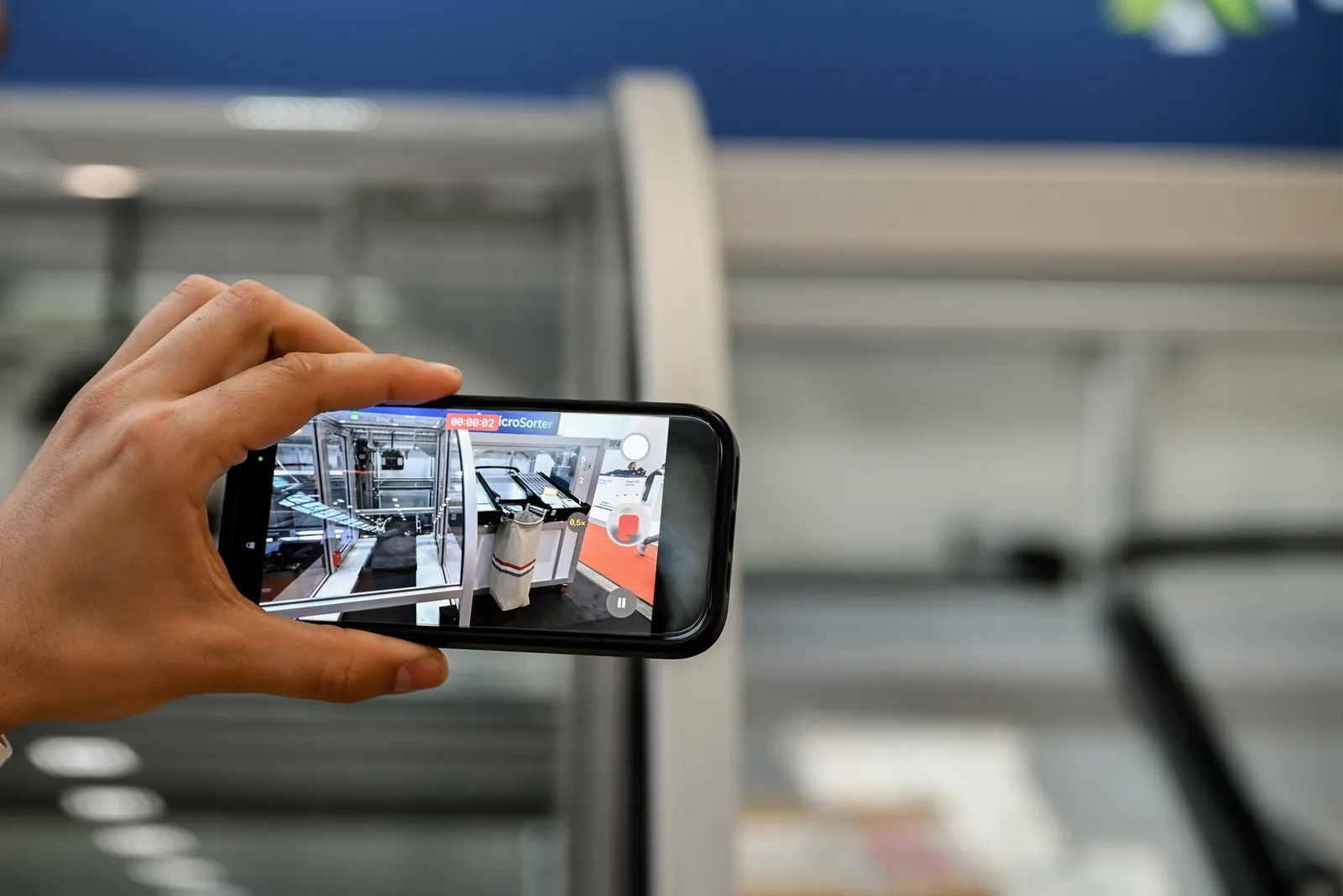
The focus was on the microsorter, a compact sorting module for
handling small-goods flows in areas such as e-commerce, fulfilment and healthcare, with the collaboration with Hexapole also highlighted. The solution combines high sorting capacity with a small footprint and is aimed at applications including order processing, fine sorting and returns.
A bespoke demo set-up was developed for the trade fair, attracting considerable interest. “There was a great deal of interest,” says Hendriks.
According to him, the solution responds to a clear market trend. While large sorting systems remain a mainstay, demand for fine-grained sorting is growing. “We’re seeing more and more applications for fine sorting, in both B2B and B2C, and also, for example, in returns processing.”
The combination of a targeted approach to the trade fair and growing product awareness led to tangible opportunities. “We were able to follow up on a lot of contacts and generate some valuable leads,” Hendriks concludes.
Interaction and international dynamics
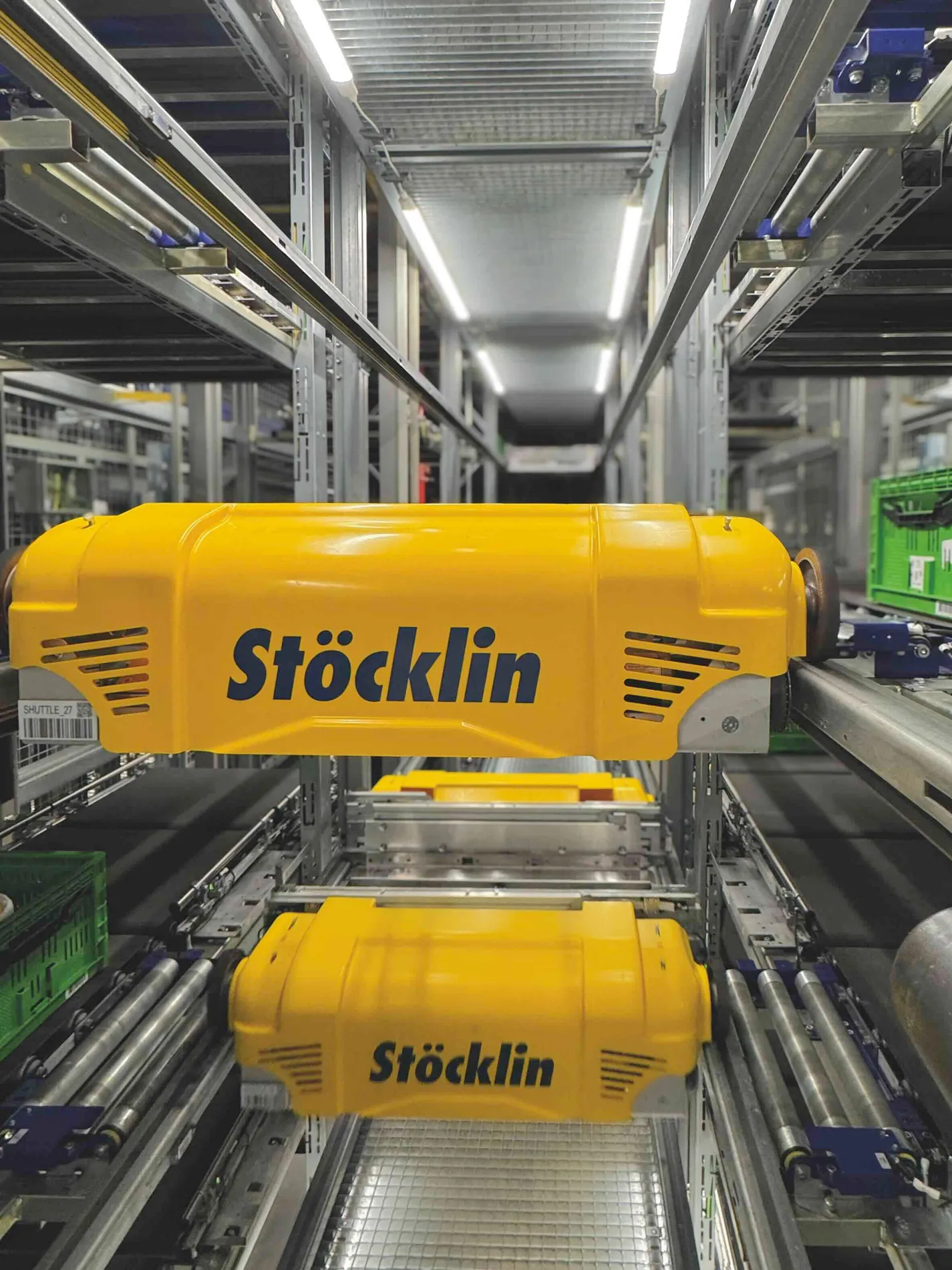
Stöcklin Group is looking back positively on the trade fair, where the quality of contacts stood out in particular. “We were pleasantly surprised by the large number of visitors,” says Guus Elbers, sales manager Benelux. “But what really made the difference was that people arrived at our stand well prepared, with specific questions and challenges.”
According to Elbers, the exhibition floor had a notably open and constructive atmosphere. Visitors took the time to talk and actively looked for solutions. “People really wanted to discuss things and exchange ideas. That led to some very valuable contacts.”
The trade fair also underlined its international character. “You can see that this has really become a global platform, with visitors and projects from all over the world,” says Elbers.
At its stand, Stöcklin Group deliberately took an interactive approach. Instead of physical installations, the company used digital and interactive tools, videos and case studies to demonstrate its solutions. One award-winning project was among those showcased, giving visitors the chance to discuss its implementation and results directly. “That makes it tangible and relevant to other companies,” says Guus Elbers.
The combination of an international profile, in-depth conversations and practical applications means the Swiss company is looking back on a successful edition with satisfaction.
International strategy and timing
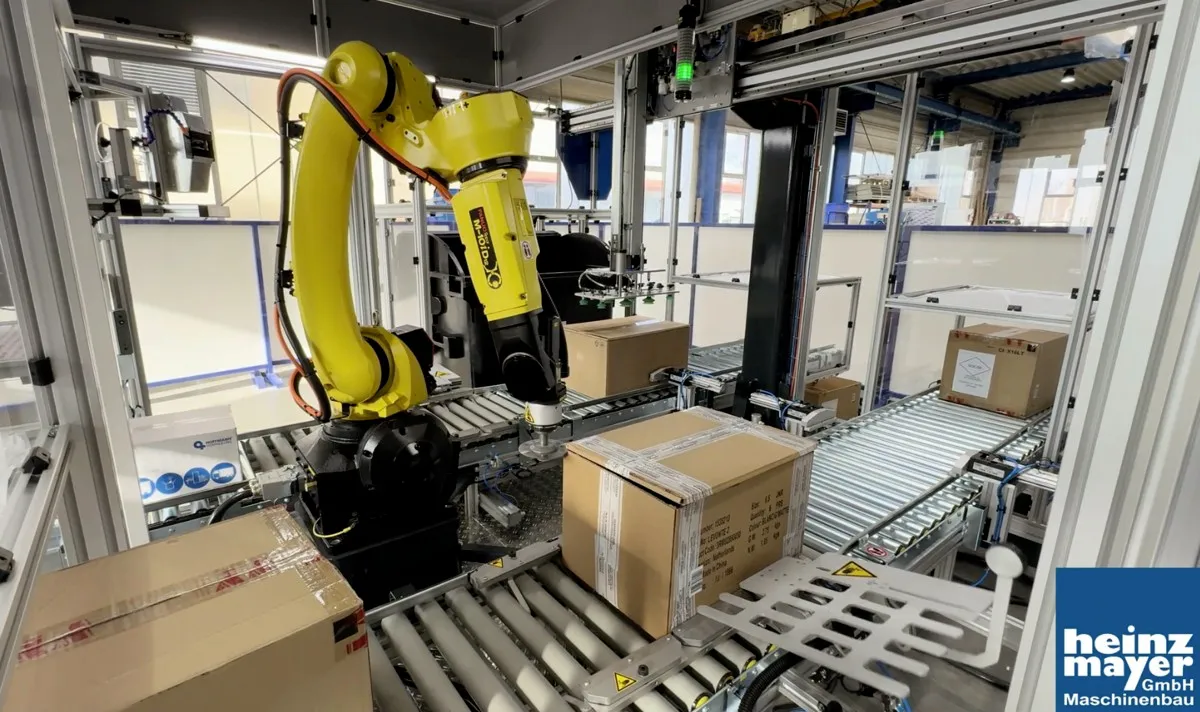
For Lantech, the trade fair remains a firm fixture in the calendar. “It’s always a strong show for us,” says Susanne Scheepers of Lantech. “We’ve been in the same spot for years, and it remains an important opportunity to connect with the market.”
One notable feature this year was the clear international focus. Whereas the company previously concentrated mainly on the DACH region, Benelux and neighbouring markets, its communications now also reached France, Eastern Europe and Italy, among others. “You can see that the trade fair is becoming increasingly international, and we’ve adapted our approach accordingly,” says Scheepers. The strategy proved successful, attracting a broad and relevant stream of visitors.
Lantech deliberately took a different approach to showcasing its products. With other trade fairs coming up later this year, it did not launch a new product, instead focusing on its existing portfolio. “We mainly showcased our bestsellers, such as our pallet wrappers and case erectors, which are performing very well in the logistics sector.”
Scheepers says the trade fair remains an important link in the company’s international growth ambitions. “It’s an ideal platform for making contacts and developing markets further,” she concludes.
Practical technology and valuable contacts
According to Raul Antolin of Modula Benelux, the trade fair remains an important opportunity to connect with the right people. “People who attend have a clear purpose. They invest their time in being there, so the conversations are very valuable and specific, whether about existing or future projects.”
At its stand, Modula presented its vertical lift machines (VLMs), including the Flexibox VLM for bins. Both systems automate storage and picking, with a focus on efficiency and throughput. The long-goods machine was also showcased for the first time, an automated solution for storing long goods up to seven metres in length.
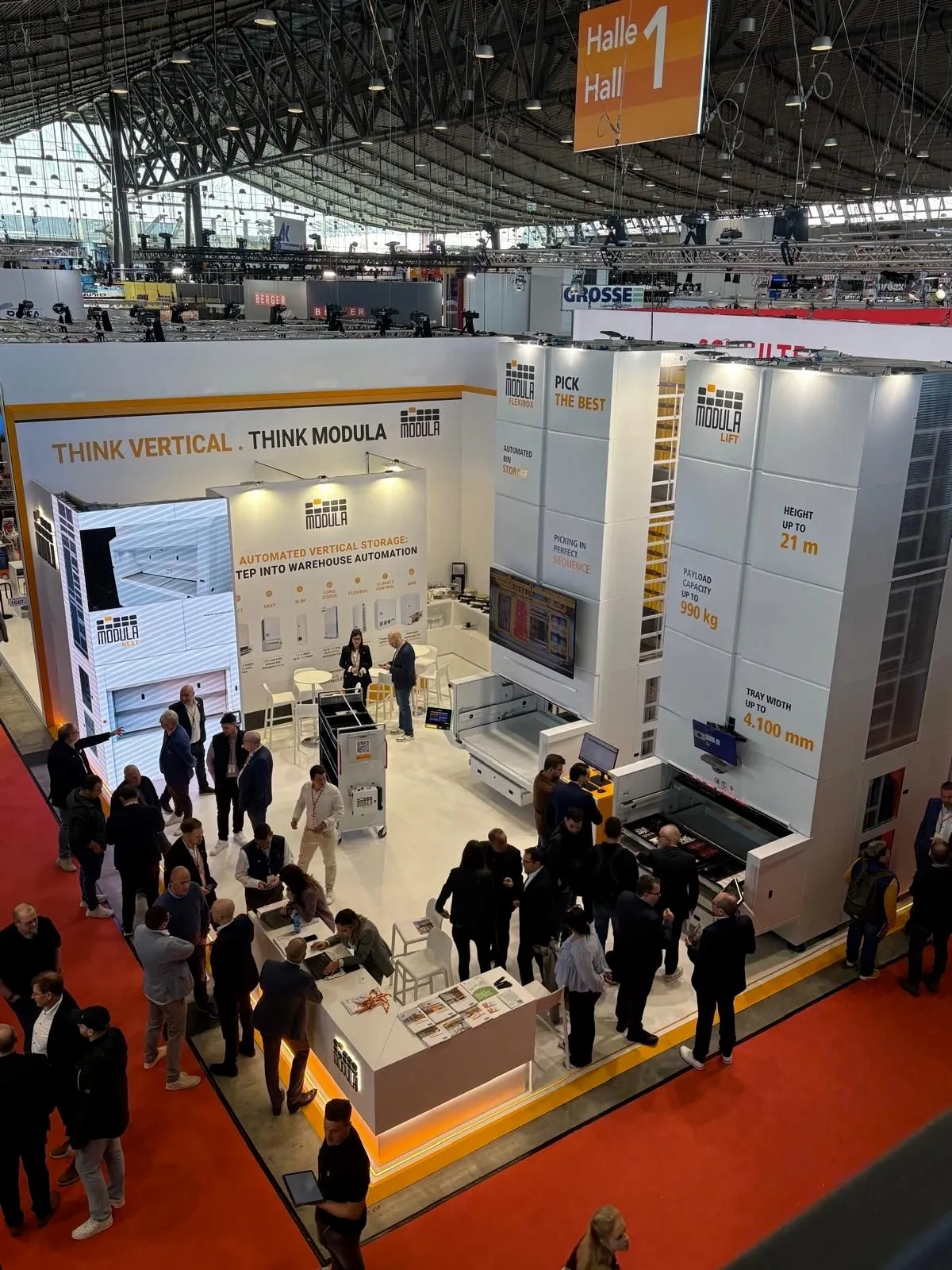
According to Raul, Modula’s strength lies in combining reliable, proven technology with the right software and solutions to optimise its VLMs. “They’re robust systems that we make smarter with options tailored to the customer’s specific needs,” he says. The combination of targeted visitors and practical solutions means Modula looks back on a successful edition.
From exhibition floor to tangible business
A clear picture emerges from all these conversations: LogiMAT has evolved into a platform centred on preparation, substance and concrete projects.
Visitors arrive with increasingly specific questions and clear requirements. Exhibitors respond with solutions that are not only innovative, but also practical and scalable.
The common thread running through the trade fair is clear: automation, flexibility and collaboration are key to the logistics of tomorrow. LogiMAT 2026 thus reaffirms its role not only as a meeting place, but above all as a driving force for tangible progress in the sector.
■
A business enquiry for Anera BV? Get in touch
Companies in this story


Keep following this
Get an email when a new story is published. No account needed.
- SubjectGeneral
- CompanyAnera BV
- CompanyEuroSort Systems
- CompanyEasy Systems Benelux BV.
- CompanyHaagh Protection
- CompanyCollo-X







