












CSRD as a lever for circular collaboration
Text Anse Keisse Beeld Renewi
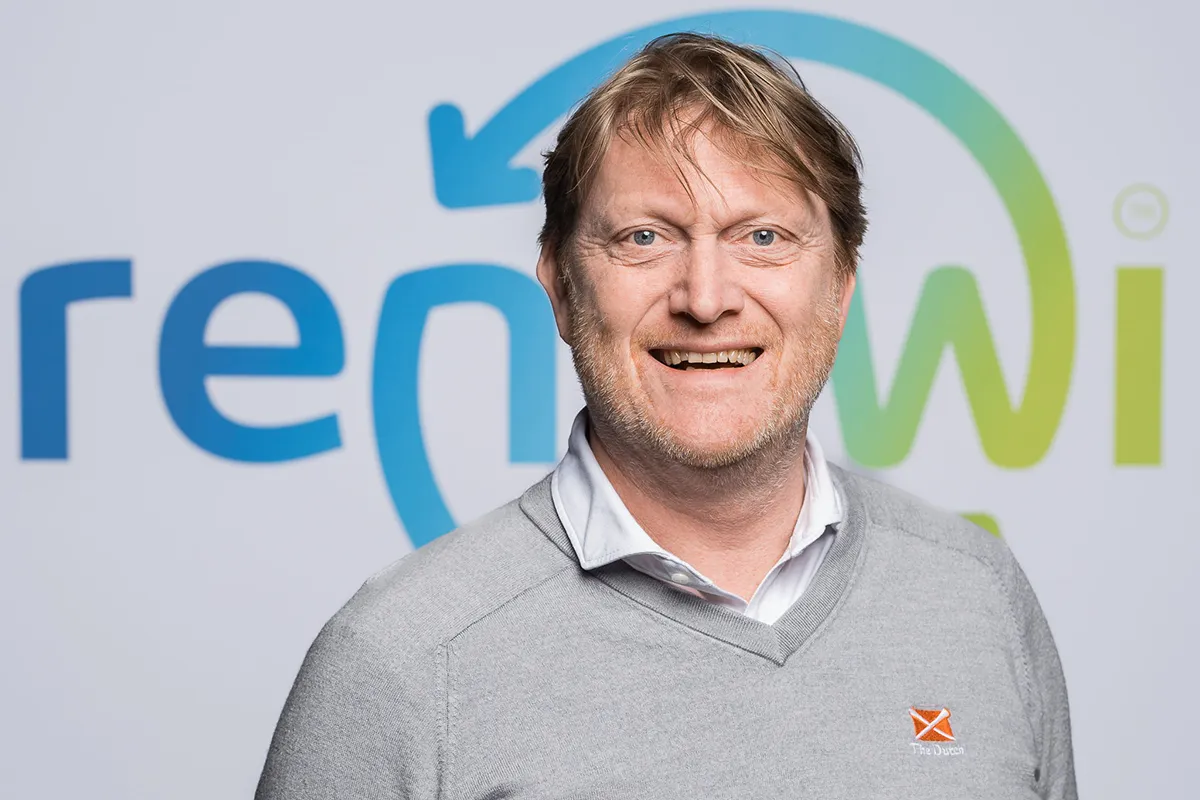
From 2025, the Corporate Sustainability Reporting Directive (CSRD) will require thousands of companies in Europe to report in detail on their sustainability impact. For many businesses, this presents a major challenge. Renewi, which specialises in circular waste management and raw materials management, sees the CSRD above all as an opportunity. “For us, it is a lever to work with customers on genuine sustainability and long-term partnerships,” says Head of National Accounts René Heijmeskamp.
The CSRD is a European directive requiring companies to report transparently, in accordance with uniform standards, on their efforts relating to environmental, social and governance (ESG) matters. The focus is not just on direct emissions (scope 1 and 2), but also on the wider impact of the supply chain, including waste management and material reuse (scope 3). This is precisely where a company such as Renewi plays a key role.
To report accurately and in a verifiable way, companies need detailed, reliable data. Mandatory sustainability reporting focuses, among other things, on climate impact and the circular use of raw materials. “Many organisations struggle to collect and verify this data, especially when they depend on external parties. Renewi has developed its own approach to address precisely this challenge,” says René Heijmeskamp, Head of National Accounts at Renewi.
From waste data to auditable sustainability figures
The leading company has developed an additional CSRD reporting tool in its existing customer portal, MyRenewi. “We didn’t want to show just averages or industry figures. Our customers need to be able to rely on genuinely auditable, scientifically substantiated data,” says Heijmeskamp.
Renewi therefore commissioned TNO, the Netherlands Organisation for Applied Scientific Research, to calculate the CO2 impact of its processes. It also had the circularity figures for its 30 main waste streams analysed by the international consultancy and engineering firm Royal Haskoning.
The reporting tool gives customers insight into their performance in terms of CO2 emissions and circularity. “This means we give companies not only the mandatory information they need for their sustainability reports, but also a strategic starting point for further improvement.” The data are validated, can be used directly in CSRD and other sustainability reports, and provide a benchmark against peers in the sector.
Strategic supply chain partner
European sustainability regulation is fundamentally changing Renewi’s role, says Heijmeskamp. “Whereas we used to be primarily a waste management company, the emergence of ambitious regulations such as the CSRD is increasingly turning us into a supply chain partner. We help customers not only with compliance, but also with setting targets and improving their sustainability profile.” To do so, Renewi works with customer profiles, ranging from companies with minimal reporting obligations to ambitious frontrunners looking to integrate circularity into their core strategy.
“Our data enable us to work with customers in conversations to establish where they are today and where improvements are possible. Sometimes this leads to immediate action, such as improving waste sorting on the shop floor, or even to broader circular projects.” Sector-specific support is also important. “The approach for retailers, with a focus on packaging and transport, is clearly different from that in industrial sectors, where hazardous waste and material reuse are priorities. That is why we have developed sector-specific indicators tailored to particular challenges and legislation.”
Collaboration as the key to accelerating circularity
The CSRD is therefore leading to more extensive and deeper collaboration. “Companies are now actively coming to us to ask for circular solutions,” says Heijmeskamp. “For example, in the healthcare sector, we are working on circular solutions for operating theatres with partners such as GreenCycl. High-quality materials are now being reused or refurbished instead of simply being incinerated.”
Renewi is also accelerating its efforts internally: electrifying its fleet, using circular concrete in the construction sector and working with producers are directly improving its customers’ sustainability impact. “The CSRD may not be mandatory for every company, but it is a strategic compass that enables lasting progress. We see this reflected in the contracts we sign: we are moving from short-term deals to long-term partnerships lasting eight to ten years.”
Question about this story? Ask your question
Keep following this
Get an email when a new story is published. No account needed.
- SubjectGeneral







