












Autonomous agents are revolutionising transport management
Text and images Manhattan
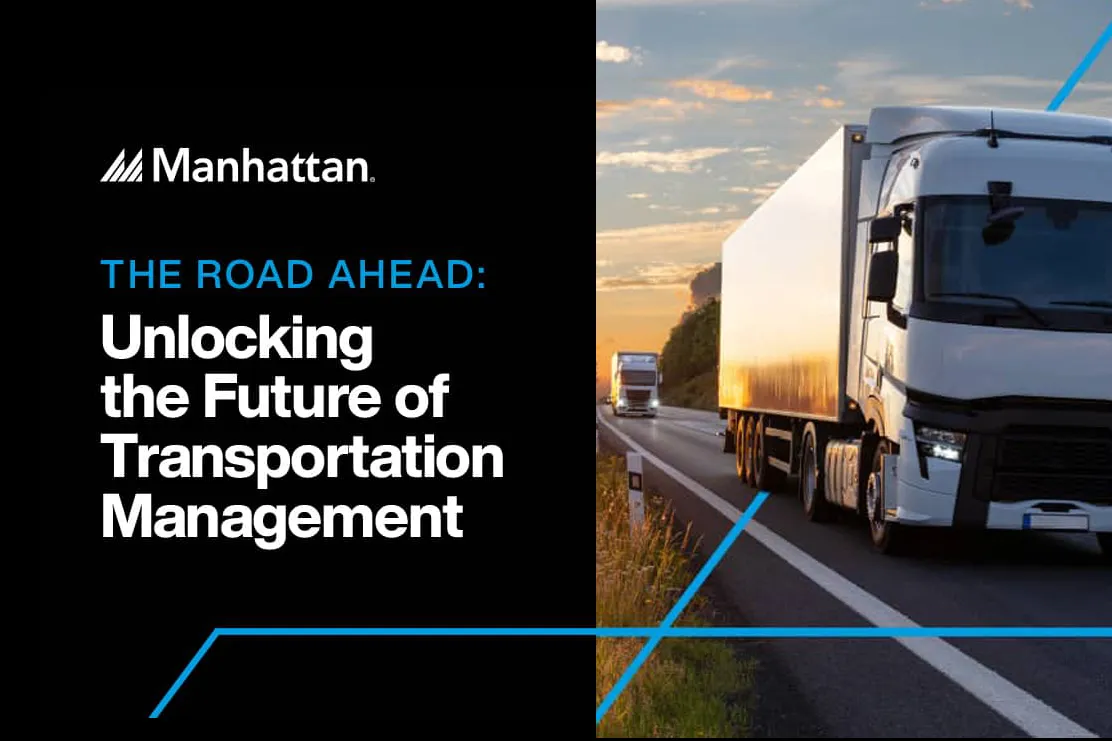
A global study by Manhattan Associates finds that integration challenges and data quality remain obstacles for organisations looking to use artificial intelligence in transport management.
Manhattan Associates Inc., a global leader in supply chain commerce, announces the results of its latest partnership with international research firm Vanson Bourne. The global study surveyed 1,450 senior decision-makers from organisations in the manufacturing, retail, wholesale, consumer products, food and beverage sectors in North America, Latin America, Europe and Australia.
“Transport is the backbone of supply chains and is essential to ensuring that products are delivered on time to meet customer expectations,” says Bryant Smith, director of Transportation Management Systems (TMS) at Manhattan Associates. “But transport management is becoming increasingly complex. It is under pressure from demand for shorter lead times, capacity and cost efficiencies, stringent sustainability regulations and the growing need for access to end-to-end visibility across all business operations.”
Fragmented systems: operational visibility and efficiency remain a challenge
The true value of visibility goes beyond simply accessing operational data. It enables organisations to address issues highlighted by that information and implement operational improvements more quickly and efficiently. But it is about more than disruptions: 60% of organisations say better visibility leads to greater customer satisfaction through more accurate and timely updates. 50% say lower transport costs are a key benefit of greater operational visibility.
The AI revolution: enthusiasm and challenges
61% of organisations expect fully autonomous Agentic AI to be able to act independently to achieve specific goals within the next five years. But only 37% have currently integrated AI and machine learning extensively into their TMS.
Five years may seem like an eternity in the age of AI, but the gap between future expectations and current use is striking, as adoption is rarely straightforward. Although almost half (48%) say they are already well prepared for autonomous agents in 2030, almost every organisation (99%) says it sees, or expects to see, obstacles. Concerns include a lack of skills (49%), integration challenges (44%) and problems with data quality and availability (44%).
Many organisations appear well positioned to benefit from the cost, efficiency and scalability advantages of autonomous agents. But they need to review their AI strategies or risk losing significant, and possibly irreversible, market share.
Sustainability compliance: a priority and a major pain point
There is strong and widespread pressure to make transport more sustainable. 69% of organisations say sustainability is either mandated globally or is an area under significant pressure. 62% have already implemented the Corporate Sustainability Reporting Directive. Navigating complex and changing compliance requirements remains a global challenge. Sustainability compliance is most frequently cited as a constraint that will affect business performance over the next five years. A modern TMS can provide the data visibility and functionality needed to measure progress and demonstrate compliance. This is essential to ensure sustainability does not take a back seat in organisations.
Smith sums it up: “Modern transport management requires organisations to balance conflicting priorities. The study clearly shows that many organisations are not yet prepared for the challenges posed by changing sustainability requirements, expectations around AI and the need for more visible, actionable data insights. By 2030, these demands will only have grown, increasing the pressure on organisations to run transport operations more intelligently and intuitively.”
“87% of respondents expect challenges around operational visibility, AI implementation and sustainability compliance to increase, making it difficult for their current transport management systems to keep pace. If organisations do not act now, they will face rising costs, questions about long-term effectiveness and the risk of failing to meet their commitments to customers,” says Smith.
Other findings
- 48% of organisations spend more than 10% of their logistics transport budget on errors and disruptions.
- 78% see transport management as a strategic necessity for success, rising to 86% by 2030.
- 61% expect fully autonomous Agentic AI in TMS, able to act independently to achieve specific goals, or at least minimal human supervision, within the next five years.
- 50% report challenges in proactively rerouting shipments, while 49% struggle to optimise workforce planning for dock and warehouse operations.
- 82% are confident that advances in planning, forecasting and modelling will reduce freight costs by at least 5% over the next five years.
- Organisations still struggle to operationalise sustainability: only 34% say they have incorporated sustainability into operational planning, 30% into procurement decisions and just 31% offer climate-friendly fuel solutions.
- Although a majority have integrated their TMS with sales and operations planning systems (60%) and use predictive analytics or AI (56%), far fewer organisations use key tools such as historical trend analysis (38%), automated booking and tendering (36%) or real-time demand sensing (35%).
Visit the website for more information about this study.
Methodology
Vanson Bourne surveyed 1,450 senior decision-makers with responsibility for, or knowledge of, their organisation’s transport management operations, working in transport, logistics, supply chain, IT or finance roles. Respondents had to work in the manufacturing, retail, wholesale, consumer goods, food or food and beverage sectors. The study included respondents from North America, Latin America, Europe and Australia. All respondents worked for organisations with annual global revenue of at least $750 million.
Een zakelijke vraag aan Manhattan Associates Europe B.V.? Get in touch
Companies in this story

Keep following this
Get an email when a new story is published. No account needed.
- ThemeTaking control of logistics processes
- SubjectGeneral
- CompanyManhattan Associates Europe B.V.







