warehouselogistiek.eu
EN

The platform for internal & external logistics, supply chain and automation
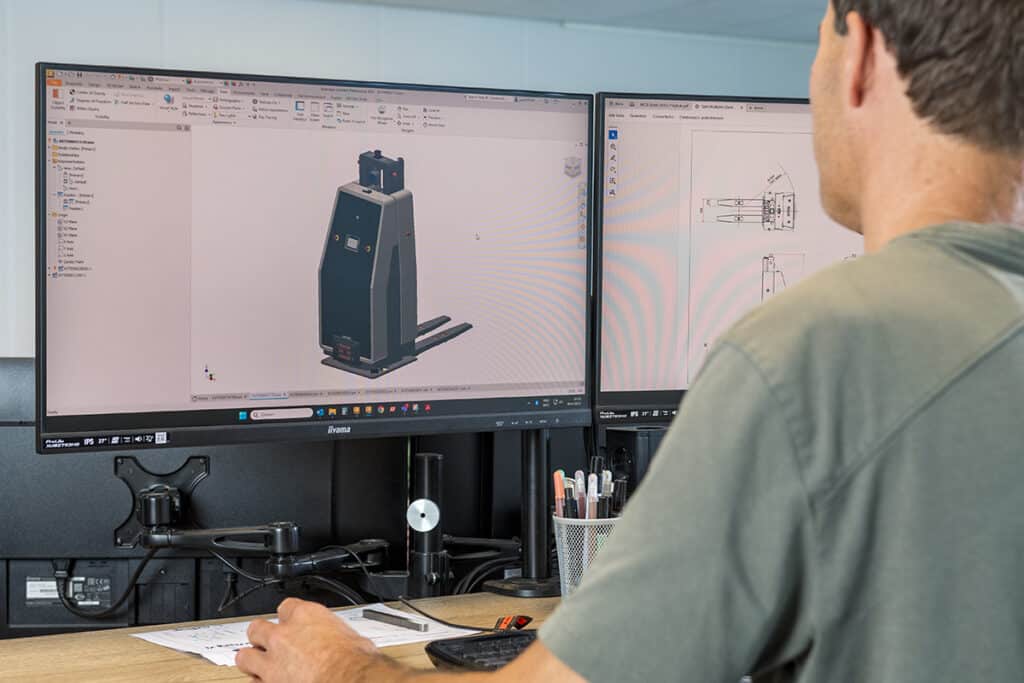
When optimizing a logistics process, it rarely involves just automating a single component. A robot can take over a task, but that has immediate consequences for the other steps. How do you ensure a steady supply, and where should the goods go?? This is part of everyday life for the Zeeland-based robot integrator KV-Techniek.
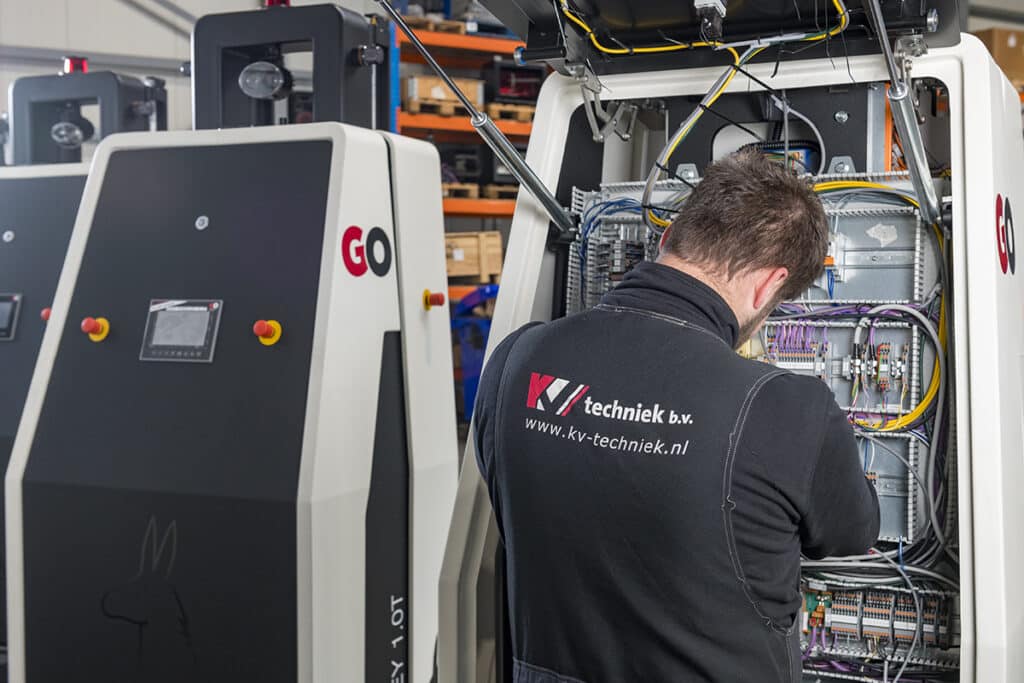
What began in 2012 with the purchase of six robots has grown into a full-service system integration company with a team of about forty employees. From their base in Goes, they design and build robotic solutions for manufacturing companies in the food industry, the graphics sector, and the logistics industry, among others. Those many years of experience with automation ultimately formed the basis for the development of their own Automated Guided Vehicles.
KV Technology The company designs production lines in which robots are equipped with special grippers, conveyor belts, and storage systems for separator sheets and pallets. “In general, we manufacture the components of a robotic production line ourselves,” says owner Bastiaan Krijger. “To ensure a robot is properly integrated, we provide a custom gripper and feeding and discharge conveyor systems that connect seamlessly. We build both ourselves out of steel or stainless steel, depending on the application or environment.” This comprehensive approach ensures that the various components of a system are perfectly coordinated.
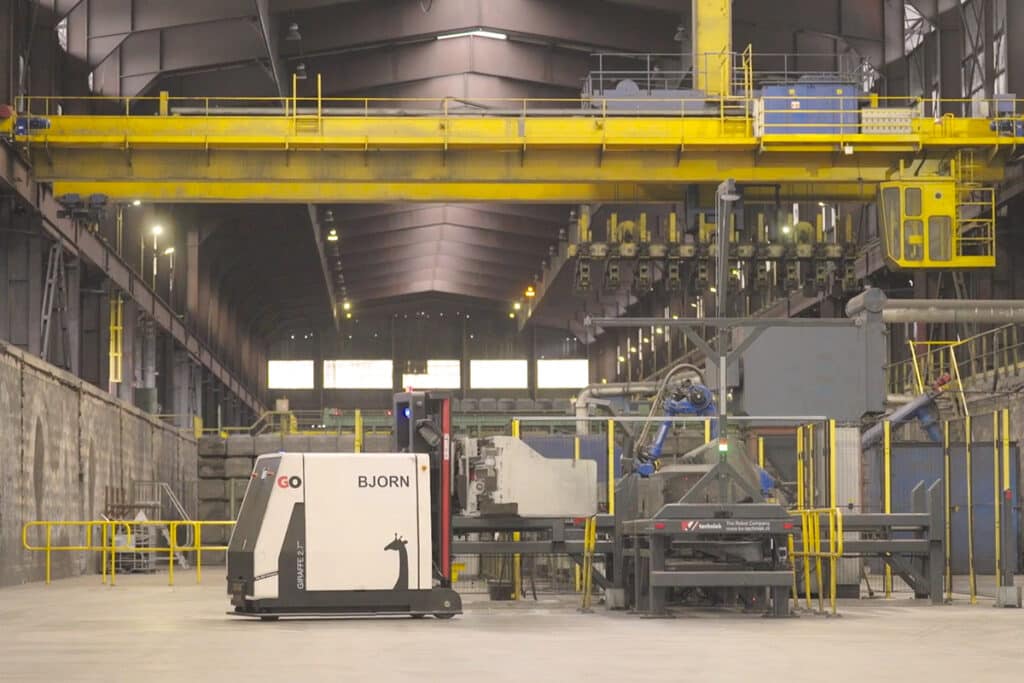
The move toward AGVs did not come out of nowhere. The technology addressed a need that KV-Techniek was encountering more and more frequently in various automation projects: how do the pallets get to their next destination? After all, the load must be transported to, for example, a wrapping machine, a buffer, a warehouse, or a shipping area. “A robotic palletizer can stack goods accurately and efficiently onto a pallet, but someone or something then has to move the pallet,” Krijger explains. “A chain conveyor isn’t always the most logical solution for this—especially when you need to cover varying distances or have multiple drop-off locations. That’s how the idea arose to develop our own Automated Guided Vehicle.”
The development of an AGV involves many of the same considerations as those for robotic systems. Safety, reproducibility, ease of use, and reliability are key to the performance of the overall solution. If a new product stream is added or the layout of a warehouse changes, the vehicle must be easy to adapt to the realities of the work floor. “Operators must be able to work with robots and AGVs without any problems,” says Krijger. “We consider a degree of autonomy to be a given. You shouldn’t always have to rely on the supplier for a minor adjustment.”
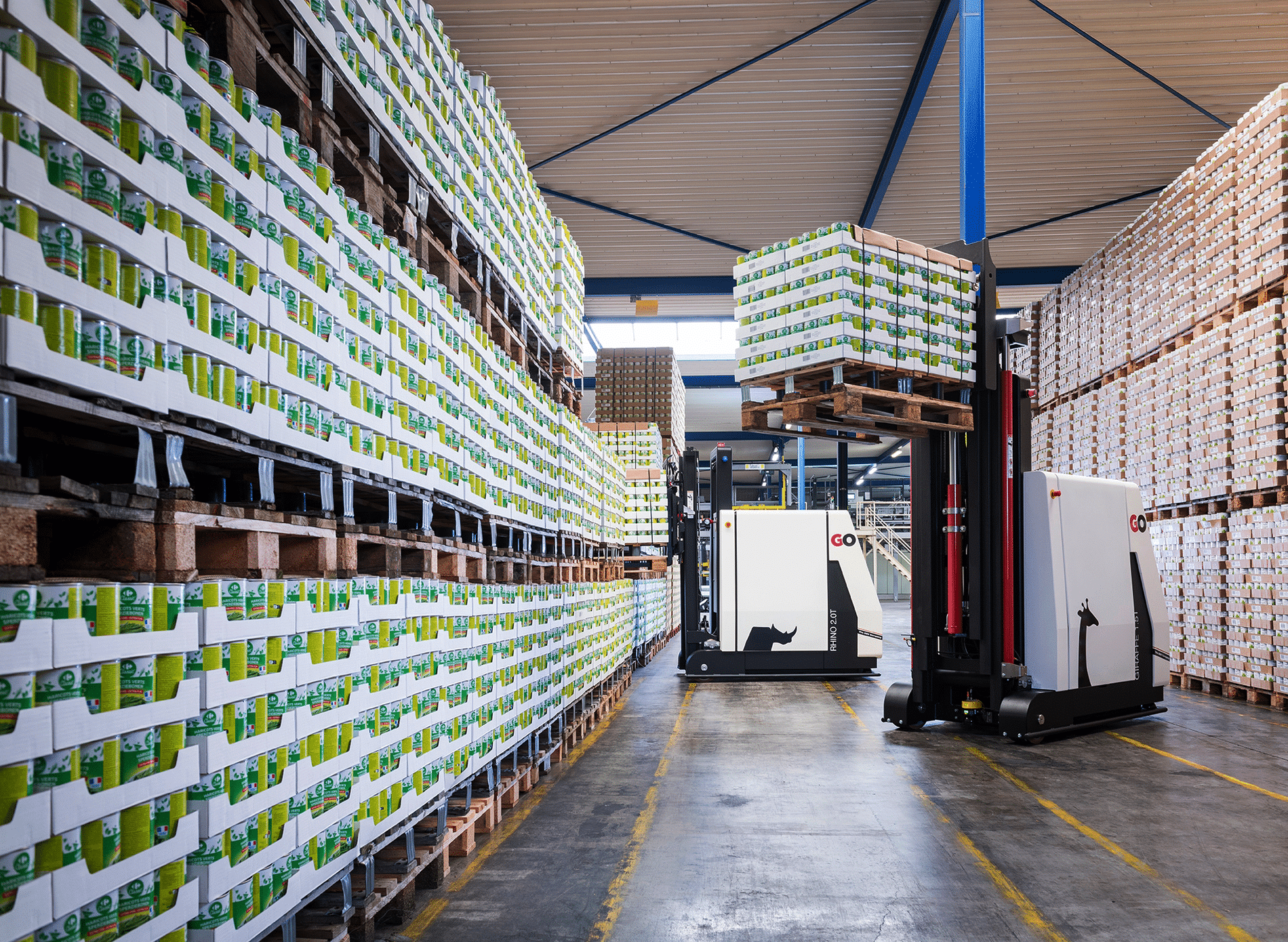
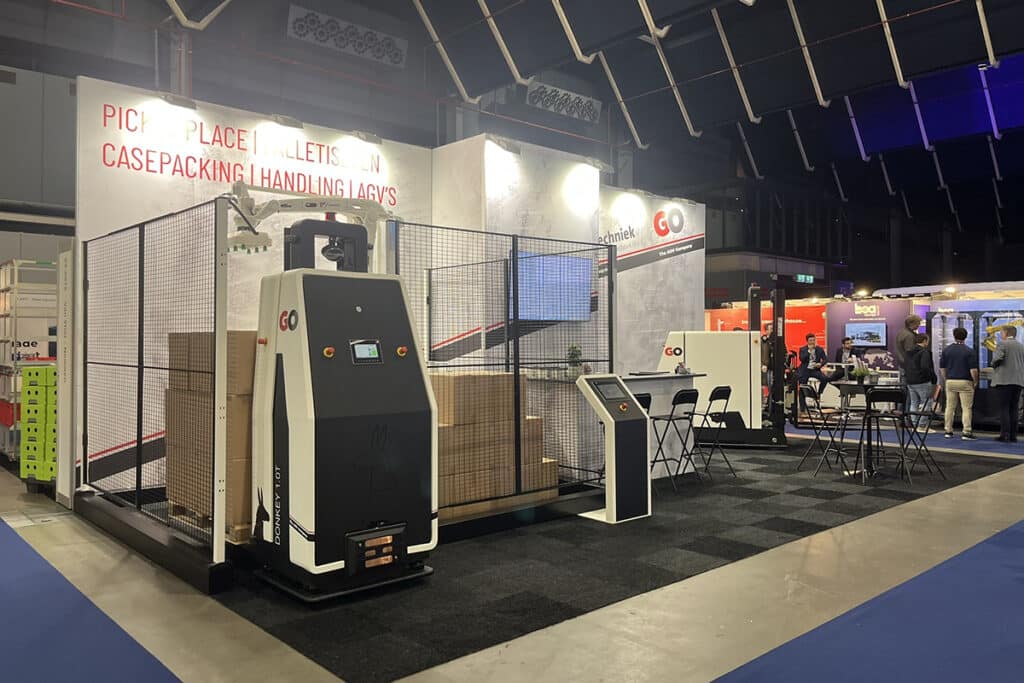
The AGVs, which are now part of their operating company GO, The AGV Company, handle internal transport on their own. They move goods from point A to point B, stack pallets on top of each other, and prepare loads for shipping. The product line consists of three models: a compact Donkey stacker, a Rhino forklift for heavier loads, and a Giraffe forklift with a high mast for storing loads up to five meters high.
The engineering department designs the AGVs and works with customers to develop customized logistics solutions for their specific needs. Because product development is handled in-house, it is possible to adjust capacity and feeding equipment or add additional safety signals. “Our vehicles serve as a solid foundation for a custom AGV,” says Krijger. “Ultimately, the application determines what the vehicle needs to be capable of.” This means the focus isn’t solely on the vehicle itself. An AGV only truly adds value when it integrates seamlessly with the rest of the logistics operation. Communication with other systems and equipment also plays a key role in this.
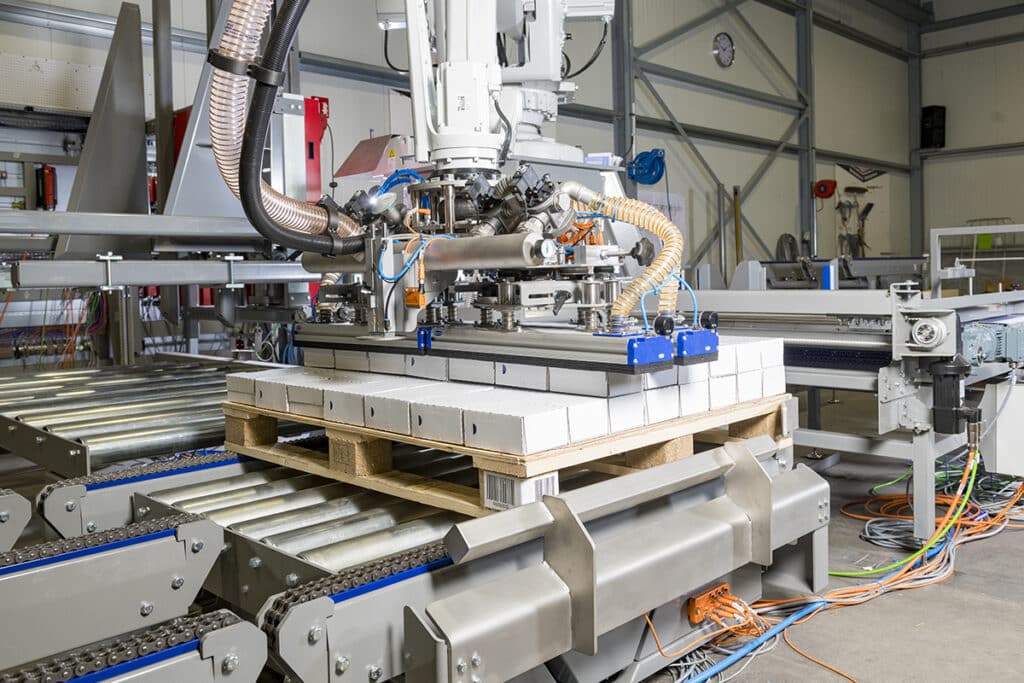
The development of GO is thus a logical next step based on the experience KV-Techniek has built up in recent years. While the robot was once the starting point, the focus is increasingly shifting to the entire process surrounding it. This also leads to a different way of looking at automation. Not every step needs to be automated separately by different integrators. It is precisely this broad knowledge of industrial and logistics automation that adds value to a smoothly functioning workflow, with services provided by a single provider.
Anyone who wants to see and learn more is invited to visit Logistica Next in early November. At booth 7.B020, KV-Techniek and GO will be presenting a combination of a robotic palletizer and an AGV. They will also be showcasing a new vehicle developed specifically for use in frozen food environments.
Neem dan rechtstreeks contact op met GO, The AGV Company.
 Contact opnemen
Improve internal logistics with AGVs! → Automate repetitive operations→ Be less dependent on seasonal labor and night shifts→ Increase peace and safety on the shop floor→ Reduce damage and repair costs→ AND create an efficient, predictable and reliable process GO, The AGV Company GO is all about smartly automating internal logistics with [...]
Bekijk Bedrijfsprofiel