[00:02] Introduction to the podcast
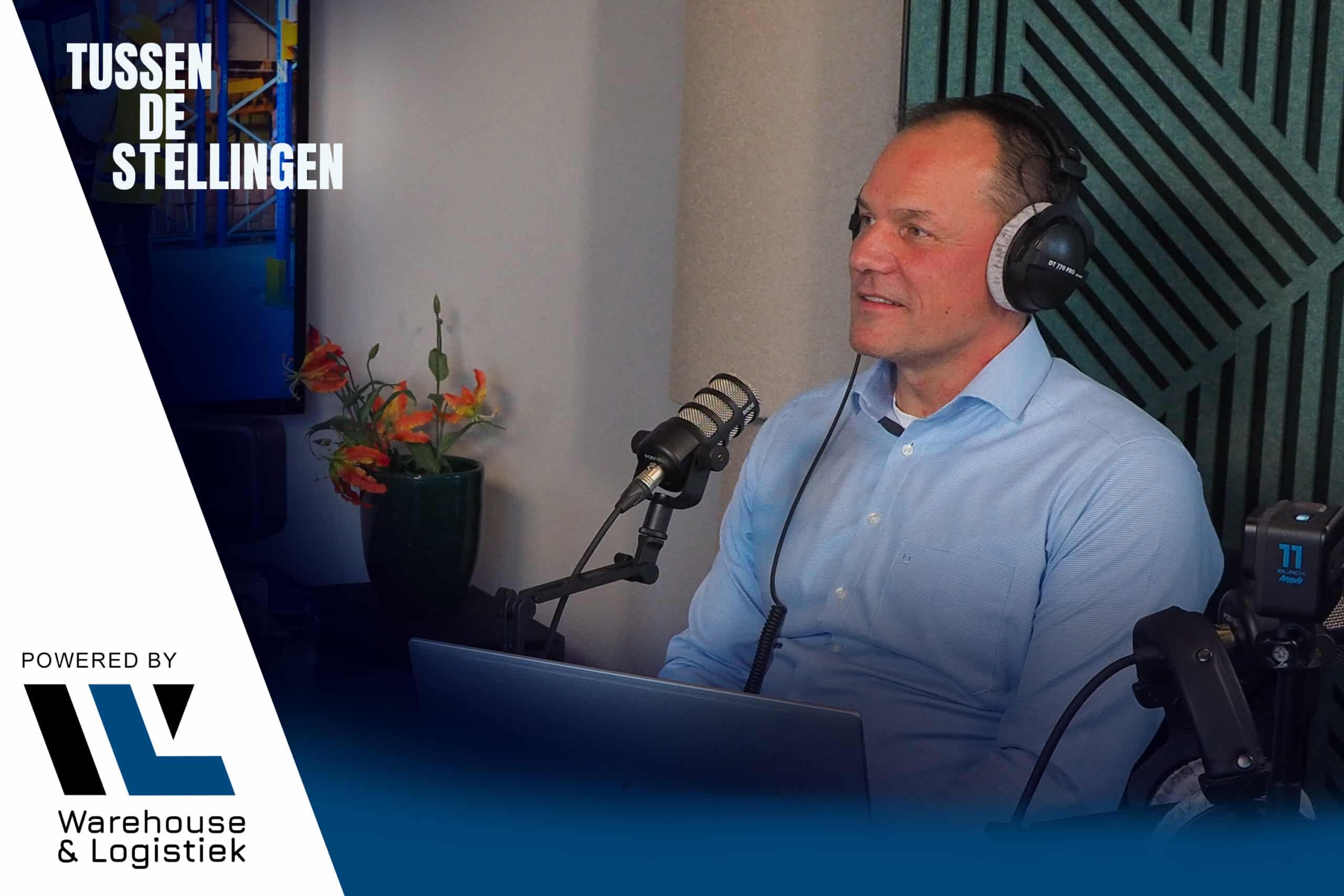
Ferdi den Bakker: Welcome to the podcast Between the Theses from Warehouse & Logistics. My name is Ferdi den Bakker and today we're going to talk about security in logistics environments. My guest today is Robin Joosen.
Ferdi den Bakker: He is responsible for the Dutch branch of Axelent, a Swedish manufacturer of safety solutions for production and logistics environments. Such as plastic edge posts for logistics environments, automatic sliding doors, fall protection, plastic collision protection and mesh walls. Welcome Robin.
Robin Joosen: Thank you very much.
[00:37] Addition to Axelent's product offering
Ferdi den Bakker: Am I forgetting something?
Robin Joosen: Machine safety maybe. That's actually what we grew up with. That's what they once started with, also in Sweden, to produce that.
[00:48] Start of the three dilemmas
Ferdi den Bakker: Are we going to take that like that as well. I want to start by presenting you with three dilemmas. You may respond to those briefly. And then that will be discussed in more detail in the theme of the podcast. The theme: security in logistics environments.
[01:00] Dilemma - safety versus workability
Ferdi den Bakker: The first dilemma is: Do warehouse safety and a workable situation easily go hand in hand?
Robin Joosen: Yes and no. It depends a bit on the situation and how you see it. A fall-through protection, for example, behind a pallet rack is a piece of safety and nine times out of ten it is perfectly workable. An ASRS cage, for example, becomes a lot more difficult if pallets have to go in and out. Then the forklift driver has to get off, open the door, drive in and close the door again. Doing the masts down, very important, because very often those masts stay up and then they break down the door again. So is that workable? That's going to be a tricky story.
[02:00] Role of consulting in security solutions
Ferdi den Bakker: You guys play a role in that, giving advice. We'll discuss that further in a moment.
[02:17] Dilemma - steel or plastic
Ferdi den Bakker: Second dilemma. For protection solutions, should you choose steel or plastic?
Robin Joosen: It depends on the situation and what investment you want to make as a company. Plastic crash barriers are designed to absorb the force of an accident or a forklift truck hitting something. With steel, that will always deform or damage the floor as anchors pull out of the ground. You're a lot less likely to have that with plastic.
[02:44] Dilemma - cost of security
Ferdi den Bakker: Third dilemma. Cost is very important. What is the best choice when it comes to cost?
Robin Joosen: Costs always come with security. But if you don't do it, those costs will always be much higher should something do happen in your warehouse.
[03:10] Increasing focus on safety in warehouses
Ferdi den Bakker: The theme of this podcast, security in logistics environments, seems to me to be a pretty hot topic. Especially since there has been a lot more attention to it in recent years. Ten years ago, you hardly noticed what measures were taken in warehouses to work safely. Now you can't escape it and you see yellow security elements almost everywhere in a warehouse. How justified is this huge increase in attention to safety?
[03:50] Causes of the growing focus on security
Robin Joosen: I think that has to do with several points. It also has to do with staff shortages that have been going on for a number of years. If something happens that causes someone to get hurt and be out of action for a number of weeks, you immediately have a problem. Safety used to be looked at much less. Nowadays it is becoming more important because the consequences are greater and the cost to society is also increasing. Not only for the staff member who is sick, but also for healthcare and hospitalizations, for example. It remains a train that goes on.
[04:35] Forklift accidents
Ferdi den Bakker: Are there figures available on numbers of accidents or figures that support the strong focus on security?
Robin Joosen: What I know is that forklift accidents are relatively infrequent. That's about two percent of all accidents that occur. Only when they do occur, they're always violent. And also of those two percent accidents you then have in a warehouse with a forklift or an automatic AGV or something like that. An AGV is not likely to cause an accident because it has a sensor on it. But if there is an accident, twenty percent of the time they are immediately fatal. So they are always violent. And that's actually also a piece of ignorance among a lot of people. If you ask the neighbor how much a forklift weighs, they might say eight hundred pounds, because they compare it to the car parked in the driveway. But a forklift is a lot heavier. And a lot of people don't know that. And so if something happens to it, it's immediately violent because there's a lot of weight and a lot of impact.
[05:51] Safety signs showing accident-free days
Ferdi den Bakker: And you also mentioned earlier that you see with companies that they themselves are more concerned with this by showing visitors: we have been accident-free for so many days.
Robin Joosen: Yes, that's right. Then indeed you see more and more companies having a big sign in the reception area saying: we have been accident-free for so many days. That can be interpreted in two ways, of course. But a few weeks ago I was at the dump in Tilburg to throw something away. And even there there was a sign saying: we have been accident-free for so many days. It is just becoming more and more important in society to show that and to show: we are safe and we pay attention and we have taken into account our traffic flows and how people walk.
[06:39] When companies take action
Ferdi den Bakker: Do companies more often take the safe bet or is it still often the case that they only take action after something has happened?
Robin Joosen: Both occur. There are companies that say: we really have to do something now because we have a very old building and it's getting busier and busier on the shop floor with automatic movements and forklifts. So we have to do something about it, otherwise an accident is going to happen. But there are also cases where the labor inspectorate has come along and said: you have to do something about this because this is no longer acceptable.
[07:28] New construction versus existing construction
Ferdi den Bakker: You have new construction and you have existing construction. There aren't very many more categories when it comes to logistics buildings. I think it's easier to include security in new construction than in existing warehouses. Do you notice that difference?
Robin Joosen: Yes, definitely. With new buildings you can often already take into account how the traffic flows are going to be when you design the building and where, for example, charging points for for forklifts will be located. In existing buildings, everything already has its place and has often grown slowly. Companies have started small, added a new building or a neighbor and expanded. This makes it increasingly difficult to control traffic flows and to ensure the safety of both machines and personnel. Because if a forklift crashes into a machine, you don't want that to happen. Then that machine might be down for a few weeks before a mechanic comes or a part is delivered. That causes just as many problems, maybe more, than if a staff member has an accident. Of course, you should always avoid that. But when a machine is down, it often costs even more due to downtime.
[09:04] Case study example - DKG Group
Ferdi den Bakker: Are there examples of companies that you say are handling it well?
Robin Joosen: Yes, that is very diverse. There are companies that say: we have new premises and come and have a look because we want to get it right from the start. But we also have companies like DKG Group, a kitchen factory. They have very old premises and there we are now looking at different locations step by step to make it safe. We are doing that mainly by separating the personnel from the traffic routes. That's an old building and that also presents challenges. For example, there are several crossings where forklifts and staff cross. We're trying to solve that with gates with magnetic locks. Then people have to press a button before the gate opens. At the same time, a beamer on the floor changes to a crosswalk so forklift drivers can see that something is about to happen. We don't supply that ourselves, but we advise on it.
[10:31] First steps toward a safer logistics environment
Ferdi den Bakker: How do you start making a logistics environment more secure? Are there certain basic steps?
Robin Joosen: The basis is looking at how things are running now. How is the business laid out and should it stay that way? Sometimes a customer, for example, says he wants to place crash barriers in certain places. Then we walk around the company together and say: why don't you do it differently? Maybe you don't need to place crash barriers in one place because you can arrange the traffic flows differently. Many business owners look at a problem one way because it's been that way for years. But if you look at it with fresh eyes, you can often improve safety by looking at the business differently.
[11:42] What to look for when choosing a supplier
Ferdi den Bakker: You are a supplier of all kinds of solutions. What do you need to know as a company when looking for a supplier?
Robin Joosen: There are a lot of different suppliers when it comes to driveway protection. We have a piece of collision protection, but we are actually manufacturer in creating barriers. We make plastic driveway barriers to separate traffic from walking personnel and forklifts. But we also have mesh walls, which is metal. We often put those around machines. And also as aerosolkoi in a warehouse or as fall-through protection. What sets us apart is that we do both plastic and metal, so we can combine that perfectly.
[12:39] Plastic versus steel
Ferdi den Bakker: Plastic or metal has different properties. What is the most common choice these days?
Robin Joosen: We see more and more that it's going to plastic. Where you used to see a lot of steel in warehouses as partitioning, it is now more often going to plastic. The problem with steel is that you often break the floor. And if you want to repair that, it takes a few days. More and more customers are realizing this and thinking: soon my floor will be full of holes and repair spots everywhere. The advantage of plastic is that it absorbs energy and the floor actually always remains in one piece.
[13:31] Repairing a concrete floor
Ferdi den Bakker: Is a concrete floor always repairable? Because such a security point is often in a strategic place where there is a lot of weight on the floor.
Robin Joosen: That gets harder and harder to repair in the same place. But about concrete I have no knowledge. We don't do that either. If our customers have a broken floor, we say: we can't guarantee that. We sell metal and plastic and give advice. But for the floor it is better to go back to the supplier who once laid that floor.
[14:13] Costs of steel and plastic
Ferdi den Bakker: And when it comes to the cost of steel or plastic?
Robin Joosen: Steel will always be cheaper than plastic initially. Only if something happens, steel is immediately broken or warped. And plastic can absorb the energy. If it does its job, then often nothing has happened. And if it breaks down, the parts can often be replaced separately. As a result, the cost can end up being not too bad.
[14:58] Growth in logistics sector and fulfillment centers
Ferdi den Bakker: Is there a particular type of business where you see the strongest growth?
Robin Joosen: We see that our products are increasingly being combined. Originally we are a supplier of machine protection. But we see more and more machine builders selling our mesh walls with a machine and also putting a plastic part around it. In the logistics sector, you mainly see a lot of improvements at fulfillment centers. Think of parties like DHL that we are working with. These are large fulfillment centers that have grown hard and are now looking more and more at how they're going to set it up safely.
[16:04] Safety versus productivity
Ferdi den Bakker: Then you also come to the productivity piece. How do you make something workable so that productivity doesn't suffer because of security measures?
Robin Joosen: That's different with every situation. You have to look carefully at the situation. Sometimes safety means that productivity slows down a little bit. For example, at DKG where there are several places throughout the factory where people can drink coffee. These are now cordoned off with plastic collision barriers and a gate. Before, everyone just walked in and out. Now people have to open the gate and look left and right before crossing. That may take a few seconds. But those few seconds times many workers and several times a day is time, of course. Still, those are compromises necessary to maintain security.
[17:29] Changing behavior in the workplace
Ferdi den Bakker: Then you're almost talking about change management. Do you guide companies in that?
Robin Joosen: That actually happens automatically because you create barriers. That automatically changes staff behavior.
[17:53] Swedish approach to safety systems
Ferdi den Bakker: You are a Swedish company. What can the Netherlands and Belgium learn from Swedish security products?
Robin Joosen: What we are strong in is modularity. We can combine both steel and plastic products. As a result, we can come up with a solution for almost any situation.
[18:31] Modular system from Axelent
Ferdi den Bakker: And you have one foot for multiple systems?
Robin Joosen: Yes. For our plastic range, we have one bollard with which we can create all the collision protection. Every situation requires a different solution. If you just want to shield a sidewalk, you don't necessarily need crash protection there. With one bollard, we can create that. And if forklifts do start driving later, we can adapt the same setup to a new situation.
[19:13] Difference with other suppliers
Ferdi den Bakker: How do other suppliers do that?
Robin Joosen: Then often a new bollard has to be ordered. We have one bollard that can be both center pole and corner pole. This allows us to easily adjust a situation if a company changes. That often happens. Then you can make a new configuration with the same products.
[20:01] Are warehouses safer now than they used to be
Ferdi den Bakker: Because there is more focus on safety, are warehouses safer now than they used to be?
Robin Joosen: Yes, I think so. At least there is more attention to it. If you show as a company that safety is important, then staff will also take that into account. People who used to walk diagonally across the floor from the coffee corner to the workplace now use fixed walkways. That's actually a piece of staff education. If you show that safety is important, then staff will think differently about it.
[21:18] Tips for entrepreneurs
Ferdi den Bakker: What tips would you like to give entrepreneurs?
Robin Joosen: Seek good advice. It's still important to put the right product in the right place. Every situation is different. At location A you might be driving 500-kilo pallets and at location B you might be driving 1,500-kilo pallets. With a different forklift or perhaps an electric pump truck. So every situation requires a different safety solution.
[22:01] When to say no
Ferdi den Bakker: Do you also have to sell no sometimes?
Robin Joosen: Yes. I was recently with a customer who services multiple warehouses. They wanted to include our products on their website so warehouse managers could order them. We would like that, of course. But we do want the right product to go to the right place. Not that someone orders something, installs it and then something happens. Then they say: your product was here, what went wrong? That is why it remains important to look at what is needed per situation.
[23:05] Final Message
Ferdi den Bakker: What would you personally like to add to this podcast?
Robin Joosen: That Axelent mainly looks at the specific situation and how to make the working environment the safest. For personnel, but also for maintaining machines and work processes. And I think we do that very well.
[23:30] Closing the podcast
Ferdi den Bakker: This was the end of the podcast. Safety is an important issue at many companies. Especially now that personnel are scarce, you have to take good care of a safe working environment. How do you look back on the podcast?
Robin Joosen: I really enjoyed it. It was the first time for me, but I found it interesting to do and hopefully people learned something from it.
Ferdi den Bakker: Thanks for listening to the podcast. Want to listen to more conversations like this and have an interest in logistics topics? Then sign up for the podcast Between the Theses from Warehouse & Logistics.