warehouselogistiek.eu
EN

The platform for internal & external logistics, supply chain and automation
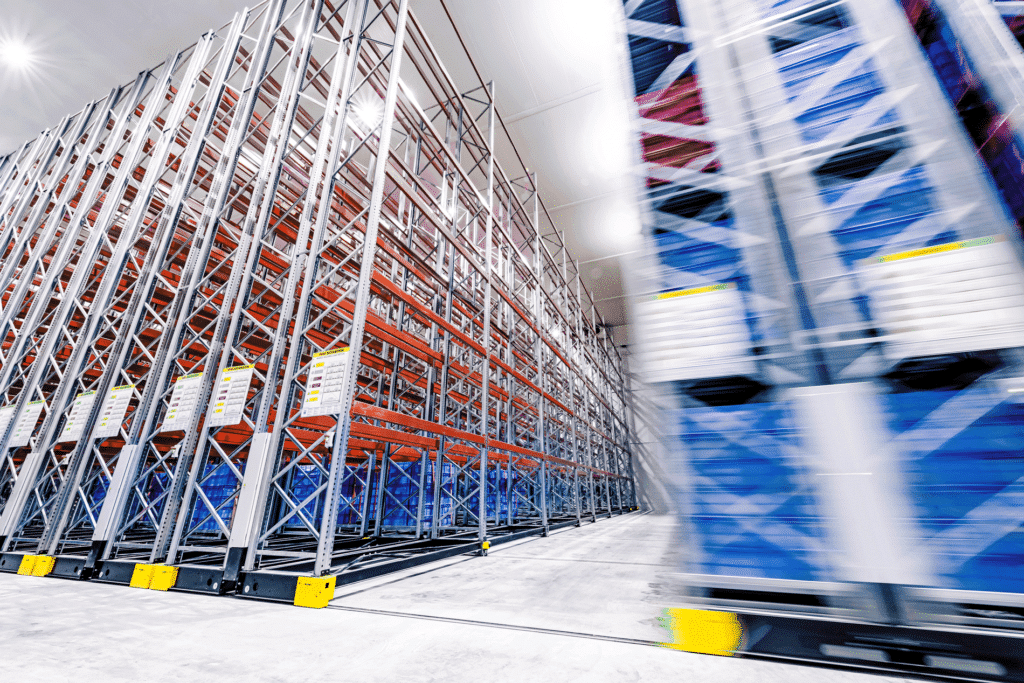
Mobile racking increases storage density, flexibility and efficiency
Fully scalable mobile racking systems are an efficient solution for maximising warehouse capacity and increasing flexibility in handling. David Eisenhut from SSI SCHAEFER explains how these systems contribute to more efficient warehouse processes, lower costs and higher storage density.
One example is the Mobile ESX Rack, designed for heavy-duty applications. With box loads of up to 32 tons and trolleys capable of carrying up to 600 tons, this system is suitable for both pallets and long goods. The racks can be built up to 16.5 meters high, matched to the lift height of the forklifts used and provided there is no earthquake risk.
The biggest advantage of mobile racking is space saving. Since only one working aisle is required, up to 45% of space can be saved. Compared to static systems, storage capacity can even increase by more than 90%. At the same time, they improve operational efficiency: aisles are opened only where needed, giving transport vehicles direct access to all storage locations and avoiding unnecessary movements. Order picking processes can also be optimized via the control system, leading to shorter travel times.
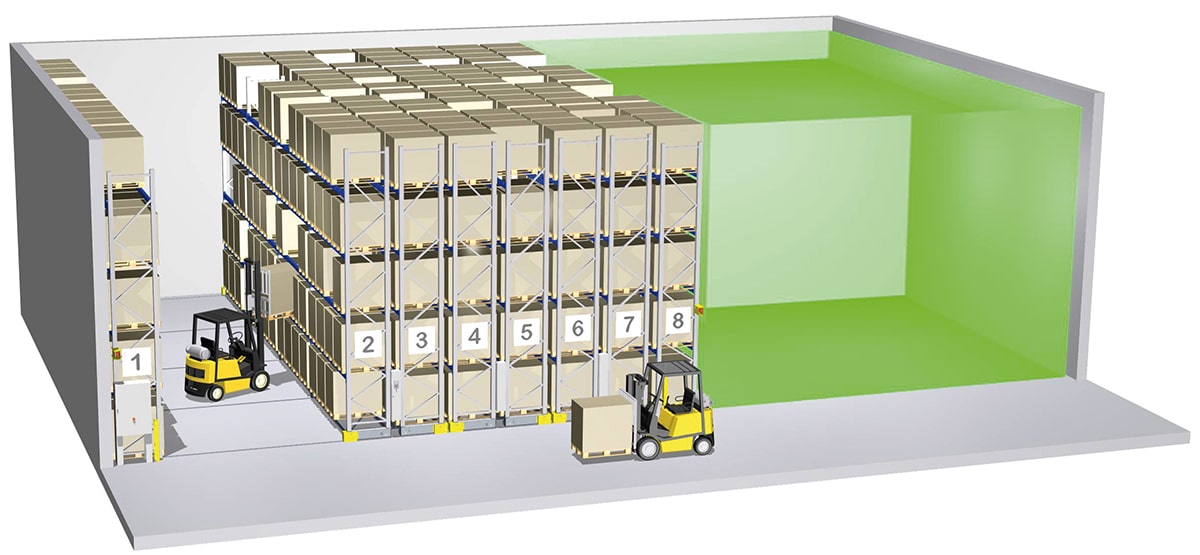
The advantages are particularly evident in a number of specific application areas. In temperature-controlled logistics, such as frozen warehouses, a higher storage density ensures that the volume to be cooled becomes relatively smaller. This leads to significant energy savings and a faster payback period for both the racking system and the refrigeration system.
Third-party logistics service providers (3PLs) also make extensive use of these systems. They combine maximum capacity with flexibility to efficiently serve different customers and load carriers. In doing so, it is essential that pick times remain under control to meet service levels.
In addition, mobile shelving offers a solution for locations where expansion is not possible, for example in urban areas. Finally, they are interesting for production companies, where storage density is often more important than a high turnover rate. Here, the system remains primarily focused on storage optimization, supporting order picking to a certain extent.
The payback period depends heavily on the situation. Although mobile racks are about twice as expensive as static systems, they prove especially profitable when real estate, energy and infrastructure costs are high.
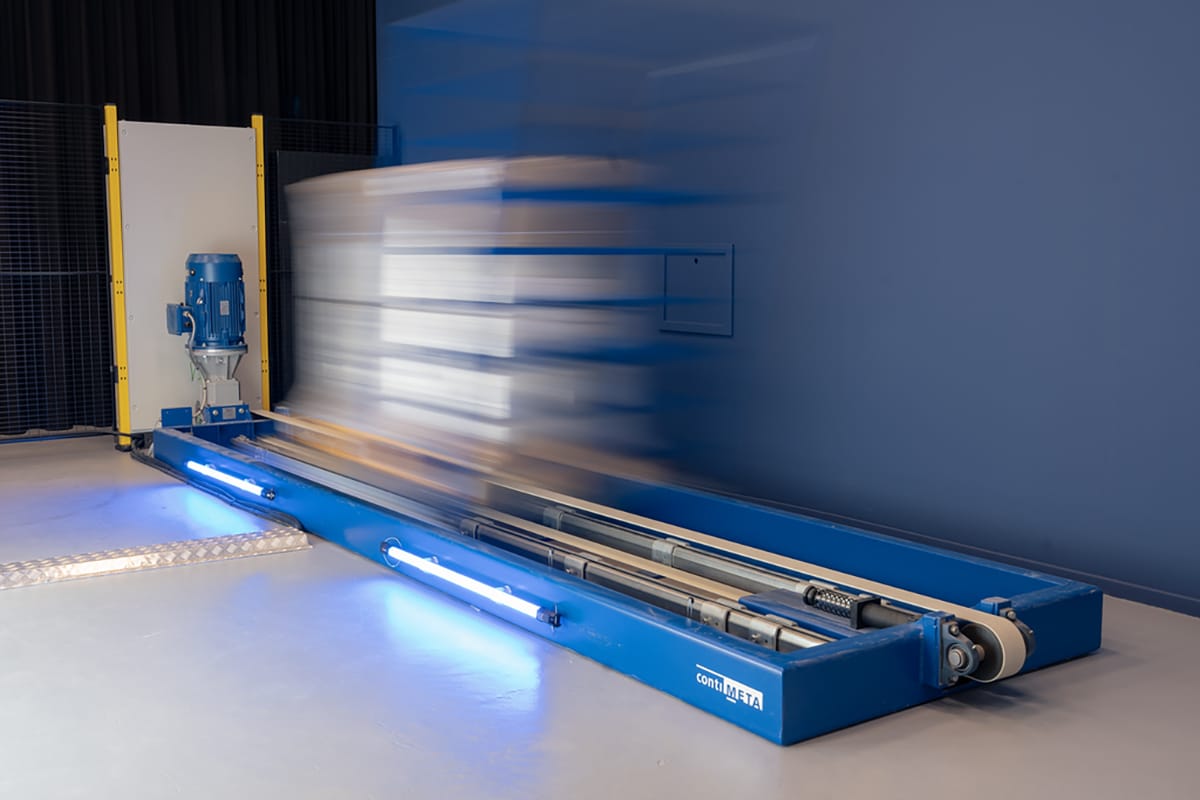
Safety plays a crucial role. Systems are equipped with multiple light barriers that immediately stop movement in the event of obstacles, supplemented by sensors along the trolleys that detect falling goods. Naturally, the systems meet all legal requirements, including fire safety and - if necessary - earthquake resistance.
Wear is also reduced by technical measures such as optimal load distribution via four-wheel drive, special bearings, distance sensors for correct alignment, and robust rail systems in high-grade steel. This ensures smooth movement and minimizes maintenance and downtime.

Automation is possible on several levels. Fully automated systems can be integrated with automated guided vehicles (AGVs) and warehouse software that continuously understands goods locations and automatically opens the correct aisles. At the same time, semi-automatic and manual solutions remain possible.
Mobile racking systems offer maximum storage density, flexibility and efficiency. They are particularly suitable for companies that want to maximize their warehouse capacity while reducing operational costs. Especially in energy-intensive environments, such as frozen food logistics, they deliver significant savings. Thanks to their modular structure and automation options, systems can also be optimized step by step.
Neem dan rechtstreeks contact op met SSI SCHÄFER BV.
 Contact opnemen
SSI SCHAEFER | Warehouse Equipment, Intelligent IT Solutions and Customer Support & Service SSI SCHAEFER Group is a leading global solution provider in all areas of intralogistics. With innovative technologies and software, the company enables its customers to make their storage, order picking and transport processes more efficient and sustainable. SSI SCHAEFER offers small and [...]
Bekijk Bedrijfsprofiel