[00:08] Introduction to the podcast
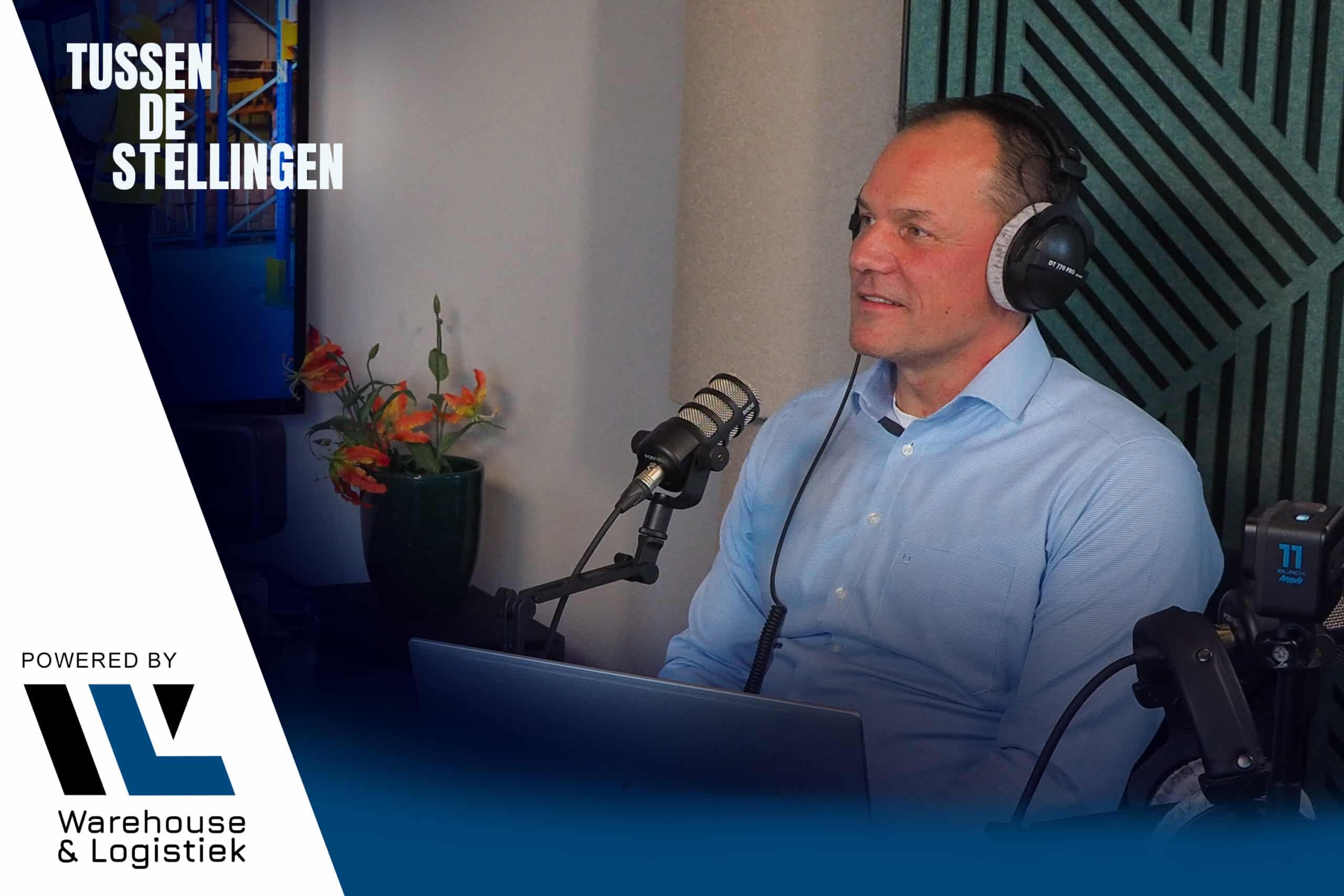
Jerry Helmers: And dear listeners, today we are back in Between the Theses. The podcast show of trade platform Warehouse & Logistics from Lauwers Media Group. Welcome all, my name is Jerry Helmers.
Jerry Helmers: And who do I have as my guest today? None other than Kay Mullenders, Managing Director of Haagh Protection. Warmly welcome.
Kay Mullenders: Yes, thank you Jerry.
[00:30] Kay's first podcast appearance
Jerry Helmers: It's your national podcast debut, but also your worldwide debut I believe.
Kay Mullenders: Yes right, nationwide but also worldwide.
Jerry Helmers: Okay, but did you sleep well last night? Because you live in Gilze-Rijen yourself, so you spent an hour this morning in the car obviously mulling over oh help, what's going to happen today. Are you kind of prepared for this podcast?
Kay Mullenders: Yes, yes. I slept well, had a nice ride towards beautiful Weert and yes, I'm confident.
[00:59] Launch of the theses
Jerry Helmers: Okay yes, we will also just divulge to the listeners that of course we also had a preliminary talk a couple of weeks ago. So of course we also know a little bit about what's going to happen. But what you don't know is, before we introduce you, or at least I'll leave that up to you, I'm going to present you with a number of statements about safety in warehouses, in the logistics sector. And what's so incredibly fun, or maybe you don't like it at all, you can only say agree or disagree. Yes, do you dare?
Kay Mullenders: Yes indeed.
[01:26] Statement 1 - Safety after an accident
Jerry Helmers: Well, then we'll start with the four propositions. Coming up, Kay. Statement one. Companies take safety seriously only after an accident has happened.
Kay Mullenders: Agreed.
Jerry Helmers: You agree with that. I did see some furrowed brows for a moment, but you did go fairly steady to agree.
[01:41] Thesis 2 - European safety standards
Jerry Helmers: Well, proposition two I have here. European safety standards are a bureaucratic burden rather than a tool.
Kay Mullenders: Disagree.
Jerry Helmers: Disagree, okay. Good, and you know, you can come back to something later.
[02:12] Thesis 3 - Security as a competitive factor
Jerry Helmers: And then I have a third statement for you. Agree or disagree. Over the next 10 years, security is going to be the biggest competitive factor in logistics.
Kay Mullenders: Agreed.
Jerry Helmers: Agree, agree. Twice agree, once disagree. I have it noted. Thank you. We're going to see if we come back to this further in the podcast.
[02:26] Introduction of Kay and Haagh Protection
Jerry Helmers: But first, we want to know who you are. Kay, tell listeners where you're from, what you do, what your mission in life is. In short, what brought you here to the studio in Weert?
Kay Mullenders: Mission in life, that's tough Jerry. But yes, I am Kay Mullenders, Managing Director at Haagh Protection from beautiful Gilze-Rijen. From there we have a nice little SME company in which we sell safety products that are mainly related to the danger of falling in the logistics industry and everything that comes with it. We do that based on anti-slip elements, but also fall protection at height by means of VarioGate tilt fences.
Jerry Helmers: Yes exactly.
Kay Mullenders: My mission in life, yes that's quite a big thing you ask me then.
Jerry Helmers: Well, life is great, too.
Kay Mullenders: Life is very grand.
Jerry Helmers: Yes, especially when it comes to security, I would almost say.
Kay Mullenders: When it comes to safety, making sure everything and everyone around you stays safe anyway.
Jerry Helmers: Yes.
Kay Mullenders: Both private and business.
[03:26] Purpose of the podcast
Jerry Helmers: Do you always have your belt on when you're in the car and driving here?
Kay Mullenders: Yes indeed.
Jerry Helmers: Okay, that was just a question in between. No, nice. Well, we kind of know who you are. I also kind of suspect that all listeners in general know what Haagh Protection is. But it's always good to share that a little bit more, who you are, where you're from. What is your goal for the podcast today?
Kay Mullenders: My goal for the podcast today is to educate people about a piece of safety. And what that involves. And maybe also give different insights into how people think about that.
Jerry Helmers: Do you also think that in addition to informing, it's perhaps going to be confrontational?
Kay Mullenders: In some ways, I think so.
Jerry Helmers: Could very well be, couldn't it?
[04:05] The four themes of the conversation
Jerry Helmers: Good. Because dear listeners, we are going to discuss the four issues today. The first question we're going to bring up in a moment is: Do people actually know what security is? Then we're going to talk about the question: does security cost a lot of money? Then we'll go to the third question after that: how do you know what security you need? And the last topic in this podcast of about 30, 35 minutes is futures and trends. Well, obviously you need to know all about that too. So let me surprise and inspire you in that regard as well, Kay.
[04:45] The accident in Germany
Jerry Helmers: When you came in here just now, well, we shake hands, we're going to have a cup of coffee downstairs and then we're going to go up the stairs to this studio. And then you told the story, which was also new to me for a moment, that ten, eleven years ago you said: when I was still a young boy of 24, you hadn't worked in this industry for very long, and then you were called, or so I should say, you were called, by a company from Germany, North Rhine-Westphalia, where there had been an accident. And someone had fallen from one and a half meters down. That's how I understood it from you later. And you said, well that was kind of a turning point in my life. Or that you felt like, I have to do something with this in my life or now I know why I'm doing it. I may be paraphrasing a bit, but could you be the first to tell me what happened at that company in North Rhine-Westphalia? Obviously you're not going to mention the name of that company, but what had happened that was so important to you that you thought, yes I'm in the right field.
Kay Mullenders: Yes, well that was quite an unusual phone call we got within the company itself. Well listen, there's been an accident. Can you come over quickly? In a hurry towards that company. And then you see a platform of one and a half, two meters high.
Jerry Helmers: Because what kind of company was it? I see, you're not going to name.
Kay Mullenders: A manufacturing company.
Jerry Helmers: A manufacturing company, really a German SME.
Kay Mullenders: Yes, just as you can kind of imagine it in North Rhine-Westphalia. Bit grayish, hard work, quite industrial. Nice platform, one and a half, two meters high. You see the opening open and it was the intention, or it's still the intention, that there was sometimes driven up and down there. Point was, someone had fallen down and a quick and nice solution had to be provided for that. You look up, which we already don't often do, but the most important thing was actually downstairs. That was another pool of dried blood that was there.
Jerry Helmers: Oh god.
Kay Mullenders: So fresh that it was actually that that person had fallen down. Dicky to say, but so that person didn't survive.
Jerry Helmers: A fall of a meter and a half already.
Kay Mullenders: From five and a half feet, probably landed on his neck.
Jerry Helmers: Yeah, you'll just indeed come down really literally wrong. It could just be your end.
Kay Mullenders: Yeah, like tripping over your own foot. Yeah, then it can have major consequences. So that person fell down and didn't survive. Which was the trigger for that company to quickly call us in.
Jerry Helmers: Okay, and then what became the solution at that company?
Kay Mullenders: Yes, we managed to put a VarioGate tilt gate there.
[07:11] Response to the first proposition
Jerry Helmers: How simple it can be really.
Kay Mullenders: Yes, actually I do. Only then we come back to your first proposition that you brought up anyway.
Jerry Helmers: Yes, companies take safety seriously only after an accident has happened.
Kay Mullenders: Yes, and that is often the thing. I don't want to lump all companies together, but grossly, people only start thinking about it once something has happened.
[07:40] Why safety often gets attention too late
Jerry Helmers: What's in that? I know, you're also just an entrepreneur, passionate about your business and about your product. You're obviously not a psychologist or a sociologist, but we're going to approach it from that perspective for a moment. Why is it, that something has to happen to people or in a company first before action is taken? Where does it come from? Is it a kind of laziness, may I use that word? Or convenience?
Kay Mullenders: Rather convenience than laziness, I think. I also think, especially today, everybody is busy. We all have staff shortages. It has to be quick, quick, quick. There's a certain pressure. So do you even have time to think about that little piece of security that's still missing in your business? And stays apparently don't.
Jerry Helmers: Then I think of the gentlemen and people in it.
[08:26] Do people know what security is?
Jerry Helmers: Because do they even know what security is? That's also the first question I wanted to ask, or the first topic we discuss in this podcast. Do people know what security is?
Kay Mullenders: In my opinion, yes, definitely. But safety is just a little bit different for each person.
Jerry Helmers: Yes, but then what do you think is, I'm going to immediately put to you perhaps the most difficult question of this entire podcast, what do you think is the unambiguous definition of safety? Or is that then maybe different by sector or by company?
Kay Mullenders: If you ask me personally, I think you can divide security into two parts. A piece of false security and a piece of security.
Jerry Helmers: Okay.
Kay Mullenders: To start first with the false security piece. What is false security? In my opinion, the sense of feeling safe.
Jerry Helmers: The feeling of feeling safe. Yeah.
Kay Mullenders: So that's easy to solve. If I can make you feel like you're safe right now.
Jerry Helmers: Yes, then ... I'm thinking very briefly.
[09:18] Fake security versus real security
Jerry Helmers: The sense of, but that doesn't mean it's actually safe. But might not false security also lead to nonchalance?
Kay Mullenders: Right. And that, to me, is where the difference is between false security and really proven security. Proven security, which is a product or a service or at least something tangible that actually gives you that security. I compare that to an umbrella. Today, fortunately, the weather is a little nicer than it was last week. But imagine, it's overcast, chance of rain is high and we have an umbrella with us. Yes, I say umbrella on purpose. One of those little umbrellas that you unfold and pop open and can easily put back in your bag. The moment it starts to rain you think: hey that's nice, I have an umbrella with me. Well, you take your umbrella out of your bag, unfold it, but with rain often comes wind. What happens? That umbrella flips open, it blows away.
Jerry Helmers: I recognize that, that happened to me once. Yeah, I don't want to say there were deaths in that, but I do recognize what you're saying.
Kay Mullenders: Yes, go on, make your point. With that so the dividing line of false security and safety is very small. Before, or before it started raining, you felt very safe because nothing can happen to me, I have an umbrella with me. But as soon as it happens and you want to use your umbrella and it hasn't proven to protect you from the rain, it's no use to you.
[11:09] Making safety clear with examples
Jerry Helmers: It sounds very strange compared to what we just said. I do think a nice comparison that also appeals. Is that also in your profession, if you reason it out from a piece of marketing and communications, that you have to look for these kinds of metaphors to make it clear, to make it less abstract for all those companies maybe that are still actually working far too unsafely or have unsafe procedures?
Kay Mullenders: Yes, I think so. You always have to look for a certain trigger in people. How can I actually hang that piece of security that is not insightful right now?
[11:47] How employees and management experience safety differently
Jerry Helmers: Do you also notice that employees in a company, and you obviously visit companies a lot, it's also just your acquisition fair is fair, experience security differently than, say, management or board?
Kay Mullenders: Yes.
Jerry Helmers: Why? And then why do you have to laugh at that question? Or is that always the beautiful dichotomy within companies?
Kay Mullenders: Okay, tell. It can go both ways again. The people on the floor find something and they often find something that they have to work with, how they work. And then you have two camps. One thinks it should be fast. In the Brabant dialect: don't bullshit but clean up. Step on the gas and we don't talk about it. That order that has to go out today, goes out today.
Jerry Helmers: So the delusion of the day wins out over this kind of discussion.
Kay Mullenders: Okay. On the other hand, there may be management who is very committed to safety. Guys, what we're going to do now is not good. We're going to make sure everybody has safety shoes on, we're going to make sure everybody wears safety glasses. And you can stretch that ad infinitum. So that's a dichotomy. The other dichotomy is that the people on the floor think they are working unsafely. Yes yes, but boss, I really can't leave work like that. Imagine me getting something in my eyes, imagine me slipping, imagine me falling down. Yes, yes, but we don't have the money for that anyway.
[13:12] How do you break through that wall?
Jerry Helmers: So how do you break through that, yes I do call it, misconception in communication? Or there's a wall in between somewhere.
Kay Mullenders: How do you break through that? I think the best way to break that is to get right around the table with both parties. One finds something and the other finds that. And you have to learn to find each other in that process.
[13:31] Safety requirements in the workplace
Jerry Helmers: But make that concrete. Because this podcast is listened to by CEOs, managers and directors of companies. Maybe this podcast is also listened to by employees on the shop floor. That maybe one morning they don't turn on Radio 538, but they hear this. People beware, listeners beware: give a very concrete tip. Can you demand safety? Give a tip to those employees.
Kay Mullenders: Yes, can you demand safety? I think so, because safety comes first. Ultimately, you have to be able to get home safely even after your work hours.
Jerry Helmers: But then do you also say: dear employees, don't take no for an answer from management?
Kay Mullenders: That not so adamant, but engage with each other. How can we solve this problem? It doesn't necessarily have to be a yes or no answer. But I want to work safely and my boss wants my processes to continue. How can you make that happen?
[14:24] Safety versus workability
Jerry Helmers: But wait a minute, isn't safety above all else? Sorry to interrupt, but isn't security above everything else?
Kay Mullenders: Safety is above everything, as long as it's within the margin of what's permissible. You can seal everything up, as safe as it can be, but you also have to be able to keep doing your job. If I have to dress you from head to toe with safety shoes, goggles, helmet and earplugs and you spend half a day doing that, aren't you actually going too far? Or can you start looking at: okay, in the context of our fall protection product, that's a collective safety device. That's great, because then we don't have to make sure that every employee has to be in a fall harness on a platform. Again, saves time, so you can get on with your work. So in my view it's a communicating vessels between safety, yes definitely at the top, but also a piece of effectiveness.
[15:24] Does security cost a lot of money?
Jerry Helmers: But your tip for CEOs, managers and directors is: at least listen to those employees when they come up with it. That's obviously their job anyway. But could that be a little bit better in general? Or don't you want to call those CEOs, managers and directors too harshly?
Kay Mullenders: I think you have to at least think in solutions. Again, giving everybody a harness literally costs a lot of money and a lot of time. Whereas a rotation of staff, hiring staff, you need it all. But then provide a collective security device that ensures that all personnel are protected.
[16:16] Thesis - Does security cost a lot of money?
Jerry Helmers: Finally, we come to the second issue. Of course, it always costs euros. Does security cost a lot of money? Let's make that a proposition as well, shall we? We're in the podcast Between the Theses now, after all. Safety costs a lot of money, agree or disagree?
Kay Mullenders: Disagree.
Jerry Helmers: Well you need to explain that.
Kay Mullenders: It doesn't have to cost a lot of money. Then I actually want to refer right back to the previous statement. We're between false security and security. Fake security, the sense of security, that's going to cost a lot of money. Why do you ask yourself? Well, I feel I can work safely at heights. Nothing is going on. Something happens, I fall down. At best, I break my leg. That leaves me in a pretty positive frame of mind. I'm out of action for six weeks. My boss has...
Jerry Helmers: I know what you're getting at.
Kay Mullenders: Premiums are going up, health care costs are going up. I have to have interviews because of staff attrition. I have to hire new staff, because the work can't stay put. Recruitment and selection of maybe temporary staff. That has to be rehired. Well, this string already takes a lot of time to explain, but besides that, it also takes a lot of money.
[17:50] Investing in real security
Kay Mullenders: Then safety costs a lot of money. Now if you could take a proactive approach, so not just the feeling of safety but actually start applying proven safety in the form of fall protection, PPE, you name it.
Jerry Helmers: PPE, personal protective equipment.
Kay Mullenders: Right, very good, thank you very much. Then the initial purchase price may be a little bit more substantial than you would hope. But in the end, at the back of the line, at the bottom of the line, it pays off so much more.
[18:06] The psychological problem
Jerry Helmers: But of course that remains that psychological issue that we were talking about earlier. Something has to happen before someone realizes that something should have been done much earlier. That is, of course, quite difficult to break through. Especially when money has to be spent, because every management looks at returns anyway. And you can only spend money once.
Kay Mullenders: That's certainly true as well. And what we also sometimes experience in practice is that safety is not seen. Safety is something infinite. You can keep taking steps: now we're going to address this, now we're going to address that, and next month we're going to bring the first-aid kit up to date. That's infinite. But you have to be able to see the dangers that are within your company.
[19:14] How do you determine what security is needed?
Jerry Helmers: Putting it very flatly, you guys could do a scan. So how does that work? Suppose I'm an SME, thirty people, really one of those industrial companies with one of those floors on the second floor. You come there on an acquisition call or you may come in for a visit. Do you then walk around? How does that work?
Kay Mullenders: We often come to customers who have an issue. For example: I have an open platform or sticking point, can you come over because we really have no idea how to solve this. Then we first engage in a conversation, like we're doing now, just sitting across from each other with a cup of coffee. Tell us a little bit more about the company. How do the processes run? What is the corporate culture at your company? What is important to you?
[20:01] Corporate culture and safety
Jerry Helmers: What do you mean by corporate culture?
Kay Mullenders: How one interacts. How one works. How highly safety is valued.
Jerry Helmers: Is it also part of the corporate culture how critical you dare to be of each other within a company?
Kay Mullenders: Yes.
Jerry Helmers: I think in this case you also have to be quite critical.
Kay Mullenders: Yes, and sometimes naming things that are not pleasant to name for a client.
[20:24] Naming unpleasant issues with customers
Jerry Helmers: But continue with your story. So you're walking around and taking inventory. Because actually we're already answering question three: how do you know what security you need? So you're then going to inventory that and you're taking a look at that.
Kay Mullenders: Yes, you also go together with the customer to see: what exactly is needed? What security do you need? It's different for every customer and every situation. What is important? How big is the pallet or load that needs to be put away? What is my available space? Oh wait, look, that's where the gas line runs, then we have to take that into account. Oh yes of course. What kind of subfloor are we dealing with?
[20:53] Practical constraints in warehouses
Kay Mullenders: For example, we've also had times when a concrete floor looked like a concrete floor, and not knowing that there was also underfloor heating in there.
Jerry Helmers: And what does that mean if there's underfloor heating in a concrete floor? Can you fall harder then?
Kay Mullenders: Then you have nice warm feet, only then you can't secure your tilt gate to the concrete floor, for example.
Jerry Helmers: Ah, I'm really sitting at the table with an expert here.
Kay Mullenders: So those are things that you take into account in such a conversation and such a visit. And certainly also look at: what is actually needed for that client? Does it benefit from this type or that type?
[21:46] When a solution may not fit
Kay Mullenders: Or at all: are we the right party? Or wouldn't you even think about a different way of framing the situation?
Jerry Helmers: When you are somewhere, are there signals or factors that you see, or maybe you hear something in a conversation that you then think: this is really not right, this has to be different?
[21:58] The split in counseling conversations
Kay Mullenders: In terms of security?
Jerry Helmers: Yes, that you think: this is really not sitting well here. I also understand for you the split of you want to have a friendly and good conversation with a potential customer, but you might also want to be a little strict. If you really see something that's not right, you also want to be able to bring that up with charm. So the question is briefly: do you ever have that feeling of this isn't right, how am I going to say this?
Kay Mullenders: Yes, that is indeed the split we sometimes find ourselves in.
[22:26] Discussion with management about safety
Kay Mullenders: And often that's with individuals who already think they know what the solution would be. Security managers and facility managers generally always read up very well. But a director of an SME who then says, no, this has to be done this way, because the processes have to go through. I don't want the process from A to Z to be delayed because there's going to be a yellow thing like this here.
Jerry Helmers: A yellow thing do you mean one of those yellow fences, for example?
Kay Mullenders: A tilt gate, a VarioGate.
[23:09] Process versus safety
Kay Mullenders: Then you have to have a conversation with such a person. Okay, I understand your concerns, but if we just slow down a small part of the process a little bit. The tilt gate is an extra action, but because of that we can make sure that your staff goes home safely every night. How does that seem to you?
Jerry Helmers: Yes yes, we all just have to pay attention.
Kay Mullenders: And where I see, there's also a chain with a meter hanging back. That's still allowed and that's up to each company to keep that or not. But then I think: in the delusion of the day that is still sometimes forgotten. And then how safe is that?
[23:59] Standard solutions or customization
Jerry Helmers: In conversations like that, do you always end up with a standard solution or is everything customized?
Kay Mullenders: I think about fifty-fifty. We have several standard solutions that we can deliver right out of the warehouse, about thirty different ones. But the part we really do for customers, especially in existing construction, is customization. Just that bit of height that you can't reach, or just the depth that's limited, or a crane track at the top.
[24:36] Standards and safety requirements
Kay Mullenders: It faces so many different challenges with so many different customers that that is difficult. To come back to the question, does the customer know what security they need? That often comes up in such a conversation. And then we always try to tell them: think of certain standards that may apply. How robust is the solution we are going to offer? Are the welders who worked on it certified for construction fencing or not? Is the construction fencing that we provide sturdy enough? Has it been tested? If so, by what standards?
[25:13] European safety standards
Jerry Helmers: Of course, we also had a statement about European safety standards. The statement was: European safety standards are a bureaucratic burden rather than a tool. You said disagree. So by that you're saying that if there is bureaucracy, that's not a bad thing at all. It's about safety. It's really a tool. Do all those entrepreneurs you sit at the table with know that they also have to deal with these kinds of European safety standards?
Kay Mullenders: No, I don't think so. Especially also because those European standards are really such a thick book. Just go find that bit there about fencing. It's actually not doable if you're not working on it. So I do think it's our job to inform the customer about that.
[26:16] Certification and testing
Kay Mullenders: This is our product and we meet the most stringent requirements. That's about five or six standards that we meet. It's not one standardization. For example, a skirting at the bottom, a knee rail and a breast rail. That's nice, but does that offer me protection or not?
Jerry Helmers: Yes, but if you sit at the table with me as an expert then I should also be able to rely on you.
Kay Mullenders: So it's a combination of standards A combined with standards B. For example, if I hit that with my pallet truck with a full pallet, does it provide the safety that it should? And that again is determined by another standardization.
[26:59] Standards and product testing
Jerry Helmers: How do you yourselves at your office keep up with all these standards? Because obviously a lot is happening in laws and regulations. Usually July 1 and January 1 are the dates that new regulations go into effect. Do you do that yourself or do you have a team for that? How does that work for you guys? Because you have to have that expertise. If you're back at the table here in a year, maybe something has changed. You have to know.
Kay Mullenders: Yes, of course we are not the butcher who inspects our own meat, fortunately. But that's why we called in TÜV Netherlands. And together with TÜV Netherlands, we drew up a certain set of standards for which a certificate was then issued.
Jerry Helmers: But those are your own standards?
Kay Mullenders: No, the standards that apply in the European directives.
[27:41] TÜV certification
Kay Mullenders: We have TÜV certification on our devices.
Jerry Helmers: Right.
Kay Mullenders: And that's not just a certification point. But that includes certain guidelines that have been established by TÜV. If you combine these standards with each other, then you have a product that conforms to operation of what we want.
[28:12] Are current safety standards correct?
Jerry Helmers: But are those standards any good? You also always see that laws and regulations often lag behind daily practice. Are those standards correct that you say: in terms of striving for ultimate safety? Or do you think that sometimes they could be tightened up a bit more?
Kay Mullenders: For now, they are certainly correct. Also because we are in the gray area when it comes to pick-up points in warehouses. But it could always, as far as I'm concerned, be a little bit more specified. If you drive into something, how strong should something like that be? What material should it be made of? How thick should the material be? How are the connections between them? Because it's a tube package really what you put together.
[29:01] Testing of structures
Jerry Helmers: But you mean that if something is hit on one side and eight feet away it remains, does it still hold?
Kay Mullenders: Very practical indeed. We have then tested that with us, only that is not yet described anywhere.
Jerry Helmers: You must be doing a lot with your profession to understand all this.
Kay Mullenders: Yes, and thankfully I don't know all of those by heart either, but it's something to keep in mind.
[29:45] Future and trends in security
Jerry Helmers: Then we come to the fourth and final issue we promised listeners we would discuss: future and trends. We had the statement: in the next ten years, security will be the biggest competitive factor in logistics. Then you once said. So security is a competitive thing.
Kay Mullenders: Yes, internally at companies certainly do. Just look at today. Everything has to be faster. Ordered today, delivered tomorrow. And companies, especially in logistics, compete with each other on that.
Jerry Helmers: Yes.
Kay Mullenders: Really bizarre. We also talked about it in the preliminary interview. You order something today, it has to come from Finland. And tomorrow afternoon a courier will be here on your doorstep and he'll just have that product in his van.
Jerry Helmers: Yes, unbelievable.
[30:29] Speed versus safety in logistics
Kay Mullenders: But there's a whole chain in between where things happen.
Jerry Helmers: Yes.
Kay Mullenders: And people work in that. And anything that goes fast, a mistake or an accident can just slip into that. So I agree that safety is really going to be the norm. How do we deal with those people who work in logistics?
[31:01] Security as a competitive factor
Jerry Helmers: But do you also mean that security is going to be the competitive factor?
Kay Mullenders: Yes, ultimately it does. Because if you have that in order as a company, people are also more inclined to come work for you. And you have the power to stay ahead of your competition.
[31:16] Safety reports in companies
Jerry Helmers: We're not a philosophy podcast, of course, but many companies are already being looked at and sometimes even judged on sustainability and environmental issues. They have to provide reports for that as well. Should companies also be required to do safety reports the same way they do sustainability reports?
Kay Mullenders: Yes, indeed, certain things have to be inspected annually. More and more things are being inspected in warehouses: overhead doors, tools. And so we are also inspecting and inspecting our products annually. To comply with those reports.
[32:16] The role of AI in security
Jerry Helmers: What role does technology such as AI play in security? We are now in 2025 and AI has become almost universal good. What's that like in your company?
Kay Mullenders: For us, it's still a bit of a distant concept when it comes to our products. We do of course use it internally to speed up processes, administratively speaking. But in warehouse logistics itself, I think AI is really going to play a big factor.
[33:02] Smart systems in warehouses
Kay Mullenders: Think about smart cameras that look at what's at a pick-up point. Is the pallet full? Is the pallet empty? Is there a pallet standing? Can I use the pick-up point or not?
Jerry Helmers: So do you mean that the camera sends a message, so to speak: this is going to go wrong in 15 minutes?
Kay Mullenders: For example. Or it's already going wrong. Stop producing on line A or line B.
[33:27] Sensors and automation
Kay Mullenders: What we are already implementing are certain sensors, photocells in our devices, to also indicate: it's occupied. You cannot use this device because there is a pallet in it. Or note, there's an empty pallet in there. We are already using that at some companies.
[34:07] AI and SMEs
Jerry Helmers: Are companies in SMEs ready for this yet?
Kay Mullenders: No, I sincerely don't think so. Certainly also the cost involved. I am always in favor of picking up the security aspect. But to implement AI in the warehouse at SMBs right now will take some time.
[35:06] AI is developing at lightning speed
Jerry Helmers: It does move at lightning speed with AI. If you look at something as simple as ChatGPT. Two years ago almost nobody knew it and now almost nobody can live without it. So I wonder how fast it's going in your industry then.
Kay Mullenders: I honestly don't know that exactly. But if something goes wrong with a chatbot, the consequences are small. If something goes wrong in a warehouse or manufacturing industry and an accident happens, the consequences are much bigger. So we have to be careful about that.
[36:25] Advice to entrepreneurs
Jerry Helmers: Are you actually advising entrepreneurs not to ask security questions to a chatbot but to experts?
Kay Mullenders: Yes, definitely. Get information from experts, but also from industry associations within your sector. Make a benchmark with similar companies. Company A does the same thing as us. How did they solve that? Engage with those companies. You are competitors, but in the area of safety you can also work together.
[37:39] Last contention
Jerry Helmers: Before we go to your two minutes of commercial speaking time, just a quick statement. Safety above all else, agree or disagree?
Kay Mullenders: Agreed.
Jerry Helmers: You couldn't answer that any other way.
[38:43] Commercial pitch from Haagh Protection
Jerry Helmers: Two minutes of commercial speaking time for you. You can say whatever you want.
Kay Mullenders: Jerry, thank you very much for inviting me to be here. I would like to tell you a little bit about Haagh Protection. We have been around since 1981 and we are a supplier and manufacturer of the VarioGate tilt fences. We deliver our tilt fences worldwide: America, Australia, Singapore, but mainly in Europe: Benelux, the Netherlands and Belgium.
[39:36] Products and customization
Kay Mullenders: We do that with thirty different standard configurations that we can deliver from stock. We can place these devices at our customer's premises straight from the shelf. We have had these devices certified by TÜV Netherlands. This means that the customer is assured of a proven safe solution. In addition to these standard solutions, we also have many customized solutions. Think for example of stainless steel, other RAL colors, different heights, widths and depths to turnkey projects.
[40:17] Inspections and long-term safety
Kay Mullenders: In addition to supplying and installing our VarioGate tilt gates, we also consider it important to carry out inspections. After all, safety is not a one-time action, but a continuous process. That's why we inspect installations at our customers' premises to ensure continued safety.
[40:34] Contacting Haagh Protection
Kay Mullenders: In short, with Haagh Protection you take on a total supplier who can take care of the customer from A to Z. If you are inspired by this conversation and are interested in a no-obligation consultation, feel free to contact us.
[41:14] Closing the podcast
Jerry Helmers: Kay, I think that was exactly two minutes. Thanks for coming to the studio. I hope you look back on your first podcast with satisfaction.
Kay Mullenders: Definitely. We were able to name everything we announced in the pre-conversation. I hope I was able to inspire people about a piece of safety.
Jerry Helmers: Dear listeners, this was another episode of Between the Theses. With Kay Mullenders of Haagh Protection. Thanks for listening and until the next episode.