warehouselogistiek.eu
EN

The platform for internal & external logistics, supply chain and automation
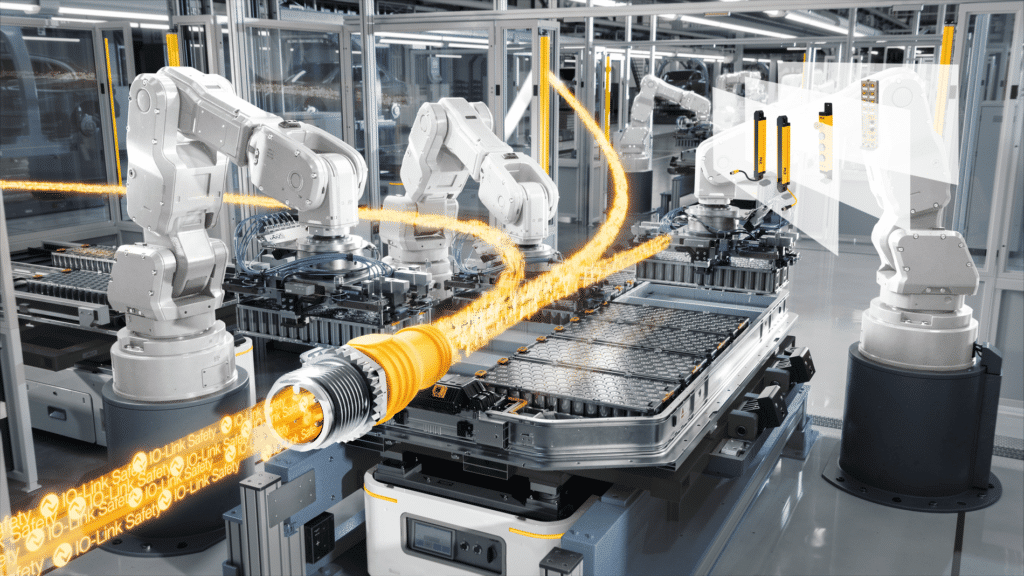
For warehouse and logistics environments, IO-Link Safety opens up new possibilities. Think less wiring, more diagnostic information and smarter deployment of sensors. Pilz was the first worldwide and is still the only one that can provide this as a complete system. “We offer not just the devices at the field level, but a complete system including sensors, actuators and master modules. This makes application easier for customers and increases performance,” says Thomas Ploeg, sales manager at Pilz.
The machine safety specialist has been guaranteeing safe and efficient automation for more than 75 years. By investing more than fifteen percent of sales in research and development, the international company offers solutions for the smart industry of the future.
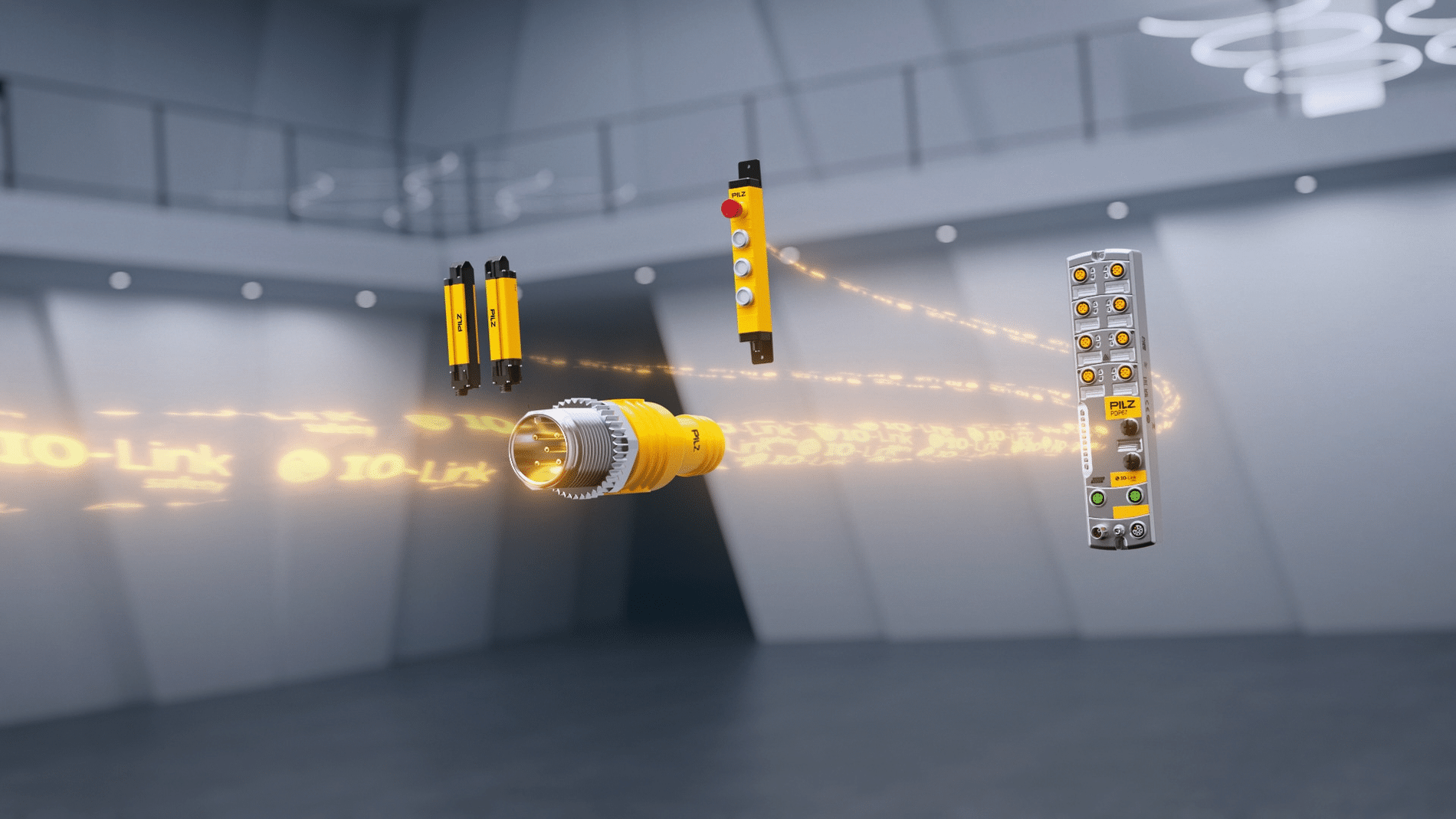
Ploeg sees great opportunities in IO-Link Safety in particular in environments where safety, productivity and maintenance are increasingly converging. “A major advantage lies in the amount of information that can now be extracted from safety components. Take a sorting machine, for example. There's a safety light curtain in there. That is actually already a smart sensor, but traditionally it is still communicated with rather ‘dumb’. Whereas previously this screen could only stop a machine as soon as an employee enters the secure area, it can now also provide additional data about passing products. For example, it can record how many rays of light are interrupted and thus provide information about the height of a package. So thanks to IO-Link Safety, you can bundle security and process information into one component. This provides all kinds of advantages. For example, that additional sensor technology is no longer needed in some applications.”
Ploeg continues: “Because sensors return more data, insight into pollution, wear or abnormalities also arises earlier. With a light screen, for example, it may become visible that the light intensity is slowly decreasing due to dust formation. Before this leads to a malfunction, the system can already issue a warning. This enables more targeted maintenance and reduces the chance of unplanned downtime.”
Sensor replacement is also easier. “Previously, when replacing a sensor one had to reload all the settings again, now new sensors can identify themselves and automatically adopt the correct settings. This also prevents downtime and also reduces the risk of errors.”

On a practical level, the system also provides benefits. Instead of wiring all sensors separately to the control cabinet, components can be connected locally to a master. From there, communication continues via a single Ethernet cable. This saves cabling, speeds up installation and makes expansion easier.
For modular machines, this is especially interesting. When individual machine parts are each equipped with their own master, they can easily be connected to each other. “Then in the end it no longer matters which configuration a customer orders. You only have to loop the modules through,” Ploeg said.
At the same time, he emphasizes that this is an open system. That means users are not locked into one manufacturer. Different components can work together within the same standard. This openness makes the technology future-proof and attractive for modular machine concepts.
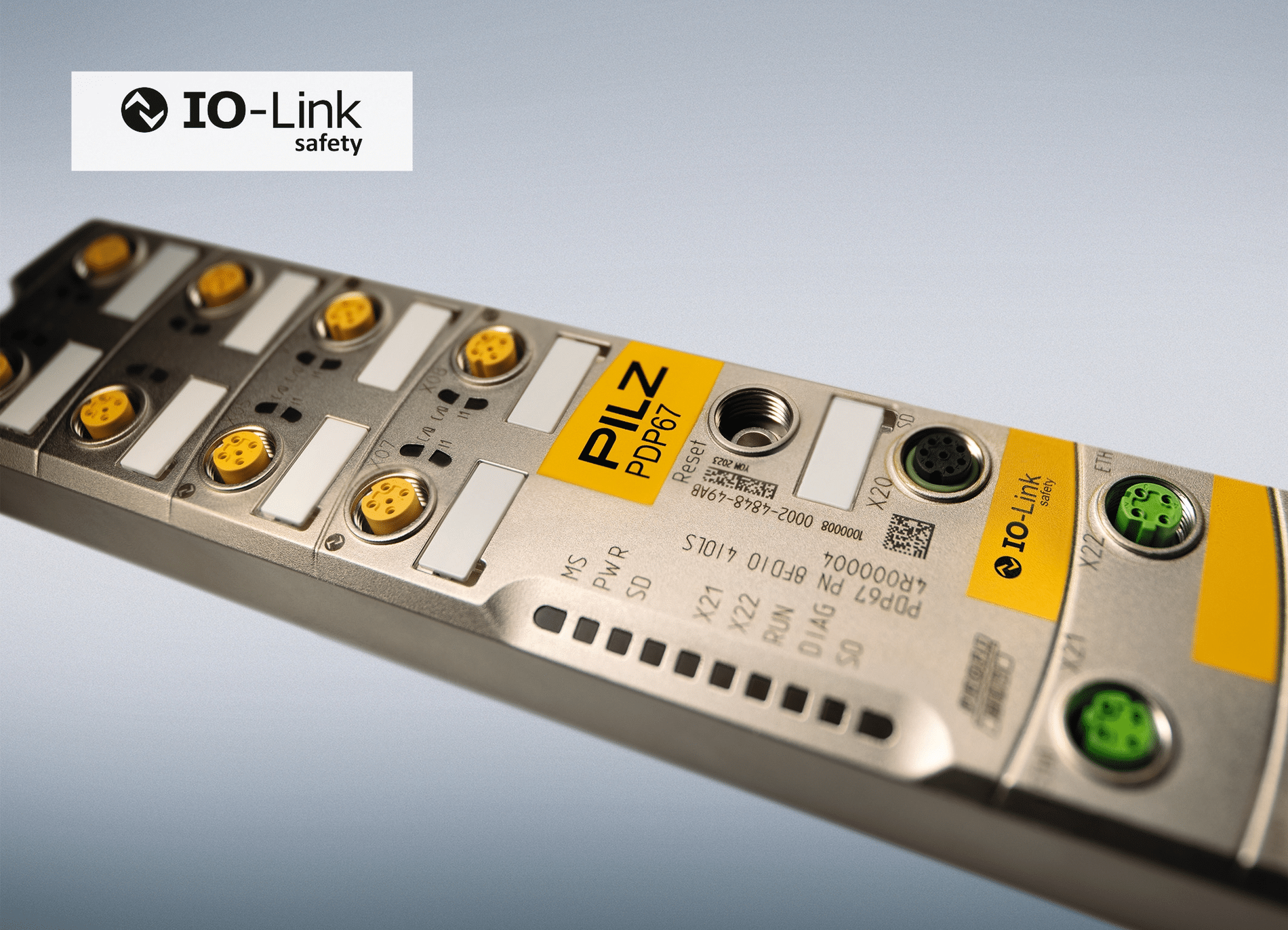
Interested parties can watch a free webinar about IO-Link Safety on the Pilz website. Among other things, it covers the benefits, as well as technical principles, practical examples and applications from industry.
Neem dan rechtstreeks contact op met Pilz Netherlands.
 Contact opnemen
As a supplier of automation solutions, the company Pilz, a name synonymous worldwide with human, machine and environmental safety, offers solutions for all industries and sectors. From Pilz, you can expect automation technology that takes into account both machine safety and security requirements. Rely on our solution for the automation of your Automated Guided Vehicles (AGV), [...]
Bekijk Bedrijfsprofiel