warehouselogistiek.eu
EN

The platform for internal & external logistics, supply chain and automation
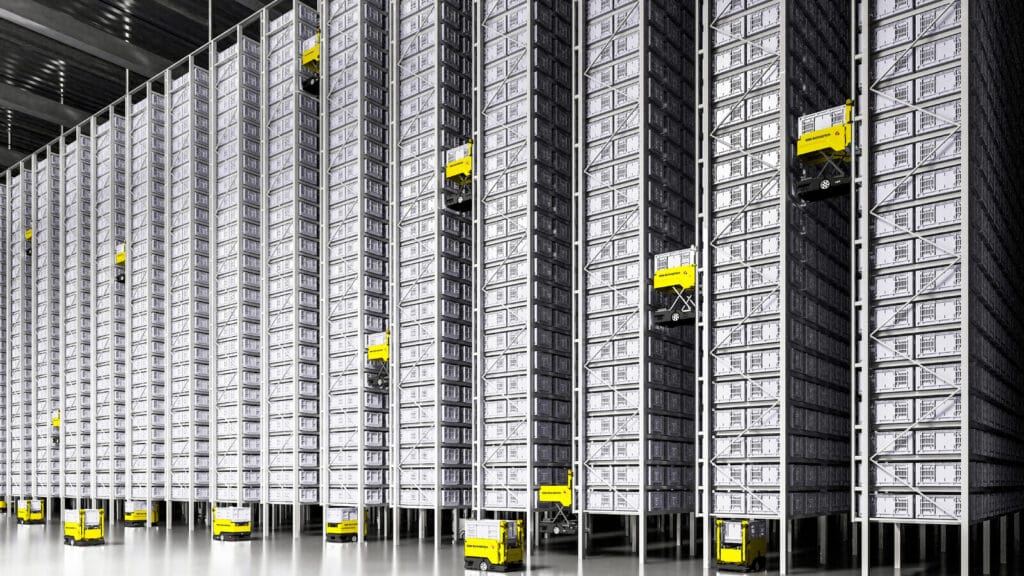
Automation is high on the agenda of virtually every logistics organization. Yet the biggest challenge is by no means always the processes, but rather the available space. Order volumes are growing, product ranges are expanding, and delivery times are under pressure, while expansion isn’t always possible or cost-effective. The question, therefore, is being asked more and more often: How can you get more capacity out of the same building? According to SSI SCHÄFER, the answer lies not only in automation, but above all in making smarter use of the warehouse space that is already available.
For many warehouse managers, this is a familiar dilemma. Creating additional storage capacity often means expanding, relocating, or undertaking major renovations. These are projects that involve a significant amount of time, investment, and operational risks. For small and medium-sized businesses in particular, it is therefore more appealing to explore ways to make better use of existing facilities.
At the same time, there is growing interest in automation solutions that not only increase capacity but also remain flexible when processes, product lines, or order flows change.
Many automated storage systems require a fixed infrastructure. This often makes future expansion complex and costly. An alternative is a modular approach in which storage capacity and performance can be scaled up independently of one another.
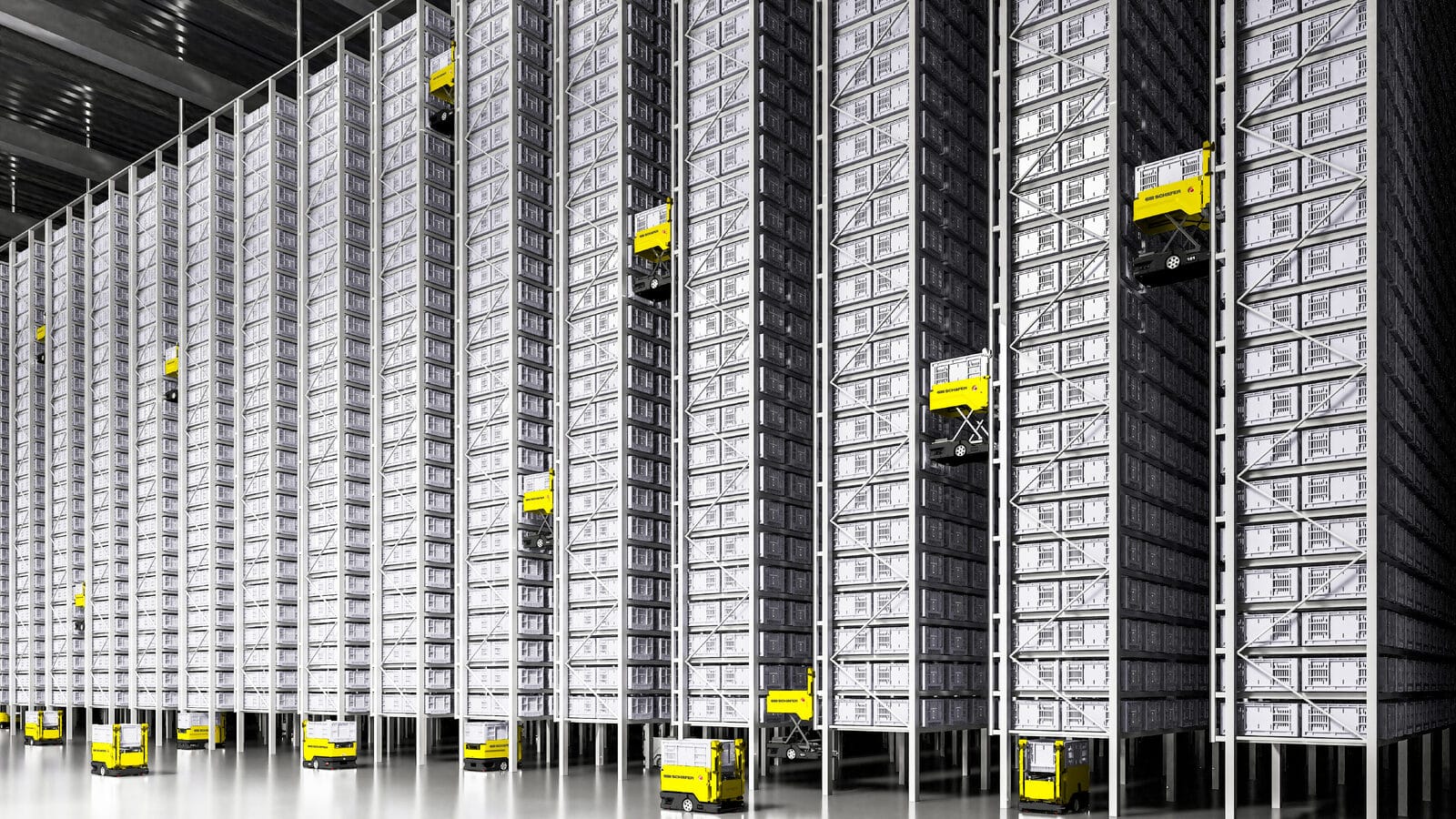
SSI SCHÄFER's RackBot Systems combine conventional racking with autonomous mobile robots. As a result, the system can be integrated relatively easily into existing warehouses without major structural modifications.
As demand grows, additional robots or racks can be added without having to modify the entire system. Furthermore, this can be done while the system is in operation, thereby minimizing downtime.
This offers additional benefits for existing buildings. Even warehouses with a non-standard layout or building structure can be configured without having to completely redesign them.
In many warehouses, the focus is primarily on available floor space, while it is actually the height that often offers room for optimization.
RackBot Systems utilize storage heights of up to twelve meters and support double- and triple-deep storage. This results in a compact storage structure with high storage density. Depending on the application, up to 43 bins per square meter can be stored. At the same time, the storage system remains flexible. It supports various bin sizes, boxes, and trays within a single installation. Storage carriers can also be removed directly from the system for further processing, without any additional buffer steps or transfer operations.
For organizations that deal with fluctuating product mixes or seasonal spikes in demand, that flexibility is often just as important as the storage capacity itself.
A key difference from traditional shuttle systems and other aisle-based automation solutions is the robots' freedom of movement.
Whereas conventional systems are often tied to specific aisles or zones, the robots within RackBot Systems have access to all storage locations. As a result, there is no direct relationship between storage capacity and the performance of any one specific aisle. In practice, this results in shorter access times and stable throughput, even when utilization rates are high or order patterns fluctuate significantly. In addition, this design makes the system less sensitive to changes in product profiles, inventory turnover rates, or order structures. This ensures greater flexibility in the long term.
Order fulfillment also benefits from the robots’ intelligent control. The required bins are delivered to the workstations in the correct order, eliminating the need for additional sorting systems or complex conveyor systems. This increases process reliability and shortens turnaround times. This offers additional benefits for rush orders. In performance-optimized configurations, a required bin can be made available at a workstation within two minutes.
One of the biggest challenges in warehouse investments is predicting what operations will look like in five or ten years. As a result, many companies invest upfront in capacity that won’t be needed for years to come. Modular automation offers an alternative. Capacity is added incrementally as the business demands it.
You can do this by:
• add additional robots;
• install additional workstations;
• adjust operational strategies.
Because the racking system remains unchanged, large-scale layout changes are not necessary. This allows companies to better align their investments with the organization’s actual growth.
The fact that this approach works in practice—not just in theory—is evident from its implementation at the fashion company Desigual. The company deployed 25 RackBots to improve warehouse performance. This resulted in a throughput of up to 650 boxes per hour and 150,000 units per week in a two-shift operation.
Another striking aspect is the project's turnaround time. Only seven months elapsed between the initial planning and the system's launch.
The results show that additional capacity does not always have to come from expanding the building. In many cases, the greatest gains come from making smarter use of the space that’s already available. In doing so, SSI SCHÄFER underscores the importance of solutions that not only enhance performance but can also adapt to changing logistics needs.
Neem dan rechtstreeks contact op met SSI SCHÄFER BV.
 Contact opnemen
SSI SCHAEFER | Warehouse Equipment, Intelligent IT Solutions and Customer Support & Service SSI SCHAEFER Group is a leading global solution provider in all areas of intralogistics. With innovative technologies and software, the company enables its customers to make their storage, order picking and transport processes more efficient and sustainable. SSI SCHAEFER offers small and [...]
Bekijk Bedrijfsprofiel