warehouselogistiek.eu
EN
The platform for internal & external logistics, supply chain and automation
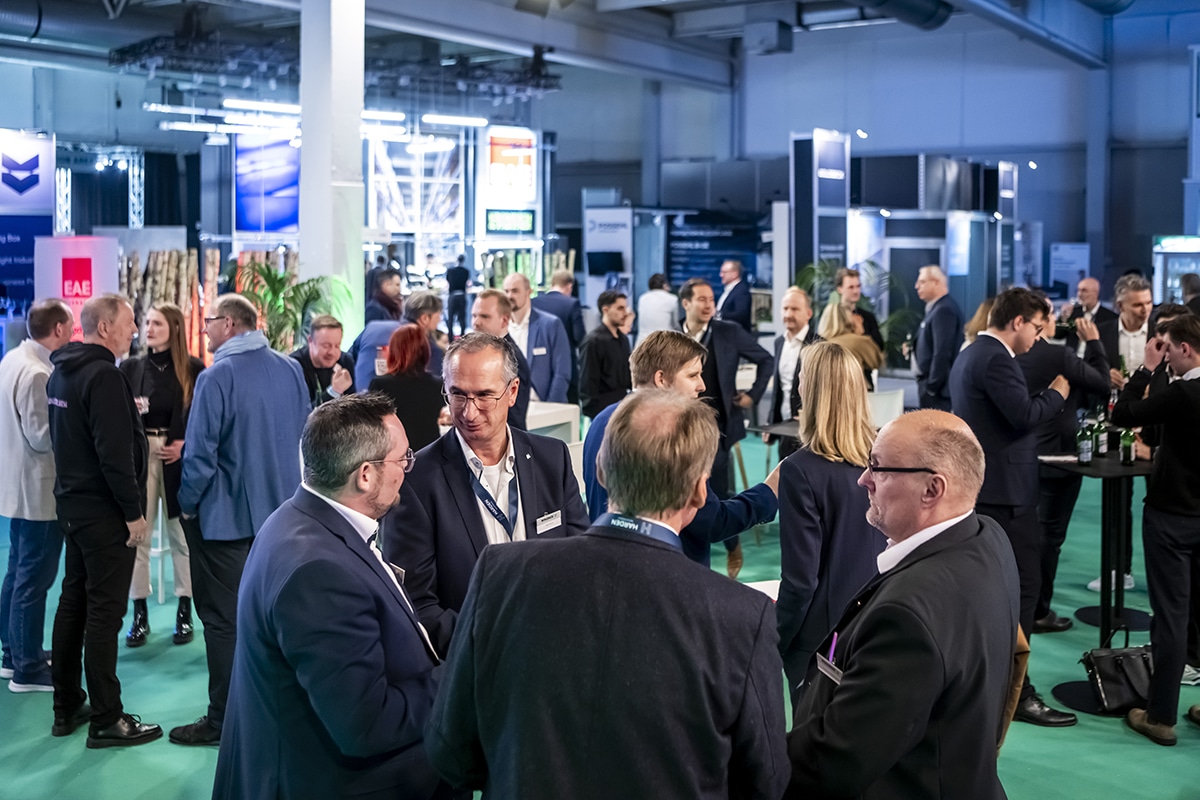
With record figures across the board, LogiMAT 2026 once again underlined its position as the leading trade fair for intralogistics. In Stuttgart, nearly 70,000 visitors and more than 1,600 exhibitors from around the world gathered around the latest developments in warehouse automation, software and material handling.
What was striking this year was not only the strong international presence, but also the distinct business character of the fair. Numerous exhibitors reported concrete leads, project inquiries and even direct orders, confirming LogiMAT as a true work fair where innovation and business go hand in hand.
Content focused on flexibility and scalability in an increasingly complex logistics environment. From advanced sorting systems and autonomous vehicles to compact automation solutions for e-commerce and return flows, the industry is showing resilience and continues to invest, even in economically challenging times.
But how was all this concretely experienced on the show floor? We listened to some of the exhibitors.
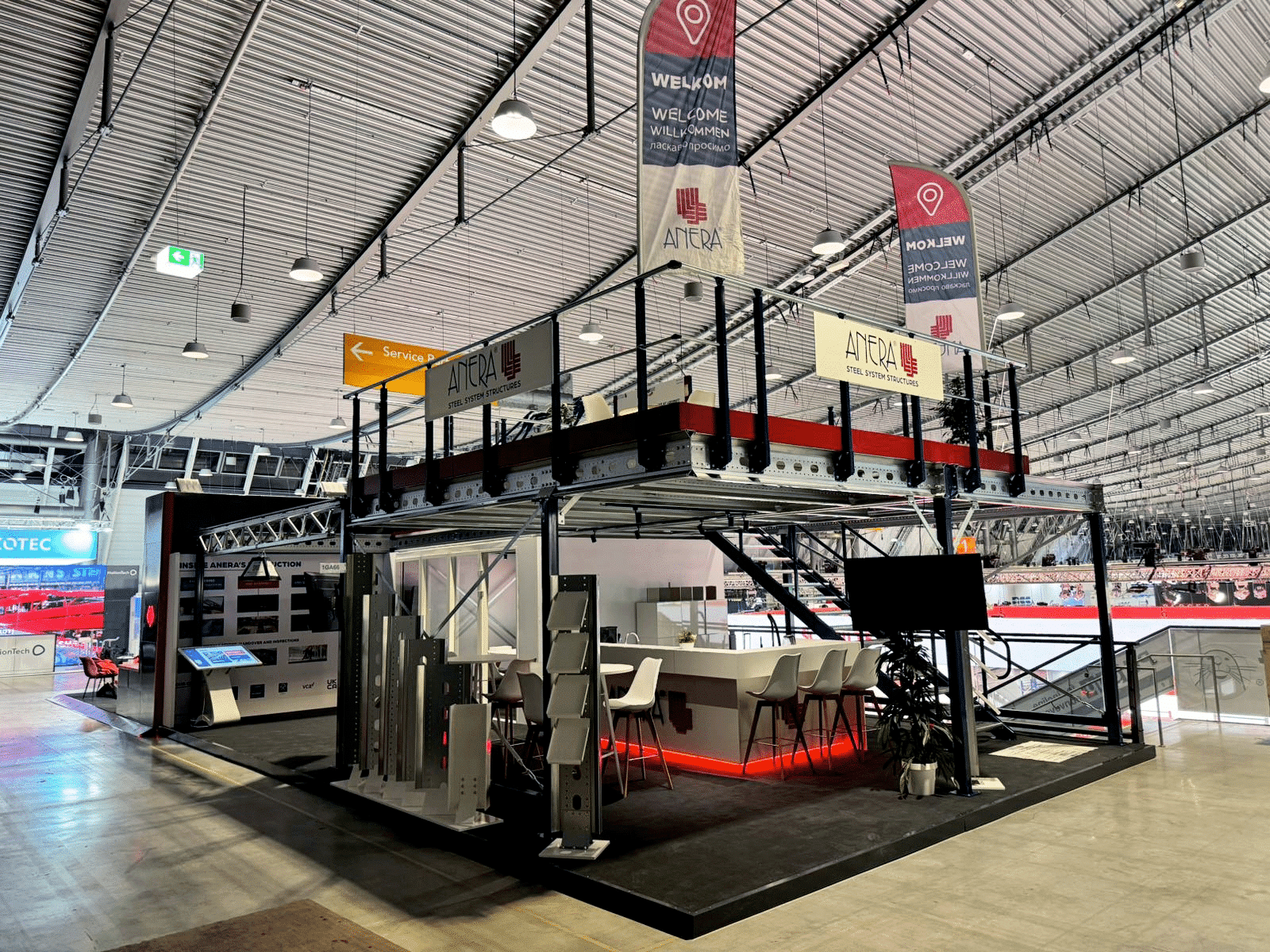
For Anera, the trade show participation was another successful experience. “After being actively present for several years, we see that partners know how to find us more easily and consciously include a visit to catch up in their trade show plans,” says Niels Deijkers, Marketing at Anera.
With its own booth, Anera deliberately opted for a combination of visibility and concrete product presentation. The eye-catcher was a sunken floor, which allowed the company to demonstrate its solution to the public in a tangible way. “It was partly to show our product, but also to show our name and speak to partners in person,” Deijkers said. As with many trade show exhibits, the networking component played an important role in this.
Based on the internal feedback, Anera looks back positively. “Every year we evaluate and learn from experiences with the goal of making next year another step more professional. But in the end, it's all about the conversations!” For the company, the participation therefore represented a valuable action for strengthening its partnerships.
For EuroSort, this year's trade fair participation was particularly successful. “For us it was probably one of the best editions ever,” says Rens Gehling, Commercial Director at EuroSort. “It really went very fast: our team was talking non-stop and even on the last day new customers came by.”
The highlight of the booth was the introduction of the new E-Sort, which was presented to the public for the first time as a full-fledged product. The solution responds to the strong growth of e-commerce, with more and more small orders going directly to consumers. “Where you used to have fewer more orders with many items, you now see just the opposite. We have developed an answer to that with E-Sort.”
The technology allows one output to be multiplied into a multitude of sorting points, resulting in high throughput on a compact footprint. Moreover, the solution can be combined with existing systems, allowing both B2B and B2C flows to be processed within a single facility.
The market responded extremely positively. “Not only did we have a lot of traffic, but we also received concrete confirmation that this really is a hit,” Gehling said. “That also immediately translated into new project requests.”
Although digitalization plays an increasing role in commercial processes, targeted trade show participation remains clearly relevant, according to EuroSort. “You have to be selective, but this is an event you just have to attend,” concludes Gehling.
For VMS, the fair confirmed a clear trend in the market. “I felt that we have reached a real tipping point,” said Niels van der Sloot of VMS. “Companies are starting to see that the model of cheap, readily available labor is under pressure.”
According to Van der Sloot, rising labor costs and more limited availability of personnel are causing organizations to look more and more emphatically toward automation. This evolution has been visible among large international players for some time, but now it also seems to be penetrating a broader group of companies.
The focus at the booth was therefore on concrete automation solutions. Among other things, an automatic truck loading solution attracted attention, in which an autonomous forklift loads pallets into trucks. There was also a lot of interest in a Box Opener, a robot that automatically opens incoming boxes, a process that is often still done manually today.
“That kind of repetitive task lends itself perfectly to automation,” Van der Sloot said. “We're finding that companies really want to make strides in that now.”
The overall impression? Positive, with a clear shift in mindset. “That awareness was for me the most important signal of the fair,” he concludes.
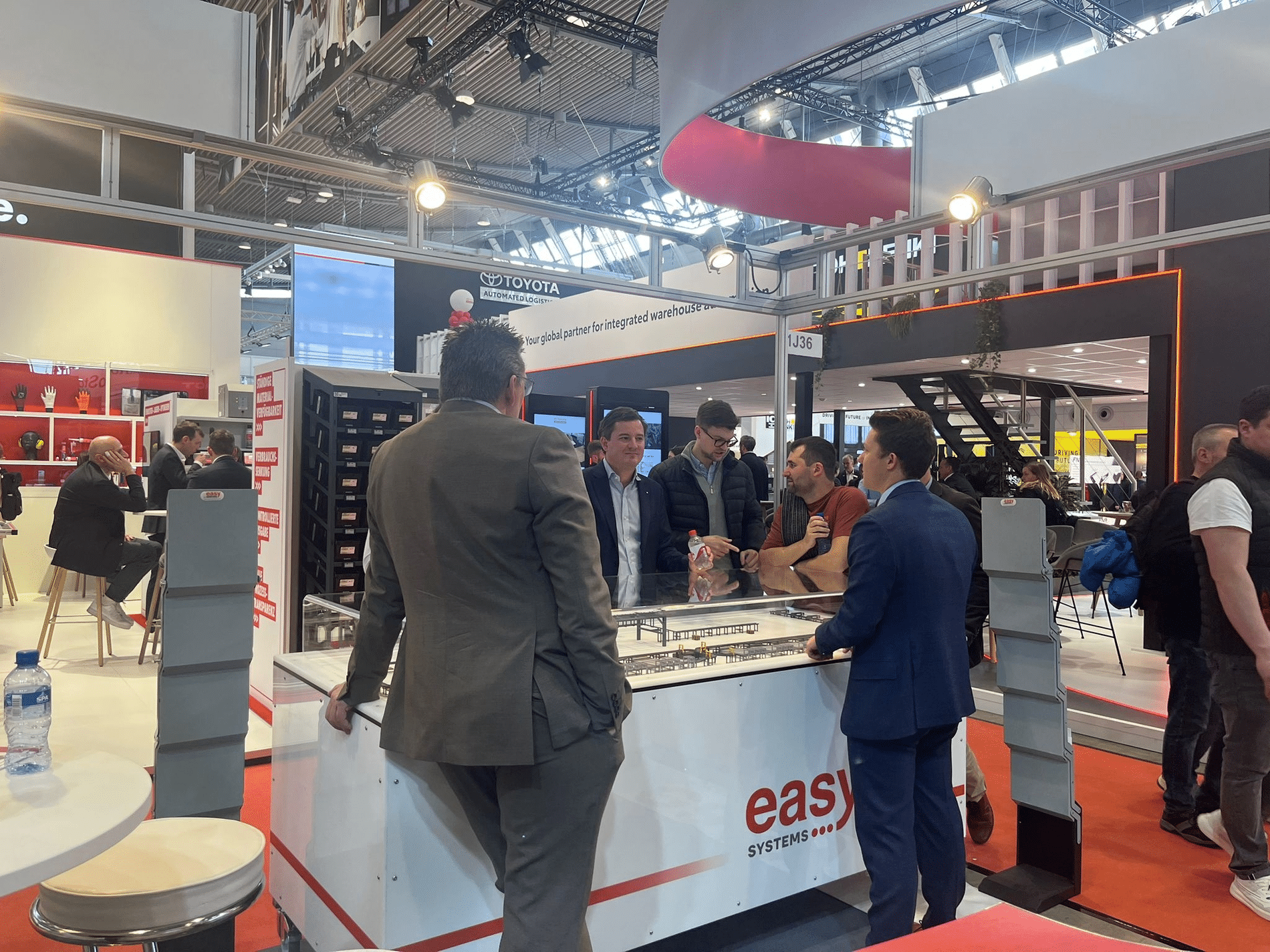
For Easy Systems, the fair went completely as expected. “It was in line with what we had envisioned beforehand,” says David Taverniers of Easy Systems. “And it is definitely worth repeating.”
Notable was the company's conscious decision to focus clearly on the Benelux market. Unlike most exhibitors, who communicate internationally, Easy Systems chose to dress the booth exclusively in Dutch and French. “If you're not ready to deliver in certain markets, you shouldn't create expectations there either,” it sounds. “You only get one chance to make a first impression.”
That approach paid off. The booth attracted targeted visitors from the right regions, thanks in part to the recognizable language. “For example, we saw that companies spontaneously stopped by the Dutch texts. That confirms that this focus works.” Easy Systems also wants to continue that line into the future. For example, an even stronger Benelux infill is already being considered, for example with a concept where customers and partners are actively involved at the booth. “We really want to continue to focus on targeted contacts and relevant conversations,” Taverniers concludes.
Haagh Protection looks back on the trade show participation with satisfaction. “There were many visitors anyway and we were able to collect good leads,” says Kay Mullenders of Haagh Protection. At the same time, the company noticed a clear evolution in visitor behavior.
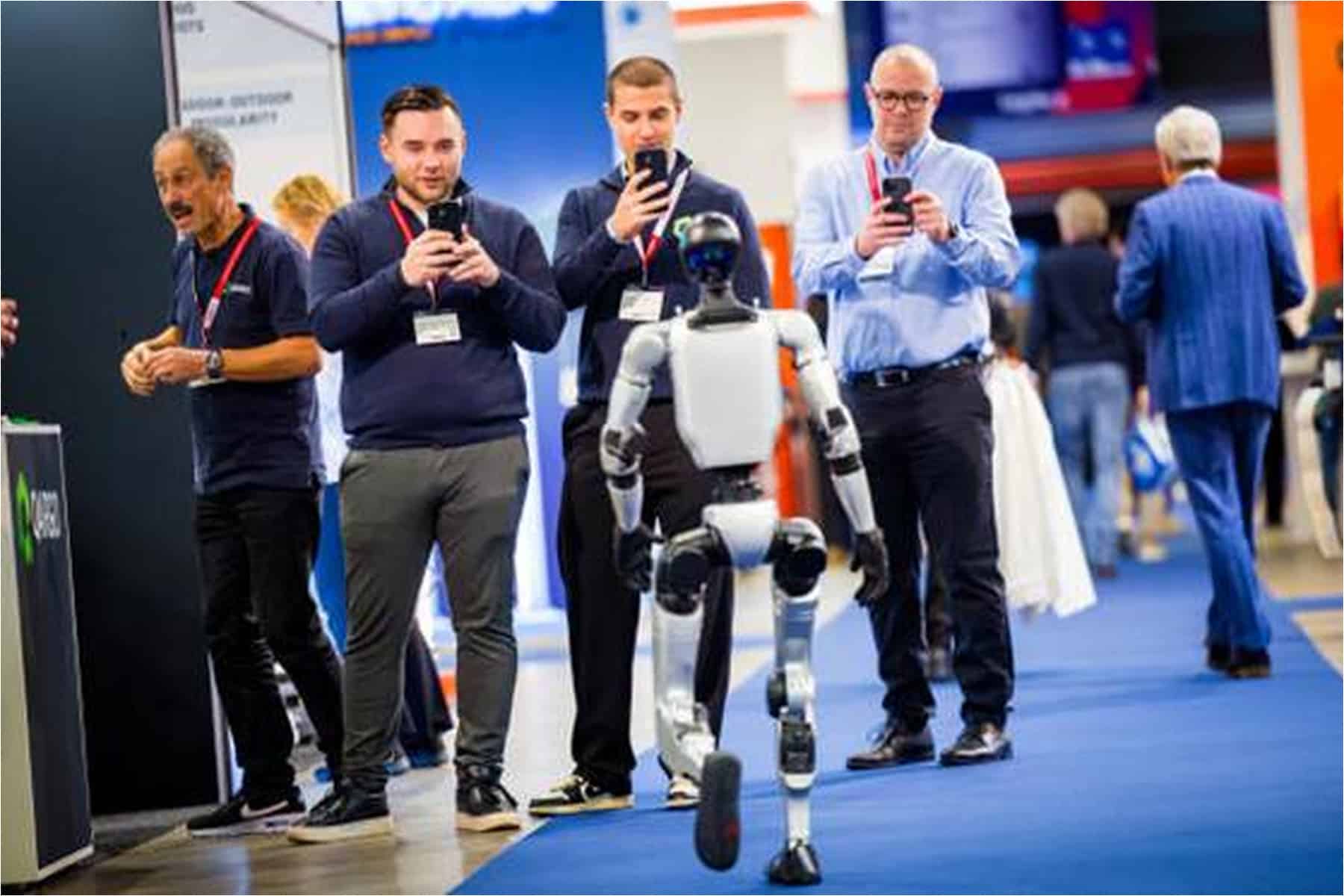
“Many people walk by, take pictures and move on again,” Mullenders said. “But afterwards they do show up in our mailbox with a concrete request.” According to him, lead follow-up is increasingly happening in a more anonymous way, without visitors immediately leaving their details at the booth. “Visibility and proper presentation of your products are very important for this, you see that people know how to find us ”
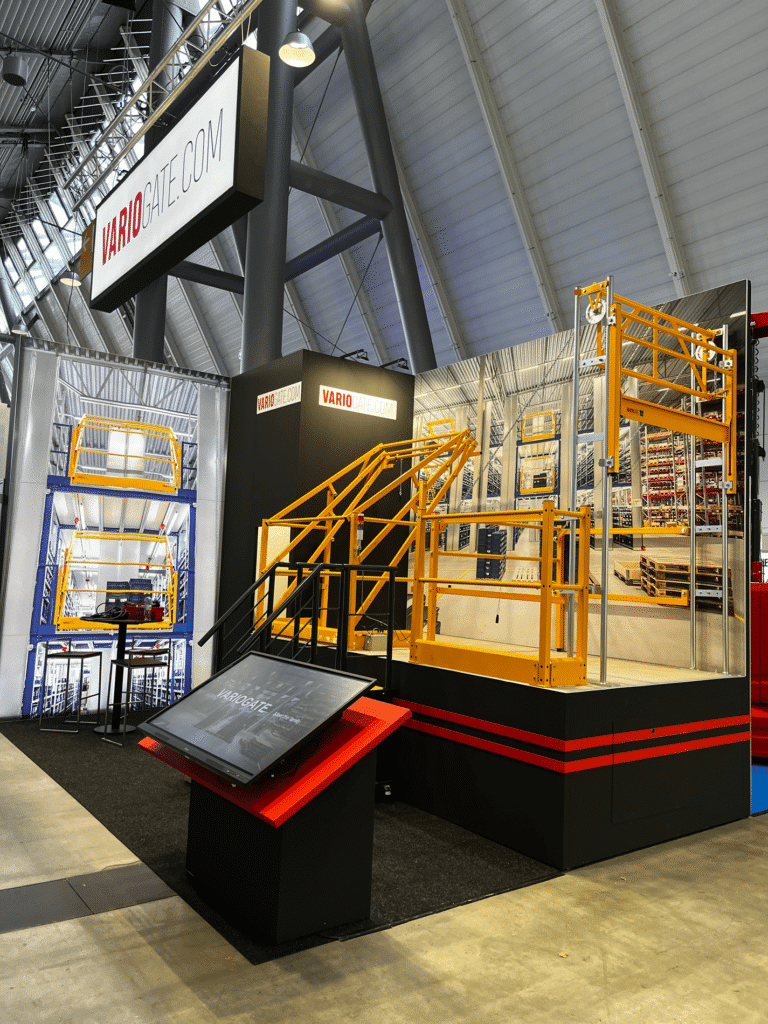
Among the products presented at the booth was Haagh Protection's Variogate tilt gates, safety solutions that screen off pallet openings on mezzanines and work platforms, preventing fall hazards. The principle works like a lock, with the opening never being accessible on both sides at the same time. The company showed two versions: a classic tilt gate that tilts around the loading area, on the one hand, and a vertical version developed specifically for situations with limited installation space, on the other. Both solutions combine safety with a smooth flow of goods at height.
The combination of product interest and targeted follow-up makes Haagh Protection look back on participation positively. “For now, I am definitely satisfied,” Mullenders concludes.
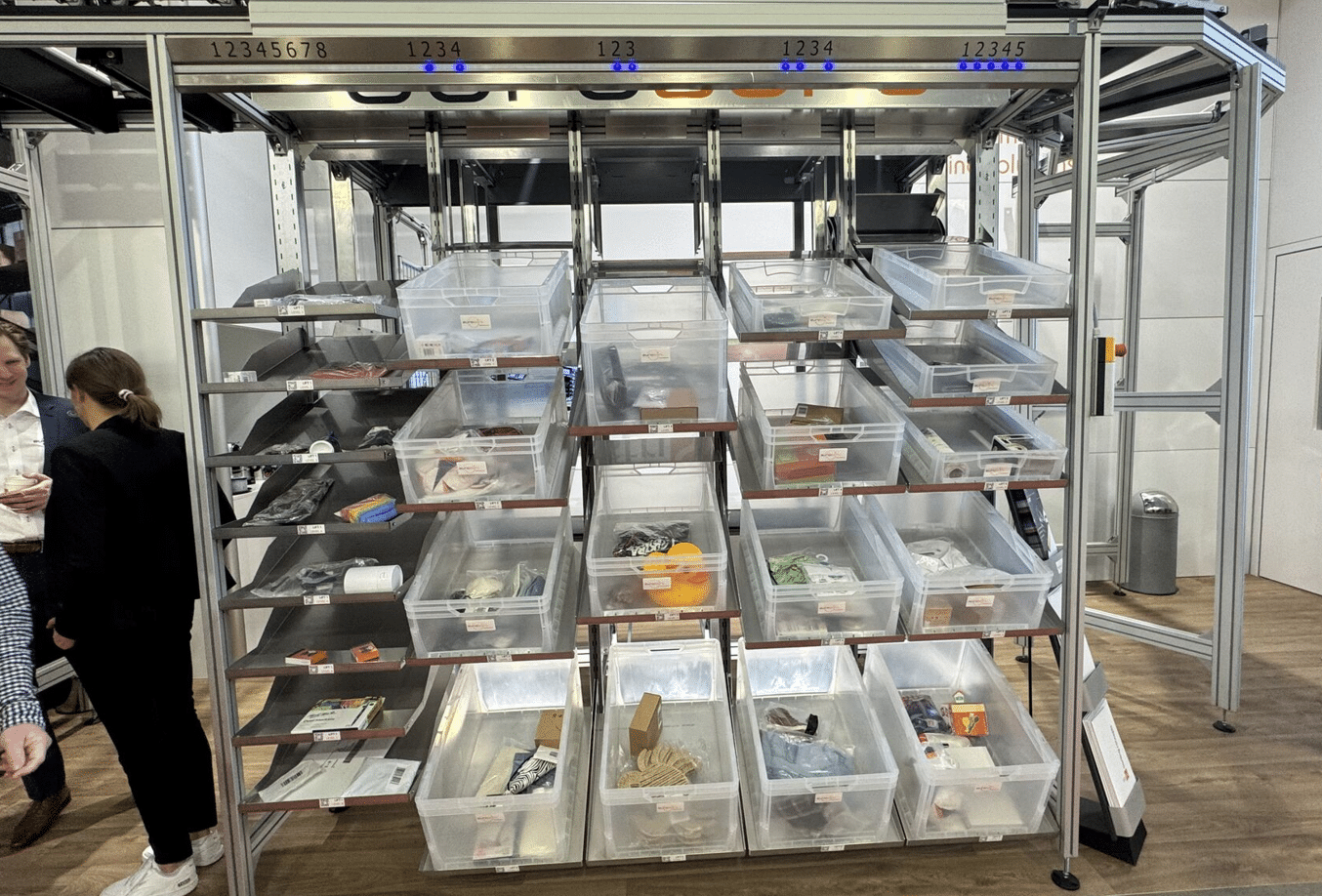
Collo-X looks back positively on the fair, where the company clearly reaped the benefits of a stronger market positioning. “We took a slightly different approach this year and also went a bit bigger,” says Floris Hendriks of Collo-X (logistics branch of Farmasort). “We noticed that our product has become more widely known in the meantime, and we also saw that from the visitors at the booth.”
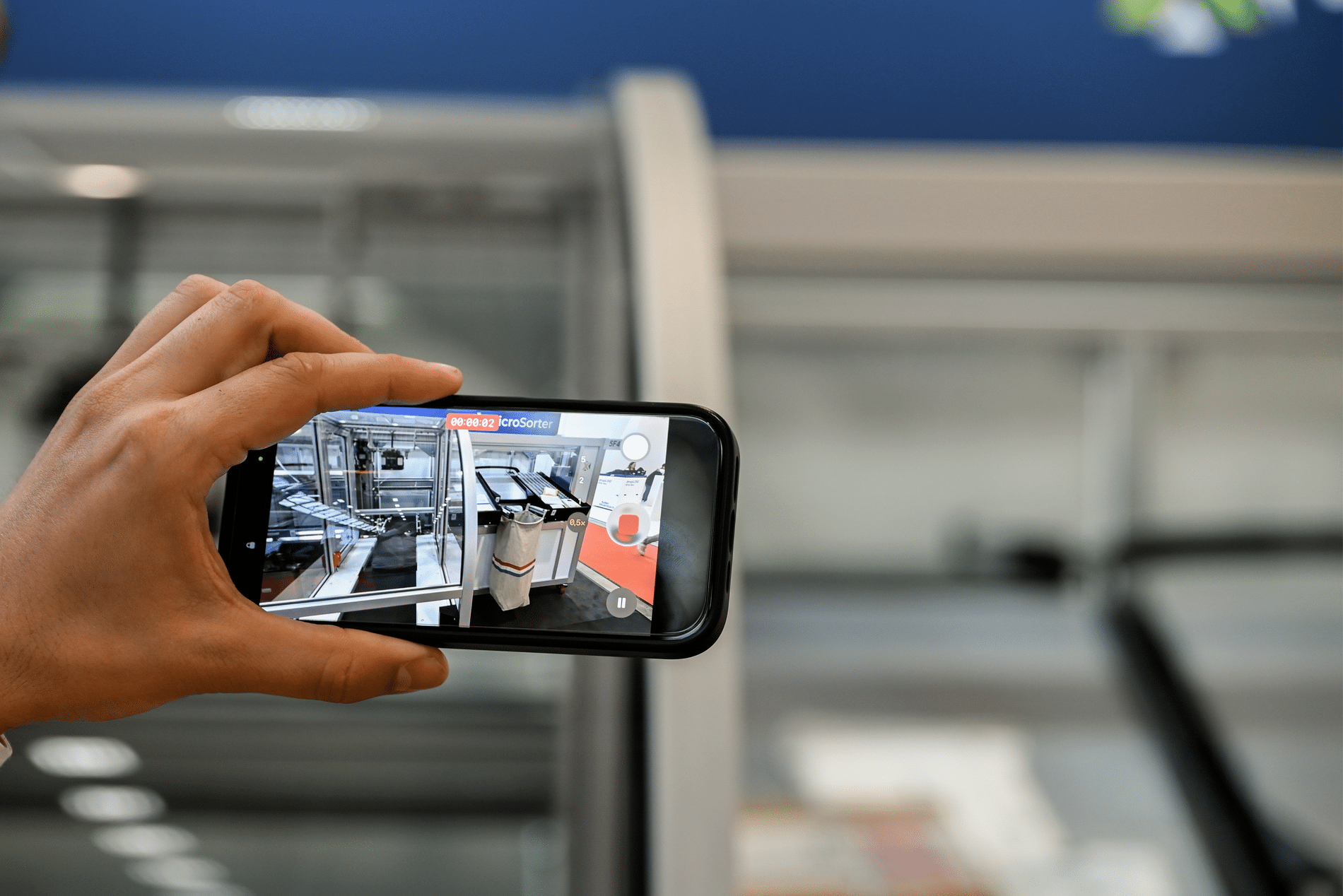
The main focus was the presentation of the microsorter, a compact sorting module for
processing small flows of goods in e-commerce, fulfillment and healthcare, among others, which also highlighted its partnership with Hexapole. The solution combines high sorting capacity with a reduced footprint, targeting applications such as order processing, fine sorting and return flows, among others.
A specific demo setup was worked out for the fair, which was met with a lot of interest. “There was really a lot of interest,” Hendriks said.
According to him, the solution responds to a clear market evolution. Where large sorting systems remain a fixture, the demand for fine sorting is growing. “For fine sorting, we see more and more applications, both in B2B and B2C, but also for return processing, for example.”
The combination of a targeted exhibition approach and growing product awareness translated into concrete opportunities. “We were able to follow up on a lot of contacts and certainly obtained valuable leads from them,” Hendriks concludes.
Stöcklin Group looks back on the fair positively, where the quality of the contacts in particular stood out. “We were pleasantly surprised by the large number of visitors,” says Guus Elbers, sales manager Benelux. “But especially the fact that people came to our booth well prepared, with concrete questions and specific challenges, made the difference.”
According to Elbers, there was a remarkably open and constructive atmosphere on the exhibition floor. Visitors took the time to engage in conversation and actively sought solutions. “People really wanted to discuss and exchange ideas. That made for very valuable contacts.”
In addition, the fair underscored its international character. “You notice that this has really become a global platform, with visitors and projects from all over the world,” Elbers said.
At the booth itself, Stöcklin Group deliberately took an interactive approach. Instead of physical installations, the company worked with digital and interactive tools, videos and real-life case studies to demonstrate solutions. This included highlighting an award-winning project, where visitors could engage directly in conversation about implementation and results. “That makes it tangible and relevant to other companies,” echoes Guus Elbers.
The combination of international appeal, substantive discussions and concrete applications makes the Swiss company look back on a successful edition with satisfaction.
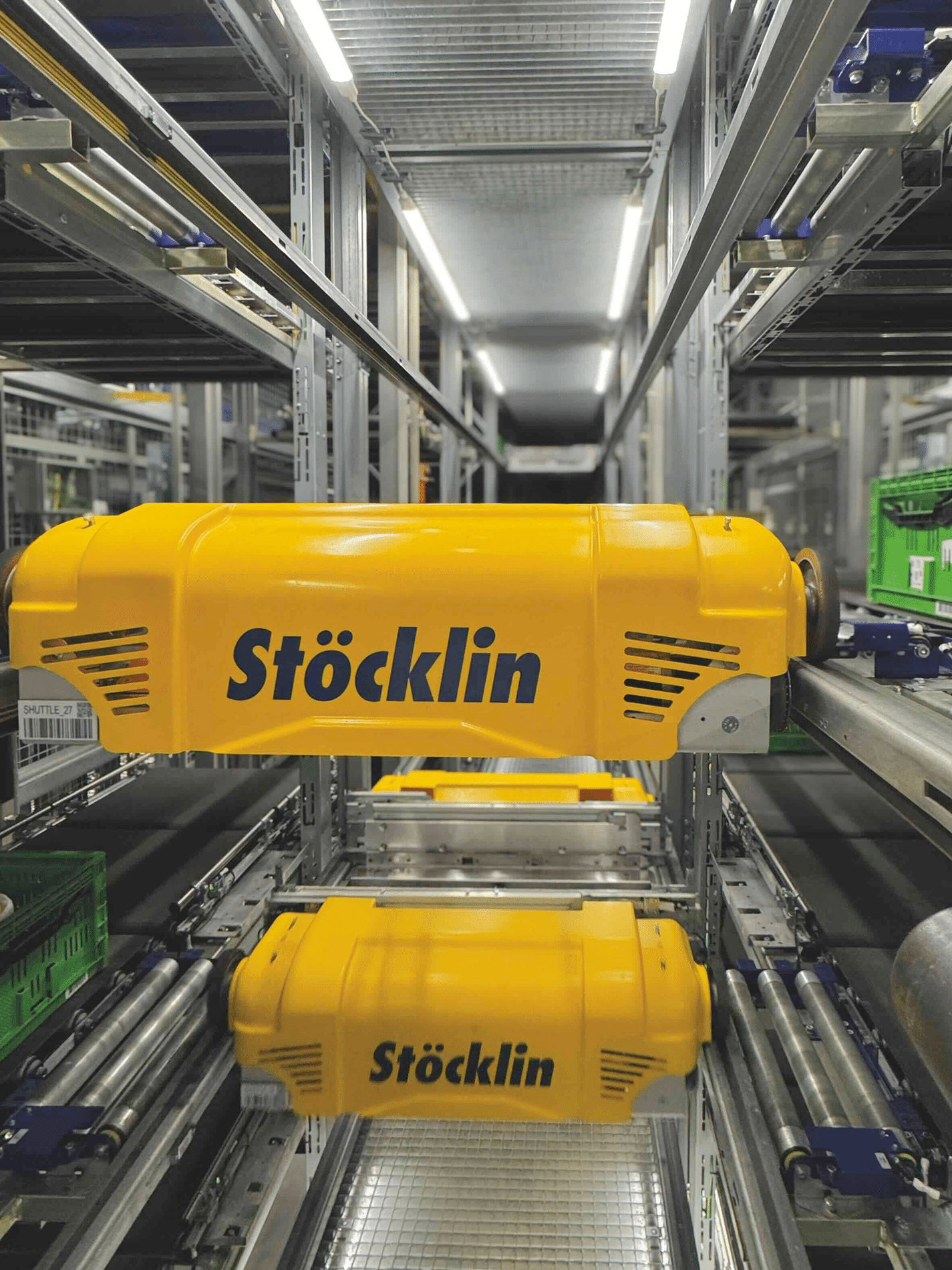
For Lantech, the fair remains a fixture on the calendar. “It's always a strong trade fair for us,” says Susanne Scheepers of Lantech. “We have been there in the same place for years and it remains an important contact moment with the market.”
Notable this year was the clear international focus. Whereas the company used to focus mainly on the DACH, Benelux and surrounding markets, communication was now expanded to include France, Eastern Europe and Italy. “You notice that the fair is becoming more and more international, and we tailored our approach to that,” Scheepers said. That strategy proved successful, with a broad and relevant influx of visitors.
In terms of product presentation, Lantech deliberately took a different approach. Leading up to other trade shows later this year, no new products were launched, but the focus was on the existing portfolio. “We mainly showed our bestsellers, such as our pallet wrappers and box erectors, which are doing very well in the logistics sector.”
According to Scheepers, the fair remains an important link in the company's international growth ambitions. “It is an ideal platform to make contacts and further develop markets,” she concludes.
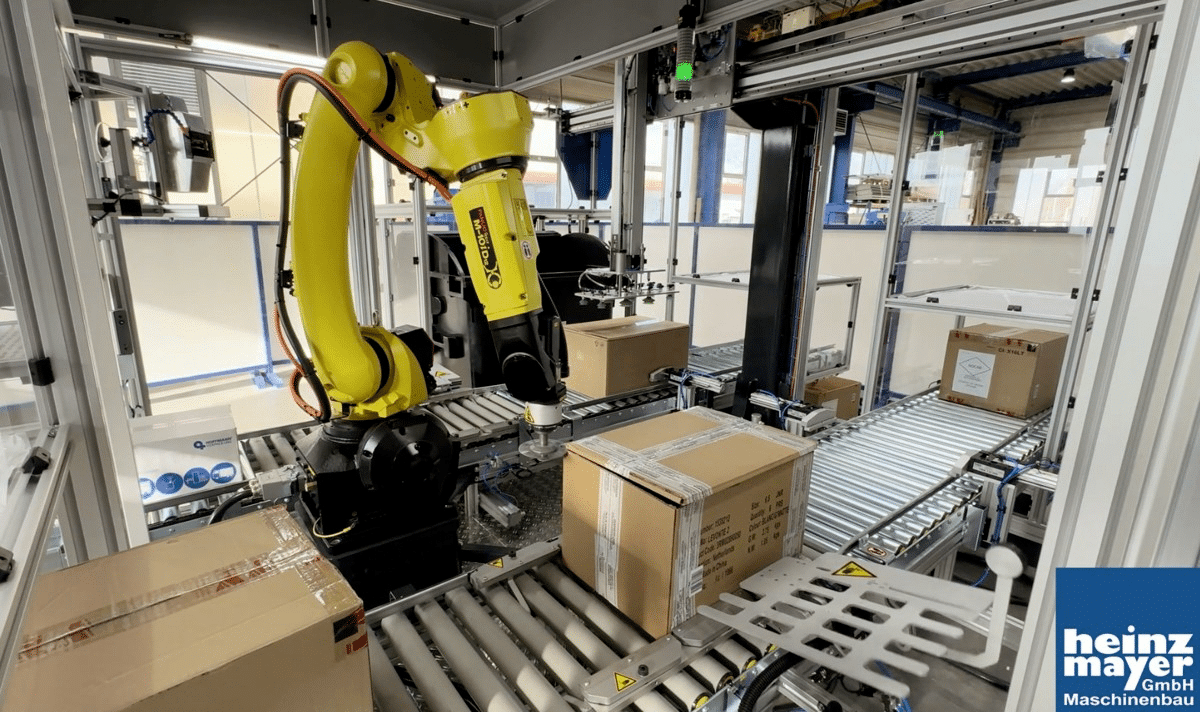
According to Raul Antolin of Modula Benelux, the fair remains an important time to make targeted contact with the right profiles. “People who attend there really come with a purpose. They invest the time to be there, so the conversations are very valuable and concrete about existing or future projects.”
Among the products presented at the booth was Modula's vertical elevator machines (VLM), the Flexibox-VLM for bins. Both systems automate storage and picking, with a focus on efficiency and throughput. In addition, the long-goods machine, an automated solution for storing long goods up to seven meters, was also highlighted as a first.
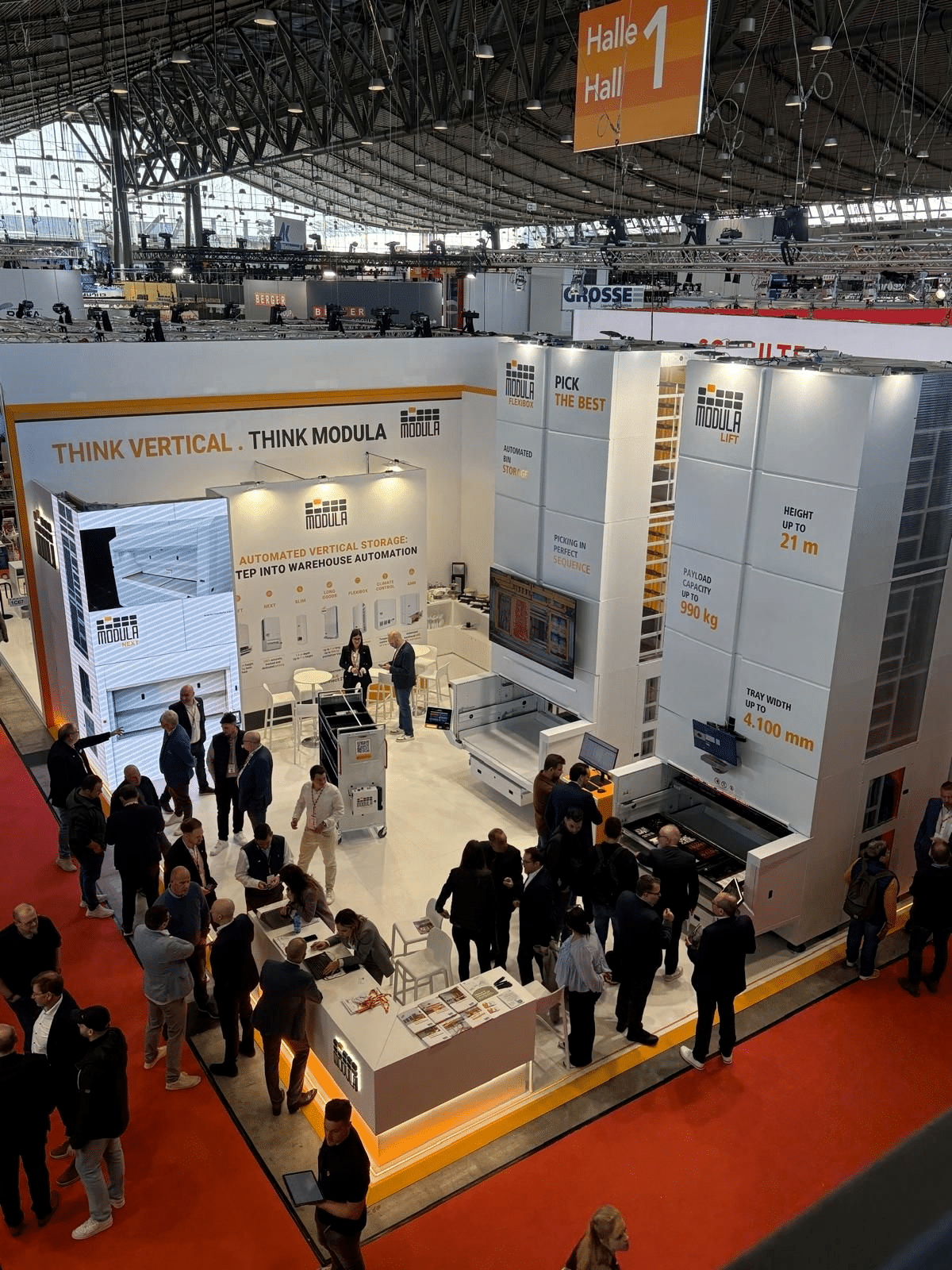
According to Raul, Modula's strength lies in combining reliable and proven technology with the optimization of the right software and solutions alongside the VLMs. “They are solid systems that we make smarter with options that are customized according to the purpose the customer needs,” he echoes. The combination of targeted visitors and practical solutions makes Modula look back positively on a successful edition.
What emerges from all these conversations is a clear picture: LogiMAT has become a platform where preparation, content and concrete projects take center stage.
Visitors come with more and more specific questions and clear needs. Exhibitors respond with solutions that are not only innovative, but also practical and scalable.
The common thread throughout the fair is clear: automation, flexibility and cooperation are the key to tomorrow's logistics. LogiMAT 2026 thus confirms its role not only as a meeting place, but above all as an engine for concrete progress in the sector.
■