warehouselogistiek.eu
EN

The platform for internal & external logistics, supply chain and automation
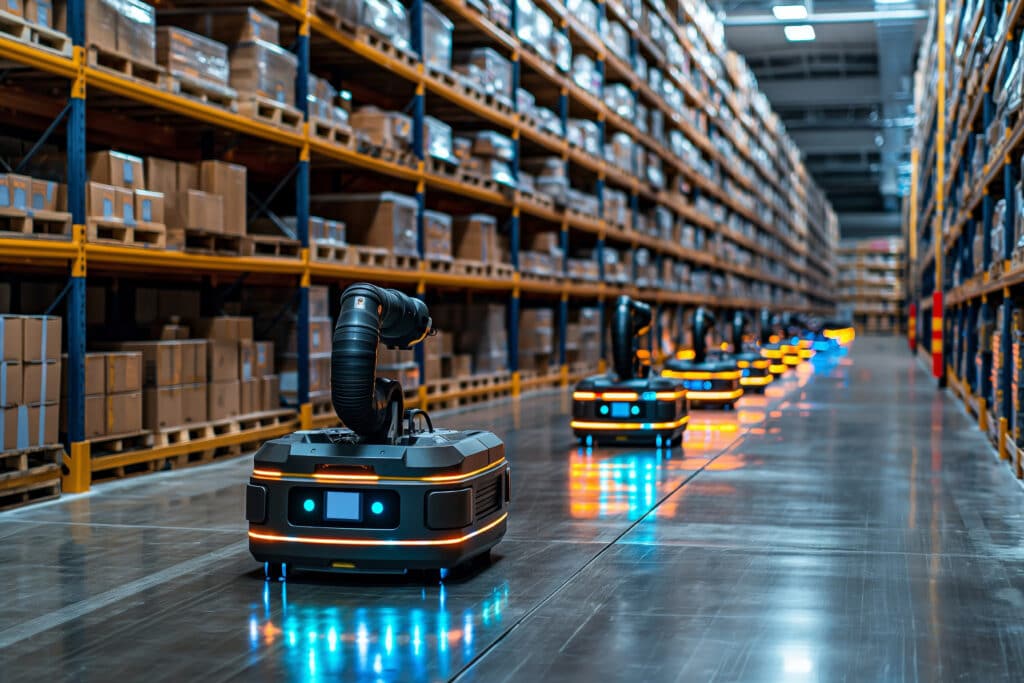
Warehouse automation is no longer a pipe dream. For many companies today, it is a concrete answer to rising order volumes, staff shortages and increasing expectations around speed, accuracy and flexibility.
As investment in warehouse automation continues to grow worldwide, more and more organizations are making the move from planning to implementation. But while the business case is often clear, implementation is rarely without challenges. Automation projects bring together multiple systems, vendors, stakeholders and operational dependencies. That makes success depend not only on the technology, but more importantly on how well the entire journey is handled.
So for logistics decision makers, the challenge lies not only in whether to automate, but more importantly, how to do so in a way that also pays off in the long run.
Based on experience with automation projects in various industries, we see eight elements that make the difference each time between a smooth journey and a difficult project.
1. Start with the problem, not the technology
A common mistake is starting from the solution rather than the challenge.
Before investment decisions are made, it must be clear exactly what one wants to improve. Is it capacity, personnel, picking efficiency, quality, ergonomics or throughput? In some cases, the solution does not even lie in automation. Process optimization, a better layout or adapted working methods can sometimes already make a big difference without heavy investments.
Strong projects start from an honest analysis of current bottlenecks and a clear, measurable definition of success.
2. Involve your WMS partner from the start
Warehouse automation is never just about technology, but about collaboration between systems.
The Warehouse Management System plays a central role in driving processes and connecting manual and automated flows. When the WMS partner is involved too late, problems often arise around responsibilities, data flows, interfaces and testing.
By bringing this partner to the table from the beginning, you create more alignment between suppliers and avoid rework later in the process.
3. Think about integration early
Integration is often the deciding factor in automation projects.
The WMS, ERP, Warehouse Control System (WCS) and other layers must work together as one. If integration is not considered until later, it often leads to fragmented logic, broken data streams and so-called ‘islands of automation’ - solutions that work separately but not together.
A clear integration strategy defines who manages what logic, how information is exchanged, how exceptions are handled and how the solution supports future changes.
4. Work clearly, but keep it flexible
In the specification phase, ambitions are translated into concrete choices.
Clarity is crucial. Unclear scope, vague responsibilities and limited documentation often cause delays, additional costs and changes later in the project. In addition to functional requirements, issues such as uptime, scalability and performance must also be clear.
At the same time, it is important not to go too far in customization. Too much customization makes it harder to adjust later. A modular approach, centered on configuration, offers more flexibility and makes future expansion easier.
5. See implementation as teamwork
During implementation, collaboration becomes at least as important as design.
Internal teams and external partners must remain well aligned. This requires clear agreements, regular coordination, shared follow-up and a structured approach to risks and changes.
An often underestimated factor is the role of end users. Superusers and operational teams often see practical bottlenecks that others miss. By involving them early, you increase both ease of use and acceptance.
6. Take commissioning seriously
The commissioning phase is when theory and practice come together.
This phase takes time. Solutions must be tested multiple times and systems must prove themselves under realistic conditions, including peak loads. Clear acceptance criteria are essential so that everyone has the same idea of when something ‘works.
When testing is curtailed because earlier phases drag out, problems often crop up later. Saving time on testing rarely means gaining time in the whole.
7. Go-live is not an end point
Go-live often feels like the finish line, but is actually the beginning of a new phase.
Even well-prepared projects face issues when they go live. They often disappear after an initial stabilization, only to reappear later as volumes rise and complexity increases.
Therefore, it is better to view go-live as a gradual process. Additional support, quick decision-making and operational preparedness remain essential even after go-live.
8. Keep improving after going live
The real value of automation comes after implementation.
Once the system is stable, operational data provides insight into new improvement opportunities. Think of bottlenecks, delays, plant utilization and disruptions in flows. This is where continuous improvement becomes crucial.
More and more companies are also using digital twins and simulations to test scenarios before making adjustments in the live environment. This helps mitigate risk and further optimize performance without disrupting operations.
In conclusion
Warehouse automation is not a purely technological project, but an operational change that requires clear choices, strong collaboration and realistic expectations.
Companies that are successful approach automation as a journey: they start with the right problem, involve the right partners in time, test thoroughly and continue to improve after going live.
Automation can have a major impact on efficiency, scalability and resilience, but only when the entire operation is viewed and managed as one.
The insights in this article are based on Consafe Logistics' latest guide to warehouse automation.
Read the full eBook: The 8 Steps to Successful Warehouse Automation Implementation [link].
Neem dan rechtstreeks contact op met Consafe Logistics B.V..
 Contact opnemen
Consafe Logistics is a software development company. We design products and technologies that make warehouse operations of logistics and supply chain companies smarter, more effective, and thus more sustainable. The Consafe Logistics Group has 450+ employees who support our global clients from six European countries - Denmark, Finland, The Netherlands, Norway, Poland, and Sweden. Our [...]
Bekijk Bedrijfsprofiel