warehouselogistiek.eu
EN

The platform for internal & external logistics, supply chain and automation
The geopolitical map looks fundamentally different today than it did five years ago. Trade tensions, armed conflicts and protectionism are redrawing the rules of the game. For logistics managers in the Benelux, the question is no longer whether these developments will affect them, but how they can increase their agility. The combination of U.S. trade tariffs, the conflict in Iran and ongoing disruptions on global shipping routes is putting unprecedented pressure on logistics operations.
Containers are jammed at ports. Inventories spike or drop suddenly. Insurance premiums for routes along the Middle East are skyrocketing. And bottlenecks are forming at the ports of Rotterdam and Antwerp, which are spilling over into the entire European supply chain.
We spoke with Didier Weerts, CEO of Weerts Supply Chain, a Belgian logistics provider specialized in regional warehousing, transport and distribution optimization in the Benelux and Europe. He notices the pressure daily with his customers.
“Companies are actively looking for alternative suppliers to minimize the impact of tariffs,” says Weerts. “That leads to changes in existing logistics networks, but also to sudden spikes or sharp drops in warehouse handling activity. The volatility is enormous.”

Weerts' experience is not an isolated one. A Maersk study of more than 900 European supply chain professionals (September 2025) found that 78% of those surveyed expect geopolitics, trade tariffs and international trade policy to have at least a moderate impact on their operations over the next 12 to 24 months. Nearly 1 in 2 say they are very or extremely concerned about the geopolitical environment.
The tariff pressure is particularly concrete in this regard: Maersk data shows that shortly after the announcement of the US tariff package on April 2, 2025, companies paid an average of 54% tariff surcharge on US imports. That is no longer abstract trade policy. That's a direct cost on the invoice.
In response, meanwhile, 3 in 4 European companies are actively considering diversifying their suppliers, and as many are already sourcing from multiple geographic regions or planning to do so.
The mechanisms are now well known, but their intensity is increasing.
Sudden tariff changes make long-term planning in global chains particularly difficult. Trade tensions between the U.S., China and Europe have demonstrated this time and again in recent years. What is a cost-effective choice today may turn out to be an expensive mistake tomorrow.
The conflict in Iran has added a new dimension. Shipping companies are temporarily diverting via the Cape of Good Hope, causing two weeks of additional travel time and higher fuel costs. Chemical companies and steelmakers are already passing on surcharges of up to 30% to customers. The European Central Bank is warning of stagflation, with Germany and the Netherlands identified as particularly vulnerable.
“Almost all sectors are under strong pressure,” says Weerts. “Our customers have to adapt permanently and deal with the situation creatively. This pressure also translates into strong price pressure on logistics costs, both with existing and new customers.”
Companies looking to rethink their supply chain face a fundamental choice between two complementary strategies. They are similar but substantially different.
Track 1 is nearshoring: moving production or sourcing from distant regions (China, Southeast Asia) to nearby countries such as Poland, Turkey or Morocco. The logic is clear: shorter chains, less exposure to geopolitical shocks, faster response times.
Track 2 is regional network optimization: not where you produce, but where you place your warehouse or distribution platform relative to your actual distribution needs. A company that produces in the Benelux and has its customers in Western Europe does not need to have its distribution center in Eastern Europe. Yet the question of where it is best located is one that many companies have never answered analytically.
Both tracks deserve attention. Both are underestimated, albeit for different reasons.
Nearshoring is gaining strong popularity, and rightly so. But the business case is more complex than it appears on paper. Didier Weerts sees a number of persistent misconceptions recurring among companies considering the move.
“The most persistent is that lower labor costs remain stable,” he says. “In Romania and Bulgaria, labor costs are already increasing by more than 10 percent per year. Business cases built on a static labor cost gap are quickly becoming obsolete.”
In addition, the impact of cultural differences is greatly underestimated. Less team spirit, limited customer focus and communication problems are common complaints. To ensure profitable operation, management there is still often filled with Western European management: expensive, and counterproductive.
Perhaps the most fundamental misconception is the most subtle. “Many companies treat nearshoring as a logistics decision, when in reality it is an organization-wide transformation,” states Weerts. “Those who treat it purely as a location decision miss the legal, cultural, personnel and logistical dimensions, each of which requires its own lead time and investments.”
That doesn't mean: don't do it. It means: do it consciously, with a realistic time frame and proper preparation.
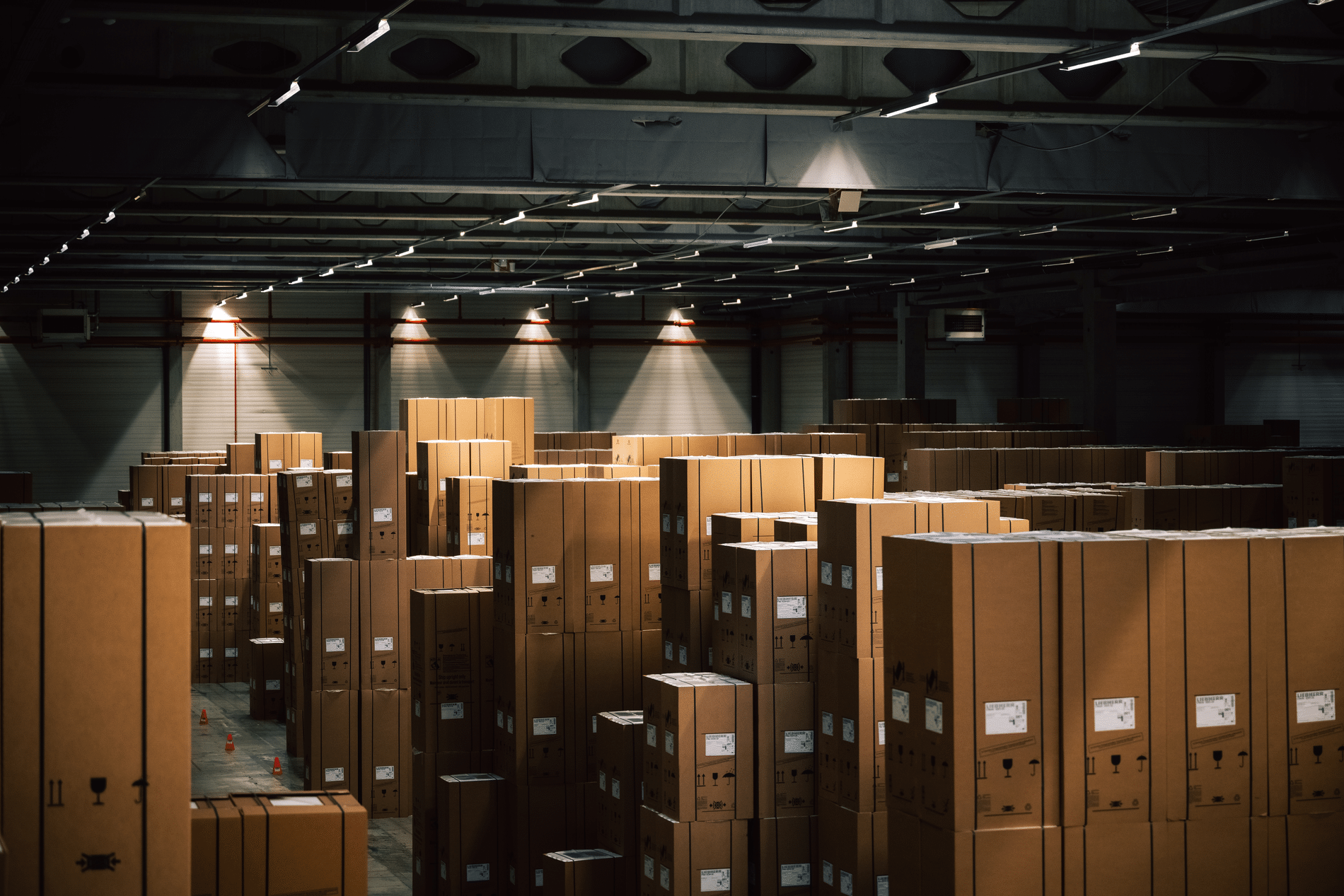
In addition to nearshoring, there is a second, often underrated strategy that delivers faster results and starts closer to home: optimizing your existing logistics network based on your actual distribution needs.
The central question here is simple but surprisingly rarely asked: is my warehouse in the best geographical location for my customers?
The tool to answer that question is network analysis: a data-driven study that determines the optimal location for a warehouse or distribution platform based on distribution volumes, delivery addresses and delivery frequencies. “Companies intuitively wish to have their distribution center as close to their production site as possible,” says Weerts. “In practice, however, we see that it is often much cheaper and more optimal to locate the distribution center geographically elsewhere. Precise analyses help companies to concretely map out the impact of the right choice and thus minimize the number of miles driven, the costs and the carbon footprint.”
This is precisely the expertise where regional logistics partners make the difference. A player who knows the local infrastructure, the multimodal hubs (inland shipping, rail, road) and the logistics reality of the Benelux from the inside, offers more value here than a global network that is a little bit everywhere.
“Many companies are opting for a hybrid model,” says Weerts. “A global player for the main flows, complemented by a regional partner for last-mile complexity or specific markets. So the question is less ‘which one is better’ and more ‘for which part of my chain does which type of partner fit?'”
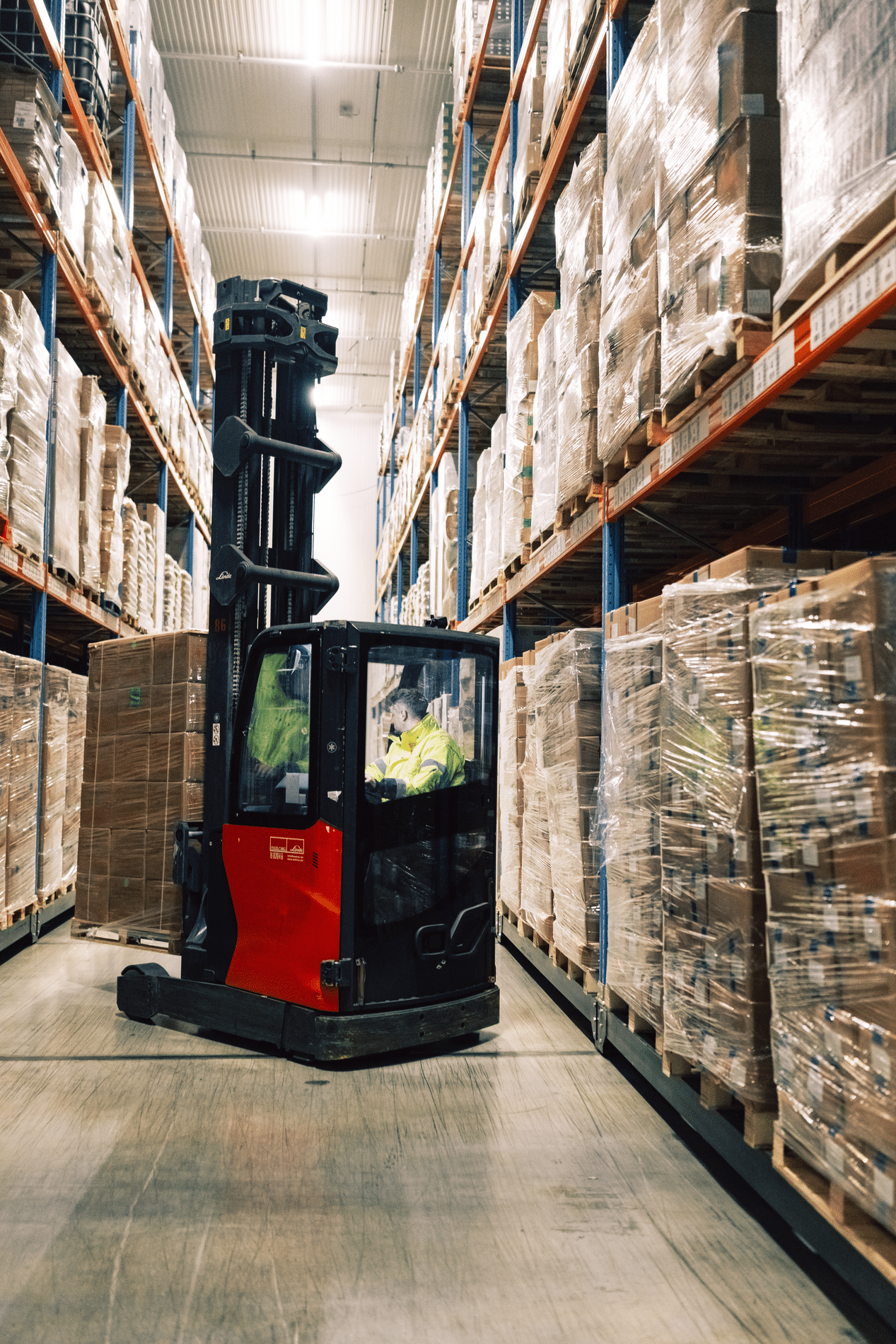
What makes the current situation fundamentally different from previous moments of crisis is the simultaneity of disruptions. Tariff measures, conflict in the Middle East and shifting trade flows affect a chain not separately but simultaneously. Those who have optimized their operations for one stable scenario are now structurally vulnerable.
For supply chain managers who hesitate, Weerts has a clear argument. “Companies compare the investment cost of change to the status quo. But the status quo no longer exists. The cost of being ‘undecided’ is often much higher than the cost of taking a calculated risk.”
Complete regionalization need not be the goal here. Even a limited step, a second supplier closer to home, a warehouse in a better location, an alternate route for one product line, lowers vulnerability substantially.
“Start small, but start,” says Weerts. “Companies that are regionalizing now are building knowledge that cannot be copied quickly. Those who wait until the situation is ‘clearer’ are stepping into a market where the best partners, locations and capacity are already occupied.”
The most successful companies in the coming years will not be the largest, but the most agile.