[00:02] Warehouse Automation and Implementation
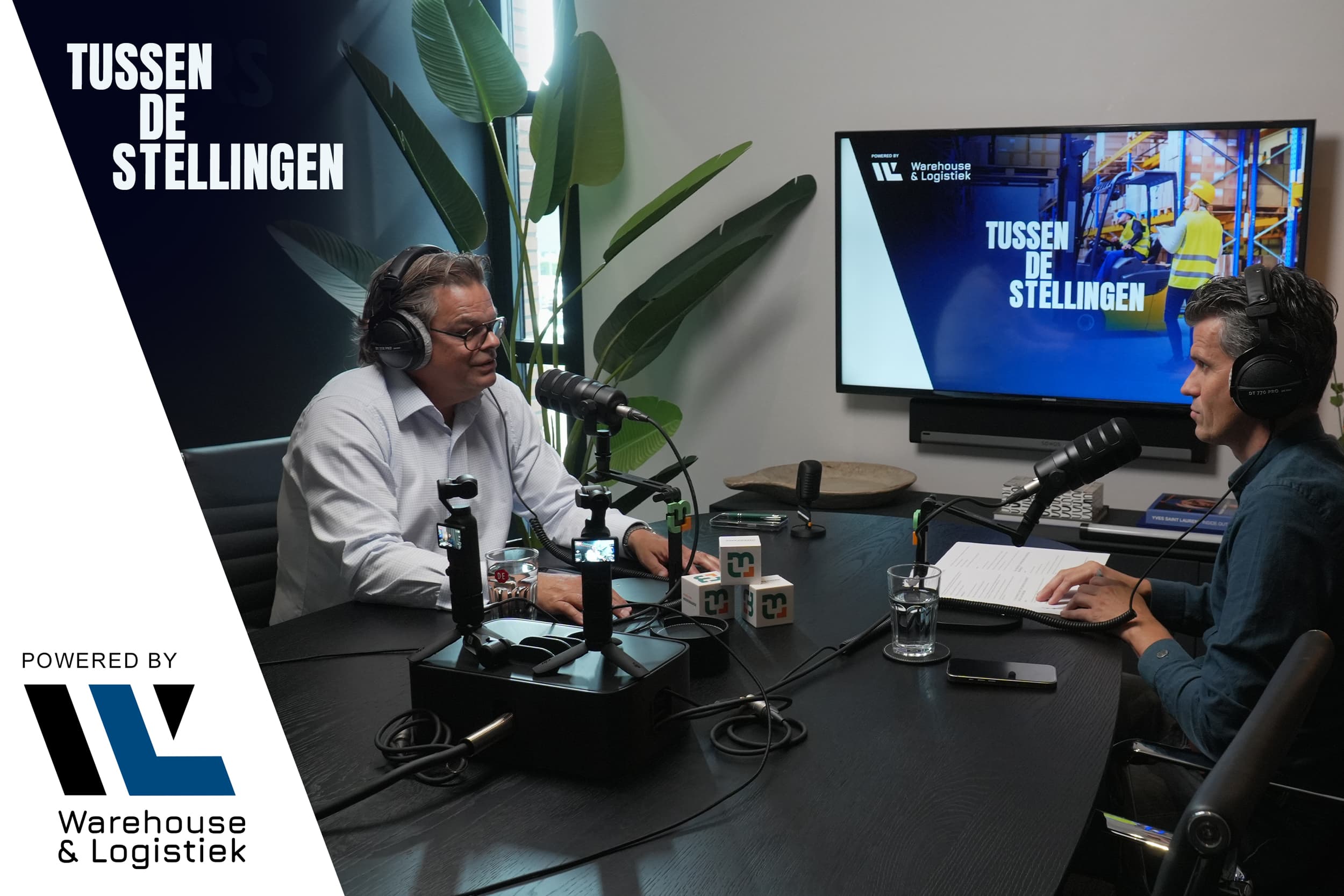
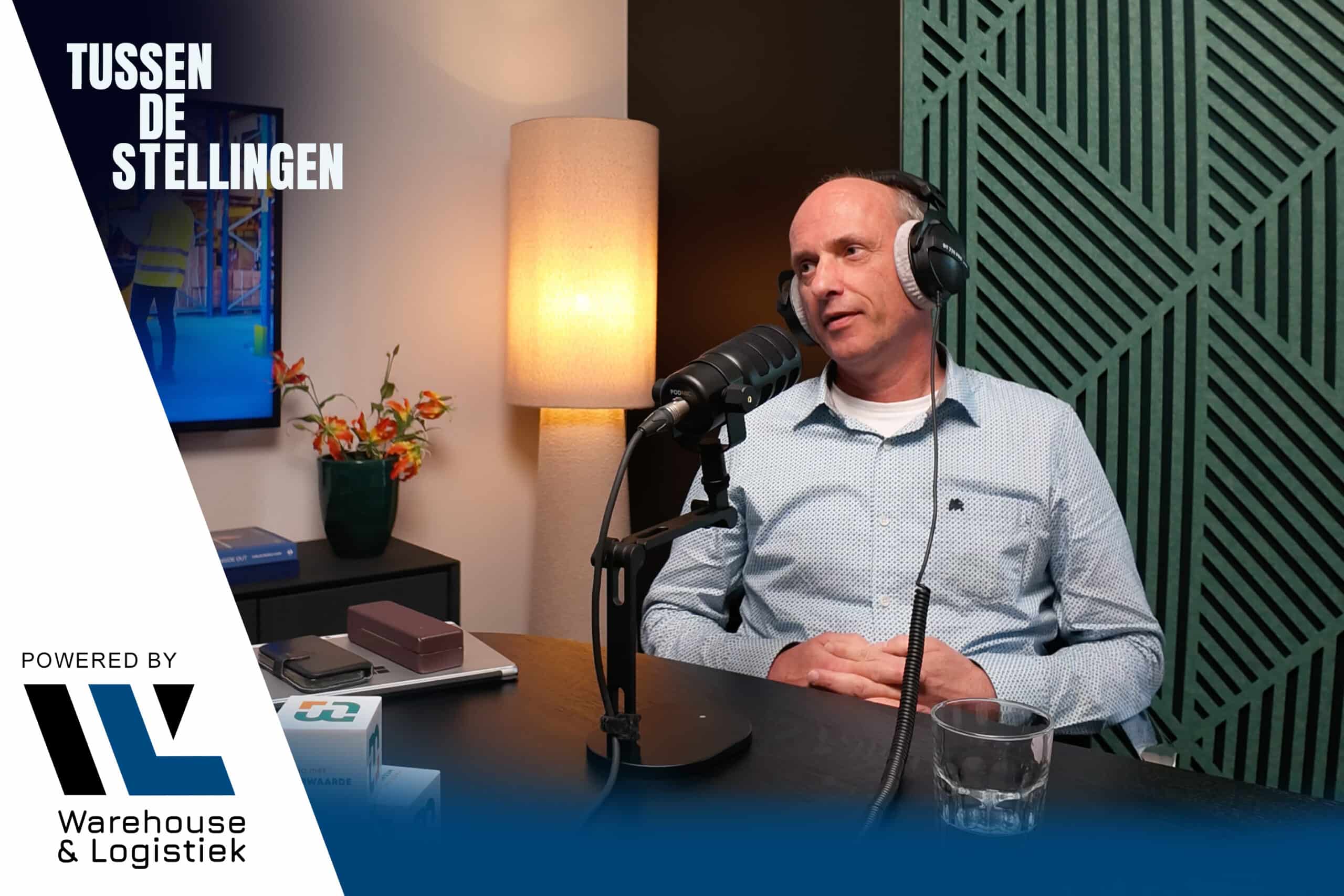
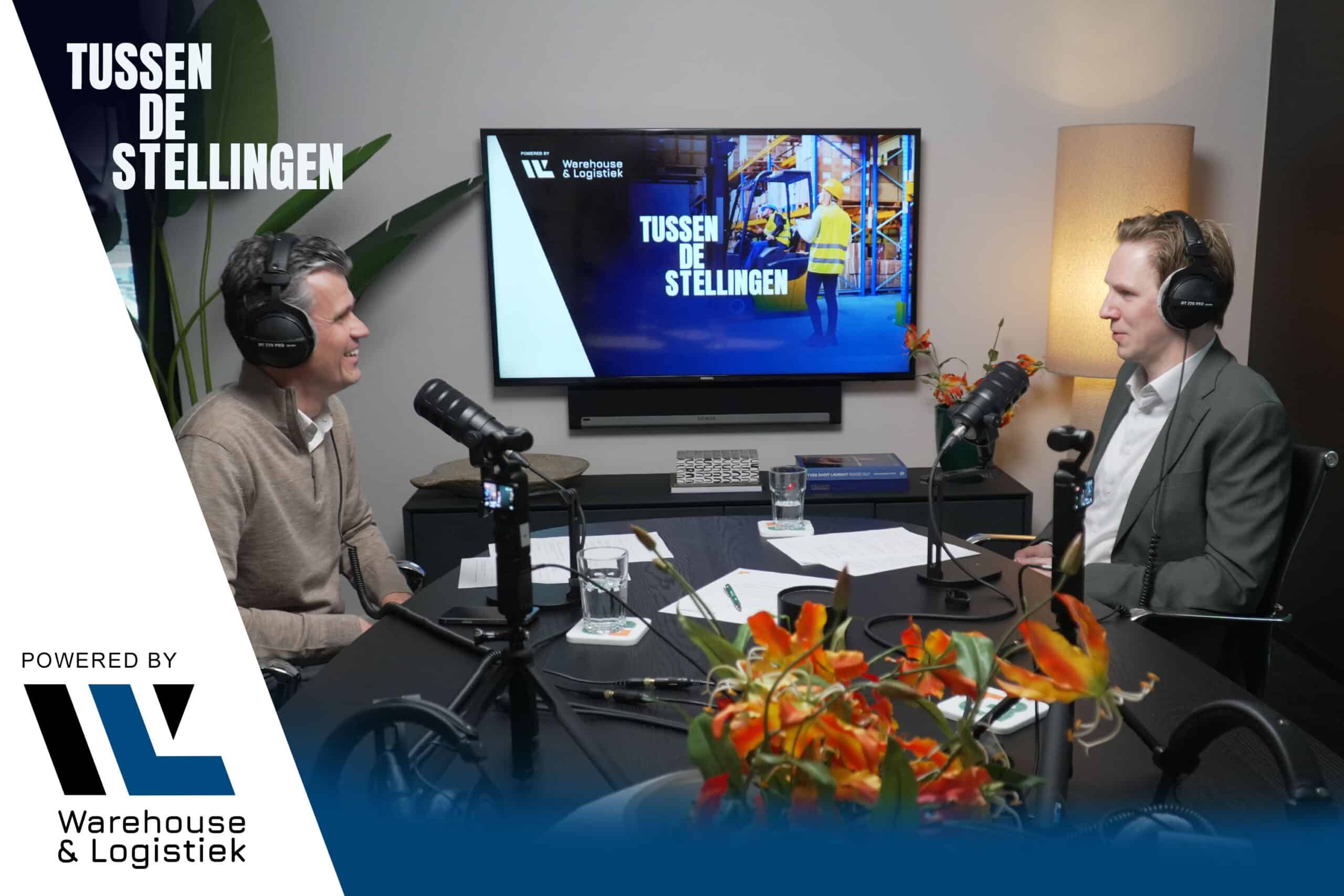
Roel van Gils: Welcome to another new episode of “Tussen de Stellingen” from Warehouse and Logistics Benelux. Today we’re going to talk about warehouse automation: robotic arms, mobile robots, and automated storage systems. Warehouses where goods find their way almost entirely on their own. It might sound like something only the very largest players in logistics would use. But is that perception still accurate? Joining me at the table is Richard Hagen Versteeg from Element Logic. Richard, welcome. Please introduce yourself if you’d like.
Richard Hagen Versteeg: Thank you. Yes, my name is Richard Hagen Versteeg. I’m 57 years old and serve as Business Development Director, responsible for business development and a member of the management team at Element Logic Benelux. That’s our office for the Netherlands, Belgium, and Luxembourg, located in Bemmel between Nijmegen and Arnhem. That’s where we’re based. Our clients are spread out from the Wadden Sea to southern Belgium.
Roel van Gils: The entire Benelux region, then?
Richard Hagen Versteeg: The entire Benelux region, yes.
[00:53] The Origins of Element Logic
Roel van Gils: Let's take a look at Element Logic. I believe the company has been around since 1985.
Richard Hagen Versteeg: Yes, that’s right. Element Logic was founded in 1985. It developed software for warehouses—nothing too advanced. And at the beginning of this century, around 2002 or 2003, the founders—it’s a Norwegian company by origin—came into contact with the inventors and founders of AutoStore. What we now know as AutoStore: a robotic storage system. And they set out to develop the software for it, handle installations, manage projects, and also become the distribution channel for sales. That’s how it all started just under 25 years ago. First in Norway, then more extensively across Scandinavia. And from there, it spread around the world.
[01:41] Branch in the Benelux
Roel van Gils: And since when has there been a permanent office in the Benelux?
Richard Hagen Versteeg: The Benelux branch was established about six years ago. We saw an increase in market demand. And based on that strategy—I wasn’t part of it at the time—we decided to open branches in Europe from our base in Norway.
Roel van Gils: And quite successfully, I gather? Because you’ve grown significantly in recent years as well, haven’t you?
Richard Hagen Versteeg: We’ve certainly grown significantly. We currently have more than 30 installations in the Benelux. And I’m talking about actual installations with an AutoStore as the central solution. And everything surrounding them—all kinds of related technology in the areas of conveyor systems, packaging machines, and other robotic applications. And, of course, an overarching software platform.
[02:24] Position as an AutoStore Distributor
Roel van Gils: Because you mentioned that it’s also one of the largest distributors of AutoStore systems worldwide, right?
Richard Hagen Versteeg: We are one of AutoStore’s largest distributors worldwide. I believe there are about ten of them in the world. I think we hold a significant market position here in the Benelux market—and globally as well.
Roel van Gils: What is it that gives you such a dominant position in that particular area?
Richard Hagen Versteeg: Definitely the origin. We were the first. So, as I said, we started that around 2003. We were the first. Globally, we have the very largest facility in existence, with more than a million bins inside. But I think the added value lies not only in those kinds of practical matters, but also—and this is actually the main focus—in understanding: what are the customer’s actual processes, and how will they future-proof their operations? And that’s more than just proposing an AutoStore. It’s really about looking at the overall concept. How can a customer grow over the next 5 or 15 years within the confines of their current facility or, potentially, in a new building? And how can we apply all kinds of automation concepts to that?
[03:26] Target Audience for Automation
Roel van Gils: Yes, we might come back to that later, actually. So, regarding your role as a system integrator. You mentioned the customer—that’s obviously a very broad category, ranging from online retailers to big players like bol.com. What do you focus on?
Richard Hagen Versteeg: We actually focus on the mid-market and high-end segments. So our clients are very large global players in the 3PL market. But they also include major companies in fashion, spare parts, and the automotive industry. So, all kinds of companies of that size where automation comes into play. The threshold for implementing automation has dropped significantly in recent years. It’s within reach for all kinds of companies—including those that might not consider themselves very large yet but are actually capable of achieving full automation with certain investments.
[04:19] Automation Is Becoming More Accessible
Roel van Gils: Because what's the reason for that? Have the costs been reduced?
Richard Hagen Versteeg: Well, that’s true, too. Technology has become a bit more mainstream. It’s accessible to medium-sized companies as well. You see that, too, but it’s also driven by the need to grow. The Netherlands is, of course, truly a distribution hub—a logistics hub in Europe and perhaps even the world. And we’re limited by space, so we have to build up high. Well, that quickly leads you to solutions like these. And yes, you have to, because otherwise, as a company, you probably won’t be able to grow sustainably over the next 5, 10, or 15 years.
[04:54] When Automation Becomes Attractive
Roel van Gils: And just to give an example, at what revenue level or volume does it become worthwhile? Can you put some numbers on that?
Richard Hagen Versteeg: Whether you’re selling cars or small items, it makes quite a difference. But if you, let’s say, have to start fulfilling 500 or 1,000 orders a day, then you might want to start considering investing in such solutions and taking steps toward automation.
Roel van Gils: This might be stating the obvious, but what are the main benefits that an entrepreneur like that experiences?
Richard Hagen Versteeg: Entrepreneurs do indeed enjoy many benefits. We store the items in containers, totes, bins—whatever you want to call them. This ensures that your inventory is highly compacted. The idea used to be: we’re moving from a warehouse—which is basically just a space filled with a lot of air—to a warehouse. So we compress it. Those containers are stacked on top of each other—up to 16 high, if you like. That saves a lot of space. You no longer have to walk 5, 10, or 15 kilometers a day to pick goods. So your employees can simply stay in their spots. And they can pick items very efficiently. You don’t run the risk of them grabbing the wrong items. Because the correct item is presented to them. So that’s more efficient.
Roel van Gils: The margin of error is also decreasing.
Richard Hagen Versteeg: The margin of error drops dramatically. Productivity increases dramatically. Yes, and those are, of course, all very appealing factors if you want to further automate your logistics.
[06:19] Making the Most of Your Space
Roel van Gils: And you can go up high, too?
Richard Hagen Versteeg: Yes, you can indeed stack them vertically. So the bins are stacked on top of each other. The bins are actually… It’s an AutoStore system. That’s really the core of one of our solutions. We integrate all kinds of other robotic systems around it. Stacked on top of each other. A grid is built around them. Those bins can be stacked to a height of over six meters. So that allows you to make very efficient use of your warehouse space.
Roel van Gils: And AutoStore is also ideal for existing buildings, isn't it?
Richard Hagen Versteeg: Yes, you can actually configure an AutoStore solution however you want. So you can configure it to go around corners, around posts, and around pillars. You tailor it to fit. It’s suitable for existing buildings, even older ones. And of course, for new construction, you can use it to create highly efficient designs and ensure optimal use of your space.
Roel van Gils: Why is that particularly true for the Dutch market? Does it offer that much potential?
Richard Hagen Versteeg: The Netherlands is a small country, and we’re very densely populated. So we don’t have much space. And one of the few ways to use that space more efficiently is to go up into the air. And that’s exactly what we’re seeing happen.
[07:23] From AutoStore to System Integrator
Roel van Gils: People mainly know you for your AutoStore solutions. But as you mentioned at the beginning, you do much more than that.
Richard Hagen Versteeg: Yes, Element Logic originally started out primarily focused on AutoStore solutions. But in the meantime, we’ve also evolved into a medium- to large-scale systems integrator. So we develop concepts that very often center around AutoStore. But we incorporate all kinds of technologies and solutions around it to deliver a comprehensive solution. This includes case erecting machines, case sealing machines, robotic picking arms, and AMRs to move boxes from A to B. And, of course, a great deal of conveyor technology—conveyor belts—to move goods from point A to point B.
Roel van Gils: So you're basically a systems integrator?
Richard Hagen Versteeg: We are a systems integrator.
[08:14] Concepts for the client
Roel van Gils: And how do you determine which combination is right for a customer?
Richard Hagen Versteeg: Yes, you actually take a closer look. Then we essentially take on the role of a consulting firm. And while we’re not a consulting firm, we are a company with consultants. So we help think through: What are the concepts, problems, and challenges the client is facing—both now and in the coming years? And how can we come up with a sustainable solution for those? And in doing so, all kinds of different technologies come into play. And in one situation, different solutions are necessary and relevant than in others. And we actually just figure that out at the drawing board—together with the client, together with their processes, together with their employees, their people. Because they’re at the heart of it all. Ultimately, they’re the ones who have to do the work.
[08:55] Design and Implementation
Roel van Gils: And do you guys also handle the design?
Richard Hagen Versteeg: We handle the entire design process. And we do it pretty quickly, too. We create all kinds of 3D-style visualizations. This makes things very concrete for potential customers and business partners. They can literally see what it will look like in their warehouse in eight to 18 months or so. And they can approve that concept. Then we ensure that all subcontractors and suppliers of component technologies are brought on board. And we bear the ultimate responsibility as the system integrator.
Roel van Gils: Well, yes, but then you're almost literally sitting in the shoes of a logistics consultant.
Richard Hagen Versteeg: A kind of advisor. We’re also a kind of consultant. We’re not consultants in the same sense as the big consulting firms—they start from scratch. But if we see a warehouse somewhere that presents a logistical challenge, we’ll go to great lengths to come up with excellent solutions for it.
[09:53] Post-Delivery Service
Roel van Gils: Yes, and it doesn't stop at delivery, because I understand that you also have your own technicians and service departments.
Richard Hagen Versteeg: That’s right. We simply have our own staff on the road who can be on site within hours in the event of malfunctions or scheduled maintenance. In an emergency, of course, they’ll be there very quickly. Yes, they’re our own people. They also speak the same language as our customers—literally. So that includes Belgium, too. And of course, we do that worldwide. It also gives people a familiar face. So if something goes wrong, we’re right there. We’re available 24/7, of course. But our staff are also available, and they’re in the right place when it’s needed.
[10:36] Triggers for Automation
Roel van Gils: When should you actually start automating? What’s the trigger that makes you think, “Hey, maybe I should get in touch with Element Logic”?
Richard Hagen Versteeg: One of the triggers is, of course, that there are multiple triggers. It could be that you’re running out of space. It could be that you can no longer meet your volume targets within the existing time frames. It could be that your number of items is getting too large or your inventory is getting too big. That’s when you need to start automating. Once you’ve reached a certain point, you have to start automating, because you can no longer get the work done on time with just people. Or within your warehouse’s current capacity. That’s when you have to start automating.
[11:13] Growing Need for Automation
Roel van Gils: And what kinds of signs do you see at companies like that?
Richard Hagen Versteeg: We’re seeing signs that automation has become accessible. And it has become very accessible to a great many companies—not just the large national or global players, but also a huge number of companies that we may not all recognize by name today, but which do handle very large order volumes. There has also been a shift from brick-and-mortar stores to e-commerce. In addition, you see that in the B2B world—the business-to-business world—everything is now sent exclusively online. Well, those volumes have grown so large that all those freight carriers, courier companies, and logistics service providers can barely handle them anymore. So you have to start automating. Because in order to have a package in your mailbox the next day—which is what we all want so much—it really has to be handed over to carriers by 10:00 or 11:00 p.m., or even 1:00 or 2:00 a.m., to get it to the customer on time.
[12:13] Start automating early
Roel van Gils: Yes, once you've reached that point, it's actually already too late to think about automation, of course.
Richard Hagen Versteeg: Well, you often see that it’s heading toward peak season, which in our region traditionally starts around mid-October for most companies. That’s coming up. Yes, it really depends on what you do. If you sell air conditioning, then no. Or motorcycle parts. But traditionally, for many sectors, it starts sometime in October. And that’s when you see companies often reaching the limits of their growth. And that they can no longer guarantee, for example, next-day or second-day delivery. And that’s why you also see increased demand for automation and solutions toward the end of the year.
Roel van Gils: Anyway, of course that won't be in the paper the next day.
Richard Hagen Versteeg: No, of course not. So that’s just a process that takes between six and 18 months. Yeah, a year and a half is still a pretty quick turnaround. Implementation isn’t a walk in the park. It’s physical work. Sure, it can be done in a matter of months. But then we’re quickly talking about three, four, or six months again.
Roel van Gils: Yes, but anyway, there's a preparation process that comes before that.
Richard Hagen Versteeg: Yes, of course that involves the entire process of procurement and specification, followed by testing and installation. So it’s a long process. As you say, it easily takes about 18 months from the initial idea to the…
Roel van Gils: So, taking action in a timely manner, in that sense.
Richard Hagen Versteeg: Acting in a timely manner, yes.
[13:36] Element Logic at Logistica
Roel van Gils: Let’s talk a little more about Logistica. You’ll be there this year, too—the trade show. I understand you’re pulling out all the stops.
Richard Hagen Versteeg: That’s exactly what we’re going to do. Logistica is, of course, an important event for the Dutch and Benelux markets. A bit of the UK and a bit of England. And we often get some visitors from Germany as well. So it’s an important event for us. We’re going to go all out there. We have a fantastic interactive 3D video wall where people can actually experience a bit of robotics—digitally. Yes, completely digitally.
Roel van Gils: So you guys aren't bringing any machines, then?
Richard Hagen Versteeg: No, we will be setting up a robot. But people are already familiar with robots. So it’s more about the experience and the conceptual approach—where we stand and where developments are headed in the world of warehouse automation.
[14:30] Experience at the trade show booth
Roel van Gils: And what's the idea behind that spectacular presentation?
Richard Hagen Versteeg: Yes, the trade show takes place in the two halls of the Jaarbeurs. Traditionally, companies like ours are located in the back hall. You have to get people to come there. You want their attention. You want to make sure they engage with you. That they take a look at who you are. What kind of solutions you offer. What kind of technology you have available. They want to look you in the eye. Because they want to see who they’re investing in. What kind of companies are they? Who are the people in the organization? Sure, we can write that down. But personal interaction is extremely important. And for me, too—given my role—that’s obviously very important. And based on my experience at Logistica, that’s exactly what we’re going to seek out and find.
[15:23] Target Audience and Specialists at the Booth
Roel van Gils: So, would the focus be on that specific target group there as well?
Richard Hagen Versteeg: Yes, the focus is on… having warehouse space and having to process a large number of orders on a daily or weekly basis, which then need to be shipped within Europe or around the world. That’s also possible, depending on the niche they’re in. And those companies come together—at Element Logic, but also with our colleagues, of course—to see what the latest technological developments are.
Roel van Gils: What else can visitors expect at your booth?
Richard Hagen Versteeg: Fresh coffee. And tea. No, we have a team of true specialists there. So, real logistics specialists or data analysts—we often have them available, too. That means people can actually have in-depth discussions about the feasibility of automating their operations. Just as we do—and many others do as well. So it’s not just a sales pitch we’re putting out there. But we have experts available to really take a close look at your specific operations. That’s how I see it.
[16:33] First Look at Automation Options
Roel van Gils: And that gives them an idea of what's possible.
Richard Hagen Versteeg: If potential clients know, have, or can provide some basic data on how volume flows work, how the processes generally work, and how my order rules and profiles are structured, then—based on our extensive knowledge and experience—we can actually very quickly just say: well, solutions could be conceptually developed in that way—and in which direction things could go.
[17:07] Dark warehousing
Roel van Gils: Well, that's great, of course. Looking ahead ten—or maybe five—years, what do you think a warehouse will look like?
Richard Hagen Versteeg: Yes, opinions on that vary quite a bit. I think it’s heading in the direction of what I and others call “dark warehousing.” So eventually, everything within companies will be automated, and “dark” means there will be no one there anymore—no human interaction, no people—which means we can turn off the lights, and that’s where the term “dark” comes from. The influence of AI, robotics, and computing power is becoming increasingly organized. So we can unload goods automatically from trucks, and we can store them automatically. We can further automate order picking to a large extent over the next 5 to 10 years using robotic arms—specifically, six-axis robotic arms. And with those, you can also simply pack the goods automatically. Technologies on the market can handle preparing goods for transport as well as reloading them. So ultimately, it will become an operation in which human activity is reduced to a minimum, and hopefully we’ll be able to turn off the lights.
[18:18] The Warehouse as an Automated System
Roel van Gils: So, in that sense, the warehouse will become one big robot?
Richard Hagen Versteeg: Yes, the warehouse will be fully automated through the use of a variety of robotic technologies, which together essentially form an automated system.
Roel van Gils: Yes, what role do humans even play anymore?
Richard Hagen Versteeg: A monitoring function, a supervisory function. But it’s not as if we ultimately need people to put goods back into the boxes. Because we can leave that to systems. We don’t need people for that. And those workers are also becoming increasingly scarce in the Dutch and Belgian markets. So I think automating that is a good thing.
[19:00] How Close Are We to Full Automation?
Roel van Gils: But do you expect us to be there in just five years?
Richard Hagen Versteeg: Yes, we're almost there. There are already a great many surgeries that require almost no human intervention.
Roel van Gils: In the Netherlands, too?
Richard Hagen Versteeg: In the Benelux as well. And that works especially well if you have a fairly homogeneous operation with similar products and similar processes. There, you can already see that you’re able to automate up to nearly 100%. That will continue to grow much further in the coming years, of course. But we can see that this trend has already begun. It started nearly ten years ago.
[19:35] AI and Self-Learning Systems
Roel van Gils: And which developments do you find most interesting in that regard?
Richard Hagen Versteeg: The influence of all kinds of AI technologies—artificial intelligence—plays an extremely important role. As a result, we are increasingly able to build systems that are self-learning and capable of self-improvement.
Roel van Gils: Could you give a specific example of that?
Richard Hagen Versteeg: As you can see, especially when it comes to robotic picking arms, the big challenge is this: if you have a bunch of identical boxes measuring 10 by 10 by 10 centimeters, each containing a Rubik’s Cube, you can pick them very easily using automation. But what if you have a fairly diverse flow of goods? Then you’ll need technology that can adapt to that flow. How can the system correctly pack the right goods into the right box at the right time? And that’s where artificial intelligence plays an exceptionally important role.
[20:27] Collaboration with Technology Partners
Roel van Gils: And in a warehouse like that, can you build that entirely on your own as Element Logic? Or are you also dependent on…
Richard Hagen Versteeg: Well, that’s done exclusively through all kinds of subcontractors. So, as a systems integrator, you have a core technology. And you source all other technological developments and technologies. It’s up to us to use software to connect everything together so that the whole process runs efficiently. So, as Element Logic, we’re capable of organizing everything ourselves, coming up with ideas, developing them conceptually, and actually implementing them. But of course, we need a lot of partners to provide all the individual technology components. As an organization, though, we’re becoming increasingly capable of doing that.
[21:13] Automation for Mid-Sized Businesses
Roel van Gils: So you don't actually have to be bol.com or a major player to start thinking about automation.
Richard Hagen Versteeg: No, of course companies like bol.com are interesting. But you also see companies that can automate a very large portion of their operations with limited investment. When it comes to advanced integration software, they can already take that step. And we’re talking about investments in the range of a few million—it’s already feasible.
[21:51] Growth means automation
Roel van Gils: So what should that entrepreneur look at differently tomorrow? How can you convince him?
Richard Hagen Versteeg: That entrepreneur needs to figure out where he wants to go and where he thinks the opportunities for growth lie. And if that entrepreneur sees that he can grow, then he needs to start automating. Because he can’t keep doing it all manually with his staff. People get sick, people are absent, people are simply not available. That’s when you need to start automating. And if that entrepreneur has a sound business plan and thinks he wants to grow in the coming years within his current environment, at his current location, or possibly in new warehouses to be acquired, then he needs to start automating.
[22:28] Contact and Logistica
Roel van Gils: And then you can contact…
Richard Hagen Versteeg: In that case, you can call Richard Hagen Versteeg at Element Logic, among others.
Roel van Gils: Or, of course, visit Logistica.
Richard Hagen Versteeg: We have a prominent location in Hall 2.
Roel van Gils: November 2 through 5, Jaarbeurs Utrecht.
Richard Hagen Versteeg: Jaarbeurs Utrecht, November 2 through 5. Easily accessible by public transportation.
[22:49] Interactive video wall
Roel van Gils: Finally, here's a scoop.
Richard Hagen Versteeg: Well, we have this amazing video wall that’s very interactive. It actually feels as if you’re being lifted up by a robotic arm. That’s pretty exciting—it doesn’t happen very often. But we do think it’s quite original to give people an experience like that.
[23:09] Closing
Roel van Gils: Well, look at that. Richard, thank you very much for your time. And listeners, maybe we'll see you at the trade show.
Richard Hagen Versteeg: Thank you very much, Roel. Thank you.