warehouselogistiek.eu
EN

The platform for internal & external logistics, supply chain and automation
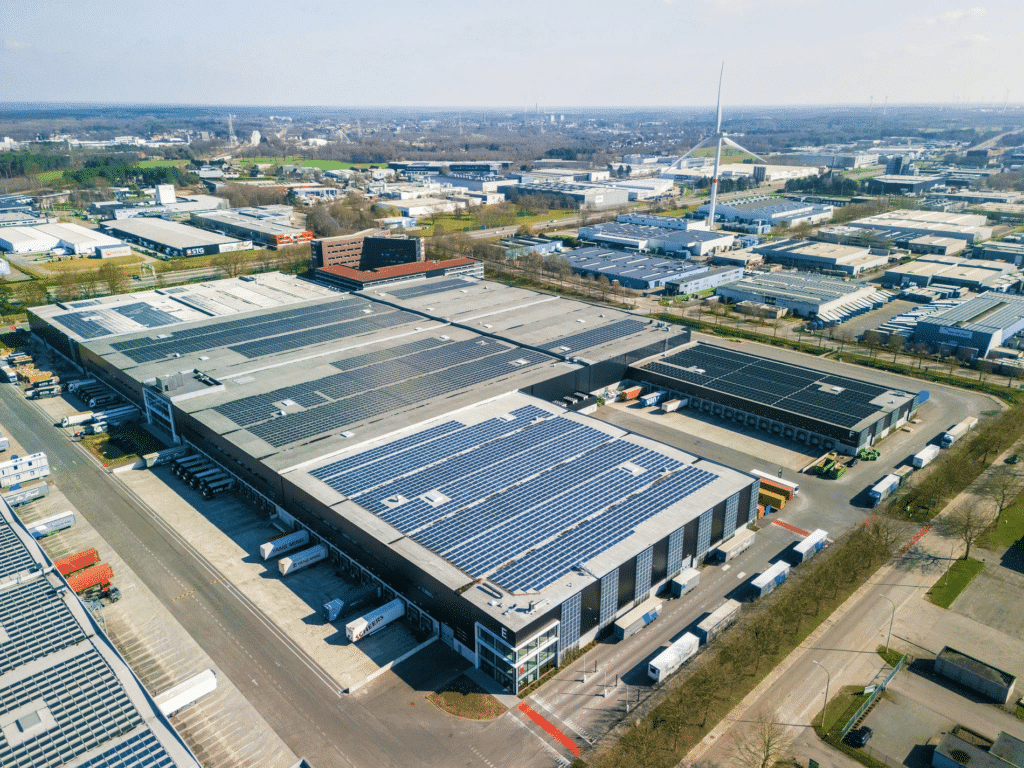
Logistics buildings today are much more than functional warehouses. They are the backbone of a rapidly evolving economy, in which efficiency, flexibility and sustainability are central. Frank Joosen Architects proves this with two recent projects: a logistics building with SME units in Evergem and a large-scale cluster of logistics spaces and offices in Herentals. Two projects where smart design and close collaboration lead to solutions that are tailored to the needs of modern companies and their logistics processes.
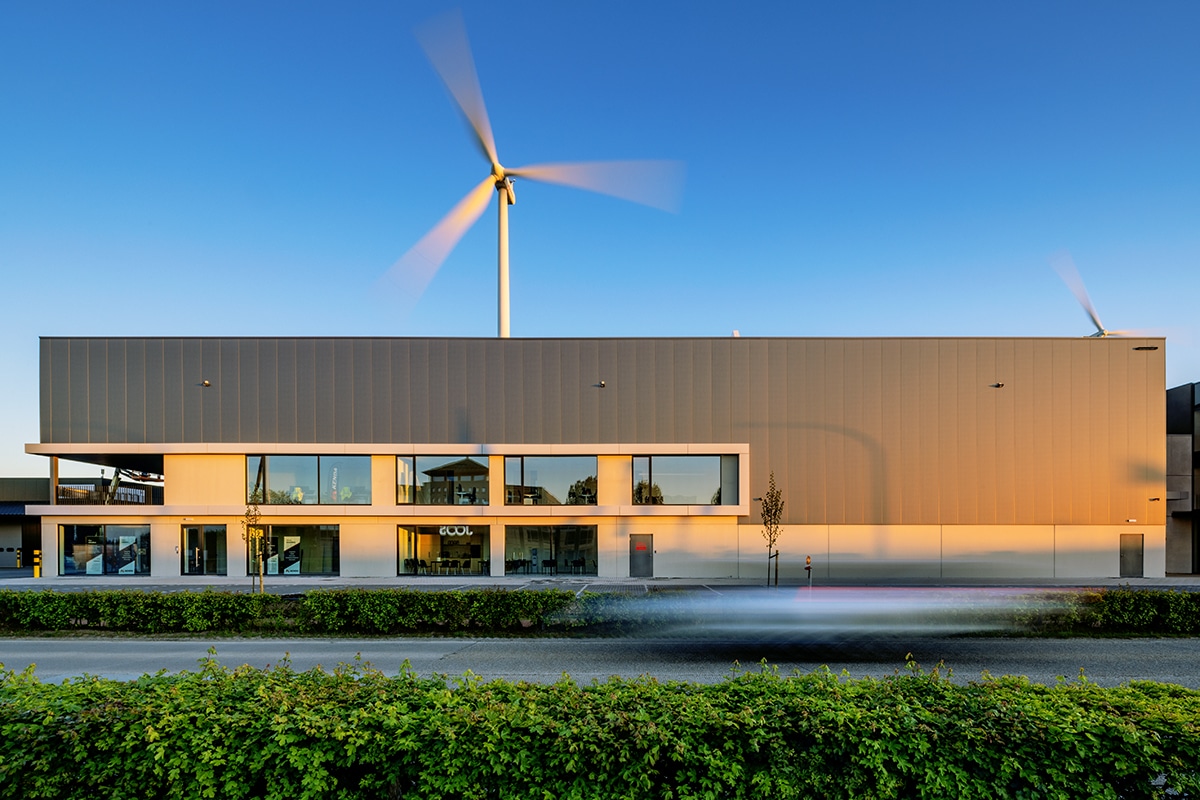
For the Bauwens Logistics project in Evergem, architect-director Frank Joosen's office faced an atypical challenge. The original plot turned out not to be ideal for the development of an efficient logistics building. Instead of compromising, a strategic collaboration with a neighboring plot was chosen.
“By merging the plots, we were not only able to design a better building, but also create additional value for both parties,” says Frank Joosen. “The result is a 14,000-square-meter logistics complex complemented by ten SME units of at least 500 square meters. That expansion created a win-win situation, with shared infrastructure and more efficient use of space.”
The project was also ahead of regulations in terms of sustainability. “Rainwater is collected above ground via infiltration systems, while green zones and wadis contribute to biodiversity,” Joosen said. “The building is equipped with heat pumps for both offices and warehouses, and is prepared for further investments such as solar panels. Moreover, electric trucks can be charged there.”
In the Kempen region, Frank Joosen Architects collaborated on the large-scale Herentals Green Logistics (Intervest) logistics project of more than 45,000 square meters. The biggest challenge here was timing. “The construction phase was particularly short and the deadline was fixed due to a scheduled tenant move,” Joosen said.
In addition, part of the site remained in use during the works, which required strict site organization and increased attention to safety. The project combines warehouses, offices and a parking tower for 410 cars and 110 bicycles, and was realized according to the strict BREEAM Excellent standards.
Frank Joosen: “Here, too, sustainability was central to every aspect of the design. Old buildings made way for a contemporary logistics park with green roofs, green facades and sophisticated water management via wadis and infiltration ponds. We deliberately chose materials and techniques that are not only energy efficient, but also contribute to a pleasant working environment.”
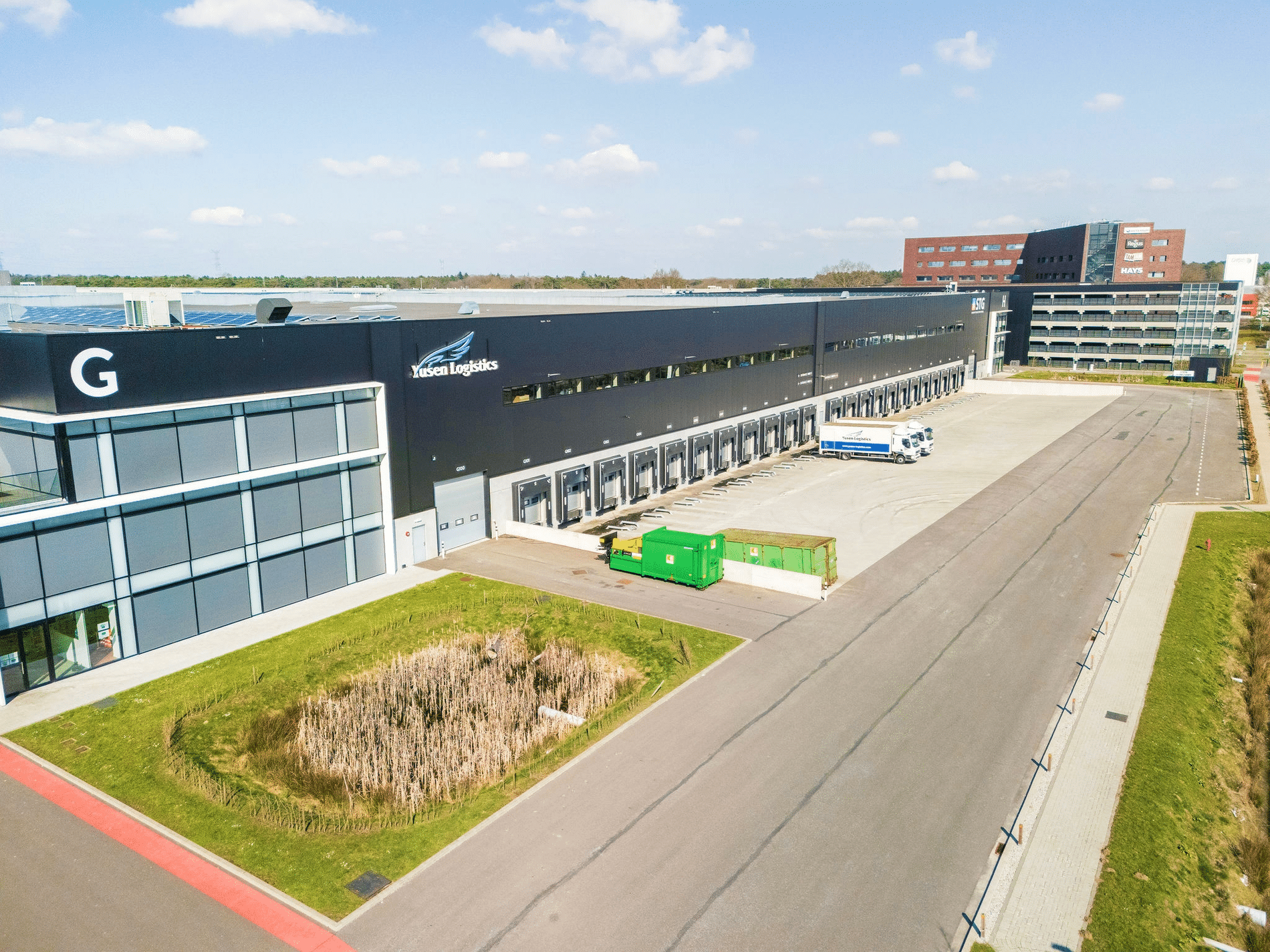
According to Frank Joosen, designing logistics buildings is fundamentally different from other architectural projects. “You work on a larger scale and have to take into account complex processes within companies. It's not just about the building itself, but also what happens around it, such as traffic flows and loading zones.”
A thorough analysis of the client's needs is crucial. “A good program of requirements is the basis of any design. Without it, you can't create a building that really works for the client.”
Logistics is constantly changing, and that translates into flexible designs. Frank Joosen Architects takes future evolutions into account by providing, among other things, larger spans, higher floor loads and additional clear height.
“We try to design buildings that can grow with the client,” Joosen explains. “That also means that we prepare technical installations for expansion, for example by providing additional cable ducts or electrical capacity. And with mezzanines and modular structures, we ensure that storage capacity can be easily adapted. This keeps the buildings relevant, even when logistics processes or technologies change.”