warehouselogistiek.eu
EN

The platform for internal & external logistics, supply chain and automation
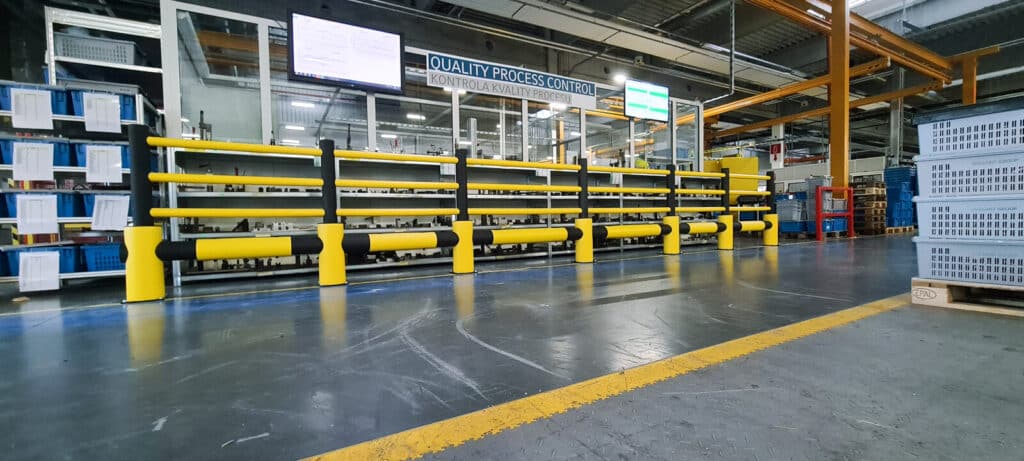
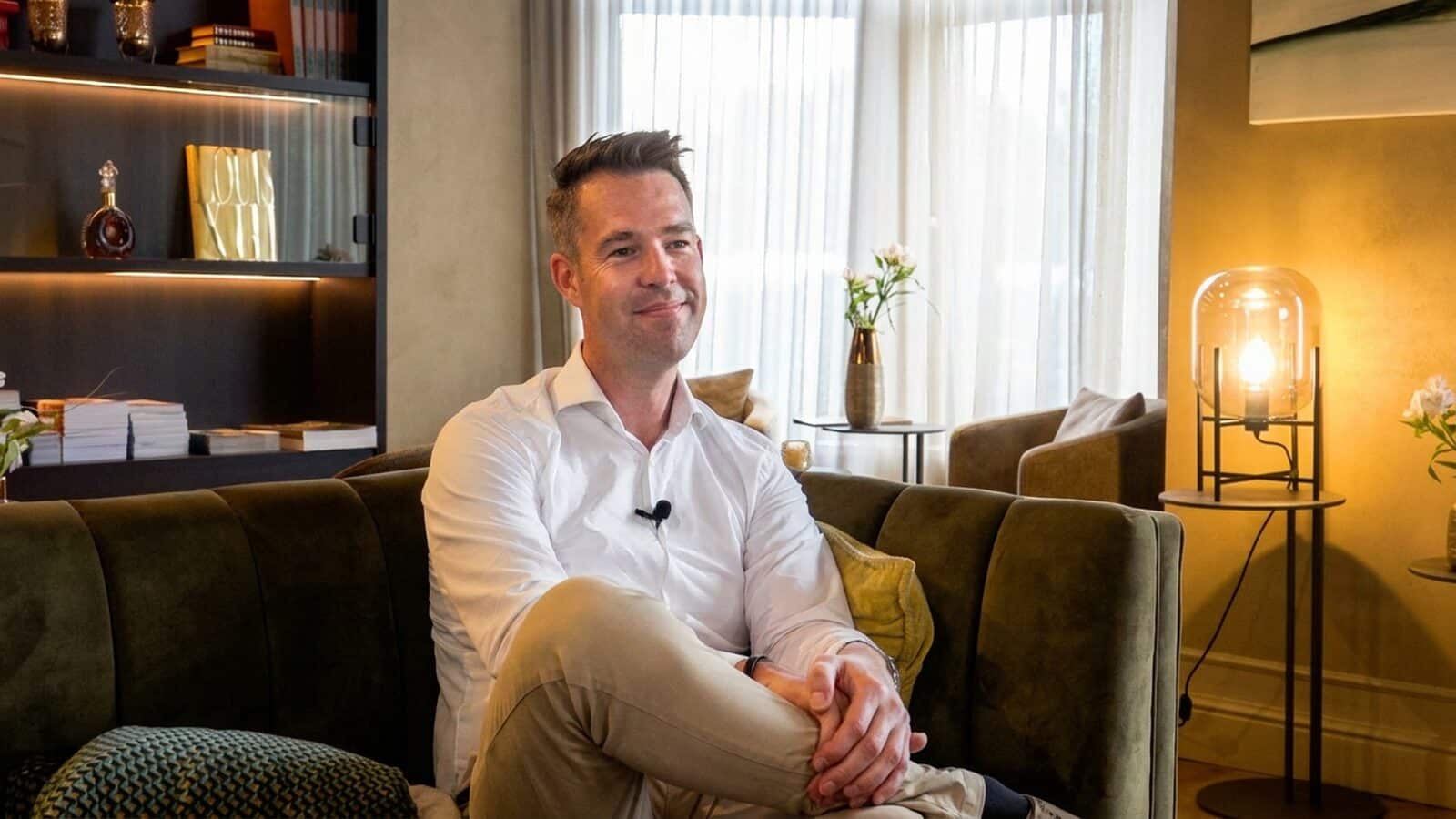
Technology is playing an increasingly important role in warehouses and logistics processes. Automation is on the rise, AGVs and AMRs are moving among employees, and the flow of goods is accelerating. As a result, new safety risks can arise on the work floor. “Today, safety must be viewed as a whole across the entire work environment. Securing one zone at a time is no longer sufficient,” says Sigrid Herbosch of Troax.
Data, automation, and robotics are having a major impact on logistics: they increase efficiency and speed up the processing of goods, but at the same time create new safety challenges. “Many warehouses have become smart tech environments,” says Herbosch. “This evolution is also bringing about significant changes in the area of safety, as people are increasingly coming into contact with high speeds and moving vehicles.”
According to her, it is precisely the places where different movements converge that become critical. Think of intersections where pedestrians, manual pallet jacks, and AGVs encounter one another, or narrow warehouse aisles where visibility is limited. “In the past, safety was often addressed on a local basis: a machine would be fitted with a safety fence, fall-through protection would be installed on pallet racks, and traffic flows were managed on a per-location basis. But now, all those zones are interconnected by AGVs and automation. So you have to look at the big picture and develop a comprehensive concept that incorporates safety from the very beginning,” says Herbosch.
Troax has been known for years for its safety fencing and mesh walls, and today positions itself as a partner for comprehensive safety solutions. The company prefers to be involved as early as possible in the design or redesign of a warehouse. “Through a risk analysis, we identify where employees, machines, and vehicles intersect and determine what combination of measures is needed. This may still involve traditional physical protection: safety fencing, perimeter barriers, or fall protection. But in dynamic zones, additional solutions are needed,” explains Herbosch.
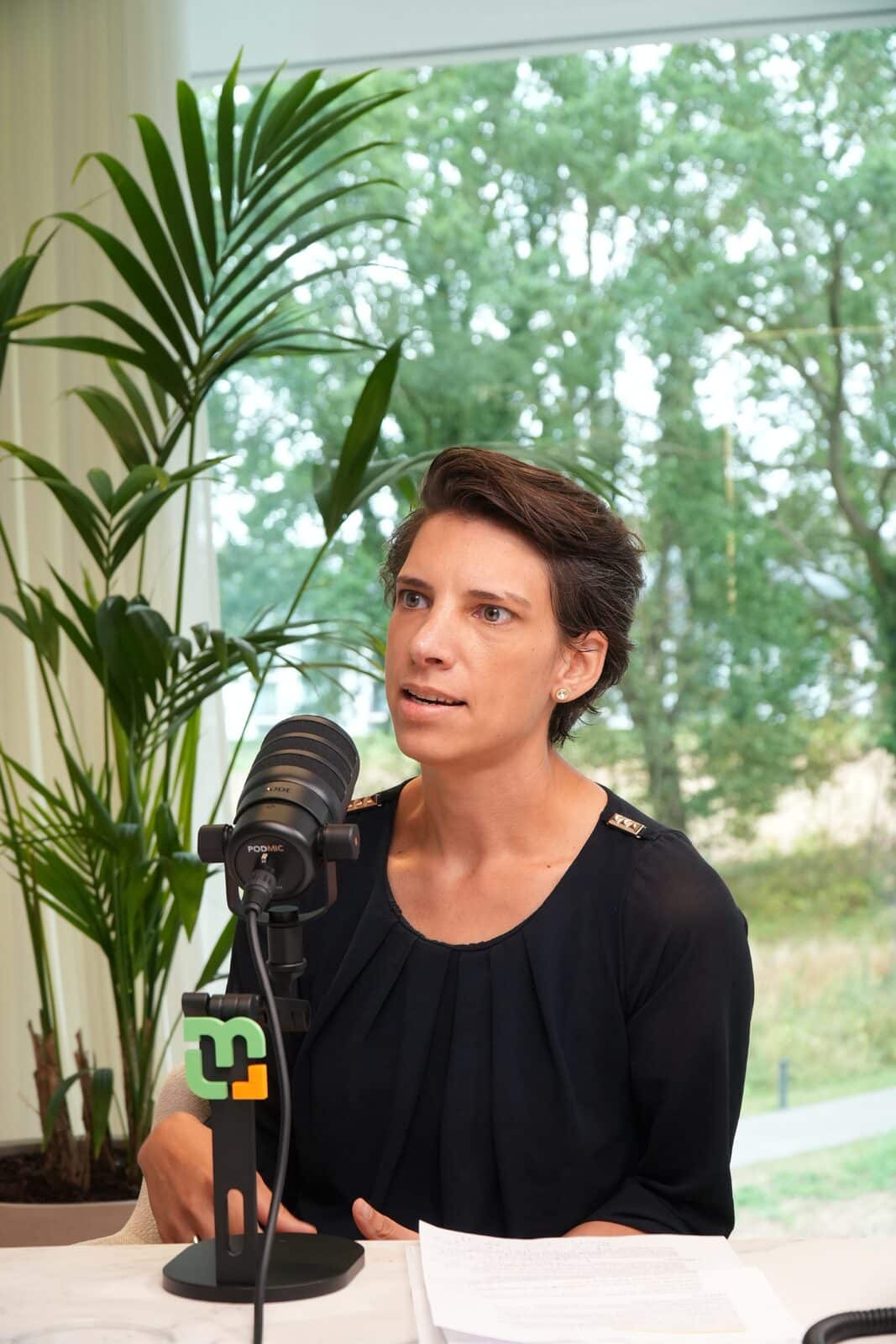
A typical high-risk situation is a blind spot. A forklift is approaching from one side, while a pedestrian appears from the other. “That’s where our Active Safety lineup comes in: technological systems that detect risks in real time and alert users. Think of projectors that display icons or a crosswalk on the floor, or tags on people and vehicles that emit light, sound, or vibration signals. Such solutions anticipate hazards and help avoid risks before anything happens,” explains Herbosch.
Active safety is therefore used where perimeter security reaches its limits. In a narrow passageway, for example, an approaching forklift can be automatically slowed down while a physical passageway is temporarily closed off. Once the vehicle has passed, a projected crosswalk can indicate that pedestrians can cross safely. “As soon as movement comes into play, you often need tools other than traditional security measures. In such cases, physical and technological solutions work together perfectly to enhance safety.”
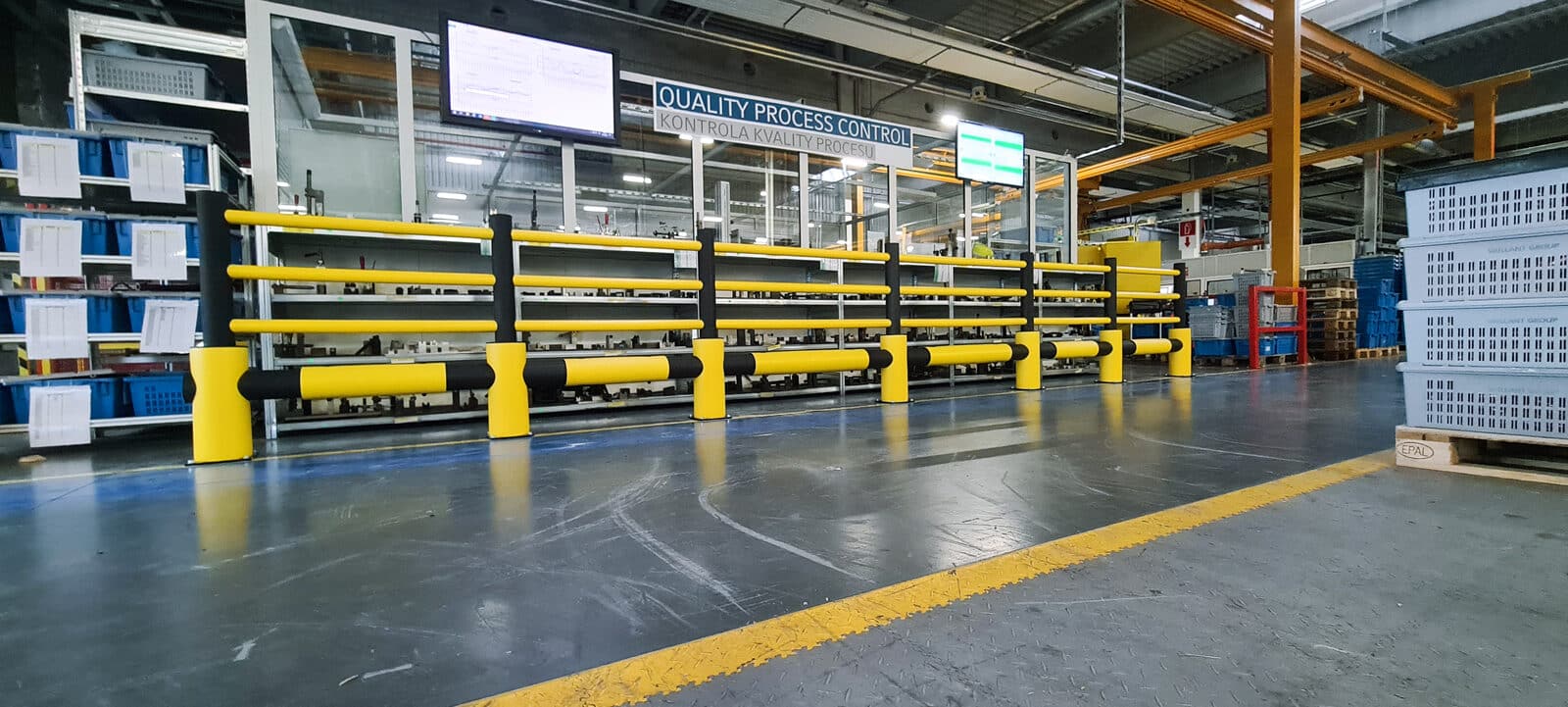
In addition to prevention, protection in the event of an actual collision remains important. To this end, Troax uses flexible collision protection, among other measures. Herbosch: “A flexible polymer barrier has several advantages over traditional steel protection. There is less damage to the vehicle, less damage to the floor, and also less damage to the barrier itself. The impact energy is absorbed, allowing the barrier to largely spring back after the impact. A steel barrier is more prone to damage and will need to be replaced sooner.”
Troax also builds modular solutions so that safety measures in a logistics environment can evolve alongside new machinery, additional automation, or changes in material flows. “No zone stays the same for ten years,” says Herbosch. “Choosing modular solutions therefore means investing in future-proofing. If an expansion is needed, you simply add panels or an extra section of barrier.” As a result, even after damage occurs, it isn’t necessarily necessary to replace the entire system. Only the damaged part needs to be replaced.
Of course, budget remains an important factor in the decisions companies make. But according to Troax, companies would do well to look beyond the initial investment costs. “You also have to consider the indirect costs: downtime after an incident, damage caused by a collision, damaged goods, or people getting injured. That puts the safety budget in a whole new light,” concludes Herbosch.
Neem dan rechtstreeks contact op met TROAX.
 Contact opnemen
Troax is the world's largest developer and manufacturer of steel mesh panels for machine guards, warehouse partitions and property security. The company concept is to develop innovative steel mesh panels for the protection of people, property and processes. The lightweight but strong mesh panels can be combined for unique solutions and are manufactured to withstand the toughest [...]
Bekijk Bedrijfsprofiel