warehouselogistiek.eu
EN

The platform for internal & external logistics, supply chain and automation
From Strategy to Implementation
The pressure on warehouses is mounting. Organizations need to deliver faster, are grappling with labor shortages, and are investing heavily in automation. At the same time, safety, flexibility, and scalability are becoming increasingly important. But how do you make the right choices? Where do you start? And how do you prevent technological investments from creating new risks? Through Warehouse & Logistics, we organized a roundtable session centered on the following question: How do you create a smart, scalable, and secure warehouse that’s ready for the future?
Warehouse automation is evolving at a rapid pace. Robots, autonomous vehicles, artificial intelligence, and advanced storage and picking systems are radically transforming the logistics sector. While automation used to focus primarily on efficiency and cost savings, there is much more at stake today. Companies are seeking solutions to labor shortages, space constraints, stricter regulations, and ever-increasing demands for safety and productivity.
In practice, however, the experts at the table say that successful automation is far less dependent on technology than is often thought. They suggest that the biggest challenges actually lie with the people, processes, and data behind the technology.
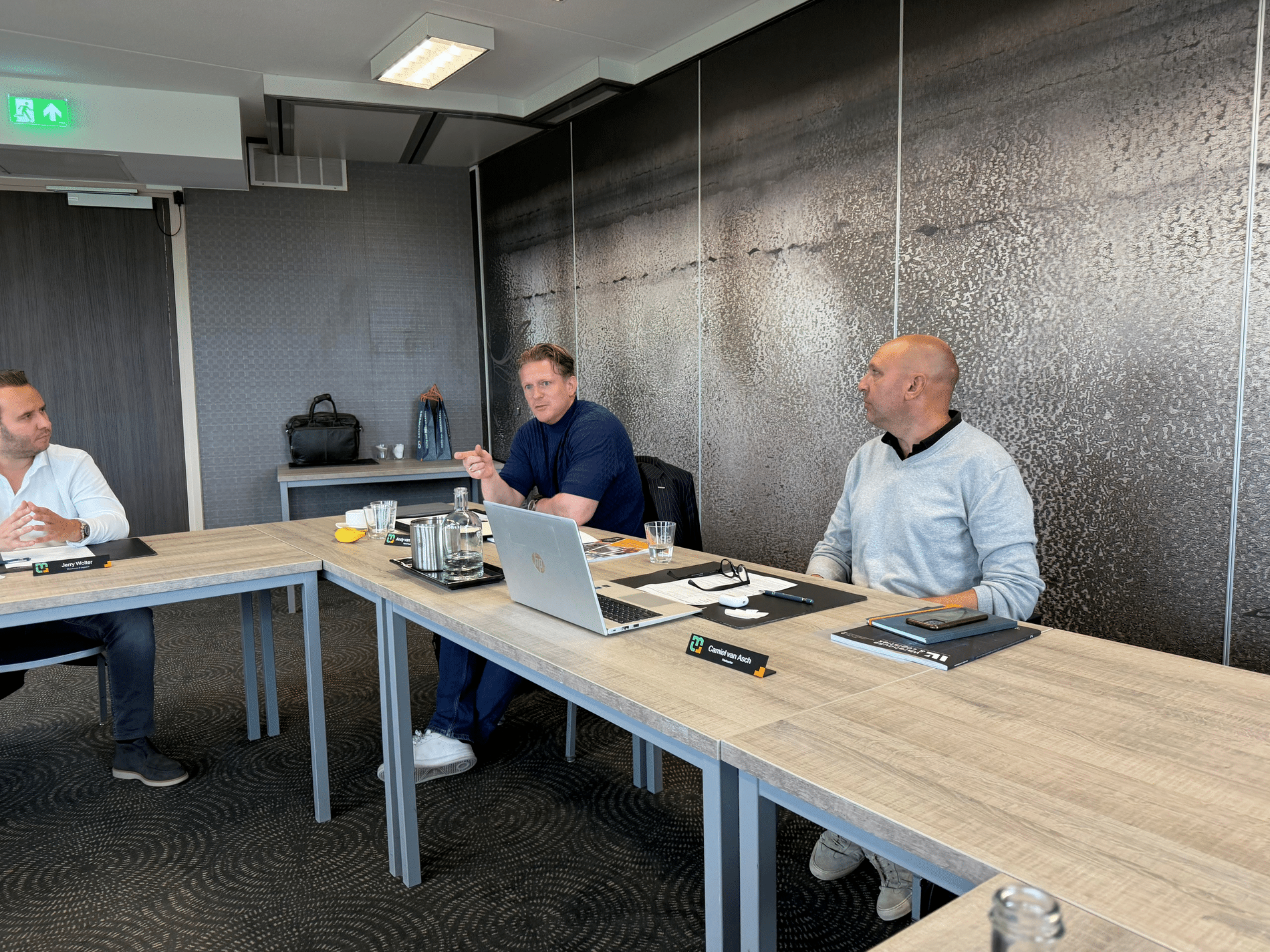
Many automation projects arise from an urgent need. There’s a staff shortage, the warehouse is bursting at the seams, or productivity needs to be boosted. The temptation to quickly opt for a technological solution is strong. According to experts, this is precisely where things often go wrong. Companies invest millions in new warehouses, robots, and software, even though the underlying data isn’t sufficiently organized. Not only are operational data such as volumes and storage capacity important, but master data is especially crucial. Product dimensions, weights, packaging details, and process information form the foundation of every automation solution.
If that information is missing or proves to be unreliable, it can lead to delays, additional costs, and sometimes even situations in which a brand-new warehouse cannot become operational for months. Successful automation, therefore, does not begin with technology, but with a comprehensive master plan that brings together processes, data, employees, space utilization, and future growth.
Automation offers many safety benefits. Modern autonomous mobile robots (AMRs) are equipped with sensors, scanners, and intelligent software that virtually eliminate collisions. Compared to traditional forklifts, this significantly reduces the number of incidents. However, safety risks do not disappear entirely. In fact, the greatest risks are often found precisely where humans and machines interact. Around order-picking stations, packaging departments, and transfer points, a dynamic environment emerges in which employees, electric pallet trucks, and forklifts constantly interact with one another.
It is difficult to completely cordon off these transition areas. Employees must be able to move freely, while vehicles must be able to continue operating efficiently. This makes these zones the most vulnerable areas within modern warehouses.
In addition, behavior plays an important role. Fatigue, routine, and time pressure cause employees and drivers to become less alert. The risk of unsafe situations increases, especially in large distribution centers where many temporary workers are employed. Experts note that technology can help address this. Examples include smart safety systems that recognize people, safety vests with transponders, automatic speed limits, and vehicles that brake automatically when an employee gets too close. The technology already exists, but it is not yet widely implemented because—as distressing as it may be—costs often take precedence over maximum safety.
A striking conclusion from many automation projects is that technology is rarely the biggest challenge. People are. New systems require new ways of working. Employees must let go of processes they’ve sometimes been following for years. According to experts, this proves to be much more difficult in practice than installing a robot or software package. Employees are often involved at the start of a project but then fade into the background. By the time the system goes live, one or two years may have passed. The change then feels sudden and drastic. Companies that actively involve employees in the process generally achieve better results. Visualizations, simulations, pilot projects, and training help build buy-in.
People have a better understanding of what is changing and are quicker to recognize the benefits of new technology. This is important because many automation projects fail not because of technical issues, but because users fall back on old ways of working.

Artificial intelligence is now playing an increasingly important role in logistics automation. AI is used for analysis, design optimization, route planning, and improving operational processes. Robots are also getting smarter. By analyzing historical data, systems recognize patterns and can anticipate situations that occur regularly. Examples include predicting traffic flows within a warehouse or adjusting driving routes based on human movements.
At the same time, there is also a caveat. AI is only as good as the data used to train the system. If the underlying information is incomplete or inaccurate, the results will also be unreliable. That is why managing high-quality data is becoming increasingly important.
The discussion about automation often focuses on jobs that are disappearing. In reality, the nature of work is changing. Simple, repetitive, and physically demanding tasks are increasingly being automated. This applies, for example, to transport operations, order picking, and packaging processes. At the same time, there is a growing need for employees who can manage, analyze, and optimize systems. The logistics professional of the future will perform fewer hands-on tasks and focus more on technology, process control, and data.
Nevertheless, a challenge remains. In many warehouses, tasks are still performed that offer little variety and are highly repetitive. Especially in large distribution centers, a work environment sometimes develops in which employees function primarily as an extension of the system. New developments, such as ‘human-like robots’ (a hot topic at the latest LogiMAT), could change this in the long run. Although this technology is still in its infancy, experts expect that such robots could play an important role within five to ten years in warehouses where flexibility and human intervention are still necessary.
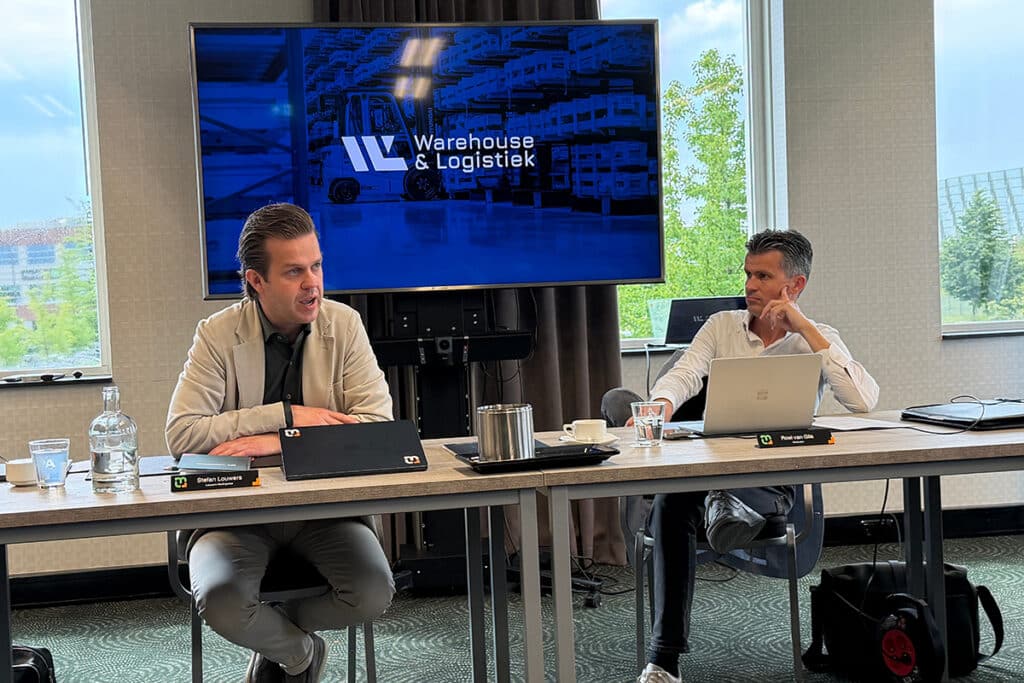
While automation projects used to consist of large, comprehensive investments, the market is now shifting more and more toward modular solutions, the experts at the table emphasize. Start small to limit risks, and then expand step by step. This makes projects more manageable and increases the likelihood of successful implementations. At the same time, it remains essential to work from a long-term perspective. Even when automating just a single process, it’s important to consider future expansions. Only then can a cohesive system be created that can grow alongside the organization.
So what will the warehouse of the future look like? If we are to believe the experts, it certainly won’t be completely unmanned. People will continue to play a crucial role, though their work will change dramatically. Robots, AI, and automation are taking over more and more routine tasks, while employees focus on supervision, optimization, and decision-making. Finally, keep in mind that the most successful organizations aren’t necessarily the ones with the most advanced technology. They are the companies that know how to intelligently combine technology, safety, data, and human behavior. Because ultimately, it’s not the robot that determines the success of a smart, safe, and future-proof warehouse—it’s the way people and technology work together.

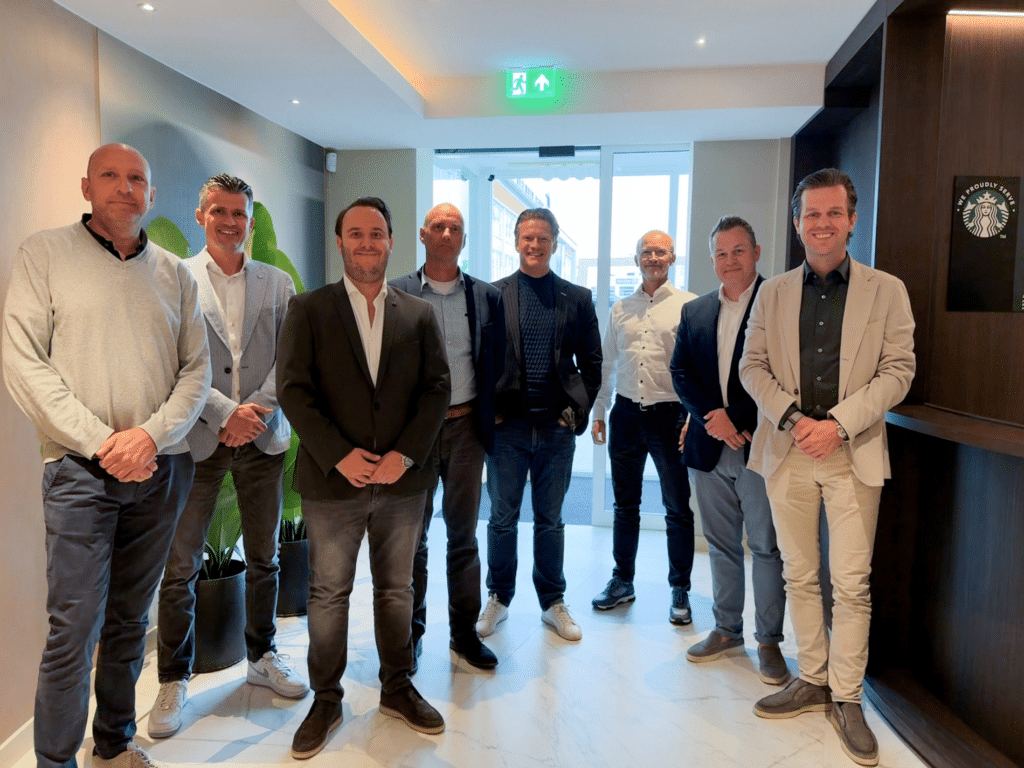
Camiel van Asch, Flexbarrier
Camiel is the director and owner of Flex-barrier, the leading specialist in collision protection. We also offer solutions for lane markings and safety barriers. In this way, we help companies improve safety in the workplace, both indoors and outdoors. We protect employees, minimize damage to equipment, and prevent costly downtime in the logistics and industrial sectors in the Netherlands and Belgium.
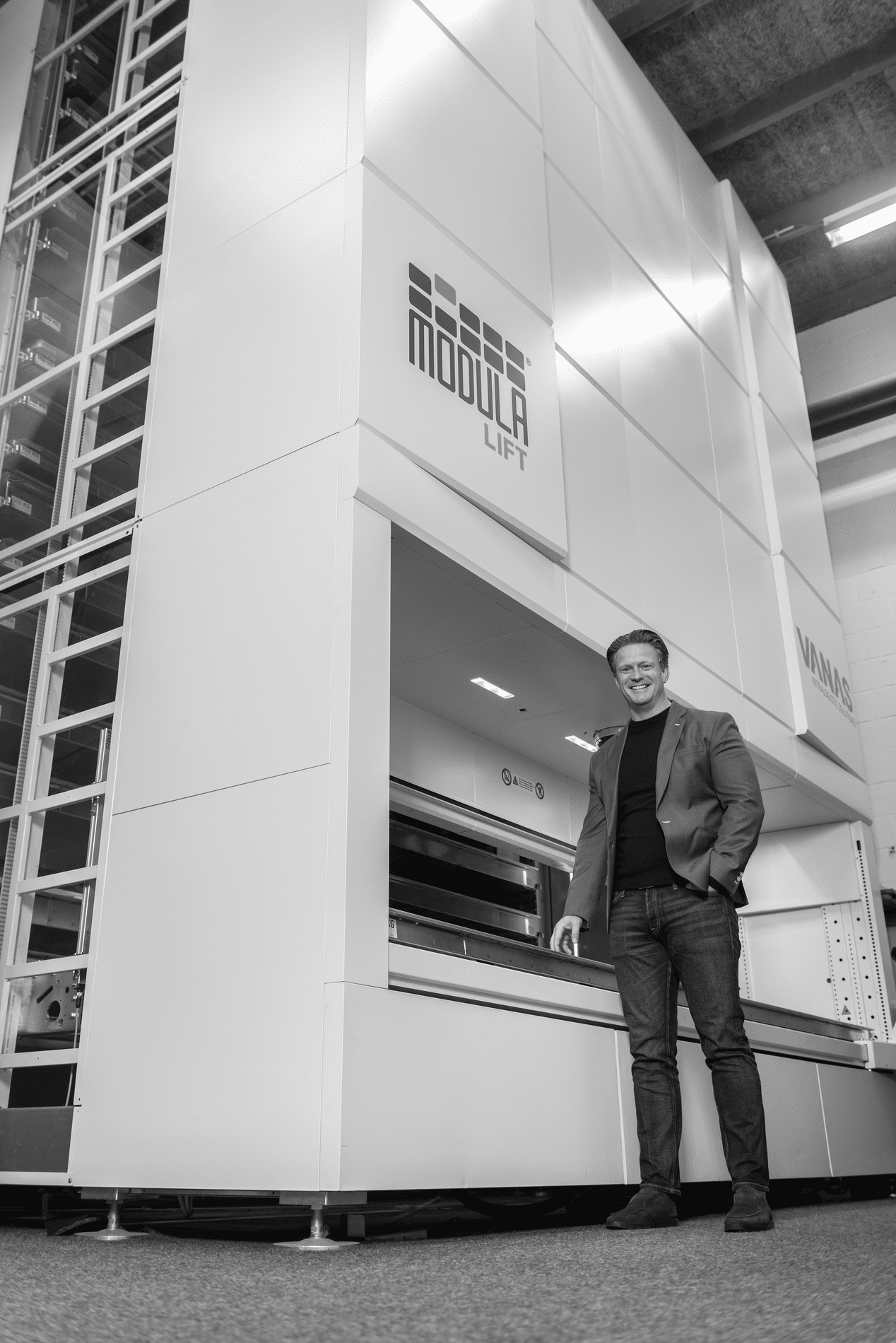
Andy van Mieghem, Vanas Engineering
Andy lives and breathes warehousing and storage. In
Over the past 20 years, he has worked his way through Vanas Engineering from the ground up and now leads the company as Managing Director. His belief is that strong logistics do not require maximum automation, but rather smart hybrid concepts—standard processes where possible, and automation where it has proven to add value. He sees this approach validated by customers who continue to scale up their operations.

Arthur Zondervan, Groenewout
Arthur is a Managing Consultant and Partner at Groenewout and, as a consultant and project manager, is involved in the planning and implementation of both supply chain design projects and intralogistics initiatives. His work primarily focuses on logistics processes, typically in conjunction with the physical facility and IT systems.

Arie Verhoeven, Gobotty
Arie works for Gobotty and has a background in control engineering and logistics solutions. We advise and help our customers make the right logistics decisions using high-quality AMRs. This often involves integrated supply chain solutions. We manage the entire process—from engineering and production to commissioning and service—in-house. Made in Holland.