warehouselogistiek.eu
EN

The platform for internal & external logistics, supply chain and automation
From Certification to Professional Competence in Logistics Practice
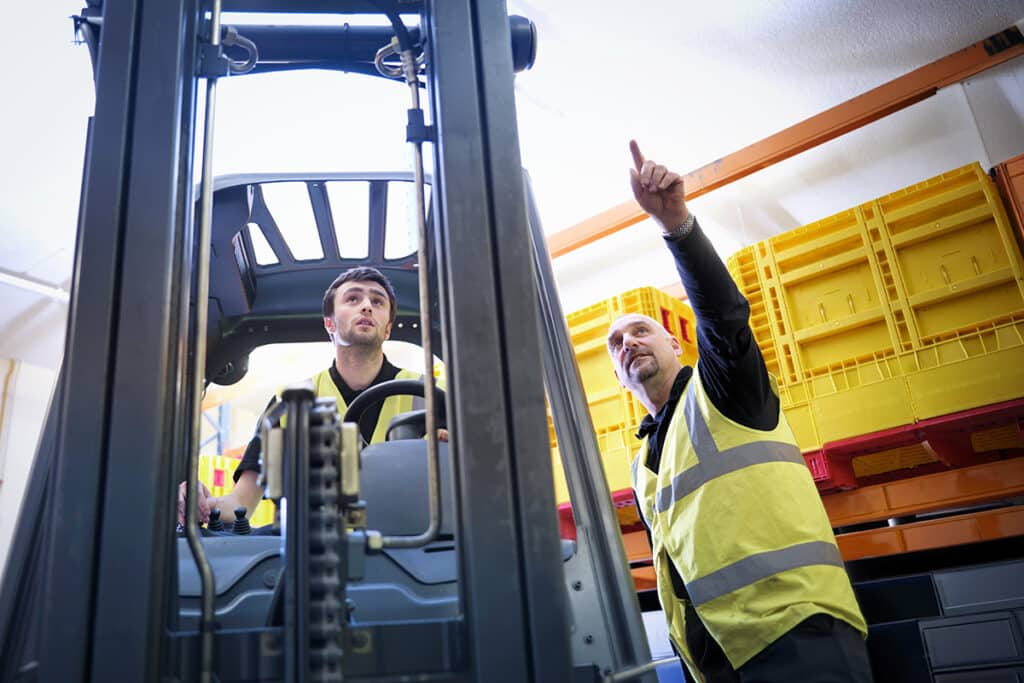
In warehouses and distribution centers, forklifts, reach trucks, and other types of material handling equipment are used on a daily basis. At the same time, safety remains a key concern. Every year, accidents continue to occur in which material handling equipment plays a role. Interestingly, the cause is often not related to the equipment itself.
Machines are periodically inspected, maintained, and repaired as needed. Warehouse racking and other safety features are also checked regularly. The technical aspects of safety are generally well organized in the Netherlands. But safety is about more than just technology.
The human factor plays an equally important role. Employees must not only know how a machine works, but also how to use it safely in their day-to-day work. This is precisely where many employers face a challenge.
Virtually every logistics organization employs workers who hold a forklift or reach truck certification. However, in practice, it turns out that the content and quality of training programs can vary greatly.
Employers are presented with certificates from a variety of training providers, but often find it difficult to assess exactly what these certificates represent. Have both theory and practice been tested?
Are the learning objectives comparable? Is there independent testing? And does every certificate holder truly meet the same standard? In addition, the logistics sector relies heavily on temporary workers, agency employees, and rotating teams. New employees bring their own certificates, but not always the same knowledge, skills, or safety routines. This makes it difficult for employers to objectively assess their employees’ professional competence.
The question is therefore becoming increasingly relevant: when can you assume that someone is demonstrably competent?
Within the industry, there is a growing need for greater uniformity in customer service training. This is not to limit trainers’ ability to address specific requirements and expectations, but rather to provide greater clarity about what a certificate actually means.
With this in mind, BMWT has developed the updated BMWT-Train. This quality standard combines customized solutions with standardized knowledge and expertise. BMWT has long been known within the industry for BMWT-Keur, the quality certification mark for the technical safety of work equipment. With BMWT-Train, the organization is focusing on another component of the same safety chain: the quality of training and the professional competence of machine operators and drivers.
The basic principle here is simple: employers must be able to rely on the value of a certificate, regardless of where the training was completed.
Nevertheless, safety experts emphasize that training is only one component of a safe work environment. Ultimately, behavior, safety awareness, supervision, and corporate culture determine how safely work is actually performed.
An employee may hold a valid certificate, but remains dependent on the choices he or she makes every day on the job. Time pressure, routine, and production targets can all play a role in this. Safety therefore requires a combination of good equipment, demonstrable professional competence, and an organizational culture in which working safely is second nature.
That is precisely why there is a growing focus on the quality of training. Not because a certificate in and of itself prevents accidents, but because good training lays the foundation for safe behavior in the workplace.
The logistics sector is rapidly becoming more professional. Employers expect an ever-greater understanding of their employees’ knowledge and skills, and clients are setting higher standards for safety and quality.
A uniform training standard can contribute to that development. Not by restricting training providers, but by creating more clarity about what professional competence entails and how it can be objectively demonstrated. This shifts the focus from simply holding a certificate to the question that ultimately matters most: Can someone perform their work safely, responsibly, and with professional competence?
Learn more about BMWT-Train? Trainers interested in joining can use the contact form at bmwt.nl/train Request an exploratory meeting to discuss the options and quality requirements.
FOUR BUILDING BLOCKS FOR QUALITY
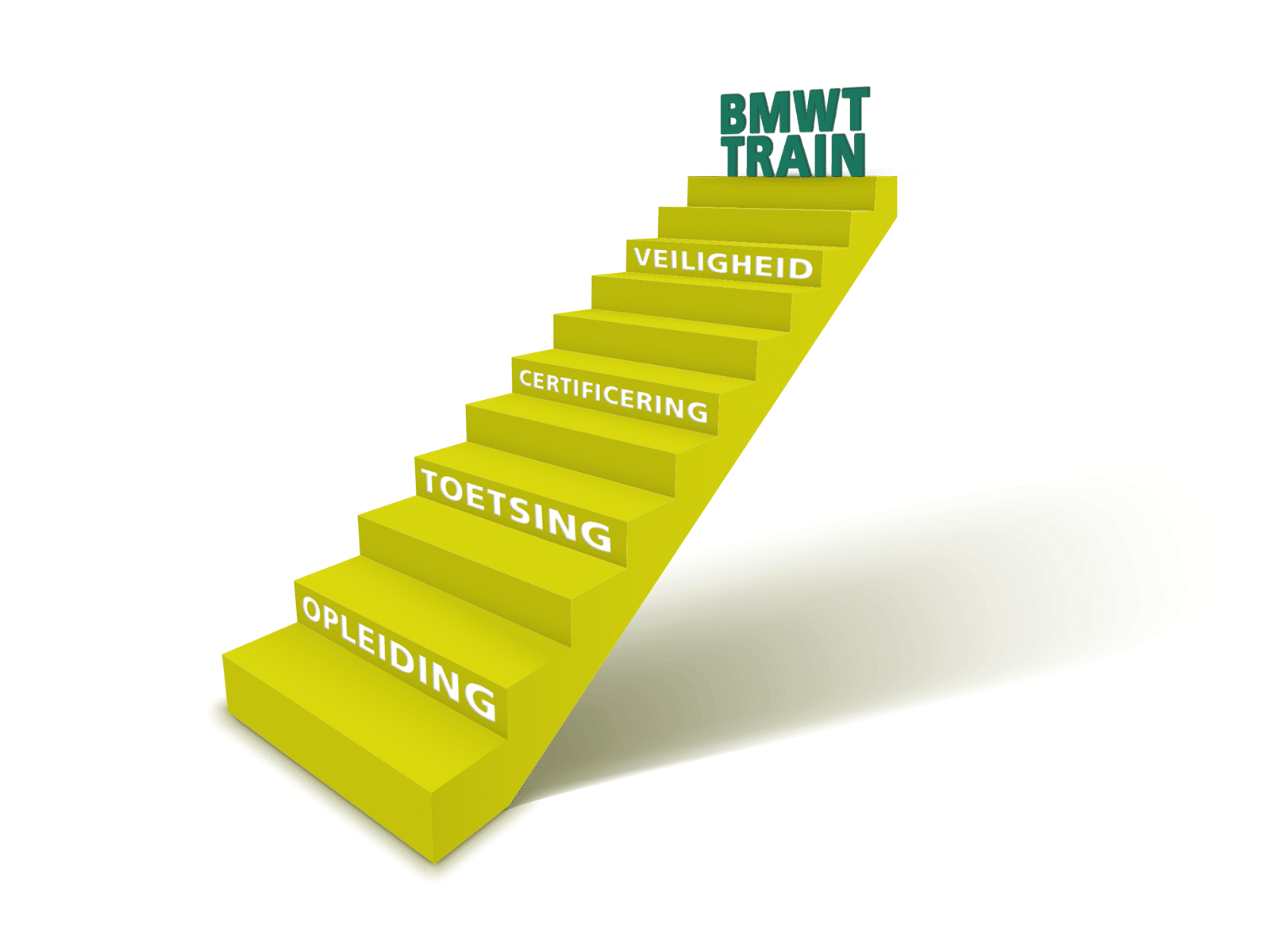
BMWT-Train was established as an independent quality assurance system for operator training. The content of the training remains the responsibility of the trainer, while quality is ensured through four pillars.
Standard Setting and Assessment
Clear requirements regarding knowledge and skills are established for each program. This creates a recognizable standard for participants and employers.
Independent examination
Participants are evaluated on both theory and practical skills. It is not just knowledge that counts, but also the ability to apply that knowledge safely in realistic work situations.
Quality Control
Audits and spot checks are used to ensure that affiliated training providers continue to meet the established quality standards.
Certification and Registration
Successful participants receive an official certificate that is entered into a central registry. This creates greater transparency for employers and clients.