warehouselogistiek.eu
EN

The platform for internal & external logistics, supply chain and automation
Where automation is no longer a ‘distant’ promise, but daily practice
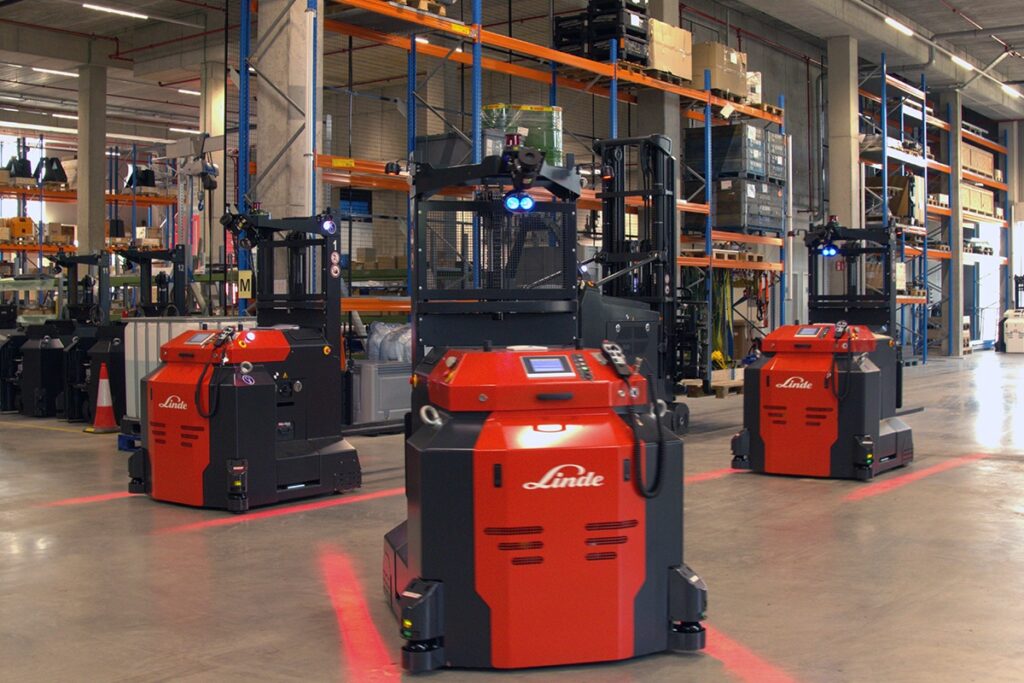
At the invitation of Motrac - importer and distributor of Linde lift and warehouse trucks in the Benelux and active in intralogistics for more than fifty years - we were given an exclusive look behind the scenes of the KION Automation Center in Antwerp. What stands out there: automation is not sold here as a vision of the future, but built, tested and above all questioned until it works.
Anyone talking about intralogistics automation today cannot ignore Antwerp. Since October 2024, the KION Automation Center Antwerp has housed both KION Automated Solutions EMEA and Dematic under one roof. On an 11,800 m² site, more than 400 employees from over 40 nationalities work on the development, assembly and validation of automated solutions that are rolled out internationally.
That scale and concentration make it immediately clear: this is not a showroom, but an operational site where engineering, software, testing, training and assembly come together.
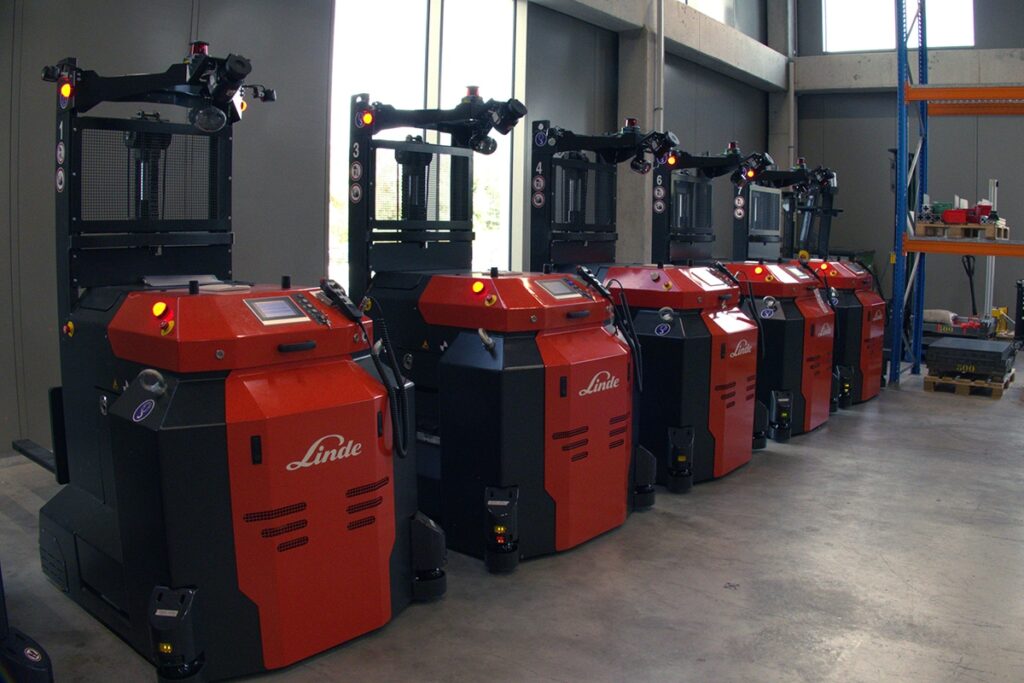
During the tour of the shop floor, it becomes clear just how wide-ranging the offerings are that come together here. Broadly speaking, the Automation Center works around three pillars:
Notable in this: assembly is only one part of the story. At least as important is the test environment, where complete customer layouts are simulated and vehicles are tested with real loads. Not based on assumptions, but on how pallets, rolls or containers behave in reality.
In the Automation Center's internal warehouse, a deliberate choice is made for a simple, realistic flow. Pallets are labeled, picked, checked and put away. And vice versa: picked back and disposed of.
The message is clear: automation does not have to start big or complex. Even with about 200 pallet locations, automation can achieve a payback of one and a half to two years. Through time savings, reduced walking movements and better utilization of people.
A recurring theme during the visit is human acceptance. Automation only really works when employees want to work with it. That's why warehouse workers and technicians are involved in projects early on.
Sometimes even something simple helps: naming vehicles. In Antwerp, for example, they are called ‘Betty’ and ‘Marcel. It sounds light-hearted, but it lowers the threshold for talking about them, and for trusting them. Because automation rarely takes away jobs, but changes them. Who does not explain this, creates resistance.
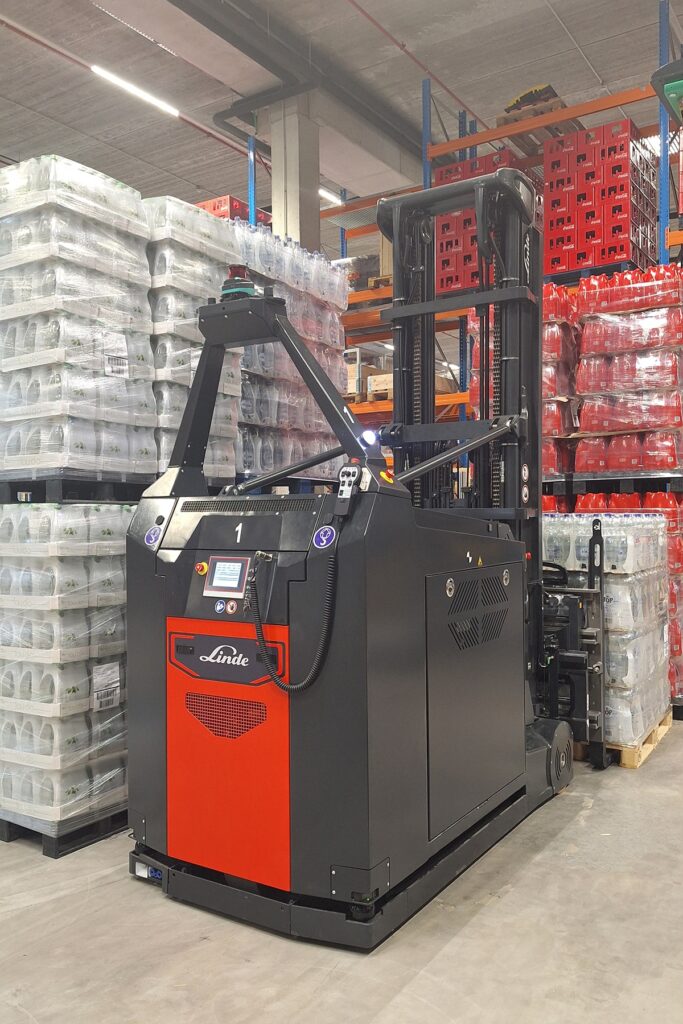
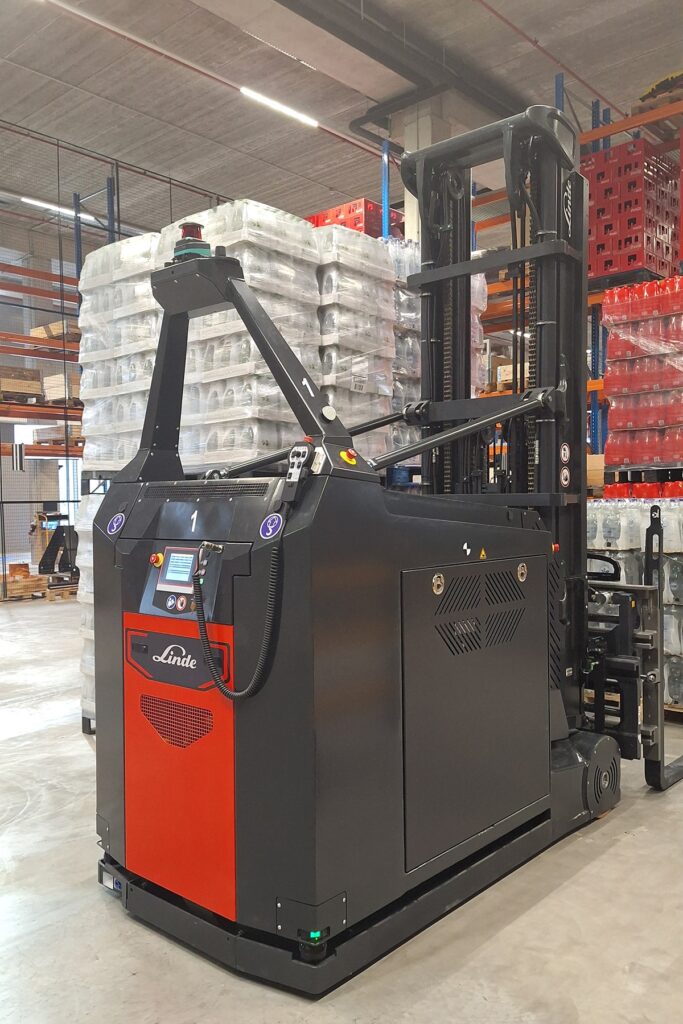
Automation is also advancing in narrow-aisle warehouses. Several generations of VNA vehicles are being tested in Antwerp, including models that will soon become more widely available within the network.
In technical terms, no one standard solution is chosen. Depending on pallet types, film, loading and environment, 3D cameras or 2D scanners are used. The latter are more robust in complex situations, while 3D cameras offer speed and precision for standard loads.
Perhaps the most underrated lesson of the visit: the floor. When automating to ten, fourteen or even sixteen meters, every millimeter of deviation is magnified.
That's why KION strongly emphasizes that automation should be considered as early as the design phase of a building. A floor that is ‘good enough’ for manual driving can be disastrous for AGVs. Those who discover this too late can expect to incur serious additional costs at worst.
What the KION Automation Center Antwerp shows above all is that automation is not a product, but a process. It requires technical knowledge, software integration, realistic testing - and above all, attention to people and context.
Whether for large multinationals or SMEs tentatively starting with a single vehicle, the common thread remains the same. Automation only really works when it is tailored to the reality of the warehouse. And exactly that reality is at the heart of Antwerp.